borosilicate laboratory beakers
CN → US| HS Code | Tariff Rate | Origin | Destination | Doc |
|---|---|---|---|---|
| 7017200000 | 41.7% | CN | US | Official Doc |
| 7017905000 | 41.7% | CN | US | Official Doc |
| 7020006000 | 40.0% | CN | US | Official Doc |
| 7020004000 | 41.6% | CN | US | Official Doc |
Product Images
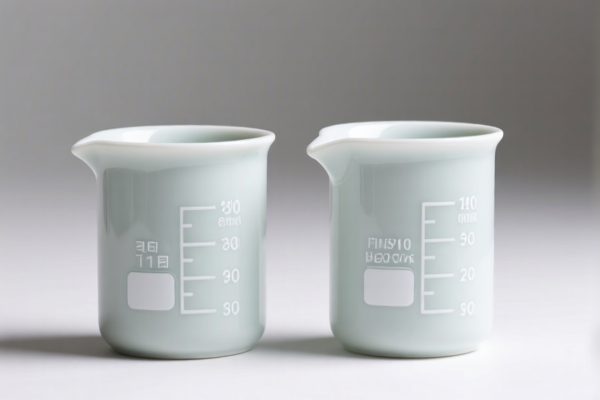
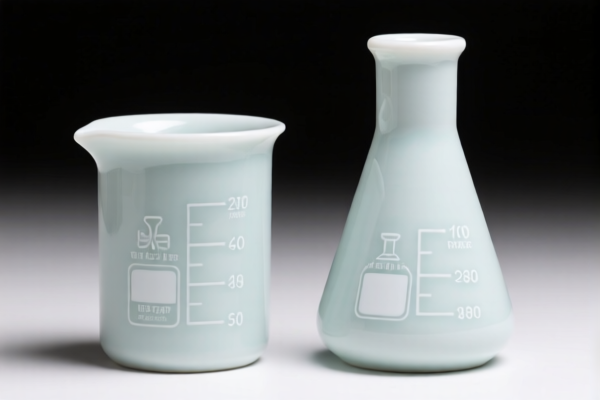
AI Analysis
🧪 Borosilicate Laboratory Beakers (Borosilicate Glassware)
🌐 HS Code Reference & Customs Clearance Guide | 2026 Latest Tariff Analysis | Professional Entry Strategy
📌 I. Product Definition & Classification: Do You Really Understand "Laboratory Beakers"?
Borosilicate laboratory beakers are essential vessels in chemical, biological, and medical laboratories. They are characterized by high thermal shock resistance and chemical inertness. In international trade, the classification depends heavily on whether the item is explicitly designated for laboratory use or classified broadly as other glass products.
⚠️ Key Distinction Point:
- If the product is explicitly designed, manufactured, and described for laboratory use (e.g., calibrated, heat-resistant borosilicate glass) → Classified under Chapter 7017 (Laboratory, Technical, or Medical Glassware). - If the product is generic glassware, not specifically adapted for laboratory use, or lacks specific laboratory designations → Classified under Chapter 7020 (Other Glass Articles).
📦 II. HS Code Classification Details (2026 Latest Tariff Authority Comparison)
| HS Code | Product Description | Application Scenario | Key Characteristic |
|---|---|---|---|
7017.20.00.00 |
Borosilicate laboratory beakers, made of low-expansion glass for laboratory use | Standard lab research, teaching labs, chemical analysis | ✅ Explicitly "Laboratory Use" |
7017.90.50.00 |
Borosilicate glass articles, explicitly for laboratory use | Specialized lab tools, non-beaker lab glassware (if not covered elsewhere) | ✅ Explicitly "Laboratory Use" |
7020.00.60.00 |
Borosilicate glass material, classified as other glass articles | Generic glass containers, decorative items, non-lab storage | ❌ General Glass Article |
7020.00.40.00 |
Borosilicate glass material, falling under the category of other glass articles | Bulk glassware, unbranded generic beakers for non-lab use | ❌ General Glass Article |
🔍 Important Reminder:
- 7017 is the correct chapter for items specifically designed for laboratory use. The material (borosilicate) must be low-expansion glass.
- Misclassifying laboratory beakers as general glass (7020) can lead to customs scrutiny, potential penalties, or misdeclaration if the product clearly bears laboratory markings or is sold in lab supply catalogs.
- However, if the beakers are generic (e.g., for home brewing, decoration, or non-scientific purposes) and lack laboratory-specific features, 7020 may apply.
💰 III. 2026 Latest Tariff Rate Breakdown (Including Additional Duties & Policy Surcharges)
✅ Applicable Country: United States (US)
✅ Country of Origin: China (CN)
✅ Effective Date: November 10, 2025 onwards (for subsequent imports)
🎯 1. 7017.20.00.00 — Borosilicate Laboratory Beakers (Explicitly Laboratory Use)
| Item | Content |
|---|---|
| Base Tariff | 6.7% (ad valorem) |
| Section 301 Additional Duty | +25.0% (China-origin goods) |
| Section 122 Duty | +10.0% (Specific category surcharge) |
| Total Tariff Rate | 41.7% |
| Tax Calculation | CIF Value × 41.7% |
| De Minimis Eligibility | ❌ Not Eligible (deny_de_minimis) |
| Legal Basis Path | USITC:7017.20.00.00 → Footnote:301 → Footnote:122 |
📌 Explanation:
- "Base Tariff 6.7%" is the standard Most Favored Nation (MFN) rate for laboratory glassware.
- "Section 301 Additional Duty 25%" applies to most Chinese-origin goods.
- "Section 122 Duty 10%" is an additional surcharge for certain glass products under specific trade provisions.
- Total 41.7% is a high tariff level. Pre-calculation of landed costs is critical.
🎯 2. 7017.90.50.00 — Other Borosilicate Glass Articles for Laboratory Use
| Item | Content |
|---|---|
| Base Tariff | 6.7% |
| Section 301 Additional Duty | +25.0% |
| Section 122 Duty | +10.0% |
| Total Tariff Rate | 41.7% |
| Tax Calculation | CIF Value × 41.7% |
| De Minimis Eligibility | ❌ Not Eligible |
| Legal Basis Path | USITC:7017.90.50.00 → Footnote:301 → Footnote:122 |
📌 Note:
- Same tax structure as7017.20.00.00.
- Applies to laboratory glassware not explicitly listed in 7017.20, but still clearly for laboratory use.
🎯 3. 7020.00.60.00 — Other Glass Articles (Borosilicate, Non-Laboratory)
| Item | Content |
|---|---|
| Base Tariff | 5.0% |
| Section 301 Additional Duty | +25.0% |
| Section 122 Duty | +10.0% |
| Total Tariff Rate | 40.0% |
| Tax Calculation | CIF Value × 40.0% |
| De Minimis Eligibility | ❌ Not Eligible |
| Legal Basis Path | USITC:7020.00.60.00 → Footnote:301 → Footnote:122 |
📌 Explanation:
- Slightly lower total rate (40.0%) due to a lower base tariff (5.0% vs 6.7%).
- Risk: This classification is only valid if the product is not clearly for laboratory use. Misuse can lead to significant penalties.
🎯 4. 7020.00.40.00 — Other Glass Articles (General Category)
| Item | Content |
|---|---|
| Base Tariff | 6.6% |
| Section 301 Additional Duty | +25.0% |
| Section 122 Duty | +10.0% |
| Total Tariff Rate | 41.6% |
| Tax Calculation | CIF Value × 41.6% |
| De Minimis Eligibility | ❌ Not Eligible |
| Legal Basis Path | USITC:7020.00.40.00 → Footnote:301 → Footnote:122 |
📌 Note:
- This is a catch-all category for other glass articles.
- Total rate is 41.6%, very close to laboratory classification.
- Only suitable if the product cannot be clearly defined as laboratory-specific.
🛠️ IV. Customs Clearance Practical Advice (Real-World Pitfall Avoidance)
✅ 1. Required Documentation Checklist (Non-negotiable)
| Document | Required? | Description |
|---|---|---|
| ✅ Product Specification Sheet | ✔️ | Must specify material (Borosilicate Glass), thermal resistance, and intended use. |
| ✅ Laboratory Use Statement | ✔️ | A letter from the manufacturer or buyer stating the product is for laboratory use (if claiming 7017). |
| ✅ Product Photos (with Labels) | ✔️ | Clear images showing calibration marks, "Lab Use" labels, or lack thereof. |
| ✅ Commercial Invoice | ✔️ | Must accurately describe the item. Avoid vague terms like "glass container." Use "Borosilicate Laboratory Beaker." |
| ✅ Packing List | ✔️ | Detail the quantity and packaging. |
| ✅ Certificate of Origin | ✔️ | To prove China origin and apply appropriate surcharges. |
✅ 2. Declaration Tips (Key Mantra)
🔥 "Lab Use is 7017, General is 7020; Name Matters, Rate Follows!"
| Scenario | Correct Declaration | Wrong Practice |
|---|---|---|
| Calibrated Beakers for Lab | 7017.20.00.00 - "Borosilicate Laboratory Beaker" |
Mislabeling as "Glass Jar" → Risk of penalty |
| Generic Glass Beakers (No Lab Markings) | 7020.00.60.00 - "Borosilicate Glass Vessel" |
Declaring as "Lab Equipment" without proof |
| Mixed Shipments (Lab + Non-Lab) | Split Declaration | Bundling all under one code → Audit risk |
✅ 3. Special Cases Handling
| Case | Handling Advice |
|---|---|
| Custom Lab Glassware | Provide design drawings and usage manuals to justify 7017 classification. |
| Branded Lab Ware (e.g., Pyrex, Duran) | Use brand-specific descriptions to support laboratory use classification. |
| Beakers for Non-Lab Use (e.g., Home Brewing) | Clearly state "Non-Laboratory Use" on invoice to justify 7020 classification. |
| OEM Products | Ensure the end-use aligns with the declared HS Code. Provide end-user statements if required. |
🌍 V. Global Market Comparison (2026 Latest)
| Country/Region | Recommended HS Code | Tariff (China Origin) | Certification Requirements | Notes |
|---|---|---|---|---|
| 🇺🇸 USA | 7017.20.00.00 |
41.7% | No specific certification required | High tariff due to 301 & 122 duties |
| 🇨🇳 China | 7017.20.00.00 |
~6-10% | CCC (if applicable) | No additional surcharges |
| 🇪🇺 EU | 7017.20.00.00 |
0-4% | REACH Compliance | Low tariffs, strict chemical safety rules |
| 🇬🇧 UK | 7017.20.00.00 |
0-4% | UKCA Marking | Post-Brexit rules apply |
| 🇦🇺 Australia | 7017.20.00.00 |
5% | No specific certification | Free Trade Agreement benefits may apply |
📌 Conclusion:
- The US market has significantly higher tariffs (41.7%) due to trade policies.
- EU and UK markets are more favorable with near-zero tariffs, but stricter chemical safety regulations.
- Clear classification is critical to avoid penalties in the US, where misdeclaration can lead to seizure.
📌 VI. Common Errors & Pitfall Guide (Lessons Learned)
❌ Error 1: Declaring laboratory beakers as "Glass Containers" (7020) to avoid higher tariffs
👉 Consequence: Customs may reclassify under 7017 and impose back duties + penalties.
❌ Error 2: Not specifying "Borosilicate" in the description
👉 Consequence: Customs may classify under general soda-lime glass (higher base tariff or different duty treatment).
❌ Error 3: Ignoring Section 122 Duty
👉 Consequence: Unexpected 10% surcharge on top of 301 duties.
❌ Error 4: Using "De Minimis" strategy for shipments under $800
👉 Consequence: Not Eligible for de minimis. All shipments are subject to full duty.
✅ Correct Practice:
"Borosilicate Laboratory Beaker, 500ml, Calibrated, Heat-Resistant, Made in China, For Laboratory Use Only"
🎯 VII. Conclusion: Professional Declaration, Cost Control, Efficiency
🎯 Remember the Mantra:
🔹 "Lab Use = 7017 (41.7%), General = 7020 (40-41.6%). Name it right, save the hassle!"
🔹 "HS Code defines your cost. A 1% base tariff difference can mean thousands in savings."
📌 Pro Tip:
If your beakers are not for laboratory use (e.g., decorative, home craft), ensure your invoice explicitly states "Non-Laboratory Use" to justify classification under 7020.
For laboratory use, consider Advance Rulings to confirm HS Code with US Customs.
📣 Immediate Action:
📞 Contact a licensed customs broker + Provide Product Specs + Verify End-Use
🚀 Ensure your beakers clear US customs smoothly, with accurate duties and no surprises!
✨ Professional Clearance Starts with Accurate Classification!
💼 Every dollar saved is a profit earned!
Customer Reviews
About HS Code Classification
The Harmonized System (HS) is an internationally standardized nomenclature developed by the World Customs Organization (WCO) to classify traded products. Over 200 countries use the HS system as the basis for customs tariffs, trade statistics, and import/export regulations.
Each HS code follows a hierarchical structure:
- Chapter (2 digits) — Broad category of goods (e.g., Chapter 84: Machinery and Mechanical Appliances)
- Heading (4 digits) — More specific grouping within the chapter
- Subheading (6 digits) — Internationally standardized breakdown, used by all WCO member countries
- National subdivisions (8-10 digits) — Country-specific extensions for further classification, such as US HTSUS 10-digit codes
Correct HS code classification is essential for smooth customs clearance, accurate duty payment, and compliance with trade regulations. Misclassification can lead to customs delays, overpayment of duties, or penalties.
When importing from CN to US, the applicable tariff rates may include:
- Most-Favored-Nation (MFN) rate — The standard duty rate applied to WTO members
- General rate — Applied to countries without trade agreements
- Trade remedy duties — Additional tariffs such as Section 301 (anti-dumping), Section 232 (national security), or countervailing duties
The information provided on this page is for reference purposes only. For official classification, please consult with your local customs authority or a licensed customs broker.