bovine leather splits
CN → US| HS Code | Tariff Rate | Origin | Destination | Doc |
|---|---|---|---|---|
| 4107122000 | 37.4% | CN | US | Official Doc |
| 4107123000 | 13.6% | CN | US | Official Doc |
| 4104115070 | 13.3% | CN | US | Official Doc |
| 4104495000 | 13.3% | CN | US | Official Doc |
| 4115100000 | 35.0% | CN | US | Official Doc |
| 4115200000 | 17.5% | CN | US | Official Doc |
Product Images
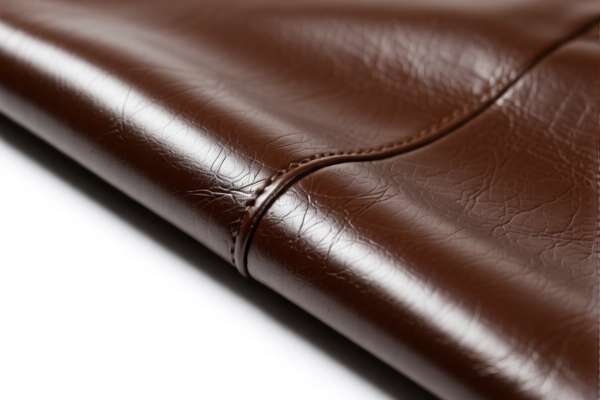
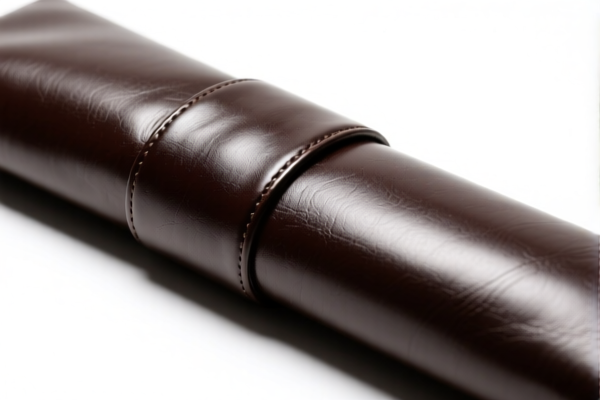
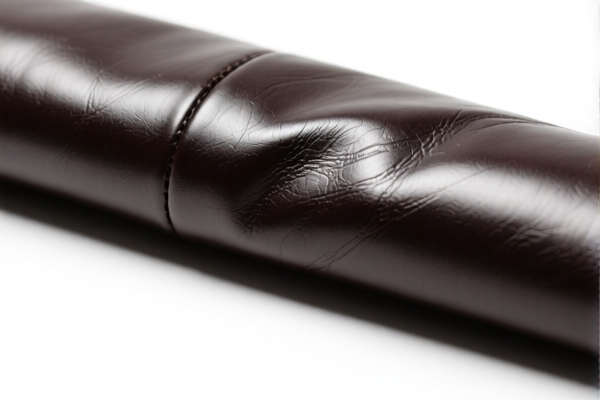

AI Analysis
Based on the data provided in your <DATA> section, here is the detailed classification and tax analysis for Bovine Leather Splits.
🧶 Bovine Leather Splits: HS Code Classification & 2026 Tax Strategy
🌐 Global Trade & Customs Guide | US Import Tax Analysis | Professional Clearance Strategy
📌 What exactly are "Bovine Leather Splits"?
Bovine leather splits are layers of leather obtained when a full cowhide (or buffalo hide) is split into layers during processing. The top layer is the "grain" (premium), while the layers underneath are the "splits."
In the US import market, splits are critical for making shoes, gloves, wallets, upholstery, and lining leather. However, they carry significantly different tax liabilities depending on their final preparation, surface area, and specific use (e.g., "Upper Leather" vs. general "Lining").
⚠️ Critical Distinction for Customs:
- Tanned/Crust (Not further prepared) → 0% Additional Tax
- Prepared "Upper Leather" (Specific size < 28 sq ft) → 25% Additional Tax
- Prepared "Not Fancy" General Split → 27.4% Total Tax
- Composition Leather (Reconstituted) → 25% Additional Tax
- Waste/Dust → 7.5% Additional Tax
📦 1. HS Code Classification Matrix (2026 Reference)
| HS Code | Product Description | Key Characteristics | Tax Scenario |
|---|---|---|---|
| 4104.11.50.70 | Wet-state Bovine/Equine Splits Tanned/Crust, wet state (wet-blue) |
- In the "wet state" (wet-blue) - Includes full grains or splits - Not fully finished/prepared |
0% Additional Tax |
| 4104.49.50.00 | Dry-state Bovine/Equine Splits Tanned/Crust, dry state (crust) |
- In the "dry state" - No further preparation than tanning/crusting |
0% Additional Tax |
| 4107.12.10.20 | Prepared Bovine Splits: "Upper Leather" | - Further prepared after tanning - Unit area ≤ 28 sq ft (2.6 m²) - Specifically for Upper Leather (shoe uppers) |
25% Additional Tax |
| 4107.12.20.00 | Prepared Bovine Splits: "Other/Not Fancy" | - Further prepared after tanning - Unit area ≤ 28 sq ft (2.6 m²) - Not fancy leather; general use (lining, etc.) |
2.4% Base + 25% Add. = 27.4% |
| 4115.10.00.00 | Composition Leather (Splits/Base) Based on leather/leather fiber |
- Reconstituted leather - In slabs, sheets, or strips - Made from waste or fibers |
25% Additional Tax |
| 4115.20.00.00 | Leather Splits: Waste & Dust Parings, waste, dust, powder, flour |
- Not suitable for manufacturing articles - Off-cuts, dust, flour |
7.5% Additional Tax |
💰 2. Detailed Tax Rate Analysis (US Import from China)
✅ Origin: China (CN)
✅ Destination: USA
✅ Applicable Policy: Section 301 Tariffs (USITC Footnotes) + Base Tariff
🎯 Scenario A: Raw/Partially Tanned Splits (No Extra Tax)
Codes: 4104.11.50.70 (Wet) & 4104.49.50.00 (Dry)
* Base Tariff: 0.0%
* Section 301 Additional Tax: 0.0%
* Total Tax: 0.0%
* Logic: These are considered "intermediate" goods that have not been transformed into a finished "upper leather" product. The US does not penalize the import of the raw split leather itself at this stage.
* Clarity: If you import wet-blue splits or crust splits (dry but not tanned/finished for specific shoes), you pay ZERO additional duty.
🎯 Scenario B: Finished "Upper Leather" Splits (High Penalty)
Code: 4107.12.10.20
* Description: Splits further prepared, unit area ≤ 28 sq ft, specifically Upper Leather.
* Base Tariff: 0.0%
* Section 301 Additional Tax: 25.0%
* Total Tax: 25.0%
* Logic: Finished "Upper Leather" (even if from a split) is viewed as a direct competitor to domestic leather goods. The US imposes a 25% punitive tariff on this specific subheading.
* Clarity: If the leather is split, prepared, and marketed as "Upper Leather" for shoes, the 25% tax applies.
🎯 Scenario C: General Prepared Splits ("Not Fancy")
Code: 4107.12.20.00
* Description: Splits further prepared, unit area ≤ 28 sq ft, Other/Not Fancy (e.g., lining leather).
* Base Tariff: 2.4%
* Section 301 Additional Tax: 25.0%
* Total Tax: 27.4%
* Logic: Even though the base tariff is low (2.4%), the Section 301 add-on pushes the total to 27.4%. This is the highest tax rate in the dataset.
* Clarity: Do not assume "Not Fancy" means "Cheaper." The 25% add-on makes it more expensive than pure Upper Leather (which has 0% base).
🎯 Scenario D: Composition Leather (Reconstituted)
Code: 4115.10.00.00
* Description: Composition leather (basis of leather fiber/slabs).
* Base Tariff: 0.0%
* Section 301 Additional Tax: 25.0%
* Total Tax: 25.0%
* Logic: Reconstituted leather (often made from split waste) is taxed similarly to finished upper leather to protect domestic manufacturing.
🎯 Scenario E: Waste & Dust (Non-Usable)
Code: 4115.20.00.00
* Description: Parings, waste, dust, flour of leather.
* Base Tariff: 0.0%
* Section 301 Additional Tax: 7.5%
* Total Tax: 7.5%
* Logic: This is the lowest penalty tier. Since this material cannot be used to make high-end leather goods, the tariff is lower.
* Clarity: If you are buying "off-cuts" to make glue or low-grade products, declare as 4115.20.00.00 for the 7.5% rate.
🛠️ 3. Customs Clearance Strategy & Practical Advice
✅ 1. Classification Pitfalls (The "Trap")
- The "Size" Trap: The tax difference between
4107.12.10.20and4107.12.20.00depends entirely on the Unit Surface Area.- If the split is > 28 sq ft (2.6 m²), it might fall into a different heading entirely.
- If ≤ 28 sq ft, you must prove if it is "Upper Leather" (25% tax) or "Other" (27.4% tax).
- The "Preparation" Trap:
- Wet/Crust (4104) = 0% tax.
- Finished/Prepared (4107) = 25%+ tax.
- Advice: Ensure your commercial invoice clearly states the state of the leather (e.g., "Wet-Blue Split" vs. "Finished Upper Leather"). Misdeclaring a finished split as "Crust" can lead to fines and seizure.
✅ 2. Documentation Checklist for Leather Splits
| Document | Requirement | Why it Matters |
|---|---|---|
| Commercial Invoice | Must state "Bovine Splits" + "Unit Area" (sq ft) | To determine if it fits the <28 sq ft tax bracket. |
| Packing List | Must specify weight and number of hides/sheets | To verify "Unit Surface Area" claims. |
| Processing Certificate | Confirm if "Tanned/Crust" or "Further Prepared" | Crucial: Distinguishes between 0% tax (4104) and 25% tax (4107). |
| Sample/Photos | Show "Grain" side vs. "Flesh" side | Proves it is a "Split" and not a "Full Hide". |
| Origin Proof | Certificate of Origin (China) | Required for Section 301 tax calculation. |
✅ 3. Strategic Sourcing Recommendation
- If importing Raw Material: Declare as
4104.49.50.00(Dry Crust Splits).- Benefit: 0% Additional Tax. Ideal for importers who will do the finishing (dyeing, buffing) in the USA or third countries.
- If importing Finished Shoe Uppers: Declare as
4107.12.10.20.- Reality: You will pay 25%. This is unavoidable for US imports of finished upper leather.
- If importing "Not Fancy" Lining: Declare as
4107.12.20.00.- Reality: 27.4% is the worst-case scenario. Try to structure the product as "Crust" (4104) if possible, then finish domestically.
✅ 4. Special Note on "Composition Leather"
If your product is Composition Leather (4115.10.00.00), note that: * It is 25% tax regardless of size. * It is often used as a lower-cost alternative to real leather. * Ensure the label says "Composition Leather" or "Reconstituted Leather" to avoid being classified as "Real Leather" and facing stricter scrutiny, though the tax rate here is the same.
🎯 4. Conclusion & Quick Summary
| Product Type | HS Code Example | Tax Rate (CN → US) | Strategy |
|---|---|---|---|
| Raw Split (Wet/Dry) | 4104.xx.xx | 0% | Best Option. Import as intermediate, finish later. |
| Finished Upper Split | 4107.12.10.20 | 25% | High cost. Check if "Finished" is necessary before import. |
| Finished "Other" Split | 4107.12.20.00 | 27.4% | Highest Cost. Avoid if possible. |
| Composition Leather | 4115.10.00.00 | 25% | Common for accessories; factor into pricing. |
| Waste/Dust | 4115.20.00.00 | 7.5% | Lowest tax. Good for recycling or low-grade use. |
🔥 Pro Tip: The difference between paying 0% and 27.4% lies in the state of preparation and the description. * DO NOT describe a finished split as "Wet Blue" to save tax; this is customs fraud. * DO ensure the "Unit Surface Area" is measured correctly; exceeding 28 sq ft might change the HS Code entirely. * DO consult with a Customs Broker to verify if your specific "Split" qualifies for the 4104 (Raw) category before shipping.
📌 Ready to Ship?
🚀 Action: Verify the "Wet/Crust" vs. "Finished" status on your invoice. 📉 Goal: Aim for HS Code 4104 to pay 0% additional tariff. 🛑 Warning: If it is already "Finished/Prepared," budget for 25-27.4%.
Disclaimer: Tax rates are subject to change based on US Trade Policy (Section 301, USITC rulings). Always verify the latest HS Code and tariff status with a licensed Customs Broker before shipment.
Customer Reviews
About HS Code Classification
The Harmonized System (HS) is an internationally standardized nomenclature developed by the World Customs Organization (WCO) to classify traded products. Over 200 countries use the HS system as the basis for customs tariffs, trade statistics, and import/export regulations.
Each HS code follows a hierarchical structure:
- Chapter (2 digits) — Broad category of goods (e.g., Chapter 84: Machinery and Mechanical Appliances)
- Heading (4 digits) — More specific grouping within the chapter
- Subheading (6 digits) — Internationally standardized breakdown, used by all WCO member countries
- National subdivisions (8-10 digits) — Country-specific extensions for further classification, such as US HTSUS 10-digit codes
Correct HS code classification is essential for smooth customs clearance, accurate duty payment, and compliance with trade regulations. Misclassification can lead to customs delays, overpayment of duties, or penalties.
When importing from CN to US, the applicable tariff rates may include:
- Most-Favored-Nation (MFN) rate — The standard duty rate applied to WTO members
- General rate — Applied to countries without trade agreements
- Trade remedy duties — Additional tariffs such as Section 301 (anti-dumping), Section 232 (national security), or countervailing duties
The information provided on this page is for reference purposes only. For official classification, please consult with your local customs authority or a licensed customs broker.