braided handbag bohemian style
CN → US| HS Code | Tariff Rate | Origin | Destination | Doc |
|---|---|---|---|---|
| 4202224020 | 42.4% | CN | US | Official Doc |
| 4602192920 | 40.3% | CN | US | Official Doc |
| 4602112100 | 41.2% | CN | US | Official Doc |
| 4202228980 | 52.6% | CN | US | Official Doc |
Product Images
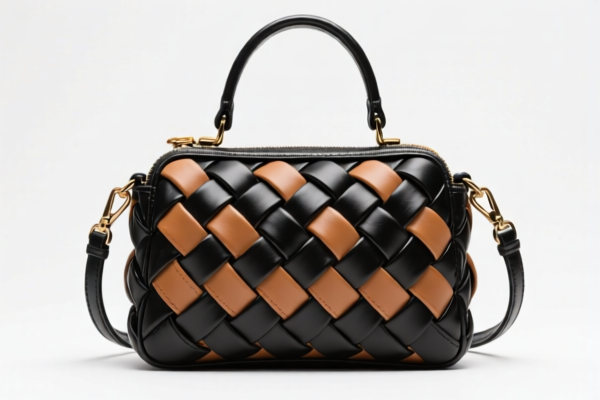
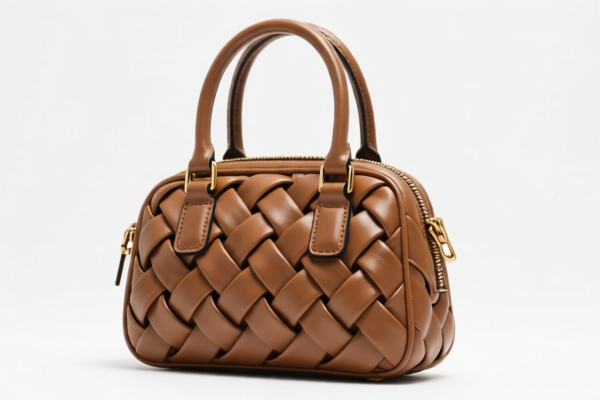
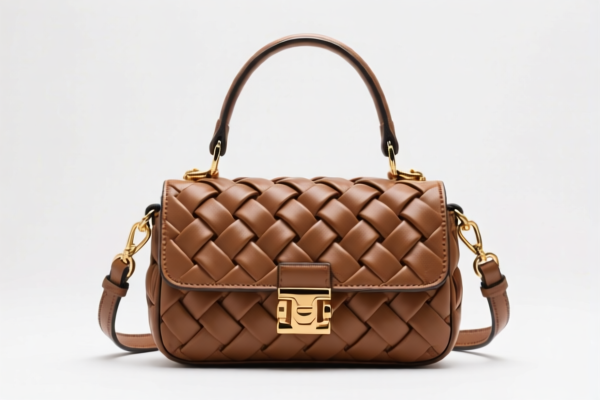
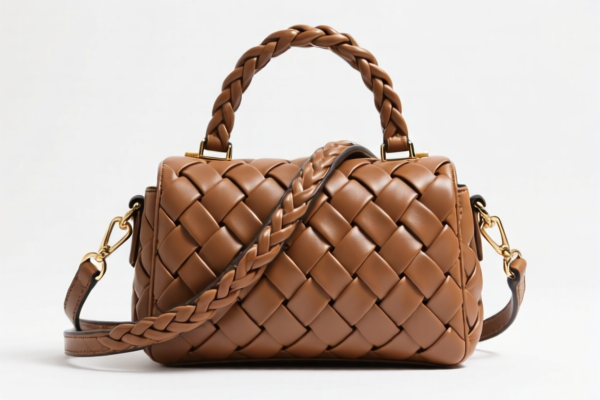
AI Analysis
👜 Bohemian Style Braided Handbags: HS Code Classification & US Customs Clearance Guide
🌐 HS Code Reference & Customs Clearance Guide | 2026 Latest Tariff Analysis | Professional Clearance Strategy 📌 I. Product Definition & Classification: What Exactly Is a "Bohemian Braided Handbag"?
A "Bohemian style braided handbag" typically refers to a handcrafted accessory featuring woven patterns, often made from natural plant fibers (jute, rattan, bamboo, straw) or textile materials. In international trade, the classification depends strictly on the material composition and structural characteristics.
Misclassification is the #1 cause of customs delays and unexpected duties. Below is the authoritative breakdown based on 2026 US Harmonized Tariff Schedule (HTSUS).
📦 II. HS Code Classification Details (2026 Authoritative Comparison)
| HS Code | Product Description | Applicable Scenario | Material Basis |
|---|---|---|---|
4202.22.40.20 |
Woven handbag, matching shape and weaving material characteristics | General woven bags with textile-like appearance | Inferred textile or mixed material |
4602.19.29.20 |
Woven handbag, compliant with plant-based woven product features | Bags made from jute, sisal, coarse hemp | Plant materials (non-wood) |
4602.11.21.00 |
Woven handbag, inferred material as bamboo, rattan, etc. | Bags explicitly made from hard plant fibers | Bamboo, Rattan, etc. |
4202.22.89.80 |
Woven handbag, inferred material as other textile materials | Bags made from synthetic fibers, cotton blends, or unspecified textiles | Other textiles |
🔍 Key Distinction:
- If the bag is clearly made from hard plant stems (bamboo, rattan) →4602.11.21.00
- If made from soft plant fibers (jute, straw) →4602.19.29.20
- If the material is ambiguous but looks like fabric/textile →4202.22.40.20or4202.22.89.80
💰 III. 2026 US Tariff Rate Breakdown (Including Surcharges & Policy Add-ons)
✅ Applicable Country: United States (US)
✅ Origin: China (CN)
✅ Effective Date: Current regulations apply (Section 301 & IEEPA tariffs active)
🎯 1. 4202.22.40.20 – Woven Handbag (Textile/General Weave)
| Item | Content |
|---|---|
| Base Duty Rate | 7.4% (ad valorem) |
| Section 301 Surcharge | +25.0% (USITC Footnote 9903.42.22) |
| IEEPA Additional Tariff | +10.0% (针对中国产品, Effective Nov 10, 2025) |
| Total Tax Rate | 42.4% |
| Calculation | CIF Value × 42.4% |
| De Minimis Exemption? | ❌ No (Section 321 exempted for certain goods, but handbags often flagged for high duty) |
| Legal Path | IEEPA:9903.01.25 → Section301:9903.42.22 → HTSUS:4202.22.40.20 |
📌 Explanation:
- Base 7.4%: Standard US duty for handbags of textile materials.
- 25% Surcharge: Section 301 tariffs on Chinese manufactured goods.
- 10% IEEPA: Emergency economic powers act surcharge on Chinese imports.
- Total 42.4%: High cost! Must be factored into pricing.
🎯 2. 4602.19.29.20 – Woven Handbag (Plant Fiber - Non-Bamboo/Rattan)
| Item | Content |
|---|---|
| Base Duty Rate | 5.3% (ad valorem) |
| Section 301 Surcharge | +25.0% |
| IEEPA Additional Tariff | +10.0% |
| Total Tax Rate | 40.3% |
| Calculation | CIF Value × 40.3% |
| De Minimis Exemption? | ❌ No |
| Legal Path | IEEPA:9903.01.25 → Section301:9903.46.02 → HTSUS:4602.19.29.20 |
📌 Note:
- Slightly cheaper than textile options due to lower base duty (5.3%).
- Still subject to full surcharges.
- Common for jute, sisal, or straw bags.
🎯 3. 4602.11.21.00 – Woven Handbag (Bamboo/Rattan)
| Item | Content |
|---|---|
| Base Duty Rate | 6.2% (ad valorem) |
| Section 301 Surcharge | +25.0% |
| IEEPA Additional Tariff | +10.0% |
| Total Tax Rate | 41.2% |
| Calculation | CIF Value × 41.2% |
| De Minimis Exemption? | ❌ No |
| Legal Path | IEEPA:9903.01.25 → Section301:9903.46.02 → HTSUS:4602.11.21.00 |
📌 Note:
- Mid-range cost.
- Specific to bamboo, rattan, wicker structures.
- If the bag is rigid and clearly plant-stem based, this is the correct code.
🎯 4. 4202.22.89.80 – Woven Handbag (Other Textiles)
| Item | Content |
|---|---|
| Base Duty Rate | 17.6% (ad valorem) |
| Section 301 Surcharge | +25.0% |
| IEEPA Additional Tariff | +10.0% |
| Total Tax Rate | 52.6% |
| Calculation | CIF Value × 52.6% |
| De Minimis Exemption? | ❌ No |
| Legal Path | IEEPA:9903.01.25 → Section301:9903.42.22 → HTSUS:4202.22.89.80 |
📌 Warning:
- Highest tax rate!
- Applies if the bag is made of synthetic fibers, cotton, or unspecified textiles.
- Avoid this code if you can justify plant-fiber classification.
🛠️ IV. Customs Clearance Practical Advice (Real-World Pitfall Guide)
✅ 1. Required Documentation Checklist
| Document | Mandatory? | Explanation |
|---|---|---|
| ✅ Product Spec Sheet | ✔️ | Must list exact material composition (e.g., "100% Jute" or "Bamboo & Cotton Blend") |
| ✅ Material Test Report | ✔️ | Third-party lab report proving plant vs. textile origin |
| ✅ Product Photos | ✔️ | Close-ups of weave texture, tags, and hardware |
| ✅ Commercial Invoice | ✔️ | Must specify "Braided Handbag, Bohemian Style" + HS Code |
| ✅ Packing List | ✔️ | Weight, dimensions, number of pieces |
| ✅ Country of Origin Certificate | ✔️ | Crucial for verifying Chinese origin and applying surcharges |
✅ 2. Declaration Strategy (Key Tips)
🔥 "Material Matters, Weave Doesn't Dictate Code Alone!"
| Scenario | Correct HS Code | Incorrect Code | Consequence |
|---|---|---|---|
| Jute/Straw Bag | 4602.19.29.20 |
4202.22.40.20 |
Under-declaration risk → Penalty |
| Bamboo/Rattan Bag | 4602.11.21.00 |
4202.22.89.80 |
Misclassification → Delays |
| Synthetic Fiber Bag | 4202.22.89.80 |
4602.19.29.20 |
Over-declaration → Higher duty paid unnecessarily |
| Mixed Material (Unclear) | 4202.22.40.20 |
4602.11.21.00 |
Risk of customs reclassification & audit |
✅ 3. Special Cases & Mitigation
| Situation | Recommendation |
|---|---|
| OEM Custom Designs | Provide design sketches + material specs to avoid "unclassified" status |
| Mixed Materials | Declare primary material (>50% by weight) but note all components |
| Low-Value Shipments | Most handbags exceed $800 de minimis threshold → Full duty applies |
| Pre-Arrival Review | File for Advance Ruling from CBP if unsure about material classification |
🌍 V. Global Market Comparison (2026)
| Country/Region | Recommended HS Code | Duty (China Origin) | Notes |
|---|---|---|---|
| 🇺🇸 USA | 4602.19.29.20 (Best) |
40.3% | Includes 25% + 10% surcharges |
| 🇨🇳 China | 4602.19.29.20 |
5-10% | No additional surcharges |
| 🇪🇺 EU | 4602.19.29.20 |
0-4% | No Section 301 equivalent |
| 🇬🇧 UK | 4602.19.29.20 |
0-4% | Post-Brexit trade deals may apply |
| 🇦🇺 Australia | 4602.19.29.20 |
5% | No major surcharges |
📌 Conclusion:
- USA is the highest-cost market due to Section 301 and IEEPA tariffs.
- Plant-based classifications (4602.xxxx) are slightly cheaper than textile (4202.xxxx) in the US.
- Consider supply chain diversification (e.g., Vietnam, India) to avoid China-specific surcharges.
📌 VI. Common Mistakes & Pitfalls (Lessons Learned)
❌ Mistake 1: Declaring "Braided Bag" as "Textile Bag" when it's Jute
👉 Result: Customs may reclassify to 4202.22.89.80 (52.6%) if they doubt material.
👉 Fix: Provide material test reports.
❌ Mistake 2: Ignoring the 10% IEEPA tariff
👉 Result: Underpayment of duties → Penalty & interest.
👉 Fix: Always include 10% IEEPA in cost calculations for China-origin goods.
❌ Mistake 3: Using "Bohemian Style" as a descriptive term without material details
👉 Result: CBP may request additional info, causing delays.
👉 Fix: Include "Material: Jute" or "Material: Bamboo" in description.
🎯 VII. Final Advice: Precision in Classification Saves Money!
🎯 Remember:
🔹 "Plant vs. Textile? Know your material!"
🔹 "40% vs. 52%? That's a 12% difference!"
🔹 "Section 301 + IEEPA = 35% extra on top of base duty!"
📌 Pro Tip:
If your handbags are originating from Vietnam, India, or Indonesia, you may avoid the 10% IEEPA surcharge (though Section 301 may still apply depending on specific rules).
Recommendation: Apply for CBP Advance Ruling before first shipment to lock in the correct HS Code.
📣 Immediate Action:
📞 Contact a licensed customs broker
📄 Provide material composition proof
🚀 Ensure accurate HS Code declaration to avoid 52.6% surprises!
✨ Professional customs clearance starts with accurate classification!
💼 Every dollar saved in duties is pure profit!
Customer Reviews
About HS Code Classification
The Harmonized System (HS) is an internationally standardized nomenclature developed by the World Customs Organization (WCO) to classify traded products. Over 200 countries use the HS system as the basis for customs tariffs, trade statistics, and import/export regulations.
Each HS code follows a hierarchical structure:
- Chapter (2 digits) — Broad category of goods (e.g., Chapter 84: Machinery and Mechanical Appliances)
- Heading (4 digits) — More specific grouping within the chapter
- Subheading (6 digits) — Internationally standardized breakdown, used by all WCO member countries
- National subdivisions (8-10 digits) — Country-specific extensions for further classification, such as US HTSUS 10-digit codes
Correct HS code classification is essential for smooth customs clearance, accurate duty payment, and compliance with trade regulations. Misclassification can lead to customs delays, overpayment of duties, or penalties.
When importing from CN to US, the applicable tariff rates may include:
- Most-Favored-Nation (MFN) rate — The standard duty rate applied to WTO members
- General rate — Applied to countries without trade agreements
- Trade remedy duties — Additional tariffs such as Section 301 (anti-dumping), Section 232 (national security), or countervailing duties
The information provided on this page is for reference purposes only. For official classification, please consult with your local customs authority or a licensed customs broker.