braided handbag casual shopping
CN → US| HS Code | Tariff Rate | Origin | Destination | Doc |
|---|---|---|---|---|
| 4202224020 | 42.4% | CN | US | Official Doc |
| 4202228980 | 52.6% | CN | US | Official Doc |
| 4602192920 | 40.3% | CN | US | Official Doc |
| 4602112100 | 41.2% | CN | US | Official Doc |
Product Images
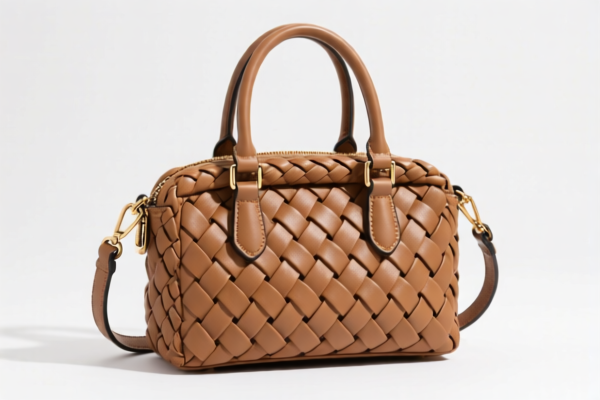
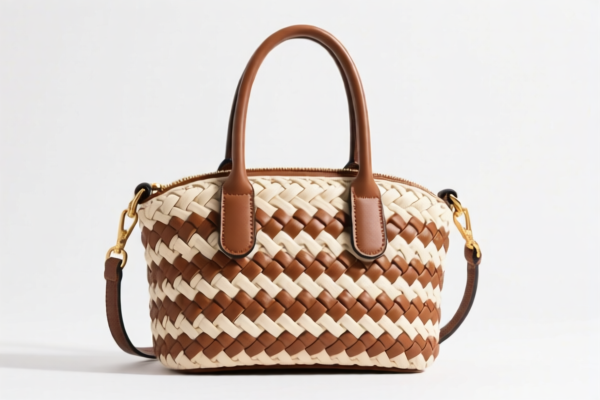
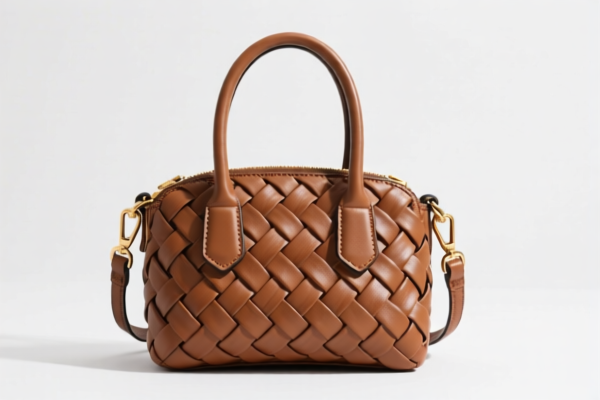
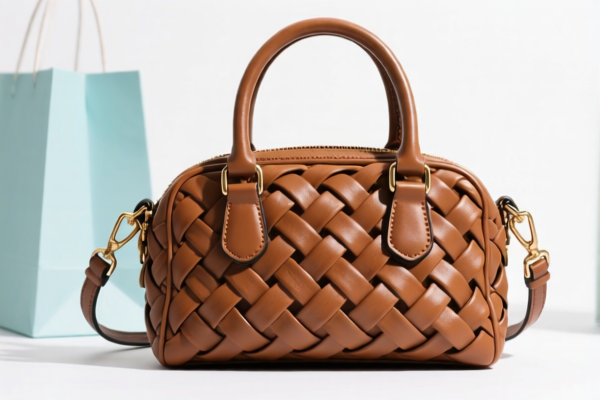
AI Analysis
👜 Braided Handbag (Casual Shopping)
🌐 HS Code Reference & Customs Clearance Guide | 2026 Latest Tariff Analysis | Professional Clearance Strategy
📌 1. Product Definition & Classification: Do You Really Understand "Braided Handbags"?
Braided handbags are lifestyle accessories often made from natural or synthetic braided materials. In international trade, they are classified based on material composition and form factor (specifically whether they are woven/plaited or constructed from other textile materials).
⚠️ Key Distinction Point:
- If the bag is made from vegetable materials (like bamboo, rattan, straw) → It falls under Chapter 46.
- If the bag is made from textile materials (weave, fabric, synthetic fibers) → It falls under Chapter 42.
- Misclassification Risk: Confusing "vegetable material weaving" with "textile weaving" leads to significant tariff differences due to the 301/Tariff Act surcharges.
📦 2. HS Code Classification Details (2026 Latest Tariff Authoritative Comparison)
| HS Code | Product Description | Material Type | Form/Shape | Applicable Scenario |
|---|---|---|---|---|
4202.22.40.20 |
Braided Handbag, Matched Form, Material: Braided Material | Synthetic/Textile Braided Material | Matched Form (Standard Shape) | Casual shopping bags made from synthetic braided fibers (e.g., plastic straw, synthetic rattan weave) |
4202.22.89.80 |
Braided Handbag, Handbag Form, Material: Other Textile Material | Other Textile Material | Handbag Form | Handbags made from woven textiles not specifically listed elsewhere (e.g., cotton/polyester blends) |
4602.19.29.20 |
Braided Handbag, Handbag Form, Material: Vegetable Material Woven Articles | Plant-Based Material | Handbag Form | Bags made from woven plant materials (e.g., straw, esparto, reeds) that don't fit specific bamboo/rattan subheadings |
4602.11.21.00 |
Braided Handbag, Handbag Form, Material: Bamboo, Rattan, etc. | Bamboo/Rattan/Plant Material | Handbag Form | Traditional bags made from bamboo, rattan, willow, or similar sturdy plant fibers |
🔍 Key Reminder:
- Chapter 42 applies to bags of leather, plastic, textile, or other materials;
- Chapter 46 applies strictly to woven articles of vegetable materials (straw, oakum, etc.).
- If the bag is primarily bamboo or rattan, it must go to 4602.11, not 4202.
💰 3. 2026 Latest Tariff Rate Detailed Breakdown (Including Surcharges & Policy Add-ons)
✅ Applicable Country: United States (US)
✅ Origin: China (CN)
✅ Effective Time: Post-2025 Tariff Updates (Including 301 Duties & Section 122)
🎯 1. 4202.22.40.20 —— Braided Handbag (Braided Material, Matched Form)
| Item | Content |
|---|---|
| Base Duty Rate | 7.4% (ad valorem) |
| Section 301 Surcharge | +25.0% (Section 301 Tariff) |
| Section 122 Surcharge | +10.0% (Section 122 Tariff - Additional Tariff on Certain Goods) |
| Total Duty Rate | 42.4% |
| Tax Calculation | CIF Value × 42.4% |
| De Minimis Eligibility | ❌ No (deny_de_minimis) |
| Legal Basis Path | Section 301 → Section 122 → USITC:4202.22.40.20 |
📌 Explanation:
- 7.4% Base: Standard MFN duty for textile/braided bags under Chapter 42;
- 25% Section 301: Trump-era/Biden-administration maintained tariff on Chinese goods;
- 10% Section 122: Additional tariff on certain imports, applicable here;
- Total: 42.4% – High tariff impact, must be factored into pricing.
🎯 2. 4202.22.89.80 —— Braided Handbag (Other Textile Material)
| Item | Content |
|---|---|
| Base Duty Rate | 17.6% (ad valorem) |
| Section 301 Surcharge | +25.0% |
| Section 122 Surcharge | +10.0% |
| Total Duty Rate | 52.6% |
| Tax Calculation | CIF Value × 52.6% |
| De Minimis Eligibility | ❌ No |
| Legal Basis Path | Section 301 → Section 122 → USITC:4202.22.89.80 |
📌 Note:
- This is the highest tariff bracket among the options;
- Applies to other textile materials not covered by specific braided subheadings;
- If your bag is made of cotton, polyester, or non-braided woven fabric, this code applies.
🎯 3. 4602.19.29.20 —— Braided Handbag (Vegetable Material Woven)
| Item | Content |
|---|---|
| Base Duty Rate | 5.3% (ad valorem) |
| Section 301 Surcharge | +25.0% |
| Section 122 Surcharge | +10.0% |
| Total Duty Rate | 40.3% |
| Tax Calculation | CIF Value × 40.3% |
| De Minimis Eligibility | ❌ No |
| Legal Basis Path | Section 301 → Section 122 → USITC:4602.19.29.20 |
📌 Explanation:
- 5.3% Base: Lower base duty for vegetable materials;
- Still subject to 25% + 10% surcharges;
- Total 40.3% – Slightly lower than 4202 codes due to lower base rate.
🎯 4. 4602.11.21.00 —— Braided Handbag (Bamboo, Rattan, etc.)
| Item | Content |
|---|---|
| Base Duty Rate | 6.2% (ad valorem) |
| Section 301 Surcharge | +25.0% |
| Section 122 Surcharge | +10.0% |
| Total Duty Rate | 41.2% |
| Tax Calculation | CIF Value × 41.2% |
| De Minimis Eligibility | ❌ No |
| Legal Basis Path | Section 301 → Section 122 → USITC:4602.11.21.00 |
📌 Note:
- 6.2% Base: Specific rate for bamboo/rattan articles;
- Total 41.2% – Mid-range tariff;
- Use only if the bag is primarily constructed from bamboo, rattan, or similar rigid plant fibers.
🛠️ 4. Customs Clearance Practical Advice (Real-World Pitfall Guide)
✅ 1. Required Documentation Checklist (All Mandatory)
| Document | Must Provide | Description |
|---|---|---|
| ✅ Product Specification Sheet | ✔️ | Material composition (e.g., 100% Bamboo vs. 100% Polyester), dimensions, weight |
| ✅ Material Test Report | ✔️ | Third-party lab report confirming material type (vegetable vs. textile) |
| ✅ Product Photos (Including Label) | ✔️ | Clear images of the bag, label, and any brand tags |
| ✅ Commercial Invoice | ✔️ | Must state: "Braided Handbag, Material: [Specific Material], HS Code: [Code]" |
| ✅ Packing List | ✔️ | Details quantity, gross weight, net weight, package dimensions |
| ✅ Certificate of Origin (CO) | ✔️ | Required for verifying China origin (triggers tariffs) |
⚠️ Critical Note:
- Misidentifying material (e.g., calling bamboo a "textile") can lead to misdeclaration penalties;
- Provide material test reports to prove vegetable content if claiming Chapter 46 codes.
✅ 2. Declaration Tips (Key Mantra)
🔥 "Material First, Code Second, Name Precise, Tariff Clear!"
| Scenario | Correct Declaration | Wrong Practice |
|---|---|---|
| Bag made of bamboo/rattan | 4602.11.21.00 – "Bamboo Braided Handbag" |
Declared as "Textile Bag" → 52.6% |
| Bag made of synthetic weave | 4202.22.40.20 – "Braided Handbag, Synthetic Material" |
Declared as "Vegetable Bag" → Audit Risk |
| Bag made of cotton/polyester | 4202.22.89.80 – "Textile Handbag" |
Declared as "Bamboo Bag" → Penalty |
| Mixed material bag | Consult Customs Broker | Guessing HS Code → Delay/Seizure |
✅ 3. Special Circumstances Handling
| Situation | Handling Advice |
|---|---|
| OEM Custom Bags | Provide client orders + design specs to prove material origin |
| Bags with Leather Trim | Still classified by primary material (braided part), not leather trim |
| Vegetable Material + Plastic Lining | Classify based on outer woven material (Chapter 46) |
| Sample vs. Bulk | Both subject to same tariffs; samples do not get de minimis exemption |
🌍 5. Global Market Clearance Comparison (2026 Latest)
| Country/Region | Recommended HS Code | Tariff (China Origin) | Certification Requirements | Notes |
|---|---|---|---|---|
| 🇺🇸 USA | 4202.22.40.20 / 4602.11.21.00 |
40.3% – 52.6% | None Required | High tariffs due to 301/122 duties |
| 🇨🇳 China | 4202.22.40.20 / 4602.11.21.00 |
5% – 10% | None | Low tariffs for domestic sales |
| 🇪🇺 EU | 4202.22 / 4602.11 |
0% – 4% | CE (if electronic accessories) | No 301/122 surcharges |
| 🇬🇧 UK | 4202.22 / 4602.11 |
0% – 5% | None | Post-Brexit independent tariffs |
| 🇯🇵 Japan | 4202.22 / 4602.11 |
0% – 5% | PSE (if applicable) | Low tariffs for handmade/braided bags |
📌 Conclusion:
- USA is the only market with high surcharges (35–45% total);
- China, EU, UK, Japan have significantly lower tariffs;
- Consider diversifying supply chains (e.g., Vietnam, India) for US-bound goods to avoid surcharges.
📌 6. Common Errors & Pitfall Guide (Blood-Tears Lessons)
❌ Error 1: Declaring a bamboo bag as "Textile Bag"
👉 Consequence: Overpayment of tariff (52.6% vs. 41.2%) → Loss of profit!
❌ Error 2: Declaring a synthetic weave bag as "Vegetable Bag"
👉 Consequence: Customs audit, potential fine, delay in release → Compliance risk!
❌ Error 3: Not providing material test reports
👉 Consequence: Customs cannot verify Chapter 46 claim → Reclassified to Chapter 42 → Higher tariff!
❌ Error 4: Using vague terms like "Woven Bag"
👉 Consequence: Customs assigns worst-case HS Code → 52.6% tariff!
✅ Correct Practice:
"Braided Handbag, Material: 100% Natural Bamboo, Handwoven, Model XYZ, Made in China"
🎯 7. Conclusion: Precise Classification Saves Money!
🎯 Remember the Mantra:
🔹 "Vegetable = 4602, Textile = 4202, Base + 25% + 10% = Total!"
🔹 "HS Code is King, Tariff Difference is Key, Declaration is Life!"
📌 Pro Tip:
If your handbags are originating from Vietnam, India, or Indonesia, you may avoid Section 301/122 surcharges, reducing tariffs to 0–5%.
Consider Advance Ruling Application to confirm HS Code and avoid clearance delays.
📣 Immediate Action:
📞 Contact a Professional Customs Broker + Provide Product Photos + Apply for HS Code Pre-Ruling
🚀 Let your handbags Clear Customs Smoothly, Export Efficiently, Profit Maximized!
✨ Professional Clearance Starts with Precise Classification!
💼 Every Cent of Your Cost Deserves to Be Calculated Precisely!
Customer Reviews
About HS Code Classification
The Harmonized System (HS) is an internationally standardized nomenclature developed by the World Customs Organization (WCO) to classify traded products. Over 200 countries use the HS system as the basis for customs tariffs, trade statistics, and import/export regulations.
Each HS code follows a hierarchical structure:
- Chapter (2 digits) — Broad category of goods (e.g., Chapter 84: Machinery and Mechanical Appliances)
- Heading (4 digits) — More specific grouping within the chapter
- Subheading (6 digits) — Internationally standardized breakdown, used by all WCO member countries
- National subdivisions (8-10 digits) — Country-specific extensions for further classification, such as US HTSUS 10-digit codes
Correct HS code classification is essential for smooth customs clearance, accurate duty payment, and compliance with trade regulations. Misclassification can lead to customs delays, overpayment of duties, or penalties.
When importing from CN to US, the applicable tariff rates may include:
- Most-Favored-Nation (MFN) rate — The standard duty rate applied to WTO members
- General rate — Applied to countries without trade agreements
- Trade remedy duties — Additional tariffs such as Section 301 (anti-dumping), Section 232 (national security), or countervailing duties
The information provided on this page is for reference purposes only. For official classification, please consult with your local customs authority or a licensed customs broker.