braided handbag outdoor casual
CN → US| HS Code | Tariff Rate | Origin | Destination | Doc |
|---|---|---|---|---|
| 4602112100 | 41.2% | CN | US | Official Doc |
| 4602192920 | 40.3% | CN | US | Official Doc |
| 4202224020 | 42.4% | CN | US | Official Doc |
| 4202228980 | 52.6% | CN | US | Official Doc |
Product Images
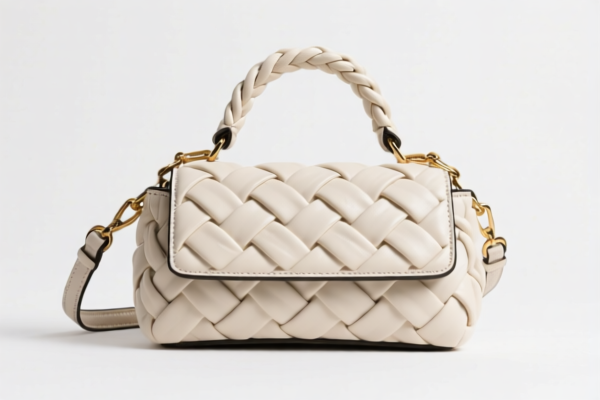
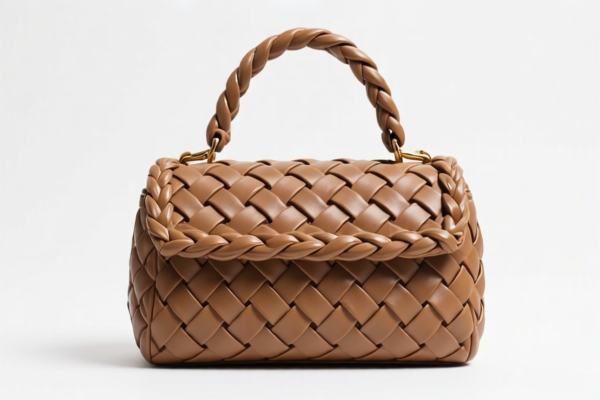
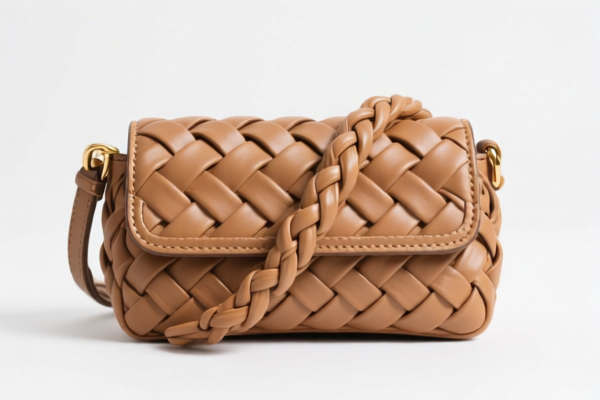
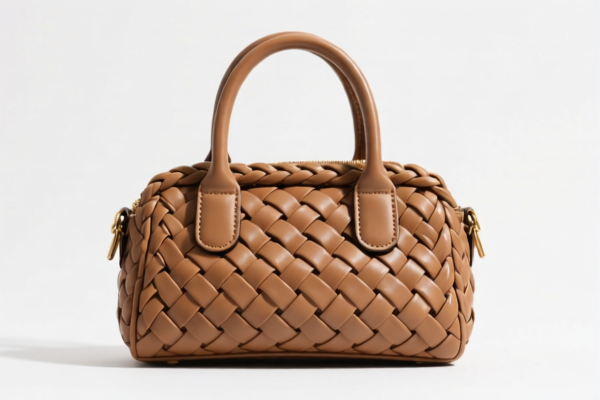
AI Analysis
👜 Braided Handbag: Outdoor Casual (Woven & Plant-Material Bags)
🌐 HS Code Reference & Customs Clearance Guide | 2026 Latest Tariff Analysis | Professional Strategy for Eco-Friendly Fashion
📌 I. Product Definition & Classification: What Exactly is a "Braided Handbag"?
Braided handbags, often marketed as "eco-friendly," "wicker," or "straw" bags, are non-metal accessories made from natural or synthetic woven materials. In international trade, classification is highly sensitive to the specific raw material. A slight difference in material composition can shift the HS Code from Chapter 46 (Basketware) to Chapter 42 (Articles of Leather/Travel Goods), drastically altering your tax liability.
Key Distinction by Material: * Plant-Based (Bamboo, Rattan, Cane, Straw): Typically classified under Chapter 46 (Woven materials of vegetable materials). * Textile/Synthetic Woven (Plastic strips, raffia, other textile fibers): Typically classified under Chapter 42 (Travel goods, handbags).
⚠️ Critical Warning:
- If the bag is made of bamboo/rattan/cane: It is "Basketware" → HS 4602.
- If the bag is made of plastic weaving, straw-like textiles, or other fabric weaves: It is a "Handbag" → HS 4202.
- Misclassification here is the #1 cause of customs delays and penalties.
📦 II. HS Code Classification Details (2026 Latest Tariff Concordance)
Based on the provided data, there are 4 specific HS Codes for braided handbags. Here is the breakdown:
| HS Code | Product Description | Material Specification | Tax Rate (Total) |
|---|---|---|---|
| 4602.11.21.00 | Braided handbag, material: Bamboo, Rattan, etc. | Natural Vegetable Materials (Bamboo, Rattan, Cane, Wicker) | 41.2% |
| 4602.19.29.20 | Braided handbag, material: Woven products of vegetable materials | Other Vegetable Materials (Straw, Papyrus, other plant fibers not specifically bamboo/rattan) | 40.3% |
| 4202.22.40.20 | Braided handbag, material: Woven materials | Woven Textile/Synthetic Materials (Plastic strips, synthetic raffia, woven fabric) | 42.4% |
| 4202.22.89.80 | Braided handbag, material: Other textile materials | Other Textiles (Non-woven textiles, blended woven materials, specific textile weaves) | 52.6% |
🔍 Key Insight:
- Cheapest Tariff:4602.19.29.20(40.3%) for general vegetable woven products.
- Most Expensive:4202.22.89.80(52.6%) for "Other textile materials."
- Chapter Split: Notice the jump from ~41% (Chapter 46) to ~52% (Chapter 42). Using the wrong chapter can cost you ~12% more in duties.
💰 III. 2026 Latest Tariff Rate Breakdown (Including Surcharge & Policy Add-ons)
✅ Applicable Country: United States (US)
✅ Origin: China (CN)
✅ Effective Date: November 10, 2025 (and onwards)
🎯 1. 4602.11.21.00 — Bamboo/Rattan Braided Handbag
| Item | Content |
|---|---|
| Base Rate | 6.2% (Ad Valorem) |
| Section 301 Surcharge | +25.0% (Additional Duty under US Trade Law 301) |
| Section 122 Surcharge | +10.0% (Specific duty for certain woven goods) |
| Total Effective Rate | 41.2% |
| Calculation | CIF Value × 41.2% |
| De Minimis Exemption | ❌ Not Eligible (Cannot use Section 321/De Minimis for this classification) |
| Legal Basis | USITC:4602.11.21.00 → 301:Footnote 301.88.01 → 122:Specific Statute |
📌 Explanation:
- Bamboo and rattan are subject to both the general Section 301 (25%) and the specific Section 122 (10%) tariffs for woven basketware.
- Total 41.2% is unavoidable for these materials if shipped from China.
🎯 2. 4602.19.29.20 — Other Vegetable Material Braided Handbag
| Item | Content |
|---|---|
| Base Rate | 5.3% |
| Section 301 Surcharge | +25.0% |
| Section 122 Surcharge | +10.0% |
| Total Effective Rate | 40.3% |
| Calculation | CIF Value × 40.3% |
| De Minimis Exemption | ❌ Not Eligible |
| Legal Basis | USITC:4602.19.29.20 → 301:Footnote 301.88.01 → 122:Specific Statute |
📌 Note:
- This code applies to bags made of straw, papyrus, or other plant fibers that are not strictly bamboo/rattan.
- Savings: 0.9% cheaper than bamboo/rattan (4602.11.21.00). Ensure your material is NOT bamboo to qualify.
🎯 3. 4202.22.40.20 — Braided Handbag (Woven Materials)
| Item | Content |
|---|---|
| Base Rate | 7.4% |
| Section 301 Surcharge | +25.0% |
| Section 122 Surcharge | +10.0% |
| Total Effective Rate | 42.4% |
| Calculation | CIF Value × 42.4% |
| De Minimis Exemption | ❌ Not Eligible |
| Legal Basis | USITC:4202.22.40.20 → 301:Footnote 301.88.01 → 122:Specific Statute |
📌 Explanation:
- This falls under Chapter 42 (Handbags).
- The base rate is higher (7.4% vs 5.3%-6.2%) because handbags generally attract higher duties than basketware.
- Applies to synthetic weaves, plastic strips, or non-vegetable woven fabrics.
🎯 4. 4202.22.89.80 — Braided Handbag (Other Textile Materials)
| Item | Content |
|---|---|
| Base Rate | 17.6% |
| Section 301 Surcharge | +25.0% |
| Section 122 Surcharge | +10.0% |
| Total Effective Rate | 52.6% |
| Calculation | CIF Value × 52.6% |
| De Minimis Exemption | ❌ Not Eligible |
| Legal Basis | USITC:4202.22.89.80 → 301:Footnote 301.88.01 → 122:Specific Statute |
📌 Warning:
- Highest Tax Bracket! This code captures "Other textile materials" not specified elsewhere.
- If your bag uses blended fabrics, non-woven textiles, or complex textile weaves, it likely falls here.
- Cost Impact: 10.2% higher than bamboo/rattan. Avoid this classification if possible by refining material descriptions.
🛠️ IV. Customs Clearance Practical Advice (Pitfall Avoidance Guide)
✅ 1. Document Preparation Checklist (Must-Haves)
| Document | Required | Details |
|---|---|---|
| ✅ Material Declaration | ✔️ | Crucial! Must explicitly state: "100% Bamboo," "Rattan & Cotton Lining," or "PP Plastic Weave." Vague terms like "Woven Material" risk misclassification. |
| ✅ Product Photos | ✔️ | Clear images showing texture, weave type, and structure. Distinguish between natural plant fiber vs. synthetic plastic strip. |
| ✅ Commercial Invoice | ✔️ | Must match HS Code exactly. Description: "Braided Handbag, Bamboo" vs. "Braided Handbag, Plastic Weave." |
| ✅ Packing List | ✔️ | Weight and dimensions. Heavy items may trigger additional freight-based checks. |
| ✅ Certificate of Origin | ✔️ | Proof of Chinese origin triggers the 25% + 10% surcharges. |
✅ 2. Classification Strategy (Key Mnemonics)
🔥 “Plant is 46, Fabric is 42; Wrong Chapter, Lose Cash!”
| Scenario | Correct HS Code | Wrong Code Risk |
|---|---|---|
| Bamboo/Rattan Bag | 4602.11.21.00 |
If misclassified as 4202, tax jumps to 42.4% or 52.6%. |
| Straw/Papyrus Bag | 4602.19.29.20 |
If misclassified as "Textile," tax jumps to 42.4%+. |
| Plastic Strip Bag | 4202.22.40.20 |
If misclassified as "Plant,"海关 (Customs) will reject it (plants ≠ plastic). |
| Complex Textile Weave | 4202.22.89.80 |
Avoid if possible; seek cheaper alternatives or negotiate material specs. |
✅ 3. Special Situations & Solutions
| Situation | Handling Advice |
|---|---|
| Mixed Materials | e.g., Bamboo body + Leather handle. Rule: Classify based on the essential character. If bamboo is the main visual/structural component, likely 4602. If leather handles dominate value, may shift to 4202. Consult a customs broker! |
| Lined Bags | Adding cotton/nylon lining does not change the chapter if the outer material remains plant-based. Still 4602. |
| De Minimis (Section 321) | ❌ Not Applicable. These HS Codes are explicitly excluded from the $800 de minimis exemption due to the 301/122 tariffs. Full duties apply. |
| Country of Origin | If made in Vietnam/Thailand (not China), you MAY avoid the 25% Section 301 tariff. Action: Ensure Certificate of Origin states non-China origin to reduce tax significantly. |
🌍 V. Global Market Comparison (2026 Update)
| Market | Recommended HS Code | Est. Total Tax (China Origin) | Key Requirement |
|---|---|---|---|
| 🇺🇸 USA | 4602.11.21.00 / 4202.22.40.20 |
40.3% – 52.6% | Strict Section 122 & 301 enforcement. |
| 🇨🇳 China | 4602.11.21.00 |
~5% - 10% | CCC/FSC if applicable. |
| 🇪🇺 EU | 4602.11 |
~0% - 4% | No Section 301. CE/RoHS if applicable. |
| 🇬🇧 UK | 4602.11 |
~5% - 15% | Post-Brexit rules. No US-style surcharges. |
| 🇦🇺 Australia | 4602.11 |
~5% | GSTR 10% on import value. |
📌 Strategic Insight:
- USA is the most expensive market due to punitive tariffs.
- Consider Supply Chain Shift: Manufacturing in Vietnam or Indonesia can bypass the 25% Section 301 tariff, potentially reducing total tax to ~10-15% (depending on base rate).
📌 VI. Common Errors & Pitfalls (Lessons Learned)
❌ Error 1: Describing bamboo bags as "Wicker Handbag" without specifying material.
👉 Consequence: Customs may classify as generic 4202 (52.6%) instead of 4602 (41.2%). Loss: 11.4%.
❌ Error 2: Assuming "Braided" means it’s a textile.
👉 Consequence: Plant materials are NOT textiles. Misclassification as 4202 leads to delays and re-assessment.
❌ Error 3: Ignoring Section 122.
👉 Consequence: Some brokers only quote 301 (25%). The 10% Section 122 is mandatory for woven basketware. Total is 35%+Base, not just 25%.
❌ Error 4: Trying to use De Minimis ($800) for these goods.
👉 Consequence: Shipments will be held or returned at the border because these HS codes are explicitly excluded from the exemption.
✅ Correct Practice:
"Braided Handbag, Outer Material: 100% Natural Bamboo Rattan, Lining: Cotton. HS 4602.11.21.00."
🎯 VII. Conclusion: Precision in Classification, Profit in Clearance
🎯 Remember the Golden Rules:
🔹 "Plant = 46, Fabric = 42."
🔹 "Bamboo is 41.2%, Other Plant is 40.3%, Textile is 42.4%-52.6%."
🔹 "No De Minimis. No Exceptions for China Origin."
📌 Pro Tip:
If your product uses synthetic plastic strips that look like bamboo, you MUST classify as 4202.22.40.20 (42.4%). Trying to hide it as bamboo (4602) is fraud and carries heavy penalties. However, if you can switch to natural bamboo, you save on consistency and align with eco-trends, but the tax is similar.
📣 Immediate Action:
📞 Verify Material Composition with your supplier.
📄 Draft Precise Descriptions for the Commercial Invoice.
📉 Evaluate Vietnam/Thailand Sourcing to save the 25% Section 301 Tariff.
✨ Professional Clearance Starts with Accurate HS Codes!
💼 Don’t Let a 12% Tax Error Eat Your Margin!
Customer Reviews
About HS Code Classification
The Harmonized System (HS) is an internationally standardized nomenclature developed by the World Customs Organization (WCO) to classify traded products. Over 200 countries use the HS system as the basis for customs tariffs, trade statistics, and import/export regulations.
Each HS code follows a hierarchical structure:
- Chapter (2 digits) — Broad category of goods (e.g., Chapter 84: Machinery and Mechanical Appliances)
- Heading (4 digits) — More specific grouping within the chapter
- Subheading (6 digits) — Internationally standardized breakdown, used by all WCO member countries
- National subdivisions (8-10 digits) — Country-specific extensions for further classification, such as US HTSUS 10-digit codes
Correct HS code classification is essential for smooth customs clearance, accurate duty payment, and compliance with trade regulations. Misclassification can lead to customs delays, overpayment of duties, or penalties.
When importing from CN to US, the applicable tariff rates may include:
- Most-Favored-Nation (MFN) rate — The standard duty rate applied to WTO members
- General rate — Applied to countries without trade agreements
- Trade remedy duties — Additional tariffs such as Section 301 (anti-dumping), Section 232 (national security), or countervailing duties
The information provided on this page is for reference purposes only. For official classification, please consult with your local customs authority or a licensed customs broker.