braided handbag with magnetic closure
CN → US| HS Code | Tariff Rate | Origin | Destination | Doc |
|---|---|---|---|---|
| 4602112100 | 41.2% | CN | US | Official Doc |
| 4602192920 | 40.3% | CN | US | Official Doc |
| 4202224020 | 42.4% | CN | US | Official Doc |
| 4202228980 | 52.6% | CN | US | Official Doc |
Product Images
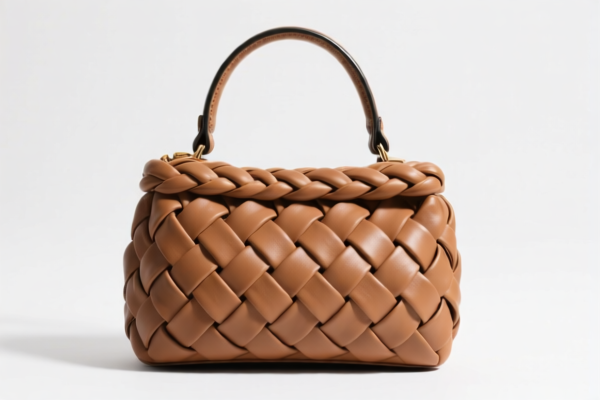
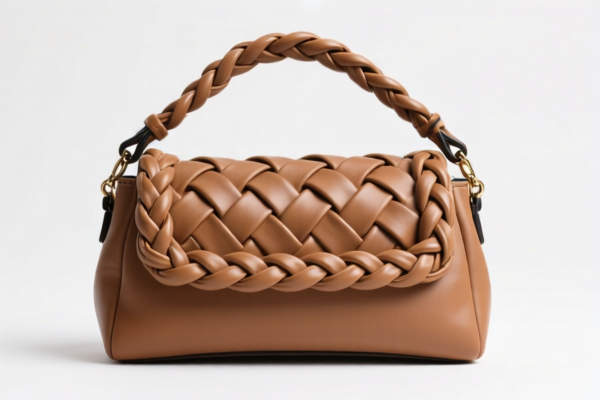
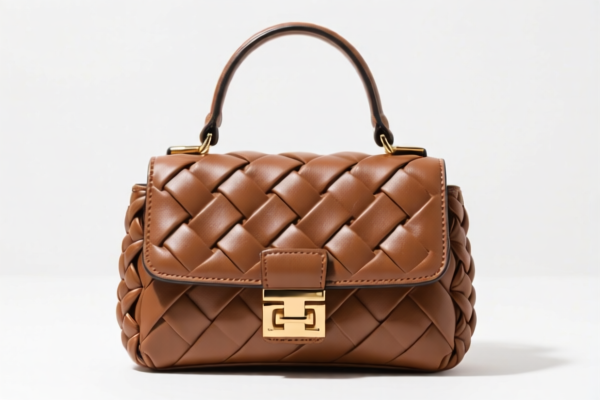

AI Analysis
👜 Braided Handbag with Magnetic Closure: HS Code Classification & US Tariff Analysis | 2026 Clearance Guide
🌐 HS Code Reference & Customs Clearance Guide | Latest 2026 Tariff Analysis | Professional Strategy for Handbags
📌 I. Product Definition & Classification: Is Your Bag a "Woven Basket" or a "Fashion Bag"?
A braided handbag with a magnetic closure is a complex commodity in international trade. Its classification hinges on the primary material and the degree of processing.
In US Customs terminology, there is a critical distinction between: * Basketry Products (Chapter 46): Items primarily made from plaited materials (bamboo, rattan, straw, reeds) without being finished into specific wearable accessories. * Handbags (Chapter 42): Items made from any material (textiles, leather, plastic sheeting, etc.) and processed into a specific shape for carrying personal items, often featuring linings, handles, and closures (like magnets).
⚠️ Key Distinction Point:
- If the bag is made of natural plant materials (bamboo, rattan) and retains the characteristic "woven basket" structure → It may fall under Chapter 46.
- If the bag is made of textile fibers (woven fabric, synthetic braids) or is considered a finished fashion accessory with linings/closures → It falls under Chapter 42 (Handbags).
- The presence of a magnetic closure often signals a more finished "fashion bag" rather than a simple "basket," pushing it toward Chapter 42, unless the material is strictly natural basketry.
📦 II. HS Code Classification Details (2026 Latest Tariff Authority Comparison)
Based on the provided data, here are the four possible HS Codes for a "Braided Handbag with Magnetic Closure":
| HS Code | Product Description | Material Focus | Why This Code? |
|---|---|---|---|
4602.11.21.00 |
Braided Handbag, Material: Bamboo, Rattan, etc. | Natural Plant Fibers | Fits if the bag is made of bamboo/rattan and meets "basketry" criteria. The summary confirms: "Woven handbag, material bamboo/rattan/plant materials, meets weaving characteristics." |
4602.19.29.20 |
Braided Handbag, Material: Plant-based Woven Products | Other Plant Materials | Fits if made from other plant fibers (not bamboo/rattan) and meets form/usage requirements. Summary: "Woven handbag, plant material woven products, meets usage and form requirements." |
4202.22.40.20 |
Braided Handbag, Material: Woven Material | Woven (Non-Textile/General) | Fits if the "braid" is made of woven material (could be plastic, paper, or other non-textile woven strands) that doesn't fit Chapter 46 strictly. Summary: "Braided handbag, woven material, meets woven product description." |
4202.22.89.80 |
Braided Handbag with Magnetic Closure, Material: Textile | Textile Materials | Most Likely for Fashion Bags. Fits if the braid is made of textile fibers (cotton, polyester, etc.) and is a finished handbag. The summary explicitly mentions: "Braided handbag with magnetic closure, woven material, meets classification requirements." Also covers "other textile materials excluding cotton/paper yarn." |
🔍 Critical Note:
-4202.22.89.80is often the correct code for fashion-style braided bags made of textile yarns (e.g., straw-like synthetic fiber, cotton braid) with linings and closures.
-4602.11.21.00is reserved for strictly natural plant-based baskets that look like traditional basketry.
- The magnetic closure is a key feature mentioned in the4202descriptions, reinforcing its status as a finished accessory.
💰 III. 2026 Latest Tariff Rate Breakdown (Including Additional Duties & Policy Add-ons)
✅ Applicable Country: United States (US)
✅ Country of Origin: China (CN)
✅ Effective Date: Post-November 2025 (Current Trade Climate)
All HS Codes below are subject to Section 301 Tariffs and IEEPA Tariffs.
🎯 1. 4602.11.21.00 – Braided Handbag, Bamboo/Rattan
| Item | Content |
|---|---|
| Base Tariff Rate | 6.2% (Ad Valorem) |
| Section 301 Additional Tariff | +25.0% (USITC Footnote 9903.88.01) |
| IEEPA Additional Tariff | +10.0% (针对中国/香港产品, effective 2025) |
| Total Tax Rate | 41.2% |
| Tax Calculation | CIF Value × 41.2% |
| De Minimis Eligibility | ❌ Not Eligible (denied for Section 301 goods) |
| Legal Basis Path | IEEPA:9903.01.25 → USITC:4602.11.21.00 → FOOTNOTE:9903.88.01 |
📌 Explanation:
- This code applies to natural bamboo/rattan bags.
- The 41.2% total rate is high due to the combination of base, Section 301, and IEEPA tariffs.
- Warning: If the bag is made of synthetic "straw" or plastic, do not use this code. It will be misclassified.
🎯 2. 4602.19.29.20 – Braided Handbag, Other Plant Materials
| Item | Content |
|---|---|
| Base Tariff Rate | 5.3% (Ad Valorem) |
| Section 301 Additional Tariff | +25.0% |
| IEEPA Additional Tariff | +10.0% |
| Total Tax Rate | 40.3% |
| Tax Calculation | CIF Value × 40.3% |
| De Minimis Eligibility | ❌ Not Eligible |
| Legal Basis Path | IEEPA:9903.01.25 → USITC:4602.19.29.20 → FOOTNOTE:9903.88.01 |
📌 Note:
- Slightly lower base rate (5.3%) than bamboo, but total cost is still high (40.3%).
- Applies to other plant-based weaves (e.g., willow, seagrass) that don't fit the "bamboo/rattan" specific subheading.
🎯 3. 4202.22.40.20 – Braided Handbag, Woven Material (Non-Textile)
| Item | Content |
|---|---|
| Base Tariff Rate | 7.4% (Ad Valorem) |
| Section 301 Additional Tariff | +25.0% |
| IEEPA Additional Tariff | +10.0% |
| Total Tax Rate | 42.4% |
| Tax Calculation | CIF Value × 42.4% |
| De Minimis Eligibility | ❌ Not Eligible |
| Legal Basis Path | IEEPA:9903.01.25 → USITC:4202.22.40.20 → FOOTNOTE:9903.88.01 |
📌 Explanation:
- This is a "catch-all" for woven bags that are not plant-based basketry (Chapter 46) and not standard textile handbags (Chapter 42 specific).
- May apply if the material is woven plastic sheeting or paper braid.
🎯 4. 4202.22.89.80 – Braided Handbag with Magnetic Closure, Textile Material
| Item | Content |
|---|---|
| Base Tariff Rate | 17.6% (Ad Valorem) |
| Section 301 Additional Tariff | +25.0% |
| IEEPA Additional Tariff | +10.0% |
| Total Tax Rate | 52.6% |
| Tax Calculation | CIF Value × 52.6% |
| De Minimis Eligibility | ❌ Not Eligible |
| Legal Basis Path | IEEPA:9903.01.25 → USITC:4202.22.89.80 → FOOTNOTE:9903.88.01 |
📌 Critical Warning:
- This code has the highest total tax rate (52.6%).
- It applies if the bag is made of textile materials (e.g., cotton, polyester, nylon braids) and is classified as a handbag.
- Misclassification Risk: If your bag is made of natural plant fibers (bamboo, straw), declaring it as "textile" (4202.22.89.80) is incorrect and may lead to penalties. However, if it is a fashion bag made of synthetic braids, this is likely the correct code.
🛠️ IV. Customs Clearance Practical Advice (Real-World Pitfall Guide)
✅ 1. Preparation Checklist (Must-Have Documents)
| Document | Required? | Explanation |
|---|---|---|
| ✅ Product Specification Sheet | ✔️ | Must clearly state: "Braided," "Magnetic Closure," Material Composition (% of bamboo vs. synthetic). |
| ✅ High-Resolution Photos | ✔️ | Front, back, interior, close-up of braid texture, and close-up of magnetic clasp. |
| ✅ Material Declaration | ✔️ | Crucial! Specify if "Bamboo," "Rattan," "Plastic Braid," or "Textile Yarn." |
| ✅ Commercial Invoice | ✔️ | Description: "Braided Handbag, Model XYZ, with Magnetic Closure." |
| ✅ Packing List | ✔️ | Include dimensions and weight. |
✅ 2. Declaration Tips (Key Mantras)
🔥 "Material First, Closure Second, Code Fits the Fiber!"
| Scenario | Correct HS Code | Error to Avoid |
|---|---|---|
| Bamboo/Rattan Bag | 4602.11.21.00 |
Don't call it "Textile Handbag" → Wrong code |
| Plastic Straw Bag | 4602.19.29.20 or 4202.22.40.20 |
Ensure it's not classified as "Textile" |
| Synthetic Braided Fashion Bag | 4202.22.89.80 |
If misclassified as "Basket," you might get lower tax, but it's fraud if material is textile |
| Natural Straw Bag (Fashion Style) | 4202.22.89.80 |
If it's a "handbag" shape with lining, it's Ch 42, not Ch 46 |
✅ 3. Special Circumstances Handling
| Situation | Handling Advice |
|---|---|
| Mixed Materials (Bamboo Frame + Textile Lining) | Declare based on essential character. If bamboo frame is dominant → 4602.11.21.00. If textile lining/closure defines it as a "handbag" → 4202.22.89.80. |
| Magnetic Closure Material | If the magnet is the primary feature (rare), it might be different, but usually, it's just an accessory to the bag. |
| Sample vs. Bulk | Ensure sample declaration matches bulk material composition. |
🌍 V. Global Market Comparison (2026 Latest)
| Country/Region | Recommended HS Code | Tariff Rate (CN Origin) | Key Certification | Notes |
|---|---|---|---|---|
| 🇺🇸 USA | 4602.11.21.00 or 4202.22.89.80 |
41.2% - 52.6% | No special cert | High tariffs due to Section 301 + IEEPA |
| 🇨🇳 China | 4602.11.00.00 or 4202.22.90.00 |
0% - 10% | CCC (if applicable) | Lower base rates, no Section 301 |
| 🇪🇺 EU | 4602.11.00 or 4202.22.00 |
0% - 6% | CE (if applicable) | Generally lower tariffs |
| 🇬🇧 UK | 4602.11.00 or 4202.22.00 |
0% - 6% | UKCA | Post-Brexit rules apply |
📌 Conclusion:
- USA has the highest clearance cost due to叠加 tariffs.
- Misclassification is risky: Using4602(lower tax) for a textile bag (4202) can lead to audits, back taxes, and fines.
- Recommendation: If the bag is made of synthetic braids, it is safer and more accurate to use4202.22.89.80despite the higher tax, to avoid compliance issues.
📌 VI. Common Errors & Pitfalls (Blood Lessons)
❌ Error 1: Declaring a synthetic braided bag as 4602.11.21.00 (Bamboo) to save tax.
👉 Consequence: Customs may require material testing. If proven synthetic, you face penalties + back taxes.
❌ Error 2: Ignoring the magnetic closure in the description.
👉 Consequence: Customs may classify it as a "plain basket," leading to different duty rates and potential delays.
❌ Error 3: Using vague terms like "Woven Bag."
👉 Consequence: Customs broker may choose the wrong HS code. Be specific: "Braided Handbag, Polyester Braid, with Magnetic Clasp."
✅ Correct Practice:
"Handbag, Braided, Material: 100% Synthetic Fiber, with Magnetic Closure, Lined, Model ABC"
🎯 VII. Conclusion: Precise Classification Saves Money!
🎯 Remember the Mantra:
🔹 "Bamboo is Ch46, Textile is Ch42.
🔹 "Magnetic closure makes it a Handbag, not a Basket.
🔹 "Tax is high in USA, so be accurate!"
📌 Pro Tip:
If your handbag is made of natural fibers (bamboo, rattan) and you want to avoid the higher
4202tax, ensure it meets Chapter 46 criteria:
- No lining (or minimal lining)
- No metal frames/zippers (magnetic clasp is usually OK)
- Primarily woven structure
If it's a fashion bag with lining and structure,4202.22.89.80is the correct, compliant choice, even with the 52.6% tax.
📣 Immediate Action:
📞 Consult a Customs Broker + Provide Material Sample + Apply for Advance Ruling
🚀 Ensure Compliance, Avoid Delays, Protect Margins!
✨ Professional Clearance Starts with Accurate Classification!
💼 Every Percent of Tax Matters!
Customer Reviews
About HS Code Classification
The Harmonized System (HS) is an internationally standardized nomenclature developed by the World Customs Organization (WCO) to classify traded products. Over 200 countries use the HS system as the basis for customs tariffs, trade statistics, and import/export regulations.
Each HS code follows a hierarchical structure:
- Chapter (2 digits) — Broad category of goods (e.g., Chapter 84: Machinery and Mechanical Appliances)
- Heading (4 digits) — More specific grouping within the chapter
- Subheading (6 digits) — Internationally standardized breakdown, used by all WCO member countries
- National subdivisions (8-10 digits) — Country-specific extensions for further classification, such as US HTSUS 10-digit codes
Correct HS code classification is essential for smooth customs clearance, accurate duty payment, and compliance with trade regulations. Misclassification can lead to customs delays, overpayment of duties, or penalties.
When importing from CN to US, the applicable tariff rates may include:
- Most-Favored-Nation (MFN) rate — The standard duty rate applied to WTO members
- General rate — Applied to countries without trade agreements
- Trade remedy duties — Additional tariffs such as Section 301 (anti-dumping), Section 232 (national security), or countervailing duties
The information provided on this page is for reference purposes only. For official classification, please consult with your local customs authority or a licensed customs broker.