braided sheets for research
CN → US| HS Code | Tariff Rate | Origin | Destination | Doc |
|---|---|---|---|---|
| 7314126000 | 85.0% | CN | US | Official Doc |
| 5911900080 | 38.8% | CN | US | Official Doc |
| 5407932030 | 47.0% | CN | US | Official Doc |
| 5911900040 | 38.8% | CN | US | Official Doc |
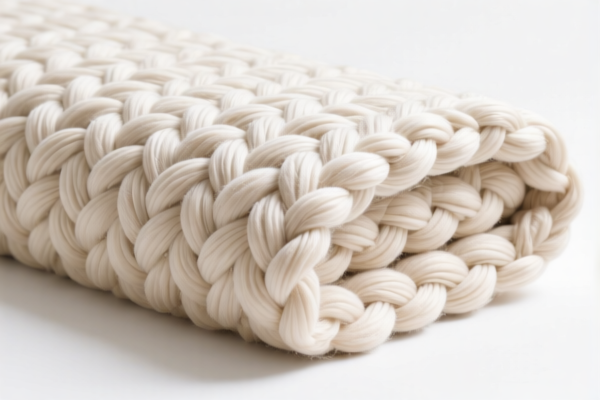
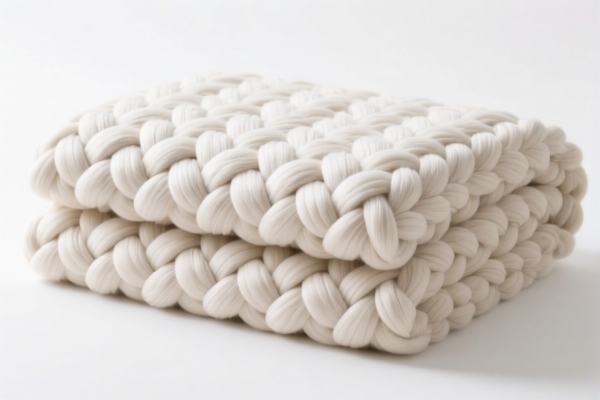
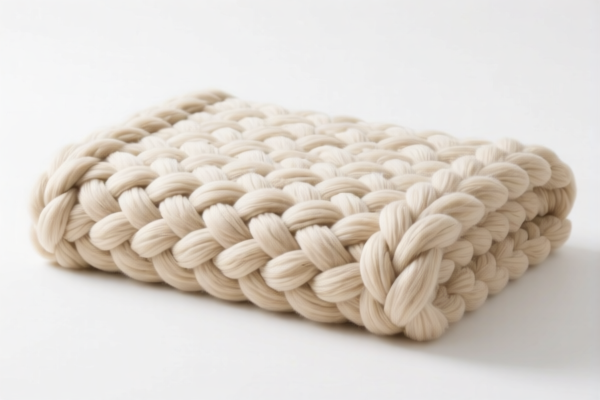
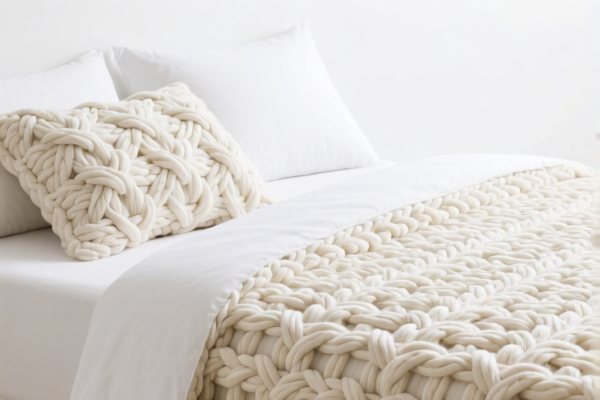
Product Images
AI Analysis
🔬 Braided Sheets for Research
🌐 HS Code Reference & Customs Clearance Guide | 2026 Latest Tariff Analysis | Professional-Level Strategy for Lab & Industrial Goods
📌 I. Product Definition: What Are "Braided Sheets for Research"?
"Braided sheets for research" is a generic commercial term that lacks a precise technical description in customs classification. In international trade, the material composition and end-use dictate the correct HS Code. These sheets are typically used in laboratories for filtration, insulation, reinforcement, or as technical textile components.
⚠️ Critical Distinction for Researchers & Importers:
- Is the sheet made of metal (wire mesh)? → Classified as Steel/Aluminum products (High Tariff).
- Is the sheet made of textile fibers (nylon, polyester, glass)? → Classified as Technical Textiles (Moderate Tariff).
- Is the sheet made of synthetic filaments woven into a fabric? → Classified as Synthetic Fabrics (Moderate Tariff).Misclassification Risk: Declaring a metallic mesh as a "textile sheet" will result in severe penalties due to tariff evasion. Conversely, declaring a textile sheet as metal will lead to unnecessary high tariffs.
📦 II. HS Code Classification Matrix (2026 Data)
Based on the provided data, here are the four potential classifications. The correct code depends entirely on the material of the braid.
| HS Code | Product Description | Material Inference | Primary Use | Tariff Complexity |
|---|---|---|---|---|
| 7314.12.60.00 | Industrial Braided Sheet | Metal (Steel, Aluminum, Copper) | Industrial filtration, reinforcement, or heating elements | ⛔ EXTREME (85%) |
| 5911.90.00.80 | Technical Textile Product | Textile (Any fiber) | Technical/Industrial applications (e.g., lab filtration, precision screening) | ⚠️ HIGH (38.8%) |
| 5407.93.20.30 | Synthetic Filament Fabric | Synthetic Fibers (Long filaments) | Other synthetic woven fabrics | ⚠️ HIGH (47.0%) |
| 5911.90.00.40 | Industrial Woven Fabric | Textile (Woven) | General industrial use | ⚠️ HIGH (38.8%) |
🔍 Key Insight:
- If your research sheet is a metallic mesh (e.g., stainless steel wire cloth), it falls under 7314.12.60.00. This is a steel/aluminum/copper product subject to Section 301 and other trade remedies.
- If your research sheet is a non-metallic textile (e.g., nylon, polyester, or glass fiber cloth), it falls under 5911 or 5407.
💰 III. 2026 Tariff Rate Breakdown (Detailed Analysis)
✅ Applicable Country: United States (US)
✅ Origin: China (CN)
✅ Context: Includes Base Tariff, Section 301 Tariffs, and IEEPA Add-ons.
🎯 1. HS Code 7314.12.60.00 — Metallic Braided Sheet
⚠️ WARNING: Highest Risk Category
| Item | Details |
|---|---|
| Base Tariff | 0.0% |
| Section 301 Tariff (List 3) | +25.0% |
| IEEPA Section 122 (Steel/Alum/Copper) | +50.0% |
| Total Effective Tax Rate | 85.0% |
| Tax Calculation | CIF Value × 85% |
| Legal Basis Path | USITC:7314.12.60.00 → IEEPA:9903.01.25 (Steel/Alum) → Section 301 |
📌 Explanation:
- This code is for metal wire cloth, gauze, or grill.
- The +50% IEEPA tariff applies specifically to steel, aluminum, and copper products under recent executive orders.
- Combined with the standard +25% Section 301 tariff, the total burden is 85%.
- De Minimis Exemption: ❌ NOT ELIGIBLE for $800 exemption (likely due to country of origin or product type restrictions).
🎯 2. HS Code 5911.90.00.80 — Technical Textile Product
Best for: Research-specific filtration, insulation, or specialized technical fabrics.
| Item | Details |
|---|---|
| Base Tariff | 3.8% |
| Section 301 Tariff (List 3) | +25.0% |
| IEEPA Add-on | +10.0% |
| Total Effective Tax Rate | 38.8% |
| Tax Calculation | CIF Value × 38.8% |
| Legal Basis Path | USITC:5911.90.00.80 → IEEPA:9903.01.24 → Section 301 |
📌 Explanation:
- Chapter 59 covers "Textile articles... suitable for technical use."
- This is a catch-all for technical textiles not specified elsewhere.
- While significantly lower than metal, the +10% IEEPA and +25% Section 301 still make it expensive.
🎯 3. HS Code 5407.93.20.30 — Synthetic Filament Fabric
Best for: Research sheets made of woven synthetic long-fiber fabrics (e.g., polyester, nylon).
| Item | Details |
|---|---|
| Base Tariff | 12.0% |
| Section 301 Tariff (List 3) | +25.0% |
| IEEPA Add-on | +10.0% |
| Total Effective Tax Rate | 47.0% |
| Tax Calculation | CIF Value × 47.0% |
| Legal Basis Path | USITC:5407.93.20.30 → IEEPA:9903.01.24 → Section 301 |
📌 Explanation:
- Chapter 54 covers "Man-made filaments."
- The base rate is higher (12%) than 5911 (3.8%), leading to a higher total tax.
- Use this only if the fabric is specifically defined as a "synthetic filament woven fabric" rather than a "technical textile."
🎯 4. HS Code 5911.90.00.40 — Industrial Woven Fabric
Best for: General industrial use textiles.
| Item | Details |
|---|---|
| Base Tariff | 3.8% |
| Section 301 Tariff (List 3) | +25.0% |
| IEEPA Add-on | +10.0% |
| Total Effective Tax Rate | 38.8% |
| Tax Calculation | CIF Value × 38.8% |
| Legal Basis Path | USITC:5911.90.00.40 → IEEPA:9903.01.24 → Section 301 |
📌 Explanation:
- Similar to 5911.90.00.80 but categorized under "Industrial Use."
- If your research sheet is for general industrial purposes (e.g., factory filtration) rather than specific scientific instrumentation, this code may apply.
- Tax rate is identical to 5911.90.00.80.
🛠️ IV. Customs Clearance Strategy & Recommendations
✅ 1. Material Verification (The Most Critical Step)
Before importing, you MUST determine the exact material composition.
- Metallic? → Use 7314.12.60.00. Expect 85% tax. Consider sourcing from non-China origins if possible to avoid Section 301/IEEPA.
- Textile/Synthetic? → Avoid 7314. Use 5911 or 5407. Expect 38.8%–47% tax.
✅ 2. Documentation Requirements
| Document | Requirement | Purpose |
|---|---|---|
| Product Specification Sheet | Must state: Material (%), Density, Weave Pattern, Mesh Size | To justify HS Code classification. |
| Letter of Explanation | Detail "Research Use" | Helps customs distinguish between "Industrial" (5911) vs. "Consumer" goods. |
| Commercial Invoice | Clear description: "Braided Sheet for Laboratory Research, Material: [Nylon/Steel/Polyester]" | Prevents misclassification by CBP officers. |
| Bill of Lading | Matches invoice details | Standard requirement. |
| Certificate of Origin | Required for Trade Remedy assessments | Determines if Section 301/IEEPA applies. |
✅ 3. Smart Classification Strategy
| Scenario | Recommended HS Code | Why? |
|---|---|---|
| Lab Filter Made of Stainless Steel Wire | 7314.12.60.00 |
It is a metal wire cloth. No other code fits. Accept 85% tax or find alternative source. |
| Lab Filter Made of Nylon Mesh | 5911.90.00.80 |
"Technical textile" fits research applications best. Lower tax (38.8%). |
| Reinforcement Cloth Made of Polyester | 5407.93.20.30 |
If it's a standard woven fabric, not a specialized technical article. |
| General Industrial Screen | 5911.90.00.40 |
If the primary use is industrial, not strictly scientific research. |
🚀 Pro Tip:
If the braided sheet is used exclusively in scientific research instruments, argue for 5911.90.00.80 ("Technical use") rather than general industrial uses. This ensures consistency with the "Research" label in your invoice.
🌍 V. Global Market Comparison (2026)
| Region | Recommended HS Code | Est. Total Duty (China Origin) | Notes |
|---|---|---|---|
| 🇺🇸 USA | 7314.12.60.00 (Metal) |
85.0% | Extremely high due to IEEPA + 301. |
| 🇺🇸 USA | 5911.90.00.80 (Textile) |
38.8% | High due to 301 + IEEPA. |
| 🇪🇺 EU | Varies by Material | ~5-12% | No Section 301/IEEPA. Lower tariffs. |
| 🇨🇳 China | Varies | ~3-8% | Low import duty. No trade war surcharges. |
| 🇬🇧 UK | Varies | ~5-12% | Post-Brexit, generally lower than US. |
📌 Conclusion:
The US market is the most hostile for Chinese-sourced braided sheets due to layered tariffs. If your research requires these materials, consider:
1. Sourcing from Vietnam, Mexico, or EU to avoid IEEPA/301.
2. Using textile materials (38.8%) instead of metallic materials (85%) if performance allows.
3. Applying for HS Code Pre-Rulings to ensure correct classification and avoid penalties.
📌 VI. Common Mistakes & Pitfalls
❌ Mistake 1: Calling a steel mesh a "textile sheet" to avoid the 85% tariff.
👉 Result: CBP will seize goods, impose fines, and potentially charge back-taxes + interest.
❌ Mistake 2: Using 7314 for a synthetic fabric.
👉 Result: Overpayment of duties. You may be paying 85% instead of 38.8%.
❌ Mistake 3: Not specifying "Research Use" in documentation.
👉 Result: CBP may classify it as general industrial goods, leading to ambiguity or rejection of specialized technical textile codes.
🎯 VII. Final Recommendation
🔥 Golden Rule:
"Material Determines Code, Code Determines Cost."
- Metal = 85% Tax
- Textile = 38.8% TaxIf your research can be done with textile-based braided sheets, switch materials to save 46.2% in duties.
If you must use metal, budget for the 85% tariff or explore non-China supply chains.
📢 Immediate Action:
1. Confirm Material: Is it metal or fiber?
2. Draft Invoice: Use precise HS Code and description.
3. Consult Broker: Submit product photos to a customs broker for a Pre-Ruling.
💼 Precision in Classification = Savings in Logistics!
Customer Reviews
About HS Code Classification
The Harmonized System (HS) is an internationally standardized nomenclature developed by the World Customs Organization (WCO) to classify traded products. Over 200 countries use the HS system as the basis for customs tariffs, trade statistics, and import/export regulations.
Each HS code follows a hierarchical structure:
- Chapter (2 digits) — Broad category of goods (e.g., Chapter 84: Machinery and Mechanical Appliances)
- Heading (4 digits) — More specific grouping within the chapter
- Subheading (6 digits) — Internationally standardized breakdown, used by all WCO member countries
- National subdivisions (8-10 digits) — Country-specific extensions for further classification, such as US HTSUS 10-digit codes
Correct HS code classification is essential for smooth customs clearance, accurate duty payment, and compliance with trade regulations. Misclassification can lead to customs delays, overpayment of duties, or penalties.
When importing from CN to US, the applicable tariff rates may include:
- Most-Favored-Nation (MFN) rate — The standard duty rate applied to WTO members
- General rate — Applied to countries without trade agreements
- Trade remedy duties — Additional tariffs such as Section 301 (anti-dumping), Section 232 (national security), or countervailing duties
The information provided on this page is for reference purposes only. For official classification, please consult with your local customs authority or a licensed customs broker.