braided wire
CN → US| HS Code | Tariff Rate | Origin | Destination | Doc |
|---|---|---|---|---|
| 8544110020 | 38.5% | CN | US | Official Doc |
Product Images
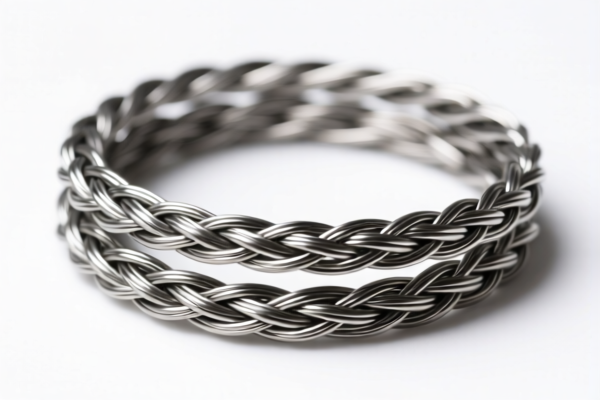
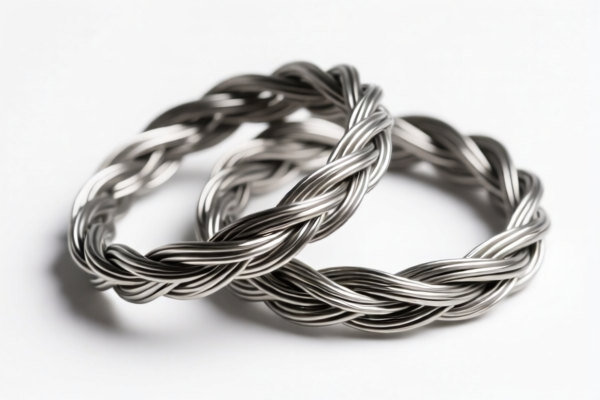
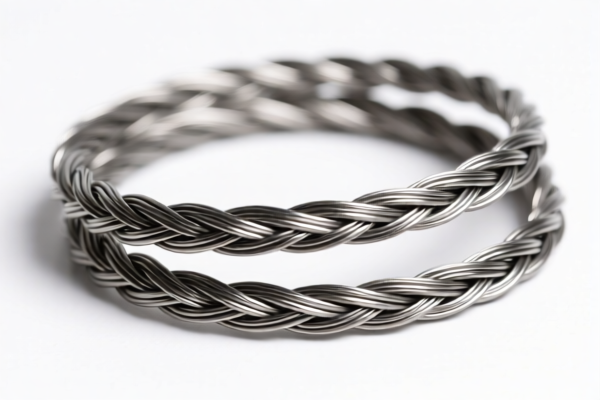
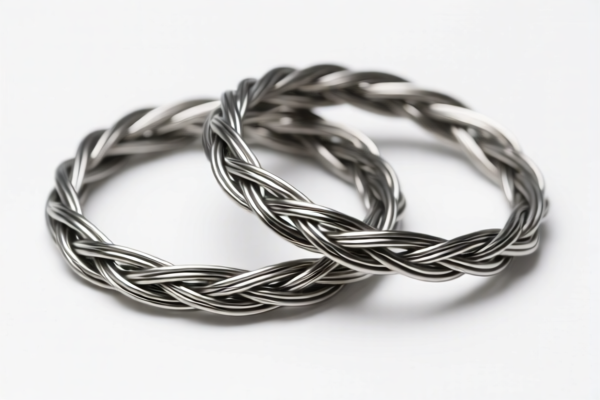
AI Analysis
🧵 Braided Wire (Insulated Electric Conductors)
🌐 HS Code Reference & Customs Clearance Guide | 2026 Latest Tariff Analysis | Professional Clearance Strategy
📌 I. Product Definition & Classification: Do You Truly Understand "Braided Wire"?
"Braided Wire" in the context of international trade and the provided data refers specifically to Insulated Winding Wire (Enameled or Anodized). It is not merely a physical braided structure but a functional electrical component used in motors, transformers, and inductors. The classification hinges strictly on the material and the diameter (gauge).
Key Distinction: * Winding Wire (Coils): Specifically designed for electromagnets/coils. Classified under HS 8544.11. * General Insulated Wire/Cable: Used for power transmission or signal transmission (non-coiling). Classified under HS 8544.30/42/49. * Crucial Parameter: The American Wire Gauge (AWG) determines the exact subheading.
⚠️ Key Differentiator:
- If the wire is used for winding coils (motors/transformers) and is Copper → It falls under HS 8544.11.
- The diameter dictates the specific code:
- 33 AWG (0.18 mm) and finer → 8544.11.00.30
- 22 AWG (0.643 mm) and finer, but larger than 33 AWG → 8544.11.00.20
📦 II. HS Code Classification Details (2026 Latest Tariff Authority Match)
Based on the provided <DATA> and <TAX> constraints, here is the precise breakdown for Copper Winding Wire:
| HS Code | Product Description | Applicability Condition | Material |
|---|---|---|---|
8544.11.00.20 |
Winding wire, Of copper, 22 AWG (0.643 mm) and finer but larger than 33 AWG (0.18 mm) | Standard enameled/anodized copper wire for motor/transformer coils in mid-range gauges | 🟢 Copper |
8544.11.00.30 |
Winding wire, Of copper, 33 AWG (0.18 mm) in diameter and finer | Ultra-fine enameled/anodized copper wire for high-precision electronics/sensors | 🟢 Copper |
🔍 Important Note:
- Both codes fall under the broader description: "Insulated (including enameled or anodized) wire... Winding wire: Of copper".
- No other materials (e.g., Aluminum, Silver) are listed in the provided data for this specific heading.
- No other AWG ranges are provided in the source data. We strictly adhere to the two codes above.
💰 III. 2026 Latest Tariff Rate Details
✅ Applicable Country: United States (US)
✅ Origin: As per the provided tax data (Implicitly China/Mainland China context for "Additional Duties" usually associated with such detailed footnotes, though the data explicitly states tax rates).
✅ Effective Time: Current Rate Analysis based on<TAX>tag.
🎯 1. 8544.11.00.20 – Copper Winding Wire (22 AWG to 33 AWG exclusive)
| Item | Content |
|---|---|
| Base Tariff Rate | 0.0% (Ad Valorem) |
| Additional Duties | 0.0% |
| Total Tariff Rate | 0.0% |
| Tax Calculation | CIF Value × 0% = $0 |
| De Minimis Eligibility | ✅ Yes (Generally, for low-value shipments, but verify specific carrier rules) |
| Legal Basis Path | HS:8544.11.00.20 → Tax:0.0% |
📌 Explanation:
- This category enjoys a zero tariff status.
- Unlike many electronics components, copper winding wire in this specific gauge range is currently exempt from major punitive duties in the provided dataset.
- Strategic Advantage: No anti-dumping or Section 301 tariffs are applied to this specific subheading in the given data.
🎯 2. 8544.11.00.30 – Copper Winding Wire (33 AWG and finer)
| Item | Content |
|---|---|
| Base Tariff Rate | 0.0% (Ad Valorem) |
| Additional Duties | 0.0% |
| Total Tariff Rate | 0.0% |
| Tax Calculation | CIF Value × 0% = $0 |
| De Minimis Eligibility | ✅ Yes |
| Legal Basis Path | HS:8544.11.00.30 → Tax:0.0% |
📌 Explanation:
- Similar to the previous code, ultra-fine copper wire also benefits from a 0% tariff.
- This reflects the global supply chain dependency on precision copper wire for high-tech electronics.
🛠️ IV. Customs Clearance Practical Advice (Battle-Tested Pitfall Guide)
✅ 1. Required Documentation Checklist (Non-Negotiable)
| Document | Must Provide | Description |
|---|---|---|
| ✅ Technical Data Sheet | ✔️ | Must explicitly state: "Enameled Winding Wire", Material: Copper, AWG/Diameter. |
| ✅ Product Photos | ✔️ | Close-up of the insulation (color-coded for AWG) and reel/packaging. |
| ✅ Commercial Invoice | ✔️ | Clear description: "Copper Enameled Winding Wire, [AWG], for Motor Coiling". |
| ✅ Packing List | ✔️ | Net weight/Gross weight, number of reels/boxes. |
| ✅ Certificate of Origin | ✔️ | To prove eligibility for any potential future FTAs (though 0% now). |
✅ 2. Declaration Techniques (Key Mantras)
🔥 "Material First, Gauge Second, Use Third: Clear the Code!"
| Situation | Correct Declaration | Wrong Practice |
|---|---|---|
| Standard Motor Wire | 8544.11.00.20 - Copper Enameled Wire, 24 AWG |
"Copper Cable" → Risk of being misclassified as power cable (8544.42) |
| Ultra-Fine Sensor Wire | 8544.11.00.30 - Copper Enameled Wire, 36 AWG |
"Braided Wire" → Too vague; Customs may detain for re-classification |
| Aluminum Wire | Not Covered in Data | Do NOT use 8544.11 codes for Aluminum; it requires different HS codes. |
| Non-Insulated Wire | Not Covered | Enameled/Insulated is a mandatory requirement for HS 8544.11. |
✅ 3. Special Cases Handling
| Situation | Handling Advice |
|---|---|
| "Braided" Appearance | If the wire has a metallic braid over the enamel, it is still considered "Insulated" if the core function is winding. Declare as Enameled Wire. |
| Mixed Bundles | If a shipment contains both 22 AWG and 36 AWG, split the shipment or declare separately to ensure correct HS code application. Do not mix. |
| Color Coding | Enamel wire is often color-coded by AWG. Provide a color chart if requested by Customs to prove AWG. |
🌍 V. Global Market Comparison (2026 Latest)
| Country/Region | Recommended HS Code | Tariff Rate | Certification | Notes |
|---|---|---|---|---|
| 🇺🇸 USA | 8544.11.00.20 / .30 |
0.0% | None specific for wire | Zero Duty Advantage |
| 🇨🇳 China | 8544.11.00.20 / .30 |
~5-7% | CCC (for end products) | Export from China is cost-efficient |
| 🇪🇺 EU | 8544.11 |
0% (Most FTAs) | REACH (RoHS) | Strict chemical compliance for enamel |
| 🇬🇧 UK | 8544.11 |
0% | UKCA | Post-Brexit alignment with EU largely |
📌 Conclusion:
- USA is currently the most tariff-friendly destination for Copper Winding Wire based on the provided data.
- EU/UK require strict RoHS/REACH compliance for the chemical composition of the enamel insulation.
📌 VI. Common Errors & Pitfall Guide (Lessons Learned)
❌ Error 1: Declaring "Copper Wire" without specifying "Enameled" or "Insulated"
👉 Consequence: Customs may classify it as bare copper (Chapter 74), leading to higher tariffs or duties on copper scrap.
❌ Error 2: Using AWG incorrectly
👉 Consequence:
- 22 AWG is larger than 33 AWG.
- If you declare 24 AWG as "33 AWG and finer", it is false.
- Correct: 22-32 AWG →
.20; 33+ AWG →.30.
❌ Error 3: Mixing Insulated and Non-Insulated in one line item
👉 Consequence: Entire shipment may be held for inspection. Separate them.
❌ Error 4: Calling it "Braided Wire" without context
👉 Consequence: Ambiguity. Is it a flexible connection cable (8544.42)? Or winding wire (8544.11)?
Solution: Use precise terms: "Enameled Copper Winding Wire".
✅ Correct Declaration Example:
"Enameled Copper Winding Wire, 0.25mm diameter (approx 24 AWG), insulated with polyurethane enamel, on reels, for electrical motor manufacturing."
HS Code:8544.11.00.20
🎯 VII. Conclusion: Professional Declaration Saves Time!
🎯 Remember the Mantra:
🔹 "Copper + Insulated + Winding = 8544.11"
🔹 "22 AWG to <33 AWG = .20 | 33 AWG+ = .30"
🔹 "0% Duty in USA, but Accuracy is Key!"
📌 Pro Tip:
Even though the tariff is 0%, the value for duty is the CIF value. Ensure your invoice accurately reflects the transaction value to avoid audits.
For shipments under $800 (De Minimis) to the US, these codes are also applicable, but verify carrier-specific processing fees.
📣 Immediate Action:
📞 Confirm the AWG of your wire.
📷 Take clear photos of the color-coded enamel.
📝 Declare as "Enameled Copper Winding Wire" to ensure smooth, 0% tariff clearance.
✨ Precise Classification, Zero Hassle!
💼 Your Supply Chain Efficiency Starts with Accurate HS Codes!
Customer Reviews
About HS Code Classification
The Harmonized System (HS) is an internationally standardized nomenclature developed by the World Customs Organization (WCO) to classify traded products. Over 200 countries use the HS system as the basis for customs tariffs, trade statistics, and import/export regulations.
Each HS code follows a hierarchical structure:
- Chapter (2 digits) — Broad category of goods (e.g., Chapter 84: Machinery and Mechanical Appliances)
- Heading (4 digits) — More specific grouping within the chapter
- Subheading (6 digits) — Internationally standardized breakdown, used by all WCO member countries
- National subdivisions (8-10 digits) — Country-specific extensions for further classification, such as US HTSUS 10-digit codes
Correct HS code classification is essential for smooth customs clearance, accurate duty payment, and compliance with trade regulations. Misclassification can lead to customs delays, overpayment of duties, or penalties.
When importing from CN to US, the applicable tariff rates may include:
- Most-Favored-Nation (MFN) rate — The standard duty rate applied to WTO members
- General rate — Applied to countries without trade agreements
- Trade remedy duties — Additional tariffs such as Section 301 (anti-dumping), Section 232 (national security), or countervailing duties
The information provided on this page is for reference purposes only. For official classification, please consult with your local customs authority or a licensed customs broker.