brake lining
CN → US| HS Code | Tariff Rate | Origin | Destination | Doc |
|---|---|---|---|---|
| 8708305030 | 0.0% | CN | US | Official Doc |
| 8708305040 | 0.0% | CN | US | Official Doc |
| 4016996010 | 37.5% | CN | US | Official Doc |
| 4016993000 | 35.0% | CN | US | Official Doc |
| 8708305030 | 0.0% | CN | US | Official Doc |
Product Images
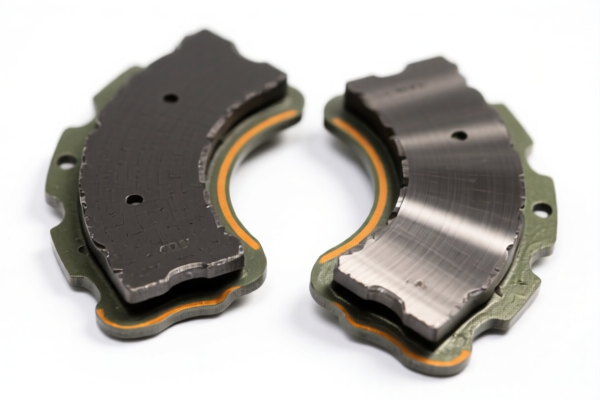
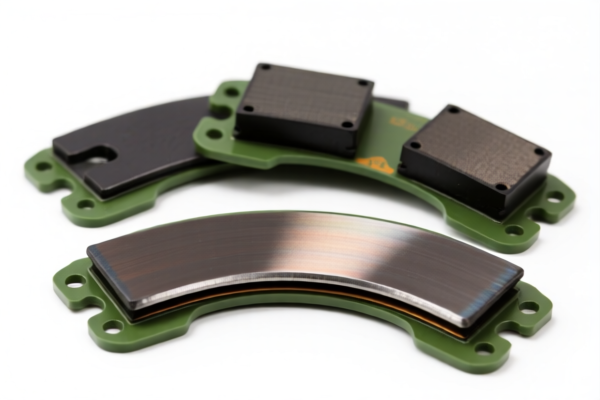
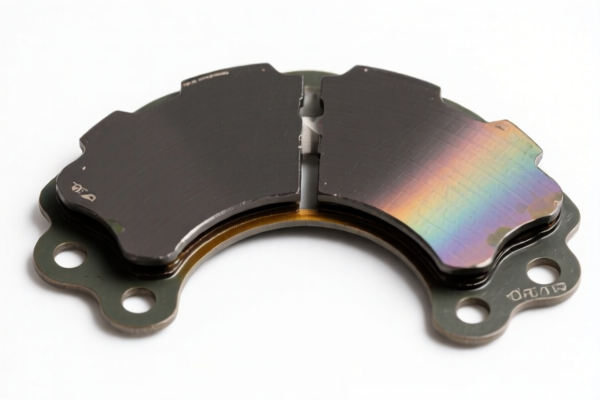
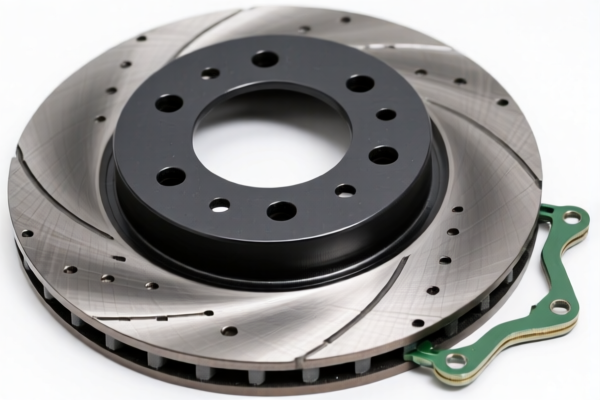
AI Analysis
🛑 Brake Lining & Brake Discs (Auto Parts)
🌐 HS Code Reference & Customs Clearance Guide | 2026 Latest Tariff Analysis | Professional Clearance Strategy
📌 I. Product Definition & Classification: What Exactly Are "Brake Linings" and "Brake Discs"?
In the automotive aftermarket and international trade, braking systems are critical safety components. They are generally categorized into two main functional groups based on their role in the braking mechanism:
1. Friction Components (Brake Pads/Linings):
These are consumable parts that create friction against the rotor to slow down the vehicle. They are often made of semi-metallic, ceramic, or organic materials. In customs terms, they are frequently classified under "Brake linings" or specific sub-headings for parts of vehicles.
2. Rotors (Brake Discs):
These are the metallic disks that the brake pads clamp onto. They are solid metal (usually cast iron or steel) parts. They fall squarely under "Parts and accessories of braking systems."
⚠️ Key Distinction:
- If the item is a pad, shoe, or lining (friction material attached to a backing plate) → It often falls under 8708.30 (Parts of braking systems) or potentially 4016 (if inferred as rubber-based linings).
- If the item is a solid metal disc → It definitely falls under 8708.30 (Parts of braking systems).
📦 II. HS Code Classification Details (2026 Latest Tariff Authority Comparison)
Based on the provided data, here are the specific HS Codes for Brake Pads/Linings and Brake Discs. Note that 8708.30.50.30 appears for both "Brake Pads" (inferred) and "Brake Discs," while other codes apply to different material interpretations.
| HS Code | Product Description | Application Scenario | Material/State Inference |
|---|---|---|---|
8708.30.50.30 |
Brake Pads (Inferred as parts of braking system) | Automotive brake pads; friction components | Parts of braking systems (no material conflict) |
8708.30.50.30 |
Brake Discs (Rotor) | Automotive brake discs; metal rotors | Exact match to "Braking rotors (discs)" |
8708.30.50.40 |
Brake Linings (Friction Material) | Vehicle braking system linings | "Brake linings" functional attribute match |
4016.99.60.10 |
Rubber-based Brake Components | Parts inferred as vulcanized rubber/compounds | Rubber friction materials |
4016.99.30.00 |
Other Rubber/Metal Brake Parts | Shock absorbers or brake parts (non-hard rubber) | Composite materials, fallback for vehicles 8701-8705 |
🔍 Key Insight:
- Brake Discs have a definitive match at8708.30.50.30because they are explicitly "braking rotors."
- Brake Pads/Linings can be classified at8708.30.50.30or8708.30.50.40based on the exact nature of the friction material, but both are recognized as parts of the braking system.
- Codes 4016.99 are riskier interpretations relying on common sense inference of rubber content. Use only if 8708 is rejected or if the product is purely rubber-based without a metal backing plate.
💰 III. 2026 Latest Tariff Rate Breakdown (Including Additional Duties)
✅ Applicable Country: United States (US)
✅ Country of Origin: China (CN)
✅ Effective Time: 2025/2026 (Current Trade Environment)
🎯 1. 8708.30.50.30 & 8708.30.50.40 —— Parts of Braking Systems (Brake Pads/Discs)
These are the primary and safest classifications for standard automotive brake components.
| Item | Content |
|---|---|
| Base Duty Rate | 2.5% (Most Favored Nation rate) |
| Section 301 Duty (Trade War) | +25.0% (List 4A/4B specific to auto parts) |
| Section 122 Duty (IEEPA) | +10.0% (Special surcharge on Chinese goods) |
| Total Effective Rate | 37.5% |
| Tax Calculation | CIF Value × 37.5% |
| De Minimis Exemption | ❌ Not Applicable (High tariff rates prevent 8042/8043 exemption) |
| Legal Basis Path | HTSUS:8708.30.50 → USITC Footnotes → Section 301 → IEEPA 122 |
📌 Explanation:
- The 2.5% is the standard import duty.
- The 25% is the Section 301 tariff, heavily impacting auto parts from China.
- The 10% is the additional Section 122 tariff.
- Total: 37.5%. This is a high-cost category. Accurate declaration is crucial to avoid penalties.
🎯 2. 4016.99.60.10 —— Rubber-based Brake Parts (Inferred Material)
| Item | Content |
|---|---|
| Base Duty Rate | 2.5% |
| Section 301 Duty | +25.0% |
| Section 122 Duty | +10.0% |
| Total Effective Rate | 37.5% |
| Tax Calculation | CIF Value × 37.5% |
| De Minimis Exemption | ❌ Not Applicable |
📌 Note:
- Although the base rate might seem similar, the classification risk is higher. Customs may reject this if the product clearly contains metal backing plates or is standard brake pads, forcing a re-classification to 8708.
🎯 3. 4016.99.30.00 —— Other Rubber/Metal Composite Parts
| Item | Content |
|---|---|
| Base Duty Rate | 0.0% |
| Section 301 Duty | +25.0% |
| Section 122 Duty | +10.0% |
| Total Effective Rate | 35.0% |
| Tax Calculation | CIF Value × 35.0% |
| De Minimis Exemption | ❌ Not Applicable |
📌 Note:
- This code has a 0% base rate, resulting in a total of 35%, which is 2.5% cheaper than the 8708 codes.
- However, it is a "fallback" classification. Only use if the product is clearly a rubber mount or composite part, NOT standard metal-backed brake pads/discs. Misclassification here can lead to audits.
🛠️ IV. Customs Clearance Practical Advice (Avoiding Pitfalls)
✅ 1. Required Documentation Checklist
| Document | Mandatory? | Description |
|---|---|---|
| ✅ Product Specification Sheet | ✔️ | Must detail material composition (e.g., "Semi-metallic friction material on steel backing"). |
| ✅ Product Photos | ✔️ | Clear images of front, back, and any part numbers. Show if it's a pad, lining, or disc. |
| ✅ Commercial Invoice | ✔️ | Must list "Brake Pads" or "Brake Discs" explicitly. Avoid vague terms like "Auto Parts." |
| ✅ Packing List | ✔️ | Detail weights and quantities. |
| ✅ Origin Certificate | ✔️ | Proves Chinese origin for tariff calculation. |
| ✅ Material Safety Data Sheet (MSDS) | Optional | If the product contains hazardous materials (e.g., asbestos-free organic compounds). |
✅ 2. Declaration Strategy (Key Tips)
🔥 "Be Specific, Be Accurate, Avoid Ambiguity!"
| Scenario | Correct Declaration | Incorrect Declaration |
|---|---|---|
| Brake Disc | "Brake Disc Rotor for Vehicle, Cast Iron" | "Auto Part" |
| Brake Pad | "Brake Pad Set, Semi-Metallic, for [Vehicle Model]" | "Brake Lining Material" |
| Rubber Mount | "Rubber Brake Hanger Mount" | "Brake Pad" |
📌 Why it matters:
- Using vague terms like "Auto Part" triggers manual review and potential misclassification.
- Specifying "Brake Disc" locks in 8708.30.50.30 with 37.5% tax.
- Specifying "Brake Pad" also locks in 8708.30 with 37.5% tax.
- Do not try to force brake pads into 4016 unless they are purely rubber without metal, to save 2.5%. The risk of penalty is not worth it.
✅ 3. Special Circumstances
| Situation | Advice |
|---|---|
| OEM Parts | Provide the OEM part number. This helps customs verify the specific 8708 sub-code. |
| Mixed Containers | If shipping brake discs (metal) and rubber mounts together, separate the entries. Do not lump them under one HS code if they differ materially. |
| Pre-Ruling Request | For large volumes, request an Advance Ruling from CBP. This locks in the HS code and tax rate for 3-5 years. |
🌍 V. Global Market Comparison (2026)
| Country/Region | Recommended HS Code | Base Duty | Additional Duties (China) | Total Effective Rate | Notes |
|---|---|---|---|---|---|
| 🇺🇸 USA | 8708.30.50.30 |
2.5% | 301: 25% + 122: 10% | 37.5% | High barriers. No de minimis. |
| 🇨🇳 China (Import) | 8708.30 |
Varies | None | ~2.5% - 10% | Depends on free trade agreements. |
| 🇪🇺 EU | 8708.30 |
4.5% | None (WTO) | 4.5% | Much lower than US. No Section 301. |
| 🇨🇦 Canada | 8708.30 |
0% | None (USMCA) | 0% | Duty-free if USMCA criteria met. |
| 🇲🇽 Mexico | 8708.30 |
0% | None (USMCA) | 0% | Duty-free if USMCA criteria met. |
📌 Conclusion:
- The US market is the most expensive for Chinese auto parts due to 301 and 122 tariffs.
- EU, Canada, and Mexico offer significantly lower or zero tariffs. Consider supply chain diversification if targeting these markets.
📌 VI. Common Mistakes & Pitfalls (Lessons Learned)
❌ Mistake 1: Declaring "Brake Pads" as "Rubber Goods" (4016)
👉 Result: Customs rejects the declaration, demands re-classification, and assesses back duties + penalties.
👉 Correct: Use 8708.30 for standard brake pads.
❌ Mistake 2: Under-declaring Value
👉 Result: Severe penalties, seizure of goods, and blacklisting of the importer.
👉 Correct: Declare true CIF value. Tax is 37.5%, so transparency is key.
❌ Mistake 3: Ignoring the "122 Clause"
👉 Result: Unexpected 10% charge at clearance, leading to cash flow issues.
👉 Correct: Factor 37.5% into your landed cost calculation.
❌ Mistake 4: Using "Brake Linings" for Metal Discs
👉 Result: Misclassification. Brake discs are not linings.
👉 Correct: Discs are Parts of Braking Systems (8708.30).
✅ Correct Practice:
"Brake Disc, Model ABC, Cast Iron, for Ford F-150, HS 8708.30.50.30"
🎯 VII. Conclusion: Precision Saves Money
🎯 Remember the Formula:
🔹 Brake Discs/Pads = 8708.30.50.30
🔹 Total Tax = 2.5% (Base) + 25% (301) + 10% (122) = 37.5%
🔹 No De Minimis. No Exceptions. No Guesswork.
📌 Pro Tip:
If you are importing large volumes, consider trans-shipment through Vietnam or Mexico (with substantial transformation) to avoid Section 301 and 122 tariffs. However, ensure Rule of Origin compliance to avoid fraud allegations.
📣 Immediate Action:
📞 Consult with a licensed Customs Broker.
📋 Prepare accurate product descriptions.
📉 Calculate 37.5% in your financial model.
🚀 Ensure smooth clearance with precise documentation.
✨ Professional Clearance Starts with Accurate Classification!
💼 Every 0.1% in duty savings matters. Don’t risk 37.5% with wrong codes!
Customer Reviews
About HS Code Classification
The Harmonized System (HS) is an internationally standardized nomenclature developed by the World Customs Organization (WCO) to classify traded products. Over 200 countries use the HS system as the basis for customs tariffs, trade statistics, and import/export regulations.
Each HS code follows a hierarchical structure:
- Chapter (2 digits) — Broad category of goods (e.g., Chapter 84: Machinery and Mechanical Appliances)
- Heading (4 digits) — More specific grouping within the chapter
- Subheading (6 digits) — Internationally standardized breakdown, used by all WCO member countries
- National subdivisions (8-10 digits) — Country-specific extensions for further classification, such as US HTSUS 10-digit codes
Correct HS code classification is essential for smooth customs clearance, accurate duty payment, and compliance with trade regulations. Misclassification can lead to customs delays, overpayment of duties, or penalties.
When importing from CN to US, the applicable tariff rates may include:
- Most-Favored-Nation (MFN) rate — The standard duty rate applied to WTO members
- General rate — Applied to countries without trade agreements
- Trade remedy duties — Additional tariffs such as Section 301 (anti-dumping), Section 232 (national security), or countervailing duties
The information provided on this page is for reference purposes only. For official classification, please consult with your local customs authority or a licensed customs broker.