bread saw
CN → US| HS Code | Tariff Rate | Origin | Destination | Doc |
|---|---|---|---|---|
| 8438100010 | 17.5% | CN | US | Official Doc |
| 8438909015 | 37.8% | CN | US | Official Doc |
| 8211924050 | 0.0% | CN | US | Official Doc |
| 8211922000 | 0.0% | CN | US | Official Doc |
| 8467220090 | 10.0% | CN | US | Official Doc |
| 8467220020 | 10.0% | CN | US | Official Doc |
Product Images
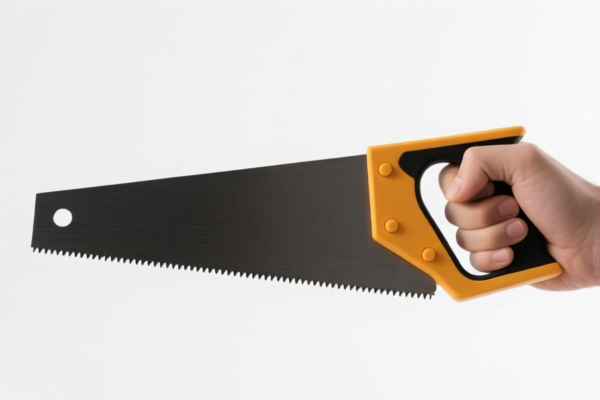
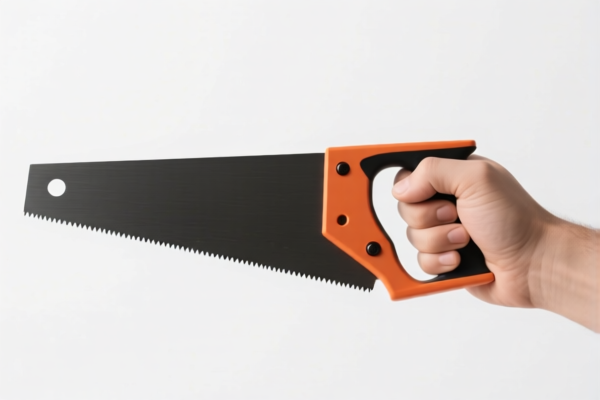
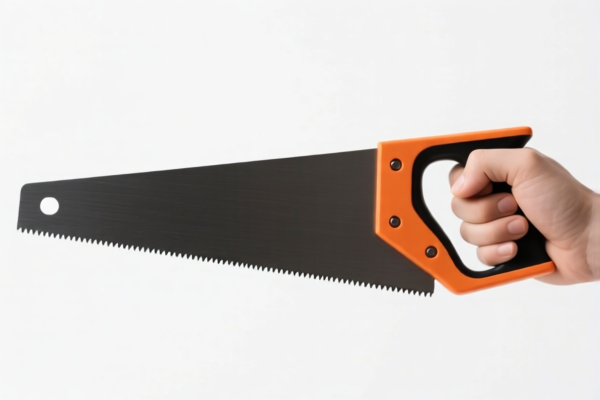
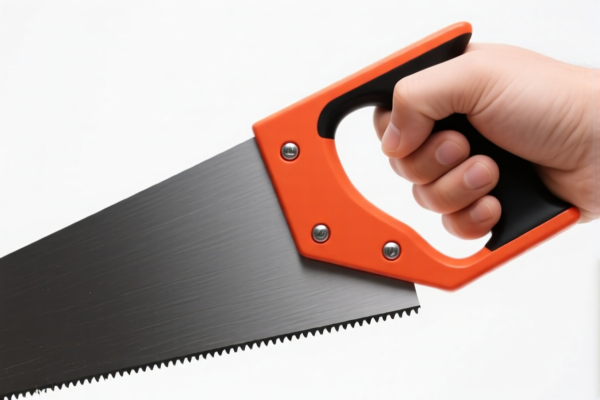
AI Analysis
🥖 Bread Saws (Industrial Bakery Machinery & Hand Tools)
🌐 HS Code Reference & Customs Clearance Guide | 2026 Latest Tariff Analysis | Professional Clearance Strategy
📌 1. Product Definition & Classification: What Exactly is a "Bread Saw"?
The term "Bread Saw" is ambiguous in international trade. It generally refers to two distinct categories of products: 1. Industrial Bakery Machinery: Automatic or semi-automatic machines designed to slice large batches of bread for commercial production. 2. Hand Tools: Manual knives with serrated blades specifically designed for cutting bread loaves in households or small bakeries.
⚠️ Critical Distinction:
- If it is an electrically powered machine with a conveyor and slicing mechanism → It is Industrial Machinery.
- If it is a manual knife with a serrated blade → It is a Hand Tool (Knife).
Misclassification leads to significant duty differences and customs delays.
📦 2. HS Code Classification Details (2026 Latest Tariff Authority Cross-Reference)
Based on the provided data, the "Bread Saw" falls into one of two primary HS Codes depending on its form factor.
| HS Code | Product Description | Application Scenario | Power Source | Key Identification Feature |
|---|---|---|---|---|
8438.10.00.10 |
Bakery Machinery for industrial preparation/manufacture of food | Large-scale commercial bakeries, industrial food processing lines | Electric/Motorized | Automated slicing, conveyor belts, motorized blade assembly. |
8211.92.20.00 |
Kitchen and Butcher Knives (Fixed blade, rubber/plastic handle) | Household use, small cafes, manual slicing | Manual (Hand-held) | Serrated blade, handle (rubber/plastic), operated by hand. |
8211.92.40.50 |
Other Sheath-type Knives (Fixed blade, rubber/plastic handle) | Utility knives, specific kitchen tools with sheaths | Manual (Hand-held) | Includes a sheath/cover, rubber/plastic handle. |
🔍 Focus Reminder:
- The Industrial Machine (8438.10.00.10) is categorized under "Machinery for industrial preparation... of food".
- The Hand Tool (8211.92.20.00) is categorized under "Knives with cutting blades... Kitchen and butcher knives".
- Note: While8211.92.40.50is listed,8211.92.20.00is the more common classification for standard bread knives unless they are specifically "sheath-type" utility knives.
💰 3. 2026 Latest Tariff Rate Breakdown (Including Additional Duties)
✅ Applicable Country: USA (US)
✅ Country of Origin: China (CN)
✅ Effective Time: 2025/2026 Period (as per provided data context)
🎯 1. 8438.10.00.10 – Industrial Bakery Machinery (Automatic Bread Slicer)
| Item | Content |
|---|---|
| Base Tariff | 0.0% |
| Additional Tariff (Section 301/Trade War) | 7.5% |
| Total Tariff Rate | 7.5% |
| Tax Calculation | CIF Value × 7.5% |
| De Minimis Exemption | ❌ Not Applicable (Machinery > $800) |
| Legal Basis | Chapter 84 Notes → Heading 8438 |
📌 Explanation:
- Industrial bakery machinery is considered capital goods or processing equipment.
- The base rate is 0%, reflecting low protection for industrial inputs.
- However, a 7.5% additional tariff is applied due to current trade policies between the US and China.
- Total Cost Impact: Only 7.5% of the declared value, which is relatively low compared to consumer goods.
🎯 2. 8211.92.20.00 – Kitchen and Butcher Knives (Manual Bread Knife)
| Item | Content |
|---|---|
| Base Tariff | $0.008 per piece + 4.6% ad valorem |
| Additional Tariff (Section 301/Trade War) | 7.5% |
| Total Tariff Rate | $0.008/piece + 12.1% (Effective Ad Valorem Equivalent) |
| Tax Calculation | (Qty × $0.008) + (CIF Value × 4.6%) + (CIF Value × 7.5%) |
| De Minimis Exemption | ✅ Possible for low-value individual items, but bulk imports are scrutinized. |
| Legal Basis | Chapter 82 Notes → Heading 8211 |
📌 Explanation:
- This is a mixed tariff (Specific + Ad Valorem).
- The 4.6% base rate applies to the value.
- The 7.5% additional tariff applies to the value.
- Combined Ad Valorem: 4.6% + 7.5% = 12.1% on the value, plus a small per-piece fee.
- Warning: If declared as "Other Knives" without proper description, customs may reclassify and penalize.
🎯 3. 8211.92.40.50 – Other Sheath-type Knives
| Item | Content |
|---|---|
| Base Tariff | 0.0% |
| Additional Tariff | 0.0% |
| Total Tariff Rate | 0.0% |
| Tax Calculation | $0.00 |
| De Minimis Exemption | ✅ Yes (If value < $800) |
📌 Explanation:
- This specific subheading for sheath-type knives enjoys 0% tariff.
- Critical Strategy: If your bread knife comes with a protective sheath and is not strictly classified as a "kitchen/butcher knife," you might qualify for this zero-duty rate.
- Risk: Customs officers are strict. If it’s clearly a kitchen bread knife, they may force it into8211.92.20.00(12.1%). Use this only if the product genuinely fits the "sheath-type" definition and documentation supports it.
🛠️ 4. Customs Clearance Practical Advice (Battle-Tested Pitfall Guide)
✅ 1. Document Checklist (Non-negotiable)
| Document | Required | Description |
|---|---|---|
| ✅ Product Specification Sheet | ✔️ | Must clearly state: Automatic/Electric (for 8438) vs. Manual (for 8211). Include dimensions, weight, and power rating. |
| ✅ Commercial Invoice | ✔️ | Must specify: "Industrial Bread Slicing Machine" OR "Manual Serrated Bread Knife". Avoid vague terms like "Bread Tool". |
| ✅ Packing List | ✔️ | Detail quantity. For knives, ensure the "per piece" fee is calculable. |
| ✅ Photos | ✔️ | Clear images showing the entire product, especially the motor (if machine) or blade type (if knife). |
| ✅ Certificate of Origin | ✔️ | To verify CN origin and apply correct additional tariffs. |
✅ 2. Declaration Tips (Key Mnemonics)
🔥 "Machine gets 7.5%, Knife gets 12.1%, Sheath might be Free!"
| Scenario | Correct HS Code | Incorrect Declaration | Consequence |
|---|---|---|---|
| Electric Bread Slicer | 8438.10.00.10 |
Declaring as "Kitchen Knife" | Under-declaration: Risk of penalty + missed 7.5% (but lower duty, so less suspicious). However, if declared as machine but is a knife, risk of reclassification. |
| Manual Bread Knife | 8211.92.20.00 |
Declaring as "Industrial Machinery" | Over-declaration: High duty risk if misclassified, but mostly just administrative delay. |
| Knife with Sheath | 8211.92.40.50 |
Declaring as "Kitchen Knife" | Potential Savings: 0% vs 12.1%. BUT must prove it's not a standard kitchen knife. |
📌 Key Tip:
- For Machinery: Emphasize "Industrial Use", "Automated", "High Capacity".
- For Knives: Emphasize "Serrated Blade", "Manual Operation", "Household/Kitchen Use".
✅ 3. Special Handling
| Situation | Advice |
|---|---|
| OEM Branding | If branding is present, ensure the invoice matches the brand. No change in HS code. |
| Knives with Sharpeners | If sold as a set, declare the Knife as the primary item (8211) or split value. Do not declare sharpener as main item. |
| Machinery Parts | If importing spare blades for the machine, use 8438.90.90.15 (0% duty). This is much cheaper than importing whole machines repeatedly. |
🌍 5. Global Market Clearance Comparison (2026 Latest)
| Country/Region | Recommended HS Code | Tariff (China Origin) | Certification | Notes |
|---|---|---|---|---|
| 🇺🇸 USA | 8438.10.00.10 (Machine) |
7.5% | N/A | Low duty for machinery. |
| 🇺🇸 USA | 8211.92.20.00 (Knife) |
12.1% + $0.008/piece | N/A | Higher duty for consumer goods. |
| 🇪🇺 EU | 8438.10.00.10 |
0-5% | CE Marking | Machinery requires CE. |
| 🇬🇧 UK | 8438.10.00.10 |
0-5% | UKCA Marking | Post-Brexit rules apply. |
📌 Conclusion:
- USA is the focus here.
- Industrial Machinery is heavily favored with low duties (7.5%).
- Consumer Knives face higher duties (12.1%) and complex per-piece fees.
📌 6. Common Mistakes & Pitfall Guide (Lessons Learned)
❌ Mistake 1: Calling an industrial bread slicer a "Bread Knife" to avoid 7.5% duty.
👉 Result: Customs will detect the motor/conveyor in photos or specs. Penalty + Back Duties.
👉 Better: Declare correctly. 7.5% is reasonable.
❌ Mistake 2: Declaring a manual knife as "Industrial Machinery" to get 0% base duty.
👉 Result: Rejected. Manual knives are clearly Chapter 82.
👉 Better: Use 8211.92.20.00 or explore 8211.92.40.50 if sheathed.
❌ Mistake 3: Ignoring the $0.008 per piece fee for knives.
👉 Result: For large shipments (e.g., 10,000 knives), this fee adds up ($80). It’s small but must be declared accurately to avoid queries.
✅ Correct Practice:
"Industrial Automatic Bread Slicer, Model X, 220V, Motorized, For Bakery Use"
"Manual Serrated Bread Knife, Plastic Handle, No Motor, For Household Use"
🎯 7. Conclusion: Professional Declaration, Cost Optimization
🎯 Remember the Mnemonic:
🔹 "Machine = 7.5%, Knife = 12.1%, Sheath = 0% (Maybe)."
🔹 "Industrial Machinery is cheap to import, Knives are expensive due to volume and trade wars."
📌 Strategic Advice:
- If you are importing machines, focus on spare parts (8438.90.90.15, 0% duty) to maintain long-term customer relationships cost-effectively.
- If you are importing knives, evaluate if the product can be classified as "Sheath-type" (8211.92.40.50) to save 12.1%. Ensure the sheath is integral and the product doesn’t look like a standard butcher knife.
📣 Immediate Action:
📞 Contact a Customs Broker: Provide photos and spec sheets.
🚀 Pre-classify: Apply for an Advance Ruling if importing large volumes to lock in the HS Code and tariff rate.
💼 Optimize: For knives, consider the "Sheath" classification to potentially reduce duty to 0%.
✨ Precise Classification Starts Here!
💼 Every Percentage Point Counts in Global Trade!
Customer Reviews
About HS Code Classification
The Harmonized System (HS) is an internationally standardized nomenclature developed by the World Customs Organization (WCO) to classify traded products. Over 200 countries use the HS system as the basis for customs tariffs, trade statistics, and import/export regulations.
Each HS code follows a hierarchical structure:
- Chapter (2 digits) — Broad category of goods (e.g., Chapter 84: Machinery and Mechanical Appliances)
- Heading (4 digits) — More specific grouping within the chapter
- Subheading (6 digits) — Internationally standardized breakdown, used by all WCO member countries
- National subdivisions (8-10 digits) — Country-specific extensions for further classification, such as US HTSUS 10-digit codes
Correct HS code classification is essential for smooth customs clearance, accurate duty payment, and compliance with trade regulations. Misclassification can lead to customs delays, overpayment of duties, or penalties.
When importing from CN to US, the applicable tariff rates may include:
- Most-Favored-Nation (MFN) rate — The standard duty rate applied to WTO members
- General rate — Applied to countries without trade agreements
- Trade remedy duties — Additional tariffs such as Section 301 (anti-dumping), Section 232 (national security), or countervailing duties
The information provided on this page is for reference purposes only. For official classification, please consult with your local customs authority or a licensed customs broker.