bread slicer
CN → US| HS Code | Tariff Rate | Origin | Destination | Doc |
|---|---|---|---|---|
| 8210000000 | 38.7% | CN | US | Official Doc |
| 8438100090 | 17.5% | CN | US | Official Doc |
| 8479896500 | 20.3% | CN | US | Official Doc |
| 8438100010 | 17.5% | CN | US | Official Doc |
| 7323930080 | 62.0% | CN | US | Official Doc |
Product Images
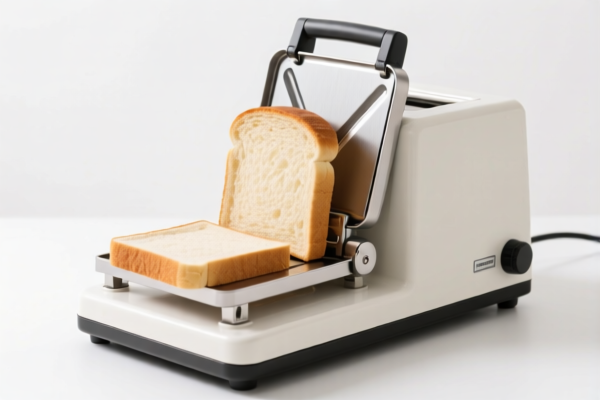
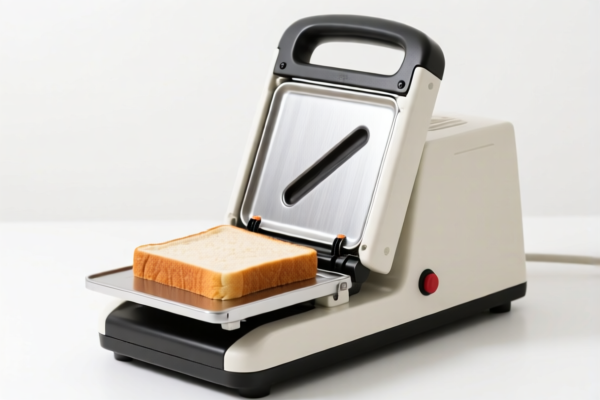
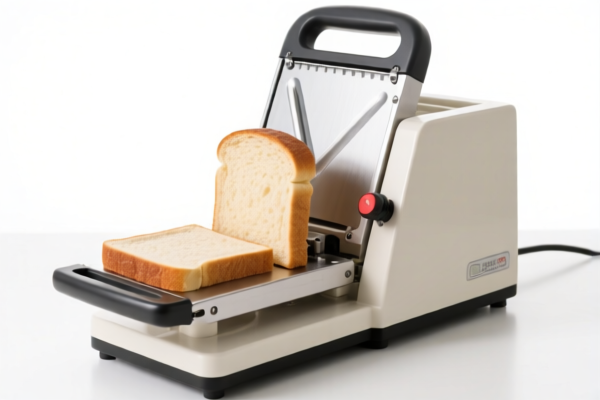

AI Analysis
🥪 Bread Slicer: The Ultimate HS Code & Customs Clearance Guide (2026)
🌐 HS Code Reference & Customs Strategy | Precision Classification for High-Value Logistics
📌 I. Product Definition: Is it a Machine or a Tool?
A Bread Slicer is a device used to cut bread into uniform slices. In international trade, its classification is highly controversial and depends entirely on its mechanism and power source.
There are two distinct categories: 1. Manual Wire Slicers: A frame with a wire, often with a wooden or plastic base. It is a simple kitchen gadget. → Usually falls under Chapter 73 (Steel Articles). 2. Mechanical/Electric Slicers: A machine with a motor, moving blades, or a lever-driven mechanical system. → Falls under Chapter 84 (Machinery).
⚠️ Critical Distinction:
- If it is manual, simple, and lacks a motor → Think 7323.
- If it has a motor, gears, or complex mechanical action → Think 8438 or 8479.
- If it is a small hand-held tool for food prep → Think 8210.
📦 II. HS Code Classification Matrix (2026 Latest Tariff)
Based on the provided data, here are the 5 potential HS Codes for Bread Slicers, ranging from simple steel tools to complex machinery.
| HS Code | Product Description | Key Classification Logic | Total Tax Rate (CN→US) |
|---|---|---|---|
8210.00.00.00 |
Manual/Small Electric Food Prep Tools | Matches use (food prep) + form (mechanical appliances, portable). | 38.7% |
8438.10.00.90 |
Baking Machinery (General) | Matches logic for "machinery for producing baked goods." | 17.5% |
8479.89.65.00 |
Other Independent Mechanical Appliances | Contains self-contained electric motor; independent function. | 20.3% |
8438.10.00.10 |
Specific Bread Machinery | Best Match: Explicitly includes "bread machinery." | 17.5% |
7323.93.00.80 |
Steel Kitchen Articles | Material: Stainless Steel; Use: Bread slicer (non-motorized). | 62.0% |
🔍 Strategic Insight:
- 8438.10.00.10 and 8438.10.00.90 offer the lowest duty rates (17.5%) if the device is classified as industrial/baking machinery.
- 7323.93.00.80 is the highest risk/lowest cost trap. While the base duty is low, the additional steel tariffs (50%) and Section 301/IEEPA taxes push the total to 62.0%. Avoid this unless you are sure it’s a simple manual steel frame.
- 8210.00.00.00 is a "catch-all" for small tools, but the 38.7% rate is steep due to high additional tariffs.
💰 III. 2026 Detailed Tax Breakdown & Legal Basis
✅ Applicable Country: United States (US)
✅ Origin: China (CN)
✅ Effective Date: Post-2025 Policy Adjustments
🎯 1. 8438.10.00.10 – Bread Machinery (Recommended for Motorized/Complex Slicers)
| Item | Detail |
|---|---|
| Base Duty | 0.0% |
| Additional Duty (Section 301) | +7.5% |
| IEEPA Section 122 Duty | +10.0% |
| Total Effective Rate | 17.5% |
| Calculation | CIF Value × 17.5% |
| De Minimis Eligibility | ❌ No (Deny de minimis for Chinese goods) |
| Legal Path | HTSUS:8438.10.00.10 → USITC Footnote → IEEPA:9903.01.24 |
📌 Why this code?
The summary states: "Product use (bread slicing) matches the classification explanation of 'bread machinery' completely." This is the most precise fit for dedicated bread slicing equipment.
🎯 2. 8438.10.00.90 – Other Baking Machinery
| Item | Detail |
|---|---|
| Base Duty | 0.0% |
| Additional Duty (Section 301) | +7.5% |
| IEEPA Section 122 Duty | +10.0% |
| Total Effective Rate | 17.5% |
| Calculation | CIF Value × 17.5% |
| De Minimis Eligibility | ❌ No |
📌 Why this code?
Used if the slicer is part of a broader "bakery production line" or doesn't fit the specific "bread machinery" subheading. Logically consistent with "machinery for manufacturing dough products."
🎯 3. 8479.89.65.00 – Other Mechanical Appliances (Motorized)
| Item | Detail |
|---|---|
| Base Duty | 2.8% |
| Additional Duty (Section 301) | +7.5% |
| IEEPA Section 122 Duty | +10.0% |
| Total Effective Rate | 20.3% |
| Calculation | CIF Value × 20.3% |
| De Minimis Eligibility | ❌ No |
📌 Why this code?
For slicers that are electric but not strictly "baking machinery." The logic relies on the presence of a self-contained electric motor providing an independent mechanical function.
🎯 4. 8210.00.00.00 – Small Manual/Electric Appliances
| Item | Detail |
|---|---|
| Base Duty | 3.7% |
| Additional Duty (Section 301) | +25.0% |
| IEEPA Section 122 Duty | +10.0% |
| Total Effective Rate | 38.7% |
| Calculation | CIF Value × 38.7% |
| De Minimis Eligibility | ❌ No |
📌 Why this code?
Classifies as "mechanical appliances" for food preparation that are hand-operated or small electric. Note the high 25% Section 301 tariff, making this a less optimal choice compared to 8438.
🎯 5. 7323.93.00.80 – Steel Kitchen Articles (High Risk)
| Item | Detail |
|---|---|
| Base Duty | 2.0% |
| Additional Duty (Section 301) | 0.0% |
| IEEPA Section 122 Duty | +10.0% |
| Steel/Alloy/Copper Surcharge | +50.0% |
| Total Effective Rate | 62.0% |
| Calculation | CIF Value × 62.0% |
| De Minimis Eligibility | ❌ No |
📌 Why this code?
For manual, stainless steel slicers (frames/wires). WARNING: The +50% steel surcharge makes this the most expensive option despite the low base duty. Only use if the product is purely a static steel structure with no moving mechanical parts or motors.
🛠️ IV. Customs Clearance Practical Advice
✅ 1. Documentation Checklist
| Document | Required? | Description |
|---|---|---|
| ✅ Product Specification Sheet | ✔️ | Must specify: Motor? Weight? Material (Steel vs. Plastic)? Manual vs. Electric? |
| ✅ Operational Photos/Video | ✔️ | Show how it works. Is there a plug? Are gears moving? |
| ✅ Bill of Materials (BOM) | ✔️ | List all components. Separate steel parts from motors. |
| ✅ Commercial Invoice | ✔️ | Use precise language: "Electric Bread Slicer, Model XYZ" vs. "Steel Wire Rack." |
| ✅ Certificate of Origin | ✔️ | Proves CN origin (triggers tariffs). |
✅ 2. Declaration Strategy (The "Golden Rules")
🔥 Rule #1: If it has a motor, DO NOT use 7323.
Misclassifying a motorized slicer as "Steel Kitchenware" is considered fraud. The 50% steel tariff and penalties will destroy your margin.🔥 Rule #2: If it is manual, consider 7323 ONLY if you accept the 62% tax.
Actually, check if it fits 8210 (38.7%) or if a simpler "steel article" code exists with lower surcharges. However, based on the data, 8438 is the safest low-tax route for any powered device.🔥 Rule #3: Prioritize
8438.10.00.10.
This code has the lowest total tax (17.5%) and the most accurate description ("Bread Machinery"). Use this for any slicer that is more than a simple wire frame.
✅ 3. Common Pitfalls
| Mistake | Consequence | Solution |
|---|---|---|
Declaring Electric Slicer as 7323 |
Severe penalty, back-taxes, seizure. | Classify as 8438 or 8479. |
Declaring Manual Slicer as 8438 |
Over-classification, potential audit for false "machinery" claim. | Ensure no motor/complex mechanism exists. If simple, 7323 might be technically correct but expensive; consider if 8210 is a better fit for "small appliances." |
| Ignoring the 50% Steel Surcharge | Unexpected 62% duty instead of expected 3-10%. | Calculate total landed cost including all surcharges before shipping. |
🌍 V. Global Market Comparison (2026)
| Market | Recommended HS Code | Est. Total Tax | Notes |
|---|---|---|---|
| 🇺🇸 USA | 8438.10.00.10 |
17.5% | Best balance of accuracy and cost. |
| 🇨🇳 China | 8438.10.00.10 |
5-8% | Low import duty; no US-style surcharges. |
| 🇪🇺 EU | 8438.80 |
3-4% | No Section 301 or IEEPA taxes. |
| 🇬🇧 UK | 8438.80 |
3-5% | Post-Brexit tariffs vary but are generally lower than US. |
📌 Conclusion:
The US market is the most complex due to layered tariffs (Base + Section 301 + IEEPA + Steel Surcharge).
Strategy: Aim for Machinery (8438) classification to avoid the punishing 50% Steel Surcharge associated with Chapter 73.
📌 VI. Final Recommendation
-
For Electric/Complex Slicers:
Use HS Code8438.10.00.10.- Tax: 17.5%
- Reason: Precise match for "Bread Machinery." Low base duty, manageable additional taxes.
-
For Manual Steel Wire Slicers:
Use HS Code7323.93.00.80(if purely steel) OR8210.00.00.00(if considered a small appliance).- Warning:
7323carries a 62.0% effective tax rate due to the 50% steel surcharge. - Advice: Even if manual, if it has any moving mechanical parts, consider
8210(38.7%) as it avoids the steel surcharge.
- Warning:
-
Clearance Tip:
Always include a product video showing the mechanism. If the customs officer sees a motor or complex gears, they will reject a7323declaration immediately. If they see a simple wire, they may accept7323but charge the high steel tax. Best value is8438for powered devices.
🎯 Summary Quote:
"Don't let the 'Steel' trap catch you. If it moves with a motor, declare it as Machinery (8438). You save 25% in taxes compared to the Steel trap (7323). Precision in classification is the key to profit!"
✨ Professional Customs Brokerage Services Available
💼 Let us calculate your exact landed cost before you ship!
Customer Reviews
About HS Code Classification
The Harmonized System (HS) is an internationally standardized nomenclature developed by the World Customs Organization (WCO) to classify traded products. Over 200 countries use the HS system as the basis for customs tariffs, trade statistics, and import/export regulations.
Each HS code follows a hierarchical structure:
- Chapter (2 digits) — Broad category of goods (e.g., Chapter 84: Machinery and Mechanical Appliances)
- Heading (4 digits) — More specific grouping within the chapter
- Subheading (6 digits) — Internationally standardized breakdown, used by all WCO member countries
- National subdivisions (8-10 digits) — Country-specific extensions for further classification, such as US HTSUS 10-digit codes
Correct HS code classification is essential for smooth customs clearance, accurate duty payment, and compliance with trade regulations. Misclassification can lead to customs delays, overpayment of duties, or penalties.
When importing from CN to US, the applicable tariff rates may include:
- Most-Favored-Nation (MFN) rate — The standard duty rate applied to WTO members
- General rate — Applied to countries without trade agreements
- Trade remedy duties — Additional tariffs such as Section 301 (anti-dumping), Section 232 (national security), or countervailing duties
The information provided on this page is for reference purposes only. For official classification, please consult with your local customs authority or a licensed customs broker.