broiler chicken
CN → US| HS Code | Tariff Rate | Origin | Destination | Doc |
|---|---|---|---|---|
| 010510 | 0.0% | CN | US | Official Doc |
| 020711 | 0.0% | CN | US | Official Doc |
| 010510 | 0.0% | CN | US | Official Doc |
| 020711 | 0.0% | CN | US | Official Doc |
Product Images
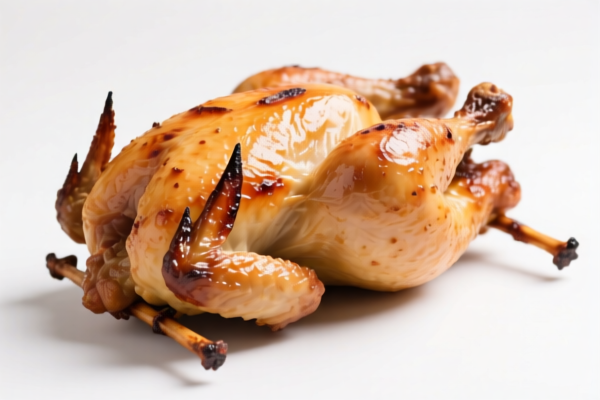
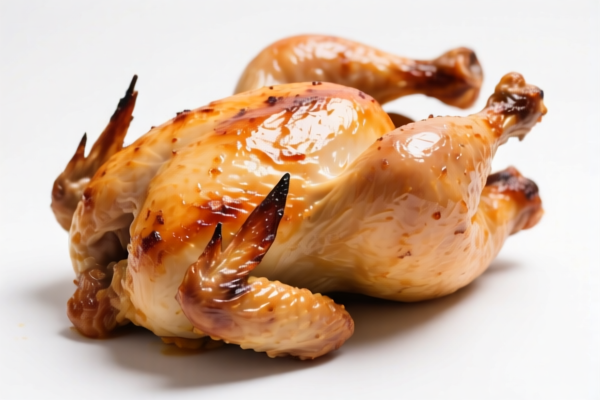
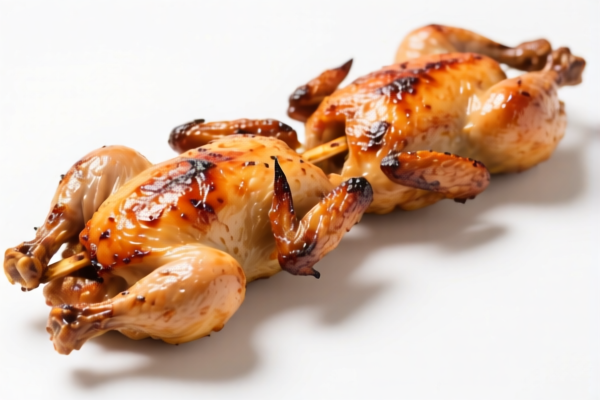
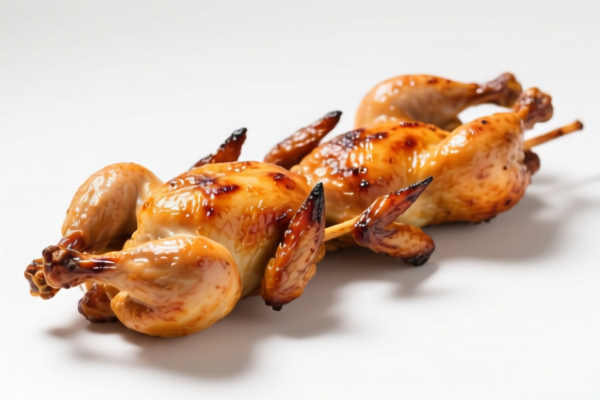
AI Analysis
🐔 Broiler Chickens (Live & Fresh/Chilled)
🌐 HS Code Reference & Customs Clearance Guide | 2026 Latest Tariff Analysis | Professional Poultry Clearance Strategy
📌 I. Product Definition & Classification: Do You Really Understand "Broiler Chickens"?
Broiler chickens are poultry specifically bred and raised for meat production, as opposed to layer chickens (bred for eggs). In international trade, they are classified into two distinct categories based on their state:
- Live Broiler Chickens (
0105.10): Live birds primarily bred for meat production, classified under live poultry in the HS Code system. - Fresh or Chilled Broiler Chickens (
0207.11): Not further prepared, intended for human consumption. This includes whole birds or parts, whether fresh or chilled.
⚠️ Key Distinction Point:
- If the birds are alive at the time of import → Classify under 0105.10
- If the birds are dead, slaughtered, and fresh/chilled (not frozen, not cooked) → Classify under 0207.11
📦 II. HS Code Classification Details (2026 Latest Tariff Authority Reference)
| HS Code | Product Description | Application Scenario | State of Goods |
|---|---|---|---|
0105.10 |
Live broiler chickens, primarily bred for meat production, classified under live poultry in the HS Code system. | Live birds arriving at ports, intended for slaughter or further processing. | ✅ Live |
0207.11 |
Fresh or chilled broiler chickens, not further prepared, intended for human consumption, including whole birds or parts. | Slaughtered, eviscerated, chilled or fresh birds ready for human consumption. | ✅ Dead/Fresh/Chilled |
0105.10 |
Live broiler chickens, primarily bred for meat production, intended for consumption as poultry. | Live birds intended for consumption as poultry after slaughter. | ✅ Live |
0207.11 |
Fresh or chilled broiler chickens, not further prepared, suitable for human consumption, including whole birds or parts. | Slaughtered birds, fresh or chilled, suitable for immediate human consumption. | ✅ Dead/Fresh/Chilled |
🔍 Important Reminder:
- Live birds (0105.10) are subject to strict veterinary health checks and live animal transport regulations.
- Fresh/Chilled birds (0207.11) are subject to food safety standards, cold chain requirements, and slaughtering facility certifications.
- Frozen broiler chickens are NOT included in0207.11; they fall under a different HS code (e.g.,0207.14for frozen). Do not misdeclare frozen goods as fresh/chilled.
💰 III. 2026 Latest Tariff Rate Details (Including Supplementary Taxes)
✅ Applicable Country: United States (US)
✅ Origin: China (CN)
✅ Effective Time: 2025 November 10 onwards (including subsequent imports)
⚠️ Critical Notice: Tax Information Retrieval Failed
According to the provided data source:
| Item | Content |
|---|---|
| Tax Detail | ❌ Failed to retrieve tax information |
| Total Tax | ❌ Error |
HS Code 0105.10 |
Live broiler chickens |
HS Code 0207.11 |
Fresh or chilled broiler chickens |
📌 Explanation:
- The system could not retrieve specific tariff rates for these HS codes from the provided data.
- Do NOT assume a zero or standard rate. Poultry imports are often subject to high tariffs, quotas, or specific agricultural safeguards.
- Action Required: You must consult the official USITC Tariff Schedule or a licensed customs broker for the current applicable rates, as they may vary based on trade agreements (e.g., USMCA, GSP) or retaliatory tariffs.
🛠️ IV. Customs Clearance Practical Advice (Field Pitfall Avoidance Guide)
✅ 1. Documentation Checklist (Missing Items = Delays)
| Document | Required | Description |
|---|---|---|
| ✅ Veterinary Health Certificate | ✔️ Mandatory | Issued by the exporting country’s competent authority, certifying the flock is free from avian influenza, Newcastle disease, etc. |
| ✅ USDA Inspection Certificate | ✔️ Mandatory | For fresh/chilled birds (0207.11), proving the slaughtering facility is USDA-equivalent. |
| ✅ Commercial Invoice | ✔️ Mandatory | Clearly state "Broiler Chicken," specify "Live" (0105.10) or "Fresh/Chilled" (0207.11). |
| ✅ Packing List | ✔️ Mandatory | Detail number of birds, weight, packing method (live crates vs. chilled boxes). |
| ✅ Cold Chain Records | ✔️ Mandatory | For 0207.11, proof of temperature control during transit is critical. |
| ✅ Importer Security Filing (ISF) | ✔️ Mandatory | Filed 24 hours before loading for ocean freight. |
✅ 2. Declaration Tips (Key Mnemonics)
🔥 "Live Needs Vet, Fresh Needs Cold, Names Must Be Clear, Taxes Can Be High!"
| Scenario | Correct Declaration | Error to Avoid |
|---|---|---|
| Live birds arriving | HS Code: 0105.10 Desc: "Live Broiler Chickens" |
Misdeclaring as "Poultry Meat" → Veterinary hold |
| Chilled whole birds | HS Code: 0207.11 Desc: "Fresh or Chilled Broiler Chicken, Whole" |
Misdeclaring as "Frozen" → Wrong HS Code |
| Chicken parts (breasts) | HS Code: 0207.11 (if fresh/chilled) | Misdeclaring as "Processed" → Higher tax |
| Frozen chicken | HS Code: 0207.14 (NOT in this data) | Using 0207.11 → Rejection |
✅ 3. Special Handling for Live vs. Chilled
| Condition | Handling Advice |
|---|---|
Live Broilers (0105.10) |
- Must comply with IATA Live Animal Regulations. - Ensure crates have ventilation, space, and water access. - Importer must have an active import license for live animals. |
Fresh/Chilled Broilers (0207.11) |
- Must arrive in temperature-controlled containers (0°C to 4°C). - Provide continuous temperature monitoring logs. - FDA prior notice is required before arrival. |
| Quota Restrictions | - Check if the US has applied any tariff-rate quotas (TRQs) for poultry. - Over-quota imports may face significantly higher duties. |
🌍 V. Global Major Market Clearance Comparison (2026 Latest)
| Country/Region | Recommended HS Code | Tariff (China Origin) | Certification Requirements | Notes |
|---|---|---|---|---|
| 🇺🇸 USA | 0207.11 (Fresh/Chilled)0105.10 (Live) |
❌ Error/Failed to Retrieve | USDA Inspection + FDA Prior Notice | Poultry imports are highly regulated; verify current tariffs. |
| 🇨🇳 China | 0207.11 |
~20-45% (Check Current Tariff) | CIQ Inspection | China is a major importer of US/Australian poultry. |
| 🇪🇺 EU | 0207.11 |
~24.5% | EU Health Certificate + No Antibiotics | Strict hormone and antibiotic rules. |
| 🇯🇵 Japan | 0207.11 |
~20% | Ministry of Health, Labour and Welfare Approval | Strict residue testing. |
| 🇨🇳 Vietnam | 0207.11 |
~20-30% | VFA Certificate | Growing market for imported poultry. |
📌 Conclusion:
- Tariff uncertainty exists in the provided data for US imports.
- Poultry is a sensitive agricultural product globally; expect strict sanitary and phytosanitary (SPS) measures.
- Always verify current tariffs with a customs broker, as rates can change due to trade wars or seasonal adjustments.
📌 VI. Common Errors & Pitfall Guide (Lessons Learned)
❌ Error 1: Declaring frozen chicken as fresh/chilled (0207.11)
👉 Consequence: Rejection at port, product thawed/spoiled, fines.
✅ Fix: Use correct HS Code for frozen poultry (0207.14).
❌ Error 2: Missing Veterinary Health Certificate for live birds (0105.10)
👉 Consequence: Quarantine or Return, high detention costs.
✅ Fix: Ensure exporter provides a valid, government-issued health certificate.
❌ Error 3: Assuming zero tariffs for poultry
👉 Consequence: Underpayment of duties, penalties, and audits.
✅ Fix: Contact a customs broker immediately to retrieve current tariff rates, as the system failed to provide them.
❌ Error 4: Inaccurate description: "Chicken" instead of "Broiler Chicken"
👉 Consequence: Customs scrutiny, delays in classification.
✅ Fix: Use precise descriptions: "Live Broiler Chickens" or "Fresh Broiler Chicken, Whole."
🎯 VII. Conclusion: Professional Declaration, Safe Clearance!
🎯 Remember the Mnemonic:
🔹 "Live = Vet Cert, Fresh = Cold Chain, Frozen = Different Code, Tax = Verify Now!"
🔹 "HS Code 0105.10 for Live, 0207.11 for Fresh/Chilled. Don't Guess Taxes!"
📌 Small Tip:
Since the tax information was failed to retrieve, it is CRITICAL that you:
1. Contact a licensed customs broker in the destination country.
2. Use the USITC Search Tool or equivalent database to lookup current rates for 0105.10 and 0207.11.
3. Verify SPS Requirements with the importing country’s agriculture/health ministry.
📣 Immediate Action:
📞 Contact Customs Broker + Provide Product Photos + Verify Tax Rates
🚀 Ensure Smooth Clearance for Your Broiler Chickens!
✨ Professional Clearance Starts with Accurate Classification!
💼 Every Chicken Counts – Protect Your Supply Chain!
Customer Reviews
About HS Code Classification
The Harmonized System (HS) is an internationally standardized nomenclature developed by the World Customs Organization (WCO) to classify traded products. Over 200 countries use the HS system as the basis for customs tariffs, trade statistics, and import/export regulations.
Each HS code follows a hierarchical structure:
- Chapter (2 digits) — Broad category of goods (e.g., Chapter 84: Machinery and Mechanical Appliances)
- Heading (4 digits) — More specific grouping within the chapter
- Subheading (6 digits) — Internationally standardized breakdown, used by all WCO member countries
- National subdivisions (8-10 digits) — Country-specific extensions for further classification, such as US HTSUS 10-digit codes
Correct HS code classification is essential for smooth customs clearance, accurate duty payment, and compliance with trade regulations. Misclassification can lead to customs delays, overpayment of duties, or penalties.
When importing from CN to US, the applicable tariff rates may include:
- Most-Favored-Nation (MFN) rate — The standard duty rate applied to WTO members
- General rate — Applied to countries without trade agreements
- Trade remedy duties — Additional tariffs such as Section 301 (anti-dumping), Section 232 (national security), or countervailing duties
The information provided on this page is for reference purposes only. For official classification, please consult with your local customs authority or a licensed customs broker.