brownie pan
CN → US| HS Code | Tariff Rate | Origin | Destination | Doc |
|---|---|---|---|---|
| 7323930045 | 62.0% | CN | US | Official Doc |
| 7323930035 | 62.0% | CN | US | Official Doc |
| 7326908688 | 87.9% | CN | US | Official Doc |
| 8438800000 | 35.0% | CN | US | Official Doc |
| 8516604070 | 35.0% | CN | US | Official Doc |
Product Images
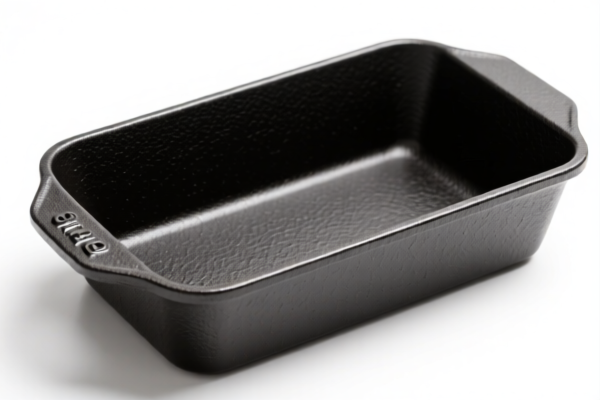
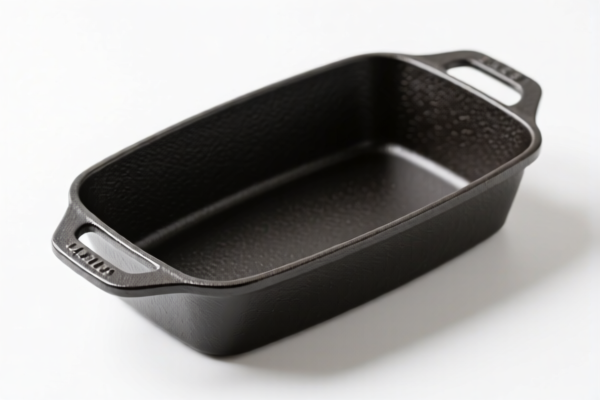
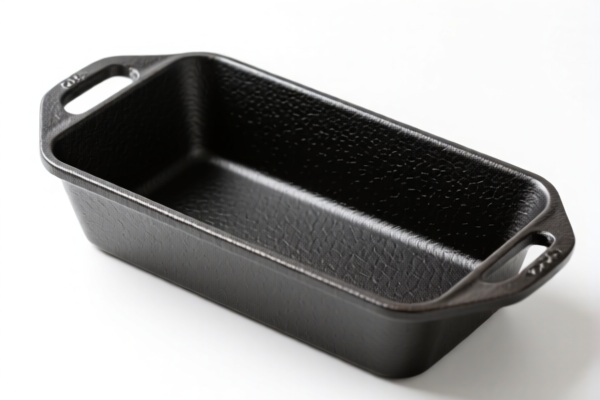
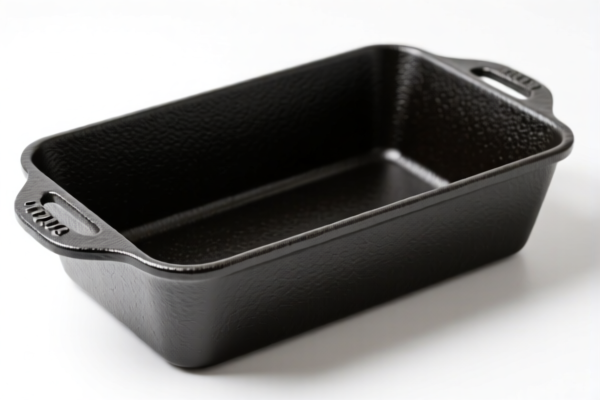
AI Analysis
🍪 Brownie Pan (Baking Sheet/Tray)
🌐 HS Code Reference & Customs Clearance Guide | 2026 Latest Tariff Analysis | Professional Clearance Strategy
📌 I. Product Definition & Classification: Do You Really Know a "Brownie Pan"?
A "Brownie Pan" is a generic term often used by consumers for rectangular baking vessels. In international trade, the classification depends heavily on the material and the specific function (cooking vs. general baking). Under current US trade policies (particularly Section 301 and IEEPA measures regarding Chinese-origin goods), misclassification can lead to catastrophic tariff penalties.
There are three primary categories for these items in the provided data:
- Stainless Steel Cooking Pans (
7323.93.00.45): Specifically for stovetop cooking or general "cookware." - Stainless Steel Baking Pans (
7323.93.00.35): Specifically designed for ovens/baking. - General Stainless Steel Articles (
7326.90.86.88): A "catch-all" category if it doesn't fit standard cookware/baking definitions or is a non-standard item.
⚠️ Key Distinction Point:
- If the item is explicitly marketed as a "Baking Pan" or "Brownie Pan" for oven use → 7323.93.00.35
- If the item is marketed as "Cookware" or "Stainless Steel Pan" for stovetop use → 7323.93.00.45
- If it is a miscellaneous stainless steel item not clearly falling into 7323 → 7326.90.86.88
📦 II. HS Code Classification Details (2026 Latest Tariff Authority)
| HS Code | Product Description | Usage Scenario | Tax Rate | Legal Basis for Rate |
|---|---|---|---|---|
7323.93.00.45 |
Stainless steel cookware (e.g., frying pans, pots) | Cooking utensils, stovetop use | 62.0% | Base 2% + Sec 301 0% + IEEPA 10% + Sec 232 Aluminum/Steel 50% |
7323.93.00.35 |
Stainless steel kitchenware for baking | Baking utensils, oven use | 62.0% | Base 2% + Sec 301 0% + IEEPA 10% + Sec 232 Aluminum/Steel 50% |
7326.90.86.88 |
Other articles of stainless steel | Miscellaneous steel articles | 87.9% | Base 2.9% + Sec 301 25% + IEEPA 10% + Sec 232 Aluminum/Steel 50% |
8438.80.00.00 |
Food processing machinery | Industrial/Commercial food manufacturing | 35.0% | Base 0% + Sec 301 25% + IEEPA 10% |
8516.60.40.70 |
Portable oven | Cooking range/oven appliances | 35.0% | Base 0% + Sec 301 25% + IEEPA 10% |
🔍 Crucial Reminder:
- Do NOT misclassify a simple stainless steel brownie pan as "Portable Oven" (8516) or "Food Machinery" (8438) unless it is an electric/appliance with motors/heating elements.
- A simple passive metal tray MUST go under Chapter 73 (Articles of Iron or Steel).
- The "Steel/Aluminum" Surcharge (50%) applies to Chapters 72-83 under Section 232. This is the biggest cost driver for stainless steel items.
💰 III. 2026 Latest Tariff Rate Breakdown (Including Additional Taxes)
✅ Applicable Country: United States (US)
✅ Origin: China (CN)
✅ Effective Date: Post-November 2025 (Current Policy)
🎯 1. 7323.93.00.35 & 7323.93.00.45 —— Stainless Steel Baking/Cooking Pans
| Item | Content |
|---|---|
| Base Tariff | 2.0% (Ad Valorem) |
| Sec 301 Surcharge | 0.0% (Note: Many 7323 items have reduced Sec 301 rates, check specific HTS exclusion lists) |
| IEEPA Surcharge | +10.0% (Against China/HK products, effective since Nov 10, 2025) |
| Sec 232 Surcharge | +50.0% (Aluminum/Steel products surcharge) |
| Total Rate | 62.0% |
| Tax Calculation | CIF Value × 62% |
| De Minimis Exemption | ❌ Not Eligible (High value/high risk) |
| Legal Path | IEEPA:9903.01.25 → USITC:7323.93.00.35/45 → FOOTNOTE:232 |
📌 Explanation:
- Even though the Base Tariff is only 2%, the 50% Section 232 tariff on steel/aluminum products adds massive cost.
- The 10% IEEPA tariff is applied on top.
- Total 62% makes low-margin imports of stainless steel bakeware extremely expensive.
🎯 2. 7326.90.86.88 —— Other Stainless Steel Articles
| Item | Content |
|---|---|
| Base Tariff | 2.9% |
| Sec 301 Surcharge | +25.0% |
| IEEPA Surcharge | +10.0% |
| Sec 232 Surcharge | +50.0% |
| Total Rate | 87.9% |
| Tax Calculation | CIF Value × 87.9% |
| De Minimis Exemption | ❌ Not Eligible |
📌 Warning:
- If you fail to prove the item is specifically "Cookware/Baking" (7323) and Customs classifies it as "Other Articles" (7326), you pay 87.9% instead of 62.0%.
- Always provide clear product descriptions distinguishing it as a "Pan" or "Tray."
🎯 3. 8516.60.40.70 —— Portable Oven (Electric)
⚠️ Only applicable if the "Brownie Pan" is part of an ELECTRIC appliance.
If you are importing an electric oven that comes with a pan, the pan is part of the appliance (8516).
Rate: 35.0% (Base 0% + Sec 301 25% + IEEPA 10%).
Note: Appliances often avoid the 50% Steel/Aluminum surcharge because they are classified as electrical machinery, not raw steel articles.
🛠️ IV. Customs Clearance Practical Advice (Pitfall Avoidance Guide)
✅ 1. Required Documentation Checklist
| Document | Required | Notes |
|---|---|---|
| ✅ Product Specification Sheet | ✔️ | Must state "Stainless Steel," "Oven Safe," Dimensions. |
| ✅ Photos | ✔️ | Show the item clearly. If it has no electrical cord, it is NOT an appliance. |
| ✅ Commercial Invoice | ✔️ | Use precise terms: "Stainless Steel Brownie Pan" or "Stainless Steel Baking Tray." Avoid vague "Metal Sheet." |
| ✅ Material Composition Proof | ✔️ | Certificate stating % of Chromium/Nickel to prove it is Stainless Steel (7323) vs. Other Steel (7326). |
✅ 2. Declaration Strategy (Key Mantra)
🔥 “Describe the Material, Define the Use, Avoid the ‘Other’ Trap!”
| Situation | Correct Declaration | Wrong Practice |
|---|---|---|
| Passive Metal Tray | 7323.93.00.35 (Baking) |
Calling it "Steel Part" → 7326 (87.9%) |
| Electric Oven with Pan | 8516.60.40.70 |
Declaring pan separately as steel → 62% on pan + tax on oven |
| Aluminum Pan | 7615.19 (Aluminum) |
Declaring as Steel → 7323 (Wrong Chapter) |
✅ 3. Special Case Handling
| Scenario | Handling Advice |
|---|---|
| Is it Aluminum or Steel? | Check the magnet. If magnetic, likely Steel (7323). If non-magnetic, it might be Aluminum (7615), which has different tariffs (often lower Sec 232 implications, but check current rules). |
| Non-Stick Coating? | If it has a ceramic/non-stick coating, it is still generally 7323 unless the coating is the primary feature. Do not misclassify as 3926 (Plastics) without strong justification. |
| Importing Electric Appliance? | Ensure the main function is electrical cooking (8516). The included pan is duty-free as part of the machine. This is the best way to avoid the 62% rate. |
🌍 V. Global Market Comparison (2026 Latest)
| Country/Region | Recommended HS Code | Tariff (China Origin) | Remarks |
|---|---|---|---|
| 🇺🇸 USA | 7323.93.00.35 |
62.0% | High due to Steel Surcharge (50%) + IEEPA (10%) |
| 🇨🇳 China | 7323.93.00.35 |
10% | Import duty for China market |
| 🇪🇺 EU | 7323.99 |
~6-8% | No Section 232 equivalent; generally lower taxes |
| 🇨🇦 Canada | 7323.93 |
0% (CUSMA eligible if Canadian origin) | High duty if Chinese origin without preferential agreement |
📌 Conclusion:
- The US market is the most hostile for stainless steel bakeware due to the 50% Section 232 tariff.
- Consider Aluminum pans (7615) if they meet your quality needs, as they may have different surcharge profiles.
- Consider bundling pans into Electric Ovens (8516) if possible, to shift the tax base from "Steel Article" to "Electrical Appliance."
📌 VI. Common Mistakes & Pitfalls (Blood-Teaching Lessons)
❌ Mistake 1: Declaring a stainless steel pan as "Other Steel Articles" (7326)
👉 Consequence: Tax jumps from 62% to 87.9%. Never do this.
❌ Mistake 2: Declaring a simple metal pan as an "Electric Oven" (8516)
👉 Consequence: Customs will reject it as false declaration. Penalty + Seizure.
❌ Mistake 3: Ignoring the "Steel/Aluminum" Surcharge (Section 232)
👉 Consequence: Underestimating landed cost by 50%. Profit margins will be wiped out.
✅ Correct Practice:
"Stainless Steel Brownie Pan, 9x13 Inch, Oven-Safe, Uncoated, Model XYZ"
HS Code:7323.93.00.35
🎯 VII. Conclusion: Professional Declaration Saves Money!
🎯 Remember the Mantra:
🔹 "Steel Pan = 62%. Other Steel = 87.9%. Electric Oven = 35%."
🔹 "If you can make it electric, do it. If it's just metal, brace for the 50% Steel Tax."
📌 Pro Tip:
If you are importing Aluminum pans instead of Stainless Steel, check Chapter 76. Aluminum often faces different surcharges. Sometimes Aluminum is cheaper to import into the US than Steel due to varying Section 232 enforcement nuances.
📣 Immediate Action:
📞 Verify material composition (Steel vs. Aluminum).
📞 Choose7323.93.00.35for stainless baking pans.
🚀 Calculate landed cost with 62% tariff included in your pricing model!
✨ Professional clearance starts with accurate classification!
💼 Every percentage point matters in the age of trade wars!
Customer Reviews
About HS Code Classification
The Harmonized System (HS) is an internationally standardized nomenclature developed by the World Customs Organization (WCO) to classify traded products. Over 200 countries use the HS system as the basis for customs tariffs, trade statistics, and import/export regulations.
Each HS code follows a hierarchical structure:
- Chapter (2 digits) — Broad category of goods (e.g., Chapter 84: Machinery and Mechanical Appliances)
- Heading (4 digits) — More specific grouping within the chapter
- Subheading (6 digits) — Internationally standardized breakdown, used by all WCO member countries
- National subdivisions (8-10 digits) — Country-specific extensions for further classification, such as US HTSUS 10-digit codes
Correct HS code classification is essential for smooth customs clearance, accurate duty payment, and compliance with trade regulations. Misclassification can lead to customs delays, overpayment of duties, or penalties.
When importing from CN to US, the applicable tariff rates may include:
- Most-Favored-Nation (MFN) rate — The standard duty rate applied to WTO members
- General rate — Applied to countries without trade agreements
- Trade remedy duties — Additional tariffs such as Section 301 (anti-dumping), Section 232 (national security), or countervailing duties
The information provided on this page is for reference purposes only. For official classification, please consult with your local customs authority or a licensed customs broker.