bubbles ball
CN → US| HS Code | Tariff Rate | Origin | Destination | Doc |
|---|---|---|---|---|
| 3926907500 | 14.2% | CN | US | Official Doc |
| 3926909989 | 22.8% | CN | US | Official Doc |
| 8801000010 | 17.5% | CN | US | Official Doc |
| 9503000013 | 10.0% | CN | US | Official Doc |
| 9503000011 | 10.0% | CN | US | Official Doc |
Product Images
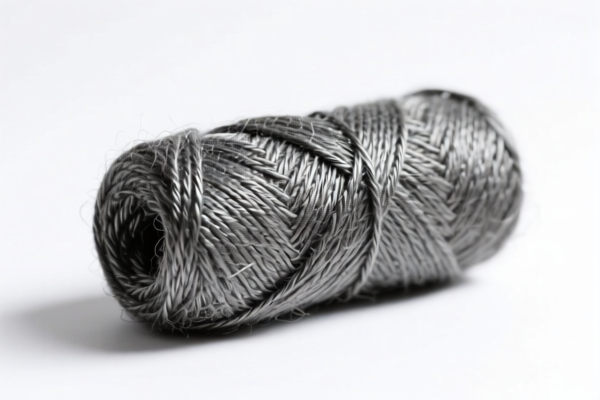
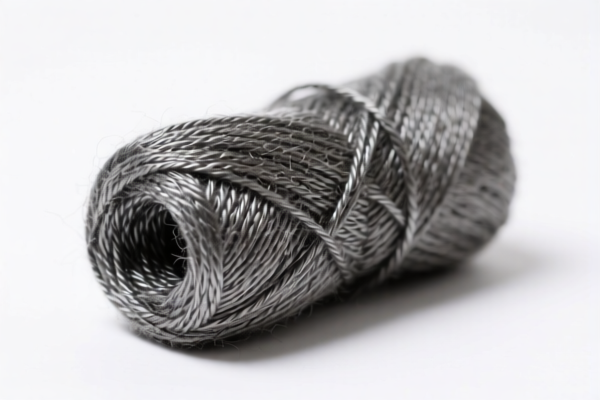
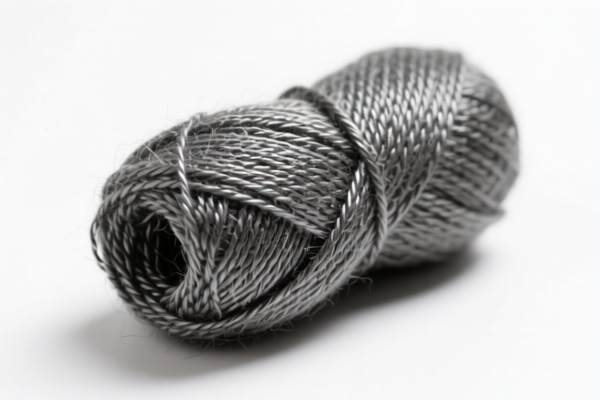
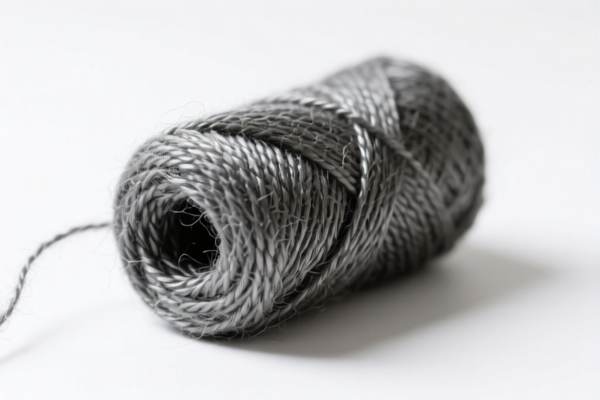
AI Analysis
🎈 Bubbles Ball (Party Balloons / Inflatable Toys)
🌐 HS Code Reference & Customs Clearance Guide | 2026 Latest Tariff Analysis | Professional Clearance Strategy
📌 I. Product Definition & Classification: Do You Really Know What a "Bubbles Ball" Is?
In international trade, "Bubbles Ball" (often referring to party balloons, inflatable decorations, or children's play balls) is a broad term. The correct HS Code depends entirely on the material composition and primary purpose of the item. Misclassification can lead to significant duty discrepancies due to US trade policies (Section 301 and IEEPA).
⚠️ Key Distinction:
- If it is a simple latex or plastic party balloon → It falls under Chapter 39 (Plastics) or Chapter 40 (Rubber) depending on material.
- If it is explicitly a children's toy (e.g., for play, not just decoration) and made of rubber → It may fall under Chapter 95 (Toys).
- Warning: The US imposes heavy additional tariffs on plastics and rubber products from China.
📦 II. HS Code Classification Details (2026 Latest Tariff Authority)
Based on the provided data, here are the 5 possible classifications for "Bubbles Ball," ranging from plastic parts to toy classifications.
| HS Code | Product Description | Material/Feature | Primary Use | Classification Logic |
|---|---|---|---|---|
| 3926.90.75.00 | Other articles of plastics | Latex or Plastic | General inflation/decoration | Matches characteristics of plastic/latex inflated items. |
| 3926.90.99.89 | Other articles of plastics (Subsidiary) | Latex, Rubber, or Plastic | General use (Not specified elsewhere) | "Other" plastic items; broader category for mixed materials. |
| 8801.00.00.10 | Balloons (Specific Category) | Any material | Inflation/Decoration | Exact match for "Balloons" in classification explanations. |
| 9503.00.00.13 | Toys: Rubber Inflatable Toys | Rubber (Inferred) | Children's Play | Inferred as rubber-based toy based on common sense. |
| 9503.00.00.11 | Toys: Rubber Inflatable Toys (Specific) | Rubber | Children's Play | Matches form/use (Toy); material inferred as rubber. |
🔍 Critical Note:
- HS 39xx and 8801 are subject to Section 301 and IEEPA additional tariffs.
- HS 9503 (Toys) has a 0% Section 301/IEEPA rate (excluding the base 10% IEEPA if applicable, but data shows 0% for 301/IEEPA in this specific context). This is a massive cost difference.
💰 III. 2026 Latest Tariff Rate Breakdown (Including Additional Taxes & Policy Surcharges)
✅ Applicable Country: United States (US)
✅ Origin: China (CN)
✅ Effective Date: Post-November 2025 Policies
🎯 1. 3926.90.75.00 —— Articles of Plastic
| Item | Content |
|---|---|
| Base Tariff | 4.2% |
| Section 301 Surcharge | 0.0% (Specific sub-category may be exempt or low) |
| IEEPA Surcharge | 10.0% |
| Total Tariff Rate | 14.2% |
| Tax Calculation | CIF Value × 14.2% |
| De Minimis Exemption | ❌ Not Applicable (Deny De Minimis) |
| Legal Basis | IEEPA 10% applies to all Chinese goods; Base 4.2% is standard. |
📌 Explanation:
- This code is for plastic/latex balloons that do not fit other specific plastic categories.
- Total 14.2% is significantly lower than other plastic codes due to 0% Section 301 in this specific sub-heading.
🎯 2. 3926.90.99.89 —— Other Articles of Plastic (Other)
| Item | Content |
|---|---|
| Base Tariff | 5.3% |
| Section 301 Surcharge | 7.5% |
| IEEPA Surcharge | 10.0% |
| Total Tariff Rate | 22.8% |
| Tax Calculation | CIF Value × 22.8% |
| De Minimis Exemption | ❌ Not Applicable |
| Legal Basis | Standard "Other" plastic items attract full Section 301 + IEEPA. |
📌 Explanation:
- This is a catch-all category. If customs cannot determine the specific plastic type, they may use this.
- Total 22.8% is the highest risk for plastic-based balloons. Avoid if possible by providing better material specs.
🎯 3. 8801.00.00.10 —— Balloons
| Item | Content |
|---|---|
| Base Tariff | 0.0% |
| Section 301 Surcharge | 7.5% |
| IEEPA Surcharge | 10.0% |
| Total Tariff Rate | 17.5% |
| Tax Calculation | CIF Value × 17.5% |
| De Minimis Exemption | ❌ Not Applicable |
| Legal Basis | Direct classification for "Balloons" under Chapter 88. |
📌 Explanation:
- This code is the most precise for "Bubbles Ball" if it is strictly a balloon.
- Total 17.5% is moderate. It has 0% Base Tariff but incurs full Section 301 + IEEPA.
🎯 4. 9503.00.00.13 —— Toys: Rubber Inflatable Toys
| Item | Content |
|---|---|
| Base Tariff | 0.0% |
| Section 301 Surcharge | 0.0% |
| IEEPA Surcharge | 10.0% |
| Total Tariff Rate | 10.0% |
| Tax Calculation | CIF Value × 10.0% |
| De Minimis Exemption | ❌ Not Applicable (Based on data context) |
| Legal Basis | Toys often enjoy Section 301 Exemptions. Only IEEPA 10% applies. |
📌 Explanation:
- Best for Cost Efficiency. If the ball is clearly a toy (for children), this code saves ~5-12% in duties compared to plastic codes.
- Requires proof that it is a toy (not just a decoration).
🎯 5. 9503.00.00.11 —— Toys: Rubber Inflatable Toys (Specific)
| Item | Content |
|---|---|
| Base Tariff | 0.0% |
| Section 301 Surcharge | 0.0% |
| IEEPA Surcharge | 10.0% |
| Total Tariff Rate | 10.0% |
| Tax Calculation | CIF Value × 10.0% |
| De Minimis Exemption | ❌ Not Applicable |
| Legal Basis | Same as above; specific sub-category for rubber toys. |
📌 Explanation:
- Identical tax treatment to9503.00.00.13.
- Use this if the product is explicitly marketed as a rubber-based toy for kids.
🛠️ IV. Customs Clearance Practical Advice (Battle-Tested Guide)
✅ 1. Documentation Checklist (Must-Haves)
| Document | Required | Description |
|---|---|---|
| ✅ Product Photos | ✔️ | Clear images showing the item is a ball/balloon, not a plastic part. |
| ✅ Material Specification | ✔️ | Explicitly state: "100% Latex," "PVC Plastic," or "Natural Rubber." |
| ✅ Purpose Statement | ✔️ | Crucial: State if it is a "Children's Toy" (for HS 9503) or "Party Decoration" (for HS 39/88). |
| ✅ Commercial Invoice | ✔️ | Description: "Inflatable Rubber Toy Ball" or "Latex Party Balloon." |
| ✅ Third-Party Test Report | ✔️ | If claiming HS 9503 (Toy), provide ASTM F963 or CPSIA compliance proof. |
✅ 2. Declaration Strategy (Key Mnemonic)
🔥 "Toy Code Saves Money, Plastic Code Costs More!"
| Scenario | Recommended HS Code | Reason |
|---|---|---|
| Product is a Kids' Toy | 9503.00.00.11 or .13 |
10% Total Rate. Section 301 Exempt. Must prove it's a toy. |
| Product is Party Decoration | 3926.90.75.00 |
14.2% Total Rate. Low Section 301, but higher base tax. |
| Uncertain Material | 8801.00.00.10 |
17.5% Total Rate. Safe "Balloons" classification. |
| Avoid This | 3926.90.99.89 |
22.8% Total Rate. Highest risk, highest duty. |
⚠️ Warning:
- Do NOT declare a toy as "Plastic Parts" to avoid scrutiny if it doesn't fit. The 12.8% duty difference is significant.
- Do NOT declare a plain balloon as a "Toy" unless it is clearly intended for play (e.g., colorful, kid-safe materials). Customs may audit and reclassify.
✅ 3. Special Case Handling
| Situation | Advice |
|---|---|
| Mixed Shipment | If you have both toys and decorations, split the invoice. Do not lump them under one HS Code. |
| OEM Custom Balls | Provide design drawings showing toy features (e.g., squeeze, bounce) to support HS 9503. |
| Large Industrial Bubbles | If used for industrial testing, do NOT use HS 9503. Use 3926 or 8801. |
| De Minimis Risk | Remember: All these codes are above the $800 De Minimis threshold. Full entry required. |
🌍 V. Global Market Comparison (2026 Latest)
| Country/Region | Recommended HS Code | Total Tariff (China Origin) | Key Certification |
|---|---|---|---|
| 🇺🇸 USA | 9503.00.00.11 (Toy) |
10.0% (Best) | CPSIA, ASTM F963 |
| 🇺🇸 USA | 3926.90.75.00 (Plastic) |
14.2% | None specific |
| 🇺🇸 USA | 8801.00.00.10 (Balloon) |
17.5% | None specific |
| 🇨🇳 China | 9503 |
5% | CCC (if applicable) |
| 🇪🇺 EU | 9503 |
0% - 4% | CE, EN71 |
| 🇬🇧 UK | 9503 |
0% - 5% | UKCA |
📌 Conclusion:
- USA is the most complex market due to IEEPA 10% and Section 301 variations.
- China and EU have minimal tariffs but strict safety standards (CE/EN71).
- US Strategy: Maximize use of HS 9503 (Toys) to benefit from 0% Section 301.
📌 VI. Common Mistakes & Pitfalls (Blood-Led Lessons)
❌ Mistake 1: Declaring a plastic party balloon as a Toy to save duty.
👉 Consequence: Customs audit → Reclassification to 3926 → Back taxes + Penalties + 8.2% rate increase.
❌ Mistake 2: Using 3926.90.99.89 when 3926.90.75.00 applies.
👉 Consequence: Paying 22.8% instead of 14.2% unnecessarily. Loss of $8.60 per $100.
❌ Mistake 3: Ignoring IEEPA 10%.
👉 Consequence: Even "Toys" (9503) still pay 10% IEEPA. Forgetting this leads to underpayment and holds.
❌ Mistake 4: Not providing Toy Safety Certs for 9503.
👉 Consequence: CBP may reject the toy classification, forcing a switch to higher-tariff plastic codes.
✅ Correct Approach:
"Inflatable Rubber Ball, ASTM F963 Compliant, for Children Ages 3+."
→ Supports HS 9503 → 10% Total Duty.
🎯 VII. Conclusion: Smart Classification, Higher Profits!
🎯 Remember the Mnemonic:
🔹 "Toy is King, Plastic is Suffering."
🔹 "9503 saves 5-12%, 3926 hurts your wallet."
🔹 "Always declare IEEPA 10%, even for toys!"
📌 Pro Tip:
If your product is marginally a toy (e.g., for adults but looks like a toy), consult a customs broker. Misclassification can lead to seizure.
For pure party balloons,3926.90.75.00(14.2%) is often the safest and most cost-effective balance if toy certification is not available.
📣 Immediate Action:
📞 Verify Material: Is it Latex, Plastic, or Rubber?
📞 Define Use: Toy or Decoration?
📞 Select Code:
- Toy + Rubber → 9503.00.00.11 (10%)
- Balloon/Plastic → 3926.90.75.00 (14.2%)
- Avoid: 3926.90.99.89 (22.8%)
✨ Professional Clearance Starts with Precise Classification!
💼 Your Margins Depend on This 10-Digit Code!
Customer Reviews
About HS Code Classification
The Harmonized System (HS) is an internationally standardized nomenclature developed by the World Customs Organization (WCO) to classify traded products. Over 200 countries use the HS system as the basis for customs tariffs, trade statistics, and import/export regulations.
Each HS code follows a hierarchical structure:
- Chapter (2 digits) — Broad category of goods (e.g., Chapter 84: Machinery and Mechanical Appliances)
- Heading (4 digits) — More specific grouping within the chapter
- Subheading (6 digits) — Internationally standardized breakdown, used by all WCO member countries
- National subdivisions (8-10 digits) — Country-specific extensions for further classification, such as US HTSUS 10-digit codes
Correct HS code classification is essential for smooth customs clearance, accurate duty payment, and compliance with trade regulations. Misclassification can lead to customs delays, overpayment of duties, or penalties.
When importing from CN to US, the applicable tariff rates may include:
- Most-Favored-Nation (MFN) rate — The standard duty rate applied to WTO members
- General rate — Applied to countries without trade agreements
- Trade remedy duties — Additional tariffs such as Section 301 (anti-dumping), Section 232 (national security), or countervailing duties
The information provided on this page is for reference purposes only. For official classification, please consult with your local customs authority or a licensed customs broker.