buffalo hide dehaired
CN → US| HS Code | Tariff Rate | Origin | Destination | Doc |
|---|---|---|---|---|
| 4104113010 | 12.4% | CN | US | Official Doc |
| 4104493010 | 12.4% | CN | US | Official Doc |
Product Images
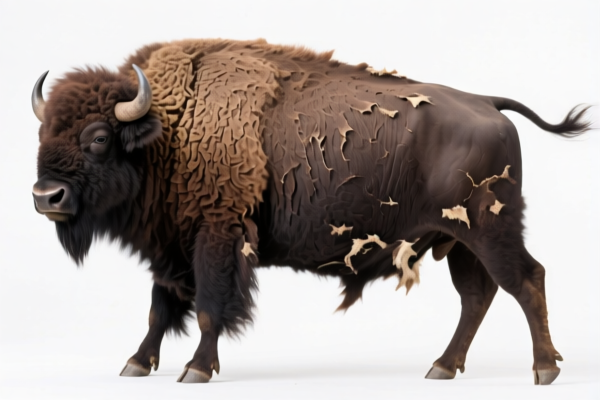
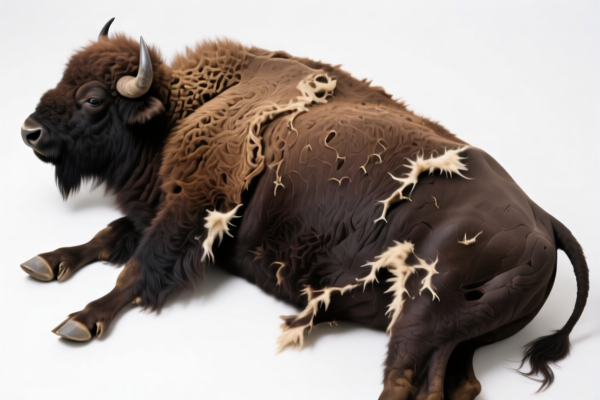
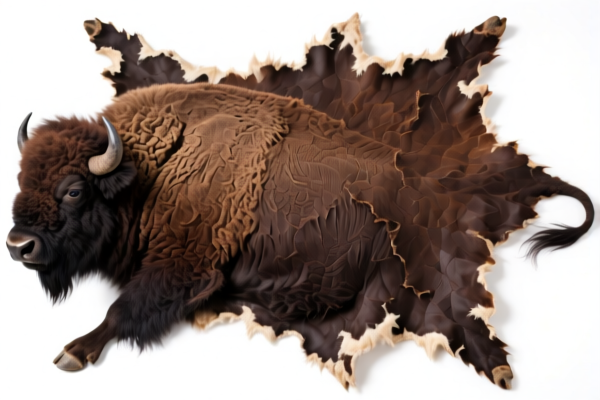
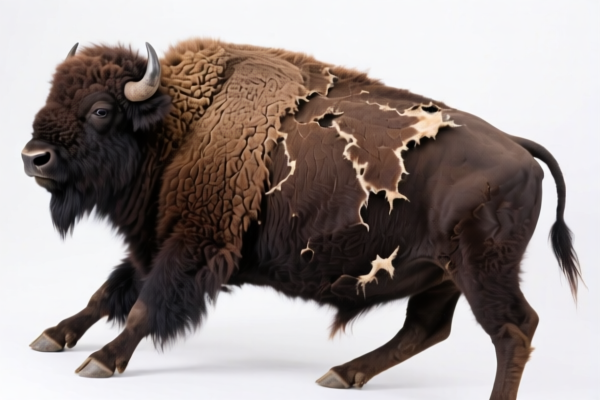
AI Analysis
🐃 Buffalo Hides: Tanned/Crust, Without Hair (Dehaired)
🌐 HS Code Reference & Customs Clearance Guide | 2026 Latest Tariff Analysis | Professional Clearance Strategy
📌 Part 1: Product Definition and Classification: What is "Buffalo Hide Dehaired"?
"Buffalo Hide Dehaired" refers to hides or skins from bovine animals (specifically buffalo) that have undergone the tanning process or are in the crust state (partially tanned), with all hair removed. They may be split (divided into layers) or unsplit.
In international trade, these are classified under Chapter 41 (Raw Hides and Skins; Leather). The classification depends strictly on: 1. State: Wet (Wet-Blue) vs. Dry (Crust). 2. Split Status: Full grain (unsplit) vs. Split. 3. Usage/Type: Specifically identified as Upper Leather (used for shoe uppers, bags, etc.).
⚠️ Key Distinction:
- Wet State (Wet-Blue): Tanned but not finished/dyed dry. Often shipped in barrels or wrapped. → HS Code4104.11.30.10
- Dry State (Crust): Tanned and dried, but not yet finished (dyed, polished, etc.). → HS Code4104.49.30.10
- "Buffalo Upper Leather": Must be specifically for upper leather production. Not for sole leather or other uses.
📦 Part 2: HS Code Classification Details (2026 Latest Tariff Reference)
| HS Code | Product Description | Condition | Split Status | Application |
|---|---|---|---|---|
4104.11.30.10 |
Buffalo Upper Leather | Wet State (including Wet-Blue) | Full Grain, Unsplit | Wet tanned buffalo hides, ready for further processing. |
4104.49.30.10 |
Buffalo Upper Leather | Dry State (Crust) | Other (Split/Unsplit) | Dried crust buffalo hides, not yet finished. |
🔍 Critical Note:
- Both codes specify "Buffalo Upper Leather". If the hide is for sole leather or other purposes, it falls under different sub-headings.
- "Without Hair On": Confirms the dehaired process is complete.
- "Not Further Prepared": Excludes finished leather (dyed, pigmented, etc.), which would fall under Chapter 41 heading 4107 or 4108.
💰 Part 3: 2026 Latest Tariff Rate Details (Detailed Tax Clause Explanation)
✅ Applicable Country: United States (US)
✅ Origin: China (CN)
✅ Effective Date: Current (as per provided data)
🎯 1. 4104.11.30.10 – Buffalo Upper Leather (Wet State)
| Item | Content |
|---|---|
| Base Tariff Rate | 0.0% (Ad Valorem) |
| Additional Tariff (Section 301) | 0.0% |
| Total Tax Rate | 0.0% |
| Tax Calculation | CIF Value × 0% = $0 |
| De Minimis Eligibility | N/A (Wet goods usually exceed de minimis thresholds) |
| Legal Basis Path | HTSUS:4104.11.30.10 → Customs Ruling |
📌 Explanation:
- Base Tariff: 0%. This is relatively low for raw materials.
- No Additional Tariff: According to the provided data, there are no Section 301 or other additional tariffs applied to this specific sub-heading.
- Implication: Importing wet buffalo hides is tax-free at the US border, provided they meet all FDA/USDA regulations.
🎯 2. 4104.49.30.10 – Buffalo Upper Leather (Dry State/Crust)
| Item | Content |
|---|---|
| Base Tariff Rate | 0.0% (Ad Valorem) |
| Additional Tariff (Section 301) | 0.0% |
| Total Tax Rate | 0.0% |
| Tax Calculation | CIF Value × 0% = $0 |
| De Minimis Eligibility | N/A (Dry hides may or may not qualify depending on value/weight, but typically high value) |
| Legal Basis Path | HTSUS:4104.49.30.10 → Customs Ruling |
📌 Explanation:
- Base Tariff: 0%.
- No Additional Tariff: Same as wet state, no extra tariffs apply.
- Implication: Dry crust buffalo hides are also tax-free at import, simplifying cost forecasting.
🛠️ Part 4: Customs Clearance Practical Advice (Combat Pitfalls)
✅ 1. Required Documentation Checklist (All Mandatory)
| Document | Required? | Explanation |
|---|---|---|
| ✅ Commercial Invoice | ✔️ | Must specify "Buffalo Hide, Tanned/Crust, Upper Leather, Without Hair". |
| ✅ Packing List | ✔️ | Detail weight, dimensions, and packaging type (barrels for wet, pallets for dry). |
| ✅ Bill of Lading/Air Waybill | ✔️ | Standard shipping document. |
| ✅ USDA APHIS Permit | ✔️ | CRITICAL: Animal products require USDA approval to prevent disease spread. |
| ✅ FDA Prior Notice | ✔️ | Food/Drug Administration prior notice is required for animal hides. |
| ✅ Treatment Certificate | ✔️ | Proof of dehairing and tanning process (chemicals used must be disclosed). |
| ✅ Certificate of Origin | ✔️ | For trade agreement benefits (though rate is 0%, proof may be needed for audits). |
✅ 2. Declaration Tips (Key Mnemonic)
🔥 "Wet vs. Dry, Split or Not, Upper Leather Only, USDA Permit First!"
| Scenario | Correct Declaration | Wrong Practice |
|---|---|---|
| Wet Blue Hides | 4104.11.30.10 |
Misdeclare as "Leather" (Chapter 41 vs 4107) → Delays |
| Dry Crust Hides | 4104.49.30.10 |
Misdeclare as "Raw Hides" (Chapter 41 vs 4103) → Higher scrutiny |
| Split vs. Unsplit | Clearly state "Full Grain" or "Split" | Ambiguous description → Customs Reassessment |
| Not Upper Leather | Do NOT use these codes | Use wrong HS Code → Potential penalty/retroactive tax |
✅ 3. Special Cases Handling
| Situation | Handling Advice |
|---|---|
| Chemical Residue | Ensure tanning agents (Chrome, Vegetable, etc.) are declared. USDA may test for hazardous substances. |
| Wet vs. Dry Logistics | Wet hides require refrigeration and special barrels to prevent rot. Dry hides are easier to store but must be moisture-proof. |
| USDA Inspection | Hides are subject to USDA APHIS inspection. Delays can occur if documents are missing or packaging is non-compliant. |
| Value Assessment | Even with 0% tax, ensure declared value is accurate. Customs may challenge undervaluation. |
🌍 Part 5: Global Market Clearance Comparison (2026 Latest)
| Country/Region | Recommended HS Code | Tariff | Certification Requirements | Remarks |
|---|---|---|---|---|
| 🇺🇸 USA | 4104.11.30.10 / 4104.49.30.10 |
0% | USDA + FDA | Tax-free, but strict health controls |
| 🇨🇳 China | 4104.11/49 | Varies | N/A | Import duties may apply depending on origin |
| 🇪🇺 EU | 4104.11/49 | 0-3% | REACH (Chemicals) | Strict chemical compliance (tanning agents) |
| 🇬🇧 UK | 4104.11/49 | 0-3% | REACH | Post-Brexit rules apply |
| 🇯🇵 Japan | 4104.11/49 | 0-3% | N/A | Moderate scrutiny |
📌 Conclusion:
- USA offers 0% tariff for these specific buffalo upper leather codes.
- Non-Tariff Barriers: The main challenge is USDA/FDA compliance, not cost. Ensure all health and safety documentation is perfect.
📌 Part 6: Common Errors & Pitfall Guide (Lessons Learned)
❌ Error 1: Declaring as "Leather" (Finished) instead of "Crust" or "Wet"
👉 Consequence: Wrong HS Code → Penalty + Back Taxes (Finished leather may have different duties).
❌ Error 2: Missing USDA Permit
👉 Consequence: Shipment Rejected or Destroyed at port. High cost and delay.
❌ Error 3: Not specifying "Upper Leather"
👉 Consequence: Customs may reclassify under generic "Other Hides" → Higher Duty Rate.
❌ Error 4: Wet Hides Leaking in Packaging
👉 Consequence: Biohazard Alert → Quarantine and fine.
✅ Correct Practice:
"Buffalo Hides, Tanned (Wet-Blue), Without Hair, Full Grain, For Upper Leather Production, USDA Permit #XXXX, FDA Prior Notice #YYYY"
🎯 Part 7: Conclusion: Professional Clearance, Risk-Free, Cost-Effective!
🎯 Remember the Mnemonic:
🔹 "Wet Blue: 4104.11.30.10, Dry Crust: 4104.49.30.10. Both 0% Tax, But USDA Permit is King!"
🔹 "Dehaired, Tanned, Upper Leather Only. No Hair, No Finish. Clear the Health Barrier, Clear the Port!"
📌 Pro Tip:
- Pre-Clearance: Apply for USDA APHIS Permit and FDA Prior Notice before shipment departure.
- Documentation: Ensure invoice explicitly states "Buffalo," "Tanned/Crust," "Without Hair," and "Upper Leather."
- Packaging: Use USDA-approved packaging for wet hides to prevent leakage.
📣 Immediate Action:
📞 Contact USDA-FIS for permit requirements.
📄 Verify HS Codes with your customs broker.
🚀 Ensure Compliance for seamless clearance and 0% Duty Savings!
✨ Professional Clearance Starts with Accurate Classification!
💼 Your Cost Efficiency Depends on Precision!
Customer Reviews
About HS Code Classification
The Harmonized System (HS) is an internationally standardized nomenclature developed by the World Customs Organization (WCO) to classify traded products. Over 200 countries use the HS system as the basis for customs tariffs, trade statistics, and import/export regulations.
Each HS code follows a hierarchical structure:
- Chapter (2 digits) — Broad category of goods (e.g., Chapter 84: Machinery and Mechanical Appliances)
- Heading (4 digits) — More specific grouping within the chapter
- Subheading (6 digits) — Internationally standardized breakdown, used by all WCO member countries
- National subdivisions (8-10 digits) — Country-specific extensions for further classification, such as US HTSUS 10-digit codes
Correct HS code classification is essential for smooth customs clearance, accurate duty payment, and compliance with trade regulations. Misclassification can lead to customs delays, overpayment of duties, or penalties.
When importing from CN to US, the applicable tariff rates may include:
- Most-Favored-Nation (MFN) rate — The standard duty rate applied to WTO members
- General rate — Applied to countries without trade agreements
- Trade remedy duties — Additional tariffs such as Section 301 (anti-dumping), Section 232 (national security), or countervailing duties
The information provided on this page is for reference purposes only. For official classification, please consult with your local customs authority or a licensed customs broker.