buffalo hide material
CN → US| HS Code | Tariff Rate | Origin | Destination | Doc |
|---|---|---|---|---|
| 4104493060 | 12.4% | CN | US | Official Doc |
| 4107124000 | 12.5% | CN | US | Official Doc |
| 4107194000 | 12.5% | CN | US | Official Doc |
| 4101503500 | 19.9% | CN | US | Official Doc |
| 4101203500 | 19.9% | CN | US | Official Doc |
Product Images
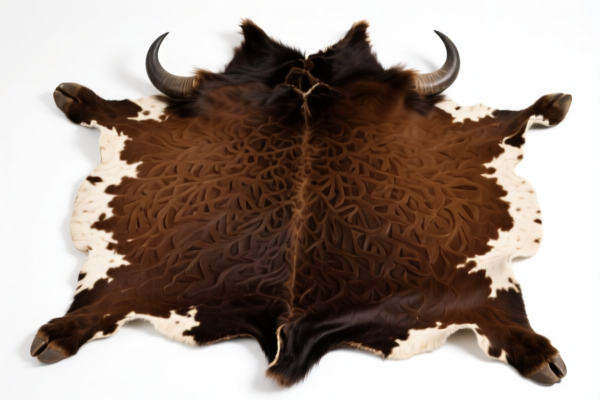


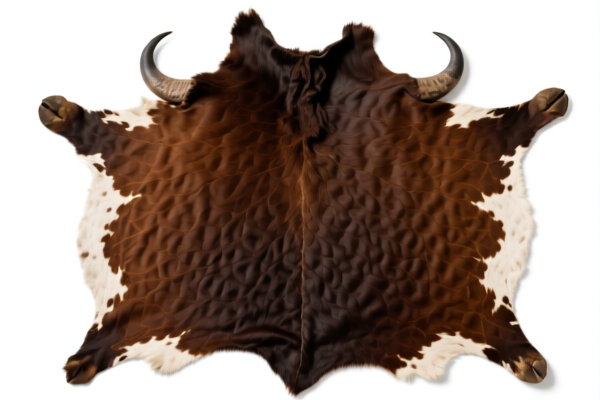
AI Analysis
🐃 Buffalo Hide Material (Raw & Processed Leather)
🌐 HS Code Reference & Customs Clearance Guide | 2026 Tariff Analysis | Professional Clearance Strategy 📌 I. Product Definition & Classification: What is "Buffalo Hide"?
In international trade, Buffalo Hide is not a single commodity but a category that splits sharply based on its state of processing. This distinction is critical because the tariff rates vary significantly between "Raw Skins" and "Processed Leather."
There are two main categories: 1. Raw Skins (Hides): Fresh, salted, or preserved animal skins without tanning. These are raw materials. 2. Processed Leather: Tanned, cured, or finished buffalo skin ready for manufacturing (e.g., upholstery, footwear).
⚠️ Key Distinction Point: * If the hide is untanned (even if salted/dried) → It falls under Chapter 41, Heading 4101 (Raw Hides/Skins). * If the hide is tanned or crust leather (finished or semi-finished) → It falls under Chapter 41, Heading 4107 (Processed Leather).
📦 II. HS Code Classification Matrix (Based on Provided Data)
| HS Code | Product Description | Category | Tax Status |
|---|---|---|---|
4101.50.35.00 |
Buffalo Hide Material (Raw) | Raw Skin | High Tariff |
4101.20.35.00 |
Buffalo Hide Material (Raw) | Raw Skin | High Tariff |
4104.49.30.60 |
Buffalo Leather (Matched Material) | Processed Leather | Low Tariff |
4107.12.40.00 |
Buffalo Leather (Direct Match) | Processed Leather | Low Tariff |
4107.19.40.00 |
Buffalo Leather (Explicit Leather) | Processed Leather | Low Tariff |
🔍 Critical Note: * Raw Skins (
4101.xx) are subject to heavy additional duties due to trade restrictions. * Processed Leather (4104/4107.xx) benefits from lower base tariffs but still incurs significant penalties. * Never confuse "Raw Buffalo Skin" with "Buffalo Leather" in customs declarations. Misclassification leads to severe penalties.
💰 III. 2026 Latest Tariff Rate Breakdown (Detailed Policy)
✅ Applicable Region: USA (Based on "122 Clause" reference in source data)
✅ Origin: Likely China (Implied by additional duties context)
✅ Effective Date: Current 2026 Tariff Structure
🎯 1. Raw Buffalo Hides (4101.50.35.00 & 4101.20.35.00)
These codes apply to untanned buffalo skins. They are considered raw agricultural/animal products.
| Item | Detail |
|---|---|
| HS Code | 4101.50.35.00 / 4101.20.35.00 |
| Base Duty | 2.4% |
| Additional Duty (Section 301/etc.) | 7.5% |
| "122 Clause" Tariff | 10% |
| Total Effective Rate | 19.9% |
| Tax Calculation | CIF Value × 19.9% |
| De Minimis Exemption | ❌ Not Applicable |
📌 Explanation: * The 7.5% additional duty reflects specific trade countermeasures or agricultural protection tariffs. * The 10% "122 Clause" is a specific regulatory surcharge applicable to raw animal products from certain origins. * Total 19.9% is relatively moderate compared to other raw materials but significantly higher than processed goods due to specific protectionist policies on raw hides.
🎯 2. Processed Buffalo Leather (4104.49.30.60, 4107.12.40.00, 4107.19.40.00)
These codes apply to tanned, crust, or finished buffalo leather. The material has undergone chemical treatment (tanning), changing its classification from "raw skin" to "manufactured leather."
| Item | Detail |
|---|---|
| HS Codes | 4104.49.30.60, 4107.12.40.00, 4107.19.40.00 |
| Base Duty | 2.4% ~ 2.5% |
| Additional Duty | 0.0% |
| "122 Clause" Tariff | 10% |
| Total Effective Rate | 12.4% ~ 12.5% |
| Tax Calculation | CIF Value × ~12.5% |
| De Minimis Exemption | ❌ Not Applicable |
📌 Explanation: * The Base Duty is low (2.4-2.5%) because processed leather is considered a manufactured good, not a raw agricultural product. * The 0.0% Additional Duty suggests that processed leather may be exempt from certain Section 301-like tariffs that apply to raw materials, OR it is covered under different trade agreements. * The 10% "122 Clause" still applies, indicating that the regulatory burden on the origin remains, regardless of processing level. * Total ~12.5% is significantly cheaper than raw hides (19.9%), incentivizing importers to process hides domestically or source finished leather if possible.
🛠️ IV. Customs Clearance Practical Advice (Avoid Pitfalls)
✅ 1. Documentation Checklist (Mandatory)
| Document | Required? | Description |
|---|---|---|
| Commercial Invoice | ✔️ | Must clearly state: "Buffalo Hide" OR "Buffalo Leather" + Tanned/Untanned Status. |
| Packing List | ✔️ | Detail weight, number of pieces, and condition (wet, salted, dried, tanned). |
| Certificate of Origin | ✔️ | Essential for verifying "122 Clause" applicability. |
| Tanning Certificate | ✔️ | For 4107/4104 codes, provide proof of tanning process to justify "Processed Leather" classification. |
| Phytosanitary/Veterinary Certificate | ✔️ | Often required for raw hides (4101) to prove no disease. |
✅ 2. Declaration Tips (Crucial Keywords)
🔥 "State of Processing Determines Code, Code Determines Cost!"
| Scenario | Correct Declaration | Common Mistake |
|---|---|---|
| Raw Salted Skins | "Raw Buffalo Hides, Untanned, Salted" | Calling it "Leather" → Audit Risk |
| Finished Leather | "Buffalo Leather, Chrome-Tanned, Finished" | Calling it "Raw Hide" → Overpaying Duty (19.9% vs 12.5%) |
| Crust Leather | "Buffalo Leather, Crust, Unfinished" | Vague description → Customs Delay |
✅ 3. Special Handling for "122 Clause"
- The 10% surcharge is unavoidable for both raw and processed buffalo products from the specified origin.
- Strategy: Ensure your supplier provides accurate HS Codes. If you can prove the product is not of the restricted origin (e.g., re-exported from a third country with substantial transformation), you might challenge the "122 Clause," but this requires robust proof of origin change.
🌍 V. Global Market Comparison (Brief Overview)
| Region | Typical HS Category | Est. Base Duty | Notes |
|---|---|---|---|
| 🇺🇸 USA | 4101/4104/4107 | 2.4-2.5% + Surcharges | High total cost due to 122 Clause & Additional Duties. |
| 🇪🇺 EU | 4101/4107 | 0-6.5% | Often lower base rates, but strict environmental/tanning regulations (REACH). |
| 🇨🇳 China | 4101/4107 | 5-12% | Import duties on processed leather may be lower; raw hides often restricted. |
📌 Conclusion: * USA is the most complex market due to layered tariffs (Base + Additional + 122 Clause). * Processing Stage Matters: Importing finished leather saves ~7.4% in duty compared to raw hides in the USA scenario provided.
📌 VI. Common Errors & Pitfalls (Lessons Learned)
❌ Error 1: Declaring "Raw Hides" as "Leather" to avoid the 7.5% additional duty. 👉 Consequence: Customs inspection reveals salted/untanned state → Seizure + Fines + Back Taxes.
❌ Error 2: Using vague terms like "Animal Skin" without specifying "Buffalo" or "Tanned." 👉 Consequence: Customs assigns worst-case HS code → Audit + Delay.
❌ Error 3: Ignoring the "122 Clause" in cost calculation. 👉 Consequence: Unexpected 10% surcharge at port → Cash Flow Issues.
✅ Correct Action:
"Buffalo Hide, Tanned, Cow Split Leather, for Upholstery, HS 4107.12.40.00" (Be specific about material, process, and end-use).
🎯 VII. Conclusion: Optimize Classification, Minimize Cost
🎯 Key Takeaway:
🔹 Raw Hides (
4101): 19.9% Total Tax. High duty, strict regulations. 🔹 Processed Leather (4104/4107): 12.4-12.5% Total Tax. Lower duty, but still significant 10% surcharge. 🔹 Strategy: If you have control over the supply chain, importing finished/tanned leather is more cost-effective than raw hides in this specific tariff structure.
📌 Pro Tip:
Always request a Tanning Certificate from your supplier. This document is your proof to classify goods under
4107(Processed) rather than4101(Raw), potentially saving you 7.4% in duties.
✨ Professional Customs Clearance Starts with Accurate Classification! 💼 Every percentage point saved is pure profit!
Customer Reviews
About HS Code Classification
The Harmonized System (HS) is an internationally standardized nomenclature developed by the World Customs Organization (WCO) to classify traded products. Over 200 countries use the HS system as the basis for customs tariffs, trade statistics, and import/export regulations.
Each HS code follows a hierarchical structure:
- Chapter (2 digits) — Broad category of goods (e.g., Chapter 84: Machinery and Mechanical Appliances)
- Heading (4 digits) — More specific grouping within the chapter
- Subheading (6 digits) — Internationally standardized breakdown, used by all WCO member countries
- National subdivisions (8-10 digits) — Country-specific extensions for further classification, such as US HTSUS 10-digit codes
Correct HS code classification is essential for smooth customs clearance, accurate duty payment, and compliance with trade regulations. Misclassification can lead to customs delays, overpayment of duties, or penalties.
When importing from CN to US, the applicable tariff rates may include:
- Most-Favored-Nation (MFN) rate — The standard duty rate applied to WTO members
- General rate — Applied to countries without trade agreements
- Trade remedy duties — Additional tariffs such as Section 301 (anti-dumping), Section 232 (national security), or countervailing duties
The information provided on this page is for reference purposes only. For official classification, please consult with your local customs authority or a licensed customs broker.