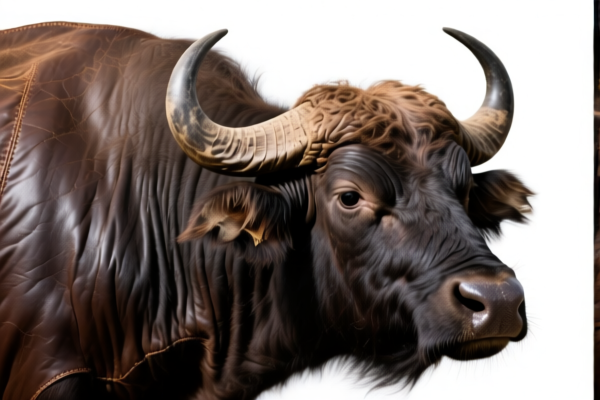
buffalo leather for shoe uppers
CN → US| HS Code | Tariff Rate | Origin | Destination | Doc |
|---|---|---|---|---|
| 4104493060 | 12.4% | CN | US | Official Doc |
| 4107196050 | 15.0% | CN | US | Official Doc |
| 4104114060 | 15.0% | CN | US | Official Doc |
| 4107994000 | 12.5% | CN | US | Official Doc |
| 4101903500 | 19.9% | CN | US | Official Doc |
Product Images



AI Analysis
👞 Buffalo Leather for Shoe Uppers (Cowhide/Leather Products)
🌐 HS Code Reference & Clearance Guide | 2026 Latest Tariff Analysis | Professional Customs Strategy
📌 I. Product Definition & Classification: Do You Really Understand "Buffalo Leather"?
Buffalo leather, primarily used in the footwear industry, is classified differently depending on its state of processing and specific form. In international trade, the distinction between "raw/unprocessed leather," "shoe upper leather," and "shoe sole leather" is critical for accurate tariff determination.
Key Distinctions: * Unprocessed/Partially Processed Leather: Crust leather or leather that has not been fully finished for a specific end-use. * Shoe Upper Leather (鞋面革): Leather specifically prepared and finished for making shoe uppers (top part of the shoe). * Shoe Sole Leather (鞋底革): Leather specifically prepared and shaped or processed for making shoe soles.
⚠️ Critical Classification Point:
- If the leather is simply tanned and cured but not specifically finished for uppers or soles, it may fall under general leather categories.
- If it is explicitly "shoe upper leather," it typically falls under Chapter 41 heading 4107 (Leather further prepared).
- If it is shaped or processed specifically for soles, it falls under specific subheadings for sole leather, which often attract different duties.
📦 II. HS Code Classification Details (Based on Provided Data)
The following HS Codes are derived strictly from the provided <DATA> set for Buffalo Leather products.
| HS Code | Product Description & Logic | Tax Detail Breakdown | Total Tax Rate |
|---|---|---|---|
4104.49.30.60 |
Buffalo Leather Material, Used for Shoe Soles, Classified Under "Other/Other" Catch-all Category | Base Tariff: 2.4% Add-on Tariff: 0.0% Section 122 Tariff: 10% |
12.4% |
4107.19.60.50 |
Buffalo Leather Material, Form: Shoe Soles, Fully Complies with Definition of Sole Leather | Base Tariff: 5.0% Add-on Tariff: 0.0% Section 122 Tariff: 10% |
15.0% |
4104.11.40.60 |
Buffalo Leather Material, As Unfurther Processed Shoe Upper Leather | Base Tariff: 5.0% Add-on Tariff: 0.0% Section 122 Tariff: 10% |
15.0% |
4107.99.40.00 |
Buffalo Leather Material, Leather Product, Used for Shoe Soles | Base Tariff: 2.5% Add-on Tariff: 0.0% Section 122 Tariff: 10% |
12.5% |
4101.90.35.00 |
Buffalo Leather Material, Semi-finished Goods or Parts Under Other Categories | Base Tariff: 2.4% Add-on Tariff: 7.5% Section 122 Tariff: 10% |
19.9% |
🔍 Key Insight:
- Section 122 Tariff (10%) applies to ALL listed HS codes in the provided data. This is a significant fixed add-on tariff.
- The Base Tariff varies from 2.4% to 5.0% depending on the specific classification (e.g., unprocessed vs. further prepared).
- Add-on Tariff is 0% for most leather categories except4101.90.35.00(19.9% total), which carries an additional 7.5% add-on.
💰 III. 2026 Latest Tariff Rate Breakdown (Including Supplementary Tariffs)
✅ Applicable Country: US (United States)
✅ Origin: CN (China)
✅ Effective Date: 2025-11-10 (Including subsequent imports)
🎯 1. 4104.49.30.60 —— Buffalo Leather for Shoe Soles (Other/Catch-all)
| Item | Content |
|---|---|
| Base Tariff | 2.4% |
| Add-on Tariff | 0.0% |
| Section 122 Tariff | 10% |
| Total Tariff | 12.4% |
| Calculation Basis | CIF Value × 12.4% |
| De Minimis Exemption | ❌ Not Eligible (Deny de minimis for leather goods under Section 122) |
📌 Explanation:
- This code is used for buffalo leather used for soles but classified under the "other" catch-all category.
- Total tax is 12.4%, making it one of the more cost-effective options for sole leather.
🎯 2. 4107.19.60.50 —— Buffalo Leather for Shoe Soles (Fully Complies with Sole Leather Definition)
| Item | Content |
|---|---|
| Base Tariff | 5.0% |
| Add-on Tariff | 0.0% |
| Section 122 Tariff | 10% |
| Total Tariff | 15.0% |
| Calculation Basis | CIF Value × 15.0% |
| De Minimis Exemption | ❌ Not Eligible |
📌 Note:
- This code applies when the leather is explicitly defined as "sole leather."
- Higher base tariff (5.0%) compared to4104.49.30.60, resulting in a higher total tax of 15.0%.
🎯 3. 4104.11.40.60 —— Buffalo Leather as Unfurther Processed Shoe Upper Leather
| Item | Content |
|---|---|
| Base Tariff | 5.0% |
| Add-on Tariff | 0.0% |
| Section 122 Tariff | 10% |
| Total Tariff | 15.0% |
| Calculation Basis | CIF Value × 15.0% |
| De Minimis Exemption | ❌ Not Eligible |
📌 Note:
- Applies to shoe upper leather that is not further processed.
- Same total tax rate as sole leather under4107.19.60.50.
🎯 4. 4107.99.40.00 —— Buffalo Leather, Leather Product for Shoe Soles
| Item | Content |
|---|---|
| Base Tariff | 2.5% |
| Add-on Tariff | 0.0% |
| Section 122 Tariff | 10% |
| Total Tariff | 12.5% |
| Calculation Basis | CIF Value × 12.5% |
| De Minimis Exemption | ❌ Not Eligible |
📌 Note:
- A middle-ground classification for leather products used for soles.
- Low base tariff (2.5%) results in a competitive 12.5% total tax.
🎯 5. 4101.90.35.00 —— Buffalo Leather, Semi-finished Goods or Parts
| Item | Content |
|---|---|
| Base Tariff | 2.4% |
| Add-on Tariff | 7.5% |
| Section 122 Tariff | 10% |
| Total Tariff | 19.9% |
| Calculation Basis | CIF Value × 19.9% |
| De Minimis Exemption | ❌ Not Eligible |
📌 Warning:
- This code carries a significant add-on tariff of 7.5%, making it the most expensive option.
- Use only if the product truly qualifies as "semi-finished goods or parts" under this specific category.
🛠️ IV. Customs Clearance Practical Advice (Avoid Pitfalls)
✅ 1. Documentation Checklist (All Required)
| Document | Required | Description |
|---|---|---|
| ✅ Product Specification Sheet | ✔️ | Details material composition (Buffalo Leather), dimensions, thickness, finish type. |
| ✅ Product Photos | ✔️ | Clear images showing grain, texture, and any markings (e.g., "Shoe Upper," "Sole Leather"). |
| ✅ Commercial Invoice | ✔️ | Clearly state "Buffalo Leather for Shoe Uppers" or "Sole Leather" based on intended use. |
| ✅ Packing List | ✔️ | List quantities, weights, and dimensions. |
| ✅ Certificate of Origin (CO) | ✔️ | If not from China, may qualify for preferential rates (not applicable for CN origin here). |
| ✅ Third-Party Test Report | ✔️ | If available, tests for leather durability, tanning process, etc. |
✅ 2. Declaration Tips (Key Mnemonics)
🔥 "Specify Form, Avoid 'Other', Section 122 Always On!"
| Scenario | Correct Declaration | Incorrect Declaration |
|---|---|---|
| Leather specifically for shoe uppers | 4104.11.40.60 (Shoe Upper Leather) |
Misdeclare as "General Leather" → Risk of 19.9% |
| Leather specifically for shoe soles | 4107.19.60.50 (Sole Leather) or 4104.49.30.60 (Other Sole) |
Misdeclare as "Upper Leather" → Wrong tax rate |
| Semi-finished leather parts | 4101.90.35.00 |
Misdeclare as "Finished Leather" → Risk of penalties |
| All Cases | Mention Section 122 compliance | Forget to mention Section 122 → Delays |
✅ 3. Special Circumstances
| Situation | Handling Advice |
|---|---|
| OEM Custom Leather | Provide design specs and end-use declaration to support 4107.19.60.50 or 4104.11.40.60. |
| Mixed Leather Types | If buffalo and cowhide are mixed, declare based on the primary material (by value/weight). |
| Leather for Non-Footwear Use | If buffalo leather is used for bags or belts, do not declare as "shoe upper/sole" → Re-classify to appropriate heading. |
| Pre-Ruling Request | For large volumes, apply for an Advance Ruling from US Customs to confirm HS Code. |
🌍 V. Global Market Comparison (2026 Latest)
| Country/Region | Recommended HS Code | Tariff Rate | Certification | Notes |
|---|---|---|---|---|
| 🇺🇸 USA | 4104.49.30.60 / 4107.19.60.50 |
12.4% - 15.0% | No specific CE/FCC | Section 122 applies |
| 🇨🇳 China | 4104 / 4107 Series |
Varies (MFN) | N/A | Lower base rates, no Section 122 |
| 🇪🇺 EU | 4107 Series |
0% - 6% | REACH Compliance | No Section 122 equivalent |
| 🇬🇧 UK | 4107 Series |
0% - 6% | UKCA | Post-Brexit rules apply |
📌 Conclusion:
- USA is the most costly market due to the Section 122 10% tariff and potential add-on tariffs.
- China and EU offer lower tariff burdens, but compliance with REACH (EU) or domestic standards is required.
📌 VI. Common Mistakes & Pitfalls (Lessons Learned)
❌ Mistake 1: Declaring "Shoe Upper Leather" when it is actually "Sole Leather"
👉 Consequence: Incorrect tax rate (15.0% vs 12.4%) → Overpayment or Underpayment & Penalties.
❌ Mistake 2: Ignoring Section 122 Tariff
👉 Consequence: Customs will auto-apply 10% + potential penalties → Delays & Fines.
❌ Mistake 3: Using "General Leather" for Specific Applications
👉 Consequence: Higher scrutiny, possible re-classification to 4101.90.35.00 (19.9%) → Significant Cost Increase.
❌ Mistake 4: Not Providing End-Use Declaration
👉 Consequence: Customs may doubt the declared HS Code → Inspection & Delay.
✅ Correct Practice:
"Buffalo Leather, Tanned, Finished for Shoe Uppers, Thickness 1.2mm, Width 40-50cm, Section 122 Compliant, HS Code: 4104.11.40.60"
🎯 VII. Conclusion: Accurate Classification Saves Money!
🎯 Remember the Mnemonics:
🔹 "Upper vs. Sole, Base Rate Varies, Section 122 is Fixed!"
🔹 "Check the Form, Declare the Use, Avoid the 19.9% Trap!"
📌 Pro Tip:
If your buffalo leather is originating from Vietnam, Mexico, or Thailand, check for IEEPA Exemptions or FTA Preferences.
However, for China-origin goods, Section 122 is unavoidable.
📣 Immediate Action:
📞 Consult a licensed customs broker + Provide Product Photos + Request HS Code Pre-Ruling
🚀 Ensure your buffalo leather clears smoothly, efficiently, and cost-effectively!
✨ Professional Clearance Starts with Accurate Classification!
💼 Every Cent Counts in Cross-Border Trade!
Customer Reviews
About HS Code Classification
The Harmonized System (HS) is an internationally standardized nomenclature developed by the World Customs Organization (WCO) to classify traded products. Over 200 countries use the HS system as the basis for customs tariffs, trade statistics, and import/export regulations.
Each HS code follows a hierarchical structure:
- Chapter (2 digits) — Broad category of goods (e.g., Chapter 84: Machinery and Mechanical Appliances)
- Heading (4 digits) — More specific grouping within the chapter
- Subheading (6 digits) — Internationally standardized breakdown, used by all WCO member countries
- National subdivisions (8-10 digits) — Country-specific extensions for further classification, such as US HTSUS 10-digit codes
Correct HS code classification is essential for smooth customs clearance, accurate duty payment, and compliance with trade regulations. Misclassification can lead to customs delays, overpayment of duties, or penalties.
When importing from CN to US, the applicable tariff rates may include:
- Most-Favored-Nation (MFN) rate — The standard duty rate applied to WTO members
- General rate — Applied to countries without trade agreements
- Trade remedy duties — Additional tariffs such as Section 301 (anti-dumping), Section 232 (national security), or countervailing duties
The information provided on this page is for reference purposes only. For official classification, please consult with your local customs authority or a licensed customs broker.