buffalo leather offcuts automotive interior
CN → US| HS Code | Tariff Rate | Origin | Destination | Doc |
|---|---|---|---|---|
| 6309000010 | 17.5% | CN | US | Official Doc |
| 4115200000 | 17.5% | CN | US | Official Doc |
| 4115100000 | 35.0% | CN | US | Official Doc |
| 6309000020 | 17.5% | CN | US | Official Doc |
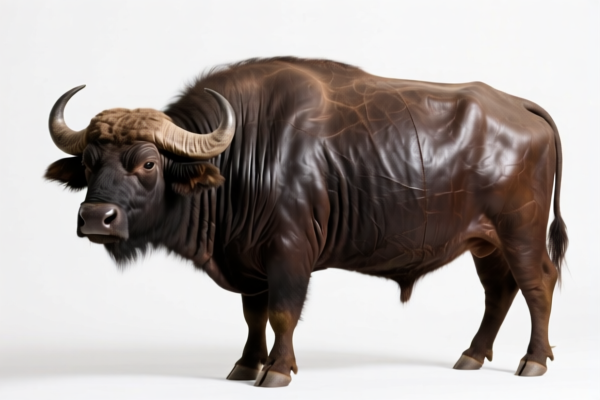
Product Images



AI Analysis
🚗 Buffalo Leather Offcuts for Automotive Interiors: HS Code & Tariff Guide (US Market)
🌐 HS Code Reference & Clearance Guide | 2024 Latest Tariff Analysis | Professional Customs Strategy
📌 I. Product Definition & Classification: Do You Really Understand "Leather Offcuts"?
Buffalo leather offcuts are residual pieces of buffalo hide, typically resulting from the cutting process for larger automotive components (seats, dashboards, door panels). In international trade, these scraps are classified not by their end-use (automotive), but by their physical form and material state.
Key Distinction: * Scrap/Waste (Offcuts): Irregular shapes, not ready for immediate use without further processing. → Classified under Chapter 41 or Chapter 63. * Ready-to-Use Trim: Pre-cut, finished pieces ready for stitching. → May fall under Chapter 39 or Chapter 41 depending on finish.
⚠️ Critical Classification Point:
- If the leather is unfinished, irregular, and clearly waste/scrap from manufacturing → Likely 4115.20.00.00.
- If the leather is finished, composite, or processed → Likely 4115.10.00.00.
- If the material is considered used/old stock or falls under "other old goods" → 6309.00.00.20.
- If the classification is ambiguous and defaults to "other" → 6309.00.00.10.
📦 II. HS Code Classification Details (2024/2025 Authority)
| HS Code | Product Description | Scenario | Composite Material? |
|---|---|---|---|
4115.20.00.00 |
Leather scraps and waste, including leather dust | Regular offcuts from buffalo hide cutting; raw or slightly processed; not composite | ❌ No |
4115.10.00.00 |
Composite leather (e.g., bonded leather) | If the offcuts are made of crushed leather + polyurethane/resin (bonded) | ✅ Yes |
6309.00.00.20 |
Other old articles | If the offcuts are deemed "used" or surplus old inventory rather than fresh waste | N/A |
6309.00.00.10 |
Other goods (miscellaneous old articles) | Ambiguous case; used as a catch-all for non-specified old leather goods | N/A |
🔍 Key Insight:
- Most fresh buffalo leather offcuts from automotive upholstery production fall under 4115.20.00.00.
- If the leather is bonded/composite (common in budget automotive interiors), it goes to 4115.10.00.00.
- Chapter 63 codes apply only if the goods are classified as "old" or "used," which is rare for new manufacturing offcuts unless returned/defective.
💰 III. 2024/2025 Tariff Rate Breakdown (US Market, China Origin)
✅ Applicable Country: United States (US)
✅ Origin: China (CN)
✅ Effective Time: Current 2024/2025 rates (Subject to Section 301 & IEEPA adjustments)
🎯 1. 4115.20.00.00 – Leather Scraps and Waste (Non-Composite)
| Item | Detail |
|---|---|
| Base Tariff | 0.0% (General Rate) |
| Section 301 Surcharge | 7.5% (List 4B / 7.5% subset) |
| IEEPA Surcharge | 10.0% (China-specific emergency tariff) |
| Total Tariff | 17.5% |
| Calculation Basis | CIF Value × 17.5% |
| De Minimis Eligible? | ❌ No (Denied de minimis for Chapter 41) |
| Legal Path | USITC:4115.20.00.00 → USITC Footnote 1 → IEEPA:9903.01.24 |
📌 Explanation:
- Base 0%: Leather waste has no base duty.
- 7.5%: Section 301 duty applies to many leather products.
- 10%: IEEPA additional tariff for Chinese-origin goods.
- Total 17.5%: This is the standard rate for fresh leather offcuts.
🎯 2. 4115.10.00.00 – Composite Leather (Bonded Leather)
| Item | Detail |
|---|---|
| Base Tariff | 0.0% |
| Section 301 Surcharge | 25.0% |
| IEEPA Surcharge | 10.0% |
| Total Tariff | 35.0% |
| Calculation Basis | CIF Value × 35.0% |
| De Minimis Eligible? | ❌ No |
| Legal Path | USITC:4115.10.00.00 → USITC Footnote 9903.88.01 → IEEPA:9903.01.24 |
📌 Explanation:
- 25% Section 301: Composite leather often falls under higher tariff subgroups due to its processed nature.
- Total 35.0%: Significantly higher than raw offcuts. Ensure your supplier specifies if it’s true buffalo hide or bonded leather.
🎯 3. 6309.00.00.20 / 6309.00.00.10 – Old Articles / Miscellaneous
| Item | Detail |
|---|---|
| Base Tariff | 0.0% |
| Section 301 Surcharge | 7.5% |
| IEEPA Surcharge | 10.0% |
| Total Tariff | 17.5% |
| Calculation Basis | CIF Value × 17.5% |
| De Minimis Eligible? | ❌ No |
| Legal Path | USITC:6309.00.00.20 → IEEPA:9903.01.24 |
📌 Explanation:
- These codes are for "old" or "used" goods. If you are importing new manufacturing offcuts, do not use these codes. Misclassification can lead to fines.
- If the offcuts are defective and returned from a previous shipment, they may qualify as "old articles," but still incur the 17.5% tariff.
🛠️ IV. Customs Clearance Practical Advice (Real-World Pitfalls)
✅ 1. Required Documentation Checklist
| Document | Mandatory? | Purpose |
|---|---|---|
| ✅ Commercial Invoice | ✔️ | Must clearly state "Buffalo Leather Offcuts" and "For Automotive Interior Use" |
| ✅ Packing List | ✔️ | Detail weight, volume, and packaging type |
| ✅ Material Declaration | ✔️ | Specify if 100% Buffalo Hide (4115.20) or Composite/Bonded (4115.10) |
| ✅ Bill of Lading/Air Waybill | ✔️ | Standard shipping document |
| ✅ Certificate of Origin | ✔️ | To prove China origin and apply IEEPA duties |
| ✅ Photos of Goods | ✔️ | Show irregular shapes to prove they are "offcuts/scrap" not finished leather |
✅ 2. Classification Tips (Key Mnemonics)
🔥 “Raw Offcuts = 4115.20 (17.5%), Bonded = 4115.10 (35%)”
| Scenario | Correct HS Code | Mistake |
|---|---|---|
| Fresh, irregular buffalo hide pieces from cutting | 4115.20.00.00 |
Reporting as "finished leather" → 25%+ base duty |
| Crushed leather mixed with PU resin (bonded) | 4115.10.00.00 |
Reporting as "natural leather" → Audit risk |
| Old, used leather scraps from returns | 6309.00.00.20 |
Reporting as "new offcuts" → Misdeclaration |
| Ambiguous "leather pieces" | 6309.00.00.10 |
Avoid unless necessary; 6309 is for "old" goods |
✅ 3. Special Case Handling
| Situation | Recommendation |
|---|---|
| Mixed Bundles | If shipment contains both raw offcuts and bonded leather, declare separately to avoid higher tax on the entire batch. |
| OEM Defect Returns | If importing defective offcuts back from the US, apply for Return of US Goods (if eligible) or declare as "old articles" with proper documentation. |
| Small Samples | If value is under $800, De Minimis (Section 321) may apply, but only if not restricted. Leather items often face scrutiny; consult a broker. |
| End-Use Misleading | Do not declare as "Automotive Parts." The HS Code is based on material, not end-use. |
🌍 V. Global Market Comparison (2024/2025)
| Country/Region | Recommended HS Code | Tariff (China Origin) | Notes |
|---|---|---|---|
| 🇺🇸 USA | 4115.20.00.00 |
17.5% | High IEEPA + Section 301 |
| 🇨🇳 China | 4115.20.00.00 |
0% | No import duty on leather waste |
| 🇪🇺 EU | 4115.20.00 |
0% | Generally no duty on leather waste |
| 🇬🇧 UK | 4115.20.00 |
0% | Post-Brexit, similar to EU |
| 🇯🇵 Japan | 4115.20.00 |
0% | No duty on leather scraps |
📌 Conclusion:
- The US is the only major market with significant additional tariffs on Chinese leather offcuts (17.5%–35%).
- EU, UK, Japan, and China typically impose 0% duty on leather waste, making it cheaper to import there.
📌 VI. Common Mistakes & Pitfalls (Lessons Learned)
❌ Mistake 1: Declaring "Leather Offcuts" as "Leather Goods" or "Auto Parts"
👉 Consequence: Higher base duty (up to 25%) + audit risk.
❌ Mistake 2: Using 6309 codes for new offcuts
👉 Consequence: Customs rejection; goods flagged as "old goods" falsely.
❌ Mistake 3: Ignoring Composite vs. Natural distinction
👉 Consequence: 17.5% vs. 35% tariff difference. Always confirm material composition.
❌ Mistake 4: Assuming De Minimis applies to all small shipments
👉 Consequence: Leather items are often subject to anti-dumping or safeguard measures. Check with a broker.
✅ Correct Practice:
"Buffalo Leather Offcuts, Unfinished, Irregular Shapes, For Automotive Interior Refurbishment, Non-Composite, HS Code 4115.20.00.00"
🎯 VII. Conclusion: Precise Classification Saves Money!
🎯 Remember:
🔹 "Raw Offcuts = 4115.20 (17.5%), Bonded = 4115.10 (35%)"
🔹 "US Market = High Tariffs, EU/Asia = Low/No Tariffs"
🔹 "Declarer’s Note: Material, Not End-Use, Determines HS Code!"
📌 Pro Tip:
If you are importing large volumes of buffalo leather offcuts into the US, consider:
1. Pre-Ruling: Apply for an HS Code Advance Ruling from CBP.
2. Supply Chain Diversification: Source from non-China origins (e.g., India, Brazil) to avoid IEEPA duties.
3. Bonded Warehouses: Use for temporary storage before final entry.
📣 Immediate Action:
📞 Contact a Licensed Customs Broker + Provide Product Photos + Material Composition Statement
🚀 Ensure Smooth Clearance, Avoid Delays, and Optimize Costs!
✨ Professional Customs Clearance Starts with Accurate Classification!
💼 Every Percent of Tariff Saved is Pure Profit!
Customer Reviews
About HS Code Classification
The Harmonized System (HS) is an internationally standardized nomenclature developed by the World Customs Organization (WCO) to classify traded products. Over 200 countries use the HS system as the basis for customs tariffs, trade statistics, and import/export regulations.
Each HS code follows a hierarchical structure:
- Chapter (2 digits) — Broad category of goods (e.g., Chapter 84: Machinery and Mechanical Appliances)
- Heading (4 digits) — More specific grouping within the chapter
- Subheading (6 digits) — Internationally standardized breakdown, used by all WCO member countries
- National subdivisions (8-10 digits) — Country-specific extensions for further classification, such as US HTSUS 10-digit codes
Correct HS code classification is essential for smooth customs clearance, accurate duty payment, and compliance with trade regulations. Misclassification can lead to customs delays, overpayment of duties, or penalties.
When importing from CN to US, the applicable tariff rates may include:
- Most-Favored-Nation (MFN) rate — The standard duty rate applied to WTO members
- General rate — Applied to countries without trade agreements
- Trade remedy duties — Additional tariffs such as Section 301 (anti-dumping), Section 232 (national security), or countervailing duties
The information provided on this page is for reference purposes only. For official classification, please consult with your local customs authority or a licensed customs broker.