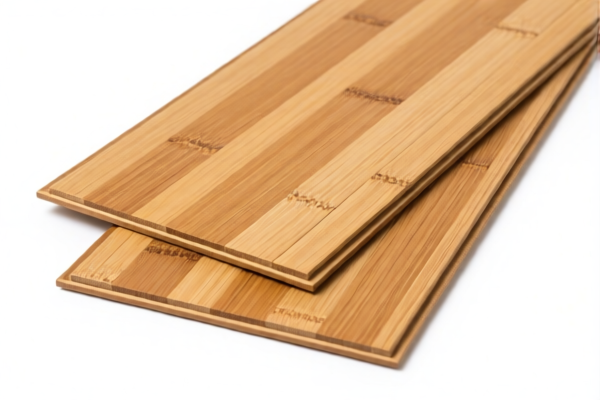
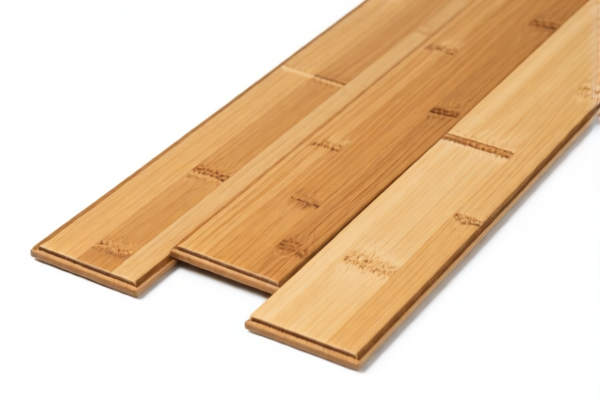
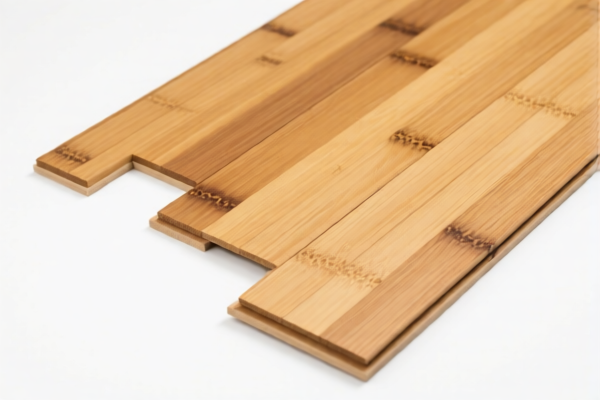
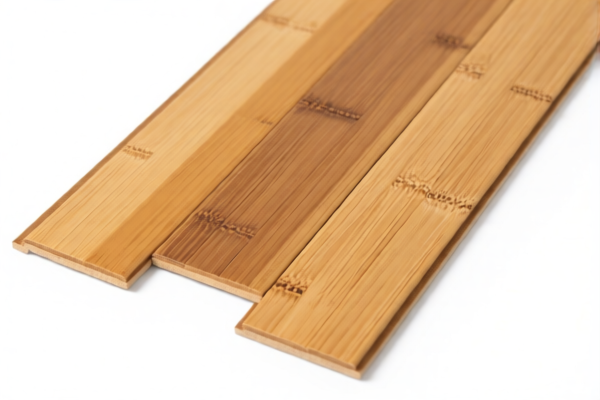
buffalo pattern panel for aircraft interior
CN → US| HS Code | Tariff Rate | Origin | Destination | Doc |
|---|---|---|---|---|
| 3926305000 | 22.8% | CN | US | Official Doc |
| 3926909989 | 22.8% | CN | US | Official Doc |
| 3921905050 | 39.8% | CN | US | Official Doc |
| 3921904090 | 39.2% | CN | US | Official Doc |
Product Images
AI Analysis
🛩️ Buffalo Pattern Panel for Aircraft Interior
🌐 HS Code Reference & Customs Clearance Guide | 2026 Latest Tariff Analysis | Professional-Level Clearance Strategy
📌 1. Product Definition and Classification: Do You Really Understand "Buffalo Pattern Panels"?
The Buffalo Pattern Panel is a specialized decorative component used in aircraft interiors. In international trade, its classification depends heavily on material composition and form factor. It is generally inferred to be made of plastic, resin, or composite materials, with a board/panel shape, intended for decorative purposes.
⚠️ Key Distinction Point:
- If the panel is classified as a "part/accessory" specifically for aircraft → May fall under Chapter 39 General Parts.
- If the panel is classified as a "plastic sheet/board" in general → May fall under Plastic Plates, Sheets, etc.
- The choice between 3926.90 (Other articles of plastic) and 3921.90 (Other plates, sheets, etc.) determines the tariff burden significantly due to Section 301 and IEEPA surcharges.
📦 2. HS Code Classification Details (2026 Latest Tariff Authority Comparison)
| HS Code | Product Description | Application Scenario | Material/Form Inference |
|---|---|---|---|
3926.30.50.00 |
Other articles of plastics, specifically decorative panels for interiors | Aircraft interior decoration, inferred as a specific "article" rather than a raw sheet | ✅ Plastic/Synthetic Material, Decorative Board |
3926.90.99.89 |
Other articles of plastics, not elsewhere specified | Aircraft interior panels classified as "other specific-use items" under general plastic articles | ✅ Plastic/Resin/Composite, Specific Form Item |
3921.90.50.50 |
Other plates, sheets, film, etc., of plastics | Classified as a plate/sheet form, general plastic board category | ✅ Plastic/Composite, Plate/Sheet Form |
3921.90.40.90 |
Other plates, sheets (flexible/other category) | Classified as a plate under other flexible/other plastic categories | ✅ Plastic, Plate Definition |
🔍 Key Reminder:
- The core difference lies in whether the product is viewed as a finished decorative article (3926) or a raw/material sheet (3921).
- 3926 codes generally have a lower base tariff but are subject to the same high surcharges.
- 3921 codes often face a 25% Section 301 surcharge on top of lower base rates, resulting in a much higher total tax burden.
💰 3. 2026 Latest Tariff Rate Details (Including Surcharges, Policy Add-ons)
✅ Applicable Country: United States (US)
✅ Origin: China (CN)
✅ Effective Date: From November 10, 2025 (and subsequent imports)
🎯 1. 3926.30.50.00 & 3926.90.99.89 —— Plastic Articles (Decorative/Special Use)
| Item | Content |
|---|---|
| Base Tariff | 5.3% (ad valorem) |
| Section 301 Surcharge | 7.5% |
| IEEPA Surcharge (Section 122/1301) | 10% (Specific to China-origin goods) |
| Total Tariff Rate | 22.8% |
| Tax Calculation | CIF Value × 22.8% |
| De Minimis Exemption | ❌ Not Eligible (Deny De Minimis for Section 301/IEEPA goods) |
| Legal Basis Path | USITC:3926.30.50.00 / USITC:3926.90.99.89 → USITC:Footnote 9903.88.01 → IEEPA:9903.01.24 |
📌 Explanation:
- These codes are classified under "Articles of Plastic".
- The 7.5% Section 301 and 10% IEEPA surcharges are applied on top of the 5.3% base rate.
- Total 22.8% is considered a moderate-high tariff for plastic articles.
- Critical: Even though 3926.30 and 3926.99 are different subheadings, the surcharge structure is identical, leading to the same total rate.
🎯 2. 3921.90.50.50 & 3921.90.40.90 —— Plastic Plates, Sheets, Boards
| Item | Content |
|---|---|
| Base Tariff | 4.8% (3921.90.50.50) / 4.2% (3921.90.40.90) |
| Section 301 Surcharge | 25% (Heavy surcharge for plastic sheets/boards) |
| IEEPA Surcharge (Section 122/1301) | 10% |
| Total Tariff Rate | 39.8% (3921.90.50.50) / 39.2% (3921.90.40.90) |
| Tax Calculation | CIF Value × 39.8% / 39.2% |
| De Minimis Exemption | ❌ Not Eligible |
| Legal Basis Path | USITC:3921.90.50.50 / USITC:3921.90.40.90 → USITC:Footnote 9903.88.01 → IEEPA:9903.01.24 |
📌 Warning:
- Classifying these panels as "Plastic Plates/Sheets" (3921) triggers a 25% Section 301 surcharge, which is significantly higher than the 7.5% for "Plastic Articles" (3926).
- Total rate of ~39% is a very high tariff.
- Risk: If customs determines the panel is a finished decorative item rather than a raw sheet, misclassification here could lead to underpayment penalties. Conversely, over-classifying into 3926 when it should be 3921 might not save much (22.8% vs 39.8%), but the legal risk of misdeclaration exists.
🛠️ 4. Customs Clearance Practical Advice (Battle-Tested Pitfall Guide)
✅ 1. Required Documents Checklist (All are Mandatory)
| Document | Required | Explanation |
|---|---|---|
| ✅ Product Specification Sheet | ✔️ | Details material (plastic/composite), thickness, dimensions, weight |
| ✅ Product Photos (Including Label) | ✔️ | Clear images showing the "buffalo pattern" texture, edges, and any installation points |
| ✅ Commercial Invoice | ✔️ | Must clearly state "Buffalo Pattern Decorative Panel for Aircraft Interior" |
| ✅ Packing List | ✔️ | Specify quantity, net/gross weight, package dimensions |
| ✅ Certificate of Origin (CO) | ✔️ | Essential for determining origin-based surcharges |
| ✅ Material Declaration | ✔️ | Explicitly state if it is "Plastic Article" (3926) or "Plastic Sheet" (3921) |
✅ 2. Declaration Tips (Key Mantra)
🔥 "Finish Product vs. Raw Material: Art vs. Sheet!"
| Scenario | Correct Declaration | Error to Avoid |
|---|---|---|
| Decorative Panel with Texture | 3926.30.50.00 or 3926.90.99.89 |
❌ Misclassifying as "Plastic Sheet" → 39% Tax |
| Raw Plastic Sheet with Buffalo Texture | 3921.90.50.50 |
✅ Accurate if it's just a material sheet |
| Panel with Integrated Fixings | 3926.90.99.89 |
❌ Do not split hardware and panel separately |
| Non-Plastic Composite | Check Chapter 39 or 68 | ❌ Assuming it's plastic if it contains metal/carbon fiber heavily |
📌 Strategy:
- If the panel is a finished decorative component (pre-cut, textured, possibly with edges/profiles), 3926 is often more favorable (22.8% vs 39%).
- Ensure your product description emphasizes "Decorative Article" or "Interior Trim" rather than just "Plastic Sheet."
✅ 3. Special Handling Cases
| Case | Handling Advice |
|---|---|
| OEM Custom Panels | Provide design files and customer order to prove it's a specific "article" not a generic sheet. |
| Composite Materials | If >50% plastic by weight, declare under 3926. If primarily metal/ceramic, consider other chapters (not in current data). |
| Small Shipments (< $800) | ❌ No De Minimis Exemption: Due to Section 301/IEEPA, small shipments still incur full tariffs. |
| Pre-Ruling | ✅ Apply for Advance Ruling: Submit samples and specs to CBP to get a binding classification decision, avoiding audit risks. |
🌍 5. Global Market Clearance Comparison (2026 Latest)
| Country/Region | Recommended HS Code | Tariff (China Origin) | Certification | Notes |
|---|---|---|---|---|
| 🇺🇸 USA | 3926.30.50.00 / 3926.90.99.89 |
22.8% | No special CE/FCC | High tariff due to 301/IEEPA. Avoid 3921 (39%). |
| 🇨🇳 China | 3926.30.50.00 |
5.3% - 9% | CCC (if applicable) | Low base tariff. No Section 301. |
| 🇪🇺 EU | 3926.90.99.89 |
3.5% - 6.5% | CE (if electronic) | No Section 301. Lower overall cost. |
| 🇦🇺 Australia | 3926.90.99.89 |
5% | RCM (if electronic) | Moderate tariff. |
| 🇯🇵 Japan | 3926.90.99.89 |
3.5% - 6% | PSE (if electronic) | Low tariff. |
📌 Conclusion:
- USA is the most challenging market due to 22.8%-39.8% tariffs.
- Opt for 3926 classification where possible to reduce tax from ~39% to 22.8%.
- Consider supply chain diversification if shipping to the US, as tariffs significantly impact profit margins.
📌 6. Common Mistakes & Pitfall Guide (Lessons Learned)
❌ Mistake 1: Classifying decorative panels as "Plastic Sheets" (3921)
👉 Consequence: Tax jumps from 22.8% to 39.8%. Loss of ~17% margin.
❌ Mistake 2: Assuming De Minimis ($800) exemption applies
👉 Consequence: Incorrect. Section 301 and IEEPA surcharges deny the de minimis exemption. Full tax applies even for small packages.
❌ Mistake 3: Vague Product Description ("Plastic Board")
👉 Consequence: Customs may reclassify or delay shipment for inspection. Delays cost money.
❌ Mistake 4: Ignoring the Buffalo Pattern as a decorative feature
👉 Consequence: Fails to emphasize the "Article" nature, pushing classification toward raw material codes.
✅ Correct Action:
"Buffalo Pattern Decorative Plastic Panel for Aircraft Interior, Model XYZ, Material: ABS Plastic, Finish: Textured, Dimension: 12x24 inches"
🎯 7. Conclusion: Professional Declaration, Save Costs, Ensure Smooth Clearance!
🎯 Remember the Mantra:
🔹 "Article is King: 3926 is Cheaper, 3921 is Expensive!"
🔹 "No De Minimis: Tax Applies to All Sizes for China Origin!"
🔹 "Describe the Pattern: Emphasize 'Decorative', Not Just 'Plastic'!"
📌 Pro Tip:
- If your panel is shipped from a third country (e.g., Vietnam, Mexico) with substantial transformation, you might avoid US tariffs.
- Apply for an Advance Ruling from CBP to lock in the 22.8% rate under 3926, avoiding the 39% risk.
📣 Immediate Action:
📞 Contact a licensed Customs Broker + Provide Product Photos + Apply for CBP Advance Ruling
🚀 Ensure your Buffalo Pattern Panels clear customs smoothly, control costs, and boost profitability!
✨ Professional Clearance Starts with Accurate Classification!
💼 Every percentage point of tariff is a direct hit to your bottom line!
Customer Reviews
About HS Code Classification
The Harmonized System (HS) is an internationally standardized nomenclature developed by the World Customs Organization (WCO) to classify traded products. Over 200 countries use the HS system as the basis for customs tariffs, trade statistics, and import/export regulations.
Each HS code follows a hierarchical structure:
- Chapter (2 digits) — Broad category of goods (e.g., Chapter 84: Machinery and Mechanical Appliances)
- Heading (4 digits) — More specific grouping within the chapter
- Subheading (6 digits) — Internationally standardized breakdown, used by all WCO member countries
- National subdivisions (8-10 digits) — Country-specific extensions for further classification, such as US HTSUS 10-digit codes
Correct HS code classification is essential for smooth customs clearance, accurate duty payment, and compliance with trade regulations. Misclassification can lead to customs delays, overpayment of duties, or penalties.
When importing from CN to US, the applicable tariff rates may include:
- Most-Favored-Nation (MFN) rate — The standard duty rate applied to WTO members
- General rate — Applied to countries without trade agreements
- Trade remedy duties — Additional tariffs such as Section 301 (anti-dumping), Section 232 (national security), or countervailing duties
The information provided on this page is for reference purposes only. For official classification, please consult with your local customs authority or a licensed customs broker.