buffalo shoe upper leather
CN → US| HS Code | Tariff Rate | Origin | Destination | Doc |
|---|---|---|---|---|
| 4104493060 | 12.4% | CN | US | Official Doc |
| 4107124000 | 12.5% | CN | US | Official Doc |
| 4107194000 | 12.5% | CN | US | Official Doc |
| 4101503500 | 19.9% | CN | US | Official Doc |
| 4101203500 | 19.9% | CN | US | Official Doc |
| 4104413060 | 12.4% | CN | US | Official Doc |
| 4107196050 | 15.0% | CN | US | Official Doc |
Product Images
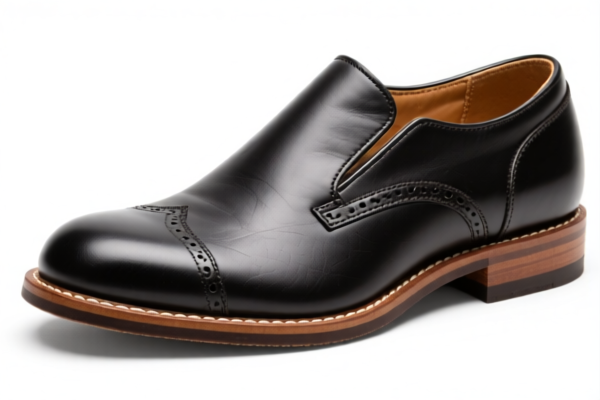
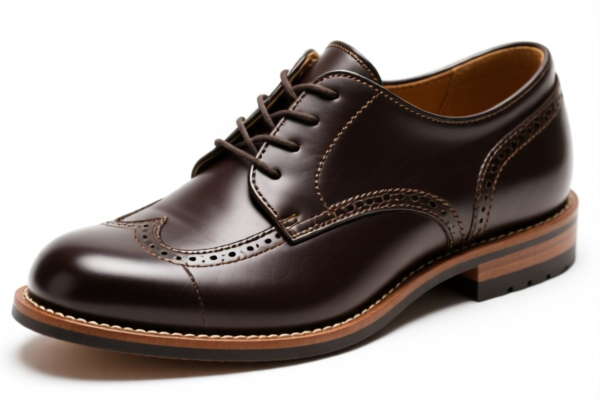
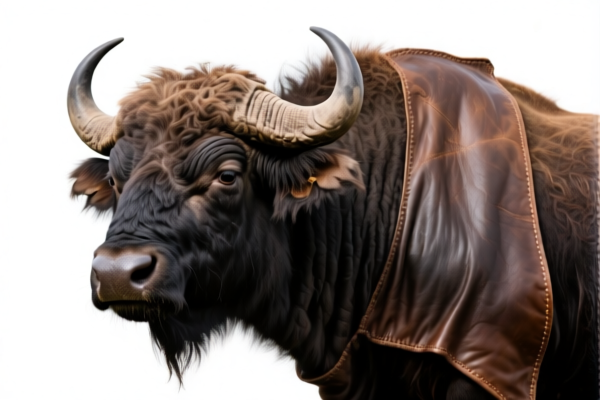
AI Analysis
🐃 Buffalo Shoe Upper Leather (水牛鞋面皮革)
🌐 HS Code Reference & Customs Clearance Guide | 2026 Latest Tariff Analysis | Professional-Level Classification Strategy
📌 1. Product Definition & Classification: Do You Truly Understand "Buffalo Shoe Upper Leather"?
Buffalo Shoe Upper Leather is a high-grade tanned leather derived from buffalo hides, specifically processed for use in shoe uppers or similar footwear components. In international trade, the classification depends heavily on the processing stage (raw vs. finished) and the final application (direct upper vs. other non-upper uses like soles).
International trade categorizes buffalo leather into two main streams: * Finished Leather (Tanned & Finished): Includes split, corrected grain, or full-grain leather ready for manufacturing shoe uppers. These are classified under heading 4107. * Raw/Half-Tanned Skins: Untanned or lightly processed buffalo skins. These fall under heading 4101.
⚠️ Critical Distinction Point:
- If the leather is tanned, finished, and intended for shoe uppers → Classify under 4107.xx.xx (Leather Further Prepared).
- If the leather is raw, half-tanned, or specifically designated for non-upper uses (e.g., soles, accessories) → Classify under 4104.xx.xx or 4101.xx.xx.
- Note: The specific HS codes provided below reflect detailed sub-categories for US imports from China, including Section 301 (Trade War) and Section 122 tariffs.
📦 2. HS Code Classification Details (2026 Latest Tariff Authority Comparison)
| HS Code | Product Description | Application Scenario | Tax Rate (Total) | Key Tariff Components |
|---|---|---|---|---|
4107.12.40.00 |
Buffalo Leather, Directly Corresponds to Material & Form | Standard buffalo shoe upper leather; finished, tanned | 12.5% | Base: 2.5%, Sec 301: 0%, Sec 122: 10% |
4107.19.40.00 |
Buffalo Leather, Explicitly Includes Material & Form Definition | Other buffalo leather, finished, for general upper use | 12.5% | Base: 2.5%, Sec 301: 0%, Sec 122: 10% |
4104.49.30.60 |
Buffalo Material, Suitable for Soles or Non-Upper Uses | Buffalo leather for footwear soles, linings, or non-upper accessories | 12.4% | Base: 2.4%, Sec 301: 0%, Sec 122: 10% |
4101.50.35.00 |
Raw Buffalo Hides, Meets Species & Material Requirements | Unprocessed or half-tanned buffalo skins; raw material stage | 19.9% | Base: 2.4%, Sec 301: 7.5%, Sec 122: 10% |
4101.20.35.00 |
Raw Buffalo Hides, Meets Species & Material Requirements | Unprocessed or half-tanned buffalo skins; alternative raw code | 19.9% | Base: 2.4%, Sec 301: 7.5%, Sec 122: 10% |
🔍 Key Reminder:
- Finished Leather (4107) is generally lower duty (12.5%) than Raw Hides (4101) (19.9%).
- Sec 122 Tariff (10%) applies to all these leather categories under current trade policies.
- Sec 301 (7.5%) applies only to raw hides (4101), not to finished leather (4107/4104). This is a major cost-saving distinction!
💰 3. 2026 Latest Tariff Rate Detailed Explanation (Including Additional Taxes & Policy Surcharges)
✅ Applicable Country: United States (US)
✅ Origin: China (CN)
✅ Effective Date: 2025-11-10 onwards (including subsequent imports)
🎯 1. 4107.12.40.00 & 4107.19.40.00 — Buffalo Shoe Upper Leather (Finished)
| Item | Details |
|---|---|
| Base Duty Rate | 2.5% (ad valorem) |
| Sec 301 Surcharge | 0% (Exempt from Section 301 tariffs) |
| Sec 122 Surcharge | +10% (Under Section 122 authority) |
| Total Tax Rate | 12.5% |
| Tax Calculation | CIF Value × 12.5% |
| De Minimis Eligibility | ❌ Not Eligible (Must pay full duties) |
| Legal Basis Path | Sec 122: 10% → Base Tariff: 2.5% → USITC: 4107.12.40.00 / 4107.19.40.00 |
📌 Explanation:
- Finished leather (HS 4107) benefits from 0% Section 301 tariff, making it significantly cheaper than raw hides.
- The 10% Section 122 tariff is a mandatory surcharge on all leather imports from China under current emergency economic powers.
- Total 12.5% is moderate compared to raw hides, but still higher than pre-trade war rates.
🎯 2. 4104.49.30.60 — Buffalo Leather for Non-Upper Uses (So Linings/Soles)
| Item | Details |
|---|---|
| Base Duty Rate | 2.4% (ad valorem) |
| Sec 301 Surcharge | 0% (Exempt from Section 301 tariffs) |
| Sec 122 Surcharge | +10% (Under Section 122 authority) |
| Total Tax Rate | 12.4% |
| Tax Calculation | CIF Value × 12.4% |
| De Minimis Eligibility | ❌ Not Eligible |
| Legal Basis Path | Sec 122: 10% → Base Tariff: 2.4% → USITC: 4104.49.30.60 |
📌 Note:
- This code is for buffalo leather not used as shoe uppers (e.g., soles, straps, accessories).
- Same tariff structure as finished uppers (12.4% vs 12.5%), but slightly lower base rate.
- Do not misclassify finished uppers here if they are intended for uppers; customs may reclassify and apply different rules.
🎯 3. 4101.50.35.00 & 4101.20.35.00 — Raw Buffalo Hides
| Item | Details |
|---|---|
| Base Duty Rate | 2.4% (ad valorem) |
| Sec 301 Surcharge | +7.5% (Subject to Section 301 tariffs) |
| Sec 122 Surcharge | +10% (Under Section 122 authority) |
| Total Tax Rate | 19.9% |
| Tax Calculation | CIF Value × 19.9% |
| De Minimis Eligibility | ❌ Not Eligible |
| Legal Basis Path | Sec 301: 7.5% → Sec 122: 10% → Base Tariff: 2.4% → USITC: 4101.50.35.00 / 4101.20.35.00 |
📌 Critical Warning:
- Raw hides incur the highest total tariff (19.9%) due to the 7.5% Section 301 surcharge.
- If you import raw hides and tan them domestically in the US, you avoid this high duty, but you face high processing costs.
- Cost Saving Tip: Import finished leather (4107) instead of raw hides (4101) if possible, as it saves 7.5% in tariffs.
🛠️ 4. Customs Clearance Practical Advice (Battle-Tested Pitfall Guide)
✅ 1. Required Documentation Checklist (No Exceptions)
| Document | Mandatory? | Notes |
|---|---|---|
| ✅ Product Specification Sheet | ✔️ | Must detail tanning process, finish type (full grain, split, etc.), and intended use. |
| ✅ Tanning Certificate | ✔️ | Proof of tanning method (vegetable, chrome, etc.) to confirm HS 4107 vs 4101. |
| ✅ Product Photos (Label & Sample) | ✔️ | Clear images showing texture, thickness, and any brand markings. |
| ✅ Commercial Invoice | ✔️ | Must explicitly state "Buffalo Leather for Shoe Uppers" or "Non-Upper Use." |
| ✅ Packing List | ✔️ | Detail net/gross weight, dimensions, and packaging type. |
| ✅ Origin Certificate (CO) | ✔️ | Confirm China origin; no preferential treaties apply for leather from China to US. |
✅ 2. Classification Strategy (Golden Rules)
🔥 "Finish Low Duty, Raw High Cost; Specify Use Clearly!"
| Scenario | Correct HS Code | Incorrect Practice | Consequence |
|---|---|---|---|
| Finished leather for shoe uppers | 4107.12.40.00 or 4107.19.40.00 |
Misclassifying as raw hide (4101) |
Overpay 7.5% Sec 301 |
| Raw hides for domestic tanning | 4101.50.35.00 |
Misclassifying as finished leather | Underpayment + Penalties |
| Leather for soles/linings | 4104.49.30.60 |
Misclassifying as upper leather | Misdeclaration Risk |
| Mixed shipment (raw + finished) | Separate Line Items | Combining in one HS code | Customs Audit & Delays |
✅ 3. Special Cases Handling
| Scenario | Handling Advice |
|---|---|
| Split Leather vs. Full Grain | Both fall under 4107 if finished; specify type in description to avoid ambiguity. |
| Chrome-Tanned vs. Vegetable-Tanned | Both are classified under 4107; no tariff difference, but technical docs must match. |
| Leather with Fabric Backing | If backing is integral, may be classified differently (e.g., 4112); consult customs broker. |
| Sample vs. Commercial Quantity | Samples still subject to duty if value exceeds de minimis; declare accurately. |
🌍 5. Global Market Comparison (2026 Latest)
| Country/Region | Recommended HS Code | Tariff Rate | Certification Requirement | Notes |
|---|---|---|---|---|
| 🇺🇸 USA | 4107.12.40.00 |
12.5% (China) | None specific | High Sec 122 tariff; Sec 301 exempt for finished |
| 🇨🇳 China | 4107.12.40.00 |
5% | None | Lower base duty; no additional surcharges |
| 🇪🇺 EU | 4107.12.40.00 |
0% | REACH Compliance | Free trade for most leather; strict environmental rules |
| 🇬🇧 UK | 4107.12.40.00 |
0% | UKCA Marking | Post-Brexit rules align with EU for leather |
| 🇯🇵 Japan | 4107.12.40.00 |
0% | None | CPTEP agreement applies; low duties |
📌 Conclusion:
- USA has the highest effective duty (12.5%) due to Sec 122, but finished leather avoids Sec 301.
- EU and UK offer 0% duty for finished leather, making them more cost-effective for exporters.
- China domestic duty is low (5%), but this guide focuses on US imports from China.
📌 6. Common Mistakes & Pitfall Guide (Lessons Learned)
❌ Mistake 1: Importing raw hides (4101) but declaring as finished leather (4107)
👉 Consequence: Customs inspection reveals raw state → Reclassification to 4101 → Pay 19.9% instead of 12.5% → Back taxes + penalties!
❌ Mistake 2: Failing to specify "Shoe Upper" vs. "Non-Upper Use"
👉 Consequence: If customs determines intended use is non-upper, reclassify to 4104 → Minor duty difference but compliance risk.
❌ Mistake 3: Ignoring Sec 122 Tariff
👉 Consequence: All leather from China incurs 10% Sec 122; forgetting this leads to underpayment.
❌ Mistake 4: Misclassifying split leather as full grain
👉 Consequence: No direct tariff difference, but technical documentation mismatch → Delays in clearance.
✅ Correct Approach:
"Buffalo Leather, Tanned & Finished, Full Grain, Intended for Shoe Uppers, HS 4107.12.40.00, Origin: China"
🎯 7. Conclusion: Professional Classification, Time & Cost Savings!
🎯 Remember the Mantra:
🔹 "Finished = 12.5% (No Sec 301); Raw = 19.9% (Yes Sec 301); Sec 122 = 10% on All!"
🔹 "Specify Use Clearly; Avoid Misclassification Penalties!"
📌 Pro Tip:
If your leather is processed in Vietnam, Mexico, or Thailand, you may avoid Sec 122 & Sec 301 tariffs entirely!
Consider supply chain diversification to reduce costs.
Request an Advance Ruling from US Customs if unsure about classification.
📣 Immediate Action:
📞 Contact a licensed customs broker + Provide product specs + Apply for HS Code Advance Ruling
🚀 Ensure smooth clearance, lower costs, and faster turnaround!
✨ Professional Customs Clearance Starts with Accurate Classification!
💼 Every Percent of Duty Saved is Pure Profit!
Customer Reviews
About HS Code Classification
The Harmonized System (HS) is an internationally standardized nomenclature developed by the World Customs Organization (WCO) to classify traded products. Over 200 countries use the HS system as the basis for customs tariffs, trade statistics, and import/export regulations.
Each HS code follows a hierarchical structure:
- Chapter (2 digits) — Broad category of goods (e.g., Chapter 84: Machinery and Mechanical Appliances)
- Heading (4 digits) — More specific grouping within the chapter
- Subheading (6 digits) — Internationally standardized breakdown, used by all WCO member countries
- National subdivisions (8-10 digits) — Country-specific extensions for further classification, such as US HTSUS 10-digit codes
Correct HS code classification is essential for smooth customs clearance, accurate duty payment, and compliance with trade regulations. Misclassification can lead to customs delays, overpayment of duties, or penalties.
When importing from CN to US, the applicable tariff rates may include:
- Most-Favored-Nation (MFN) rate — The standard duty rate applied to WTO members
- General rate — Applied to countries without trade agreements
- Trade remedy duties — Additional tariffs such as Section 301 (anti-dumping), Section 232 (national security), or countervailing duties
The information provided on this page is for reference purposes only. For official classification, please consult with your local customs authority or a licensed customs broker.