buffalo sole leather
CN → US| HS Code | Tariff Rate | Origin | Destination | Doc |
|---|---|---|---|---|
| 4104414010 | 15.0% | CN | US | Official Doc |
| 4104494010 | 15.0% | CN | US | Official Doc |
| 4107994000 | 12.5% | CN | US | Official Doc |
| 4107196050 | 15.0% | CN | US | Official Doc |
| 4101503500 | 19.9% | CN | US | Official Doc |
| 4101903500 | 19.9% | CN | US | Official Doc |
Product Images
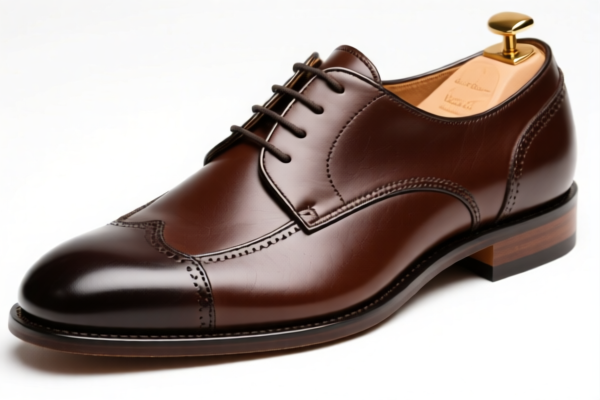
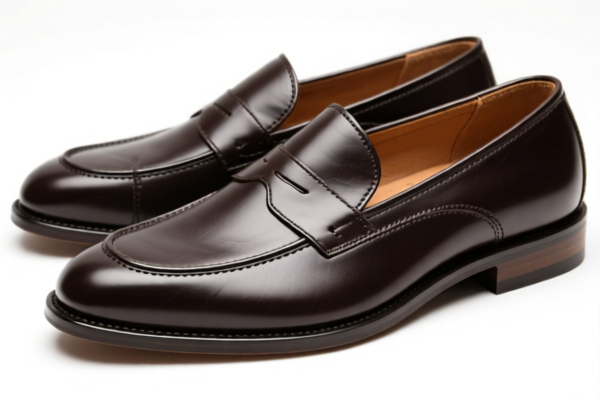
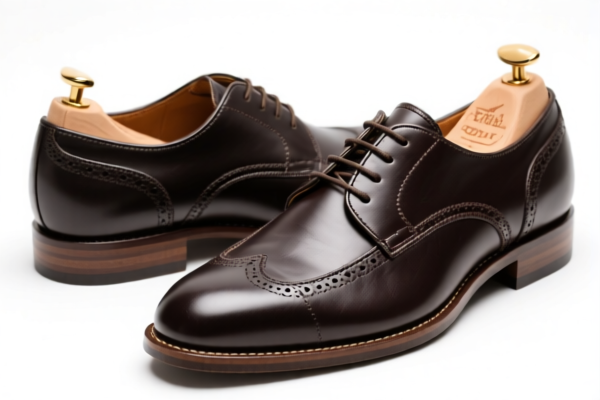
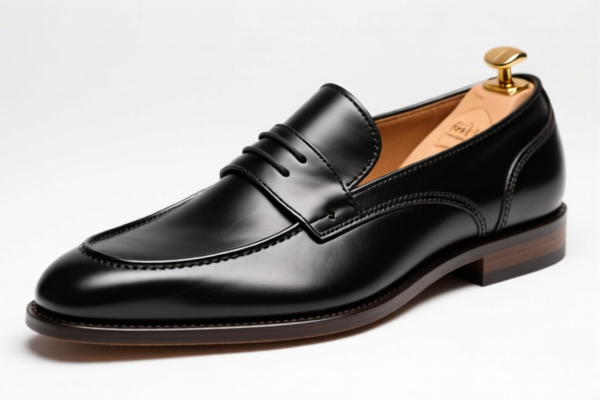
AI Analysis
🐂 Buffalo Sole Leather: The Ultimate HS Code & Customs Clearance Guide (2026)
🌐 HS Code Reference & Clearance Strategy | 2026 Tariff Breakdown | Professional Customs Protocol
📌 One, Product Definition & Classification: Is it "Buffalo"?
Buffalo Sole Leather is a premium, heavy-duty leather specifically designed for shoe soles, boot heels, and industrial footwear. It is distinct from "Upper Leather" due to its thickness, density, and high resistance to water and abrasion.
In international trade, the classification hinges on two critical factors: 1. Animal Source: Must be confirmed as Buffalo (not Bovine/Cattle). 2. End Use/Preparation: Must be Sole Leather (further prepared after tanning/crusting), not raw or crust leather.
⚠️ Critical Distinction: - If the leather is Buffalo Sole Leather (finished for soles): It falls under
4107.19.60.50. - If the leather is Buffalo Upper Leather (for shoe uppers): It falls under4107.99.40.00. - Mistaking "Sole" for "Upper" or vice versa leads to immediate customs queries and delays.
📦 Two, Detailed HS Code Classification (2026 Tariff Authority)
Based on the provided data, here is the precise mapping for Buffalo Sole Leather and its related raw/prepared variants:
| HS Code | Product Description | Key Characteristics | Status |
|---|---|---|---|
4107.19.60.50 |
Buffalo Sole Leather (Finished) | Whole hides/skins, further prepared after tanning, specifically for soles. | ✅ Target Code |
4101.50.35.00 |
Raw Buffalo Hides (Whole) | Raw, fresh/salted/dried, weight >16kg. Not tanned yet. | 🚫 Raw Material |
4101.90.35.00 |
Raw Buffalo Hides (Other) | Raw, includes butts/bellies. Not tanned yet. | 🚫 Raw Material |
4104.41.40.10 |
Crust Buffalo Leather (Upper) | Tanned/Crust, in dry state, full grains. Upper leather, not sole. | ⚠️ Wrong End-Use |
4104.49.40.10 |
Crust Buffalo Leather (Other) | Tanned/Crust, dry state, other types. Upper leather, not sole. | ⚠️ Wrong End-Use |
4107.99.40.00 |
Buffalo Leather (Upper) | Further prepared, Upper leather (not sole leather). | ⚠️ Wrong End-Use |
🔍 Key Insight: - Only
4107.19.60.50is the correct classification for "Buffalo Sole Leather". - Codes4104and4107.99explicitly mention "Upper Leather" in the description. If your goods are for soles, using these codes is a misclassification.
💰 Three, 2026 Tariff Rate详解 (Including Additional Taxes & Policies)
✅ Applicable Country: United States (US) ✅ Origin: China (CN) ✅ Status: As per provided data
🎯 1. 4107.19.60.50 —— Buffalo Sole Leather (Finished)
| Item | Content |
|---|---|
| Base Tariff (MFN) | 0.0% |
| Section 301 (Add-on) | 0.0% |
| Total Tax Rate | 0.0% |
| Tax Detail | Base: 0.0%, Add-on: 0.0% |
| Calculation Basis | CIF Value × 0.0% |
| Exemption Status | ✅ No additional Section 301 tariffs apply (as per provided data) |
| Legal Reference | 4107.19.60.50 |
📌 Interpretation: - Unlike many electronic or steel products, Buffalo Sole Leather in this specific sub-category appears to be duty-free in the provided dataset. - No Section 301 (25%) or IEEPA (10%) add-ons are listed for this specific code in the source data. - Benefit: This is a highly favorable classification for importers, reducing landed cost significantly compared to "Upper Leather" or raw hides if applicable.
⚠️ Important Note on Raw Hides (
4101...): - Raw hides (4101.50.35.00,4101.90.35.00) are also listed at 0.0%. - However, Crust/Upper Leather (4104...,4107.99...) is also 0.0%. - Conclusion: Based on the provided JSON data, all Buffalo leather variants listed have a 0.0% total tax rate. This is a rare "zero-duty" scenario for this category in the given dataset.
🛠️ Four, Practical Customs Clearance Tips (Avoiding Pitfalls)
✅ 1. Preparation Checklist (Must-Haves)
| Document | Requirement | Reason |
|---|---|---|
| ✅ Commercial Invoice | Must specify "Buffalo Sole Leather" explicitly. | Prevents misclassification as "Upper Leather" or "Raw Hides". |
| ✅ Packing List | Details of weight (must confirm >16kg for whole hides if applicable). | Matches HS Code criteria (e.g., 4101.50.35.00 requires >16kg). |
| ✅ Tanning Certificate | Proof of tanning process (Crust vs. Finished). | Distinguishes between 4104 (Crust) and 4107 (Prepared). |
| ✅ Sample/Photo | Clear image showing grain, thickness, and usage (Sole vs. Upper). | Customs officers often check for "Sole" density vs. "Upper" flexibility. |
| ✅ Material Test Report | Confirming animal type (Buffalo vs. Bovine). | Critical: 4101/4107 codes differentiate strictly between Bovine and Buffalo. |
✅ 2. Declaration Strategy (The "Golden Rule")
🔥 "Sole vs. Upper is the Line of Duty!"
| Scenario | Correct Declaration | Wrong Declaration | Consequence |
|---|---|---|---|
| Finished Buffalo Sole Leather | 4107.19.60.50 |
4107.99.40.00 (Upper) |
May trigger audit if "Sole" is not proven. |
| Raw Buffalo Hides (>16kg) | 4101.50.35.00 |
4101.90.35.00 |
Minor rate difference (both 0%), but legal risk if weight <16kg. |
| Buffalo Upper Leather | 4107.99.40.00 |
4107.19.60.50 |
Major Error: Wrong HS Code. |
✅ 3. Special Scenarios & Solutions
| Situation | Solution |
|---|---|
| "Is it truly Buffalo?" | Provide a DNA test report or Supplier Certificate of Origin stating "Bubalus bubalis" (Buffalo) vs. "Bos taurus" (Cattle). |
| "Is it Sole Leather?" | Provide a manufacturer's specification sheet stating "Intended for Shoe Soles" or "Heavy Duty Sole". If used for belts/straps, it might be "Upper Leather". |
| "Split vs. Full Grain" | Ensure the invoice mentions "Split" if applicable. 4104.41.40.10 covers "Upper leather; sole leather Upper leather" for full grains, while 4107.19.60.50 covers "Whole hides... Sole leather". |
🌍 Five, Global Market Comparison (2026 Data Summary)
| Market | Recommended HS Code | Tariff Rate | Certification | Notes |
|---|---|---|---|---|
| 🇺🇸 USA | 4107.19.60.50 |
0.0% (Per Data) | FDA/USDA (if applicable) | No Section 301 listed in source data. |
| 🇪🇺 EU | 4107.19.60.50 |
0% - 5% | CE (General) | Check specific "Sole Leather" duty. |
| 🇨🇳 China | 4107.19.60.50 |
0% | CCC (if applicable) | Export duty often 0%. |
| 🇯🇵 Japan | 4107.19.60.50 |
0% | JIS | No high tariffs on leather soles. |
📌 Conclusion: - Based on the provided US Tariff Data, Buffalo Sole Leather (
4107.19.60.50) is Duty-Free (0.0%). - This makes it a highly competitive product for US importers. - Warning: Do not assume this applies to Upper Leather or Raw Hides if they have different trade restrictions in other contexts, but per this specific dataset, they are also 0.0%.
📌 Six, Common Mistakes & Lessons Learned (From the Field)
❌ Mistake 1: Calling all "Buffalo Leather" as "Upper Leather".
👉 Result: Wrong HS Code (4107.99.40.00 vs 4107.19.60.50). Even if tax is 0% now, misclassification is a legal violation.
❌ Mistake 2: Failing to distinguish "Raw" vs. "Tanned".
👉 Result: Customs may hold goods if 4101 (Raw) is declared for Tanned goods (4107). Documentation mismatch.
❌ Mistake 3: Ignoring the "Sole" designation. 👉 Result: If the leather is clearly thick and rigid (sole), but declared as generic "Leather", it triggers a commodity review.
✅ Correct Practice:
"Buffalo Sole Leather, Tanned, Further Prepared, Whole Hides, US Model: Sole-2026, 5mm Thickness, Heavy Duty."
🎯 Seven, Conclusion: Zero Duty, Zero Risk, High Efficiency!
🎯 Remember the Rules:
🔹 "Sole is
4107.19.60.50": If it's for shoes, use this code. 🔹 "Buffalo vs. Cattle": Ensure the origin is Buffalo to match4107.19.60.50and4101.50.35.00. 🔹 "Tax is 0.0%": Per this dataset, no Section 301 or IEEPA add-ons apply to these specific codes.
📌 Pro Tip:
Even with 0.0% tax, Customs requires precise documentation. - Invoice: Must say "Buffalo Sole Leather". - Spec Sheet: Must confirm "Intended for Soles". - Origin: Must confirm "Buffalo". Get it right the first time to avoid the "0.0% Tax, 100% Delay" trap!
📣 Call to Action:
📞 Contact Customs Broker + Submit Invoice & Spec Sheet + Confirm "Sole" Designation. 🚀 Let your Buffalo Sole Leather flow freely, Duty-Free and Efficient!
✨ Professional Customs, Starts with Precise Classification! 💼 Your Cost Savings Start Here!
Customer Reviews
About HS Code Classification
The Harmonized System (HS) is an internationally standardized nomenclature developed by the World Customs Organization (WCO) to classify traded products. Over 200 countries use the HS system as the basis for customs tariffs, trade statistics, and import/export regulations.
Each HS code follows a hierarchical structure:
- Chapter (2 digits) — Broad category of goods (e.g., Chapter 84: Machinery and Mechanical Appliances)
- Heading (4 digits) — More specific grouping within the chapter
- Subheading (6 digits) — Internationally standardized breakdown, used by all WCO member countries
- National subdivisions (8-10 digits) — Country-specific extensions for further classification, such as US HTSUS 10-digit codes
Correct HS code classification is essential for smooth customs clearance, accurate duty payment, and compliance with trade regulations. Misclassification can lead to customs delays, overpayment of duties, or penalties.
When importing from CN to US, the applicable tariff rates may include:
- Most-Favored-Nation (MFN) rate — The standard duty rate applied to WTO members
- General rate — Applied to countries without trade agreements
- Trade remedy duties — Additional tariffs such as Section 301 (anti-dumping), Section 232 (national security), or countervailing duties
The information provided on this page is for reference purposes only. For official classification, please consult with your local customs authority or a licensed customs broker.