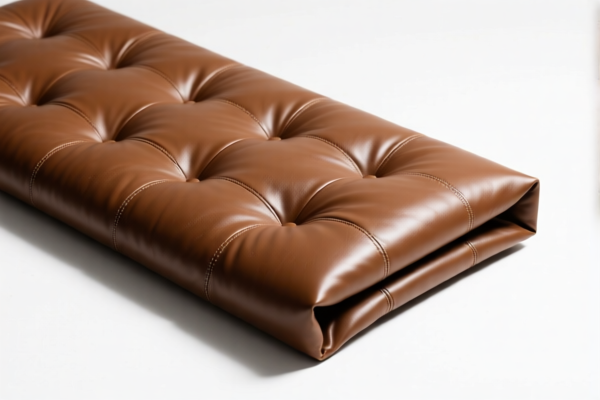
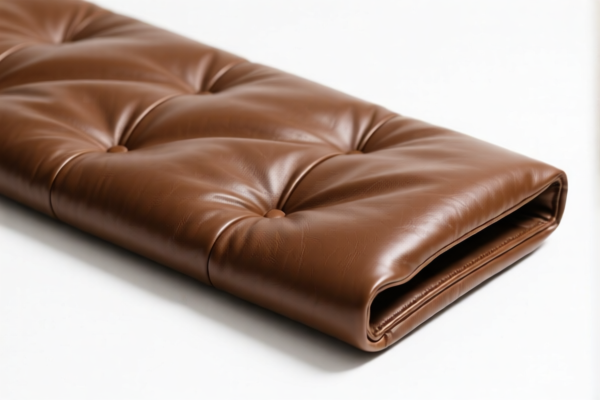
buffalo/horse leather public seating
CN → US| HS Code | Tariff Rate | Origin | Destination | Doc |
|---|---|---|---|---|
| 4203406000 | 35.0% | CN | US | Official Doc |
| 4203104085 | 41.0% | CN | US | Official Doc |
| 4107915000 | 12.8% | CN | US | Official Doc |
| 4107925000 | 12.8% | CN | US | Official Doc |
| 9401710031 | 35.0% | CN | US | Official Doc |
Product Images


AI Analysis
🪑 Buffalo/Horse Leather Public Seating (Theater Chairs)
🌐 HS Code Reference & Customs Clearance Guide | 2026 Latest Tariff Analysis | Professional Clearance Strategy
📌 Part 1: Product Definition & Classification: Do You Really Know "Theater Chairs"?
Buffalo and Horse Leather Public Seating (specifically Theater Seats) presents a unique classification challenge because it sits at the intersection of furniture and leather goods. The customs classification depends entirely on what the leather is used for and how the seat is constructed.
In international trade, these seats are categorized into three distinct scenarios: 1. Assembled Seats with Leather Upholstery: Classified as furniture (if the leather is a minor component of the upholstery) or leather articles (if the leather structure is dominant). 2. Loose Leather Covers/Covers Only: Classified as leather accessories or other leather articles. 3. Raw/Prepared Leather for Seats: If imported as raw material (skins/leather) to be upholstered later, classified as leather goods.
⚠️ Key Distinction Point:
- If the item is a complete, assembled theater seat (frame + cushion + leather cover) → Likely 9401 (Furniture) or 4203 (Leather Articles).
- If the item is only the leather covering (strips/panels) without a seat frame → 4203 (Leather Accessories/Articles).
- If the item is raw/prepared leather intended for seat upholstery → 4107 (Tanned Leather).
📦 Part 2: HS Code Classification Details (2026 Latest Tariff Authority Comparison)
| HS Code | Product Description | Application Scenario | Tax Rate Profile |
|---|---|---|---|
4203.40.60.00 |
Leather Clothing Accessories/Attachments (Interpreted here as Leather Covers/Casings for Seats) | Loose leather covers, seat covers, or leather components supplied separately for seating. | High Tax (35%) |
4203.10.40.85 |
Other Leather Articles | Leather upholstery parts not elsewhere specified, often applied to complex leather structures. | Highest Tax (41%) |
4107.91.50.00 |
Buffalo/Horse Leather, Other Tanned (For Seat Paving/Upholstery) | Raw/Prepared leather skins/panels intended specifically for covering seats (raw material). | Low Tax (12.8%) |
4107.92.50.00 |
Buffalo/Horse Leather, Other Tanned (For Seat Decoration) | Decorative leather panels or skins for seat embellishment. | Low Tax (12.8%) |
9401.71.00.31 |
Padded Seats with Metal Frame (Theater Seats) | Complete Assembled Seats: Metal frame + padding + leather upholstery. The leather is part of the furniture structure. | High Tax (35%) |
🔍 Key Reminder:
- Assembled Seats (Frame + Leather) typically fall under 9401.71.00.31 if they have a metal frame and are padded.
- Separate Leather Covers fall under 4203.40.60.00 or 4203.10.40.85.
- Raw Leather falls under 4107.
- Misclassification Risk: Declaring an assembled chair as "Leather Cover" (4203) to avoid furniture duties may lead to customs rejection or penalties, as the primary function is seating.
💰 Part 3: 2026 Latest Tariff Rate Breakdown (Including Surcharges & Policy Add-ons)
✅ Applicable Country: USA (US)
✅ Origin: China (CN)
✅ Effective Date: From November 10, 2025 (including subsequent imports)
🎯 1. 4203.40.60.00 — Leather Clothing Accessories/Attachments (Leather Covers)
| Item | Content |
|---|---|
| Base Tariff | 0.0% (ad valorem) |
| Section 301 Surtax | +25.0% |
| IEEPA Surcharge (Section 122/Other) | +10.0% |
| Total Tariff Rate | 35.0% |
| Tax Calculation | CIF Value × 35% |
| De Minimis Eligibility | ❌ No (deny_de_minimis) |
| Legal Basis Path | USITC:4203.40.60.00 → Footnote:301 → IEEPA:122 |
📌 Explanation:
- Although the base tariff is 0%, the Section 301 surcharge (25%) and IEEPA surcharge (10%) apply heavily.
- This classification is often used for leather seat covers or leather accessories for seats, not the full chair.
- Total Cost Impact: 35% is significant; ensure the declaration matches the physical product (covers vs. chairs).
🎯 2. 4203.10.40.85 — Other Leather Articles
| Item | Content |
|---|---|
| Base Tariff | 6.0% |
| Section 301 Surtax | +25.0% |
| IEEPA Surcharge (Section 122/Other) | +10.0% |
| Total Tariff Rate | 41.0% |
| Tax Calculation | CIF Value × 41% |
| De Minimis Eligibility | ❌ No |
| Legal Basis Path | USITC:4203.10.40.85 → Footnote:301 → IEEPA:122 |
📌 Note:
- This is the highest tariff bracket in the dataset.
- Used for leather articles that do not fit other specific leather categories.
- Avoid this classification if the product can be classified under4203.40.60.00or9401to save 6% base tax.
🎯 3. 4107.91.50.00 & 4107.92.50.00 — Buffalo/Horse Leather (Raw/Prepared)
| Item | Content |
|---|---|
| Base Tariff | 2.8% |
| Section 301 Surtax | 0.0% |
| IEEPA Surcharge (Section 122/Other) | +10.0% |
| Total Tariff Rate | 12.8% |
| Tax Calculation | CIF Value × 12.8% |
| De Minimis Eligibility | ❌ No (Check specific de minimis rules for leather) |
| Legal Basis Path | USITC:4107.91.50.00 / 4107.92.50.00 → IEEPA:122 |
📌 Critical Insight:
- Lowest Tariff Option: Only 12.8% total.
- Applicable Only if you are importing raw/prepared leather skins for upholstery, not assembled seats or covers.
- Compliance Warning: Do NOT use this code for assembled seats or leather covers; customs will reclassify and penalize.
🎯 4. 9401.71.00.31 — Padded Seats with Metal Frame (Theater Chairs)
| Item | Content |
|---|---|
| Base Tariff | 0.0% |
| Section 301 Surtax | +25.0% |
| IEEPA Surcharge (Section 122/Other) | +10.0% |
| Total Tariff Rate | 35.0% |
| Tax Calculation | CIF Value × 35% |
| De Minimis Eligibility | ❌ No |
| Legal Basis Path | USITC:9401.71.00.31 → Footnote:301 → IEEPA:122 |
📌 Explanation:
- This is the correct classification for complete, assembled theater chairs with metal frames and leather/padded upholstery.
- Base tariff is 0%, but the 35% surcharge applies due to Section 301 and IEEPA.
- Best for: Importers buying ready-to-use theater seats.
🛠️ Part 4: Customs Clearance Practical Advice (Avoid Pitfalls)
✅ 1. Required Documentation Checklist
| Document | Mandatory | Description |
|---|---|---|
| ✅ Product Photos | ✔️ | Clear images showing the metal frame, padding, and leather upholstery. Must prove it’s a seat. |
| ✅ Specifications Sheet | ✔️ | Dimensions, frame material, padding material, leather type. |
| ✅ Commercial Invoice | ✔️ | Must clearly state "Theater Seat" or "Public Seating" for assembled goods, or "Leather for Upholstery" for raw materials. |
| ✅ Packing List | ✔️ | Show if items are disassembled or assembled. |
| ✅ Structure Diagram | ✔️ | For 9401 vs 4203 distinction: Prove the presence of a seat frame/padding. |
✅ 2. Declaration Strategy (Key Mantra)
🔥 "Assembled Chair → 9401; Leather Cover → 4203; Raw Skin → 4107. Do Not Mix!"
| Scenario | Correct Declaration | Incorrect Declaration | Result |
|---|---|---|---|
| Assembled Theater Chair (Metal frame + Leather) | 9401.71.00.31 (35%) |
4203.40.60.00 |
✅ Correct |
| Leather Seat Cover (No frame, no padding) | 4203.40.60.00 (35%) |
9401.71.00.31 |
⚠️ Risk of reclassification |
| Raw Buffalo Leather (For upholstery) | 4107.91.50.00 (12.8%) |
9401.71.00.31 |
❌ Customs rejection |
| Complete Chair with Wood Frame | Check 9401.79 or 9401.31 |
9401.71.00.31 |
❌ Wrong code (if frame is not metal) |
✅ 3. Special Cases
| Case | Handling Advice |
|---|---|
| OEM Theater Seats | Provide design blueprints to prove it’s a "Public Seating" item, not furniture for home use. |
| Leather Parts Only | If shipping leather panels without frames, declare as 4203 or 4107 (if raw). Never declare as seats. |
| Mixed Containers | If a container has both chairs and loose leather, separate the declarations. Do not combine. |
| Leather Type | Specify "Buffalo" or "Horse" leather in the description, as 4107 codes differ by animal type. |
🌍 Part 5: Global Market Customs Comparison (2026 Latest)
| Country/Region | Recommended HS Code | Tariff (China Origin) | Certification | Note |
|---|---|---|---|---|
| 🇺🇸 USA | 9401.71.00.31 (Chairs)4203.40.60.00 (Covers)4107 (Raw) |
35% (Chairs/Covers) 12.8% (Raw) |
None for seats RoHS if electronic |
High tariffs apply due to Section 301. |
| 🇨🇳 China | 9401.71.00.31 |
5% | CCC (if applicable) | No surcharges. |
| 🇪🇺 EU | 9401.71.85 |
0-4% | CE | No Section 301 equivalent. |
| 🇦🇺 Australia | 9401.71.00 |
5% | None | Moderate tariffs. |
| 🇯🇵 Japan | 9401.71.00 |
0% | PSE (if electric) | Low tariffs. |
📌 Conclusion:
- USA is the most complex market due to Section 301 (25%) and IEEPA (10%) surcharges.
- Total cost in USA for assembled seats or leather covers is 35%, while raw leather is only 12.8%.
- Strategy: If possible, import raw leather and upholster locally (if labor costs are low) to save 22.2% in tariffs. Otherwise, prepare for 35% duty on finished goods.
📌 Part 6: Common Errors & Pitfall Avoidance (Lessons Learned)
❌ Error 1: Declaring assembled theater chairs as "Leather Accessories" (4203) to save time.
👉 Consequence: Customs may reject or reclassify to 9401, causing delays. However, the tax rate is similar (35%), so the main risk is clearance delay.
❌ Error 2: Declaring raw leather as "Theater Seats" (9401).
👉 Consequence: Overpayment of tax (35% vs 12.8%). Customs will correct and refund, but you lose capital for months.
❌ Error 3: Failing to specify "Metal Frame" in 9401.71.00.31.
👉 Consequence: If the frame is wood, it may fall under 9401.31 or 9401.79, with different tax implications or classification reviews.
❌ Error 4: Not separating leather covers from complete seats in the same shipment.
👉 Consequence: Mixed classification errors, leading to partial seizure or extra inspection.
✅ Correct Practice:
"Theater Seat, Buffalo Leather Upholstery, Metal Frame, Padded, Model XYZ" → 9401.71.00.31
"Buffalo Leather Panel, Tanned, for Seat Covering" → 4107.91.50.00
"Leather Seat Cover, No Frame" → 4203.40.60.00
🎯 Part 7: Conclusion: Professional Declaration, Cost Control!
🎯 Remember the Mantra:
🔹 "Assembled Chair → 9401 (35%); Leather Cover → 4203 (35%); Raw Skin → 4107 (12.8%). Pick the right code!"
🔹 "35% vs 12.8%: A 22.2% difference. Don’t let misclassification eat your profit!"
📌 Pro Tip:
If you are importing raw leather and plan to upholster in the US, consider Bonded Warehouses or FTZ (Free Trade Zones) to defer duties. However, note that Section 301 and IEEPA surcharges still apply upon entry into US commerce.
📣 Immediate Action:
📞 Consult a licensed customs broker with product photos and samples.
🚀 Apply for Advance Rulings if you have large volumes to ensure classification certainty.
✨ Professional clearance starts with accurate classification!
💼 Every dollar of tax saved is pure profit!
Customer Reviews
About HS Code Classification
The Harmonized System (HS) is an internationally standardized nomenclature developed by the World Customs Organization (WCO) to classify traded products. Over 200 countries use the HS system as the basis for customs tariffs, trade statistics, and import/export regulations.
Each HS code follows a hierarchical structure:
- Chapter (2 digits) — Broad category of goods (e.g., Chapter 84: Machinery and Mechanical Appliances)
- Heading (4 digits) — More specific grouping within the chapter
- Subheading (6 digits) — Internationally standardized breakdown, used by all WCO member countries
- National subdivisions (8-10 digits) — Country-specific extensions for further classification, such as US HTSUS 10-digit codes
Correct HS code classification is essential for smooth customs clearance, accurate duty payment, and compliance with trade regulations. Misclassification can lead to customs delays, overpayment of duties, or penalties.
When importing from CN to US, the applicable tariff rates may include:
- Most-Favored-Nation (MFN) rate — The standard duty rate applied to WTO members
- General rate — Applied to countries without trade agreements
- Trade remedy duties — Additional tariffs such as Section 301 (anti-dumping), Section 232 (national security), or countervailing duties
The information provided on this page is for reference purposes only. For official classification, please consult with your local customs authority or a licensed customs broker.