buffalo/horse leather theater seats
CN → US| HS Code | Tariff Rate | Origin | Destination | Doc |
|---|---|---|---|---|
| 9401710031 | 35.0% | CN | US | Official Doc |
| 9401698090 | 35.0% | CN | US | Official Doc |
| 4203406000 | 35.0% | CN | US | Official Doc |
| 4203104085 | 16.0% | CN | US | Official Doc |
| 4107915000 | 12.8% | CN | US | Official Doc |
| 4107925000 | 12.8% | CN | US | Official Doc |
Product Images
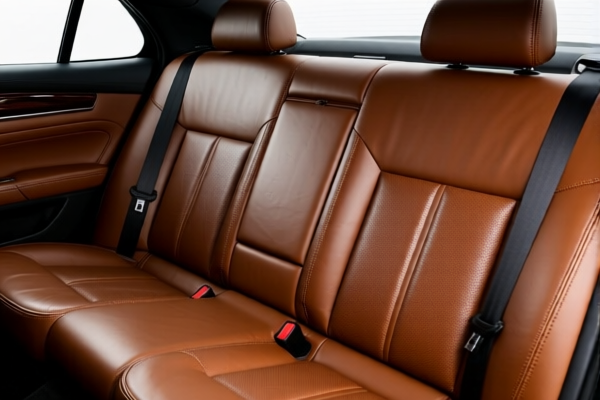
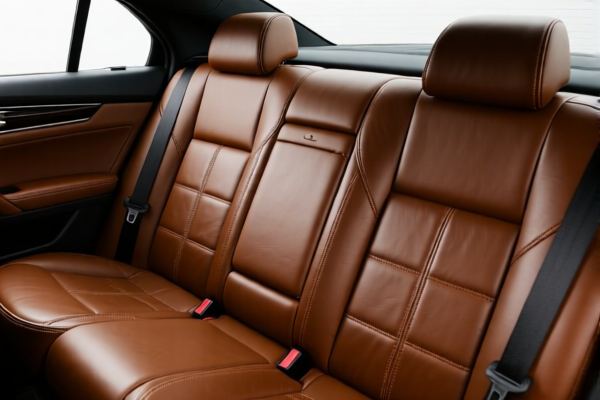
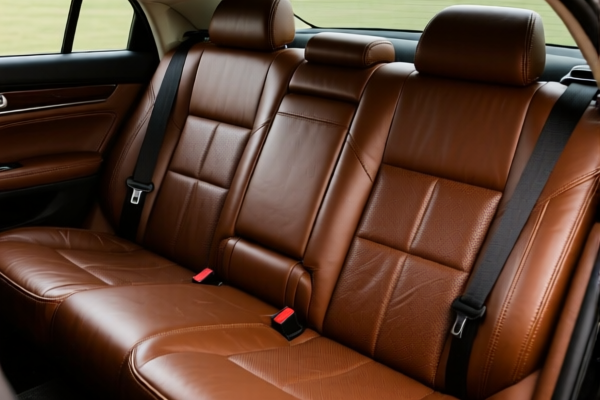
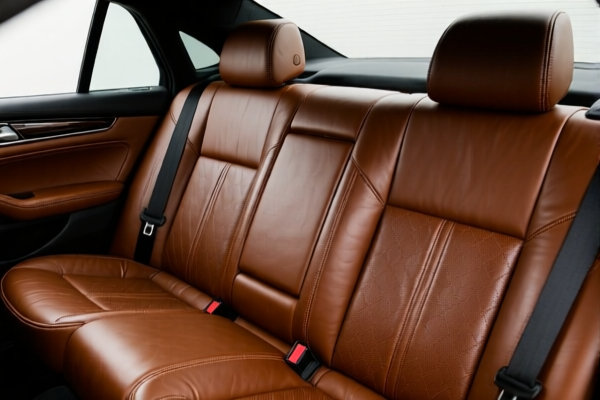
AI Analysis
🎬 Buffalo/Horse Leather Theater Seats
🌐 HS Code Classification & Customs Clearance Strategy | 2026 Tax Regime Breakdown | Premium Seating Compliance
📌 I. Product Definition & Classification: What Exactly Are "Theater Seats"?
"Buffalo/Horse Leather Theater Seats" refer to upholstered seating units specifically designed for performance venues, cinemas, lecture halls, or premium lounges. These are not ordinary furniture; they are convertible or fixed seats with metal or wooden frames, often customized for acoustic, comfort, and aesthetic requirements.
In international trade, the classification hinges on two critical factors: 1. Material Composition: Are they made of genuine bovine (buffalo) or equine (horse) leather? 2. Frame Structure: Do they have metal frames or wooden frames?
⚠️ Critical Distinction:
- If the seat is upholstered leather with a metal frame → It falls under 9401.71.00.31.
- If the seat is upholstered leather with a wooden frame → It falls under 9401.69.80.90.
- Note: Pure leather hides (without frame) belong to Chapter 41, but "Seats" are Chapter 94.
📦 II. HS Code Classification Details (2026 Customs Tariff Reference)
Based on the provided data, here is the authoritative mapping for Buffalo/Horse Leather Theater Seats:
| HS Code | Product Description | Frame Type | Application | Leather Origin |
|---|---|---|---|---|
9401.71.00.31 |
Seats (other than 9402), convertible or not, with METAL FRAMES: Upholstered Other | 🔩 Metal | Theater, Cinema, Auditorium, Conference | Buffalo / Horse (Leather) |
9401.69.80.90 |
Seats (other than 9402), convertible or not, with WOODEN FRAMES: Other | 🪵 Wooden | Luxury Theater, Home Theater, Private Lounge | Buffalo / Horse (Leather) |
🔍 Key Clarification:
- Chapter 94 vs. Chapter 41: Even though the upholstery is buffalo/horse leather, the final form is a "Seat" (furniture), so it is classified under 9401, not leather hides (4107). - Heading 9402 Exclusion: Items like "Office chairs" or "Dental chairs" fall under 9402. Theaters seats are "Other seats" under 9401. - Frame Material is King: The HS Code splits strictly based on whether the skeleton is metal or wood.
💰 III. 2026 Tariff Rate Breakdown (Detailed Tax Analysis)
✅ Applicable Country: United States (US)
✅ Origin: China (CN) - Assumed based on typical trade patterns
✅ Effective Date: 2025 onwards (Current Trade War Tariffs)
🎯 1. 9401.71.00.31 — Upholstered Seats with Metal Frames
| Tax Component | Rate | Description |
|---|---|---|
| Base Duty | 0.0% | Standard MFN tariff for general furniture. |
| Section 301 Additional Duty | +25.0% | Crucial! Levied under US Trade Act Section 301 targeting specific Chinese furniture categories. |
| Total Effective Rate | 25.0% | High Impact: Every $100,000 of value incurs $25,000 in duty. |
| Tax Detail String | Base: 0.0%, Additional: 25.0% |
📌 Explanation:
The 25% tariff is a "Section 301" penalty tariff. Unlike base duties (0%), this is a punitive measure on Chinese exports. It applies regardless of the leather quality or frame design, as long as it fits the metal-frame seat definition.
🎯 2. 9401.69.80.90 — Upholstered Seats with Wooden Frames
| Tax Component | Rate | Description |
|---|---|---|
| Base Duty | 0.0% | Standard MFN tariff. |
| Section 301 Additional Duty | +25.0% | Crucial! Same Section 301 penalty as metal frames. |
| Total Effective Rate | 25.0% | High Impact: Equal burden to metal frames. |
| Tax Detail String | Base: 0.0%, Additional: 25.0% |
📌 Explanation:
Even with a wooden frame, the 25% tariff applies. Many importers mistakenly believe "wooden furniture" gets a lower rate. In this specific sub-category, the Section 301 tax is identical to the metal frame version.
⚠️ Special Note on Raw Leather vs. Finished Seats
(For context, though not the final product) If you were importing the raw buffalo/horse leather before making the seats, the taxes would be 0.0% (as seen in items 4107.91.50.00 and 4107.92.50.00 in the data). - Strategy: Importing raw leather (0% tax) + manufacturing the seats in a third country (e.g., Vietnam/Mexico) + shipping to US could potentially avoid the 25% tariff. - Risk: Must avoid "transshipment" rules. The transformation must be substantial.
🛠️ IV. Customs Clearance Practical Advice (Step-by-Step)
✅ 1. Critical Documentation Checklist
To clear these seats without delays, ensure the following are on your commercial invoice and packing list:
| Document | Requirement | Why It Matters |
|---|---|---|
| Detailed Product Description | "Theater Seat, Upholstered in Buffalo/Horse Leather, Frame: [Metal/Wood], Model: XYZ" | Must explicitly state Frame Material to avoid misclassification. |
| Material Declaration | Specify % of leather vs. synthetic fabric. | Proof of "Leather" classification; if synthetic >50%, HS Code might change. |
| Dimensions & Weight | Total dimensions per unit and per pallet. | Needed for volumetric weight calculation and customs inspection. |
| Origin Certificate (CO) | Certificate of Origin for China (if applicable). | Required to prove origin for Section 301 applicability. |
| Photos of Interior Structure | Clear shot of the frame (metal vs. wood). | Customs officers verify the frame material against your HS Code claim. |
✅ 2. Classification Strategy (Do's & Don'ts)
🔥 Golden Rule: "Frame First, Upholstery Second!"
| Scenario | Correct HS Code | Common Error | Consequence |
|---|---|---|---|
| Metal Frame + Leather | 9401.71.00.31 |
Misclassify as 9401.61 (Wood) |
Risk of penalty for incorrect declaration. |
| Wooden Frame + Leather | 9401.69.80.90 |
Misclassify as 9401.61 (Incorrect subhead) |
Audit risk, potential back-taxes. |
| Raw Leather Hides | 4107.91.50.00 |
Import as "Seats" to save tax | Severe Fraud: Goods will be seized if frame exists. |
| Partial Assembly (Kit) | Depends on "Complete" status | Splitting parts | May trigger "kit" classification rules (different tax). |
✅ 3. Cost Optimization Suggestions
-
Manufacturing Hub Shift:
- Current: China → US = 25% Duty.
- Strategy: Manufacture in Vietnam, Mexico, or Thailand.
- Benefit: Avoids Section 301 "Additional Duty". The base tax remains 0%, but the 25% penalty disappears (if origin rules are met).
-
Leather Sourcing:
- Import raw leather (0% tax) to your manufacturing hub (e.g., Vietnam), then assemble the seats there.
- Caution: Ensure the transformation is sufficient to change the "Country of Origin" to the manufacturing hub.
-
Hybrid Frames:
- If a frame has both metal and wood, customs usually classifies based on the primary structural material. Be prepared to justify this if challenged.
🌍 V. Market Comparison (2026 View)
| Destination | HS Code | Base Tax | Section 301 / Add-On | Total Effective Tax |
|---|---|---|---|---|
| 🇺🇸 USA | 9401.71 / 9401.69 |
0% | +25% (China Origin) | 25% ⚠️ |
| 🇨🇳 China | 9401.71 / 9401.69 |
Varies | N/A | Low (Local Market) |
| 🇪🇺 EU | 9401.61 / 9401.71 |
0-3% | N/A (unless anti-dumping) | ~3% ✅ |
| 🇯🇵 Japan | 9401.71 / 9401.69 |
5-8% | N/A | ~6% ✅ |
📌 Conclusion:
The 25% tariff in the US is the biggest hurdle. It effectively doubles the cost of production compared to Asian/EU markets.
🚨 VI. Common Pitfalls & Avoidance
❌ Pitfall 1: Confusing "Leather Seats" with "Leather Hides" * Mistake: Declaring finished theater seats as "Leather, further prepared" (4107). * Result: Goods rejected at customs; fines applied; shipment detained. * Fix: Always declare as "Seats" (9401) if the frame and upholstery are assembled.
❌ Pitfall 2: Ignoring the Frame Material
* Mistake: Declaring a metal-framed seat as a wooden one (or vice versa) to "guess" the tax rate.
* Result: Customs audit. If discovered, you pay the 25% regardless of the intent, plus penalties.
* Fix: Inspect the prototype. Metal = 9401.71; Wood = 9401.69.
❌ Pitfall 3: Under-declaring the Value * Mistake: Trying to lower the declared value to reduce the 25% duty. * Result: Seizure, blacklisting, and legal action. * Fix: Use accurate CIF values. The 25% is a percentage of value; accuracy is key.
🎯 VII. Final Verdict & Action Plan
Summary:
Buffalo/Horse Leather Theater Seats imported into the US from China face a 25% Additional Tariff (Section 301), regardless of whether the frame is metal (9401.71.00.31) or wood (9401.69.80.90). The base duty is 0%, but the total cost impact is 25%.
Action Plan: 1. Verify Frame Material: Ensure your production specs match the HS Code exactly. 2. Calculate Landed Cost: Add 25% to your FOB price immediately. 3. Explore Third-Country Manufacturing: If the 25% tariff eats your margin, consider shifting assembly to a non-China, non-Section 301 jurisdiction (e.g., Vietnam). 4. Prepare Documentation: Have structural diagrams ready to prove frame material to Customs.
🔥 Pro Tip: "If you can't avoid the 25%, make sure your product is so premium (Luxury Theater) that the market absorbs the cost. Otherwise, move production!"
✨ Professional Customs Clearance Starts with Accurate HS Codes!
💼 Don't let a 25% tax surprise destroy your profit margin!
Customer Reviews
About HS Code Classification
The Harmonized System (HS) is an internationally standardized nomenclature developed by the World Customs Organization (WCO) to classify traded products. Over 200 countries use the HS system as the basis for customs tariffs, trade statistics, and import/export regulations.
Each HS code follows a hierarchical structure:
- Chapter (2 digits) — Broad category of goods (e.g., Chapter 84: Machinery and Mechanical Appliances)
- Heading (4 digits) — More specific grouping within the chapter
- Subheading (6 digits) — Internationally standardized breakdown, used by all WCO member countries
- National subdivisions (8-10 digits) — Country-specific extensions for further classification, such as US HTSUS 10-digit codes
Correct HS code classification is essential for smooth customs clearance, accurate duty payment, and compliance with trade regulations. Misclassification can lead to customs delays, overpayment of duties, or penalties.
When importing from CN to US, the applicable tariff rates may include:
- Most-Favored-Nation (MFN) rate — The standard duty rate applied to WTO members
- General rate — Applied to countries without trade agreements
- Trade remedy duties — Additional tariffs such as Section 301 (anti-dumping), Section 232 (national security), or countervailing duties
The information provided on this page is for reference purposes only. For official classification, please consult with your local customs authority or a licensed customs broker.