bungee dock line
CN → US| HS Code | Tariff Rate | Origin | Destination | Doc |
|---|---|---|---|---|
| 5607493000 | 38.6% | CN | US | Official Doc |
| 5607504000 | 38.6% | CN | US | Official Doc |
| 5604100000 | 41.3% | CN | US | Official Doc |
| 5604909000 | 40.0% | CN | US | Official Doc |
| 5609003000 | 39.5% | CN | US | Official Doc |
| 5609004000 | 38.9% | CN | US | Official Doc |
Product Images
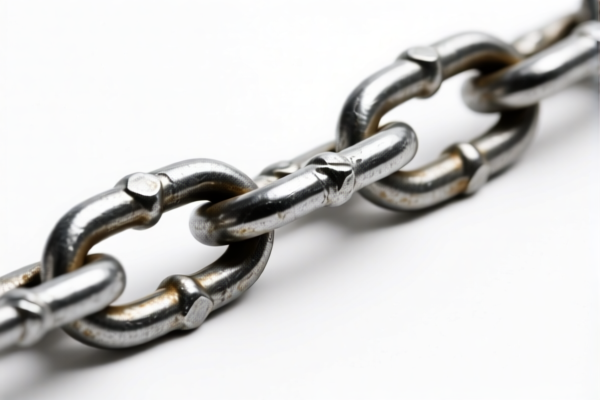
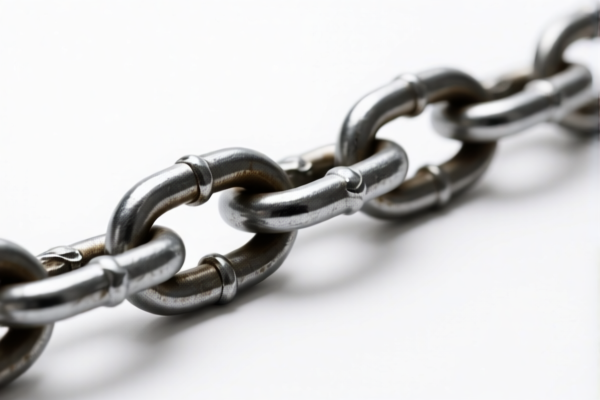

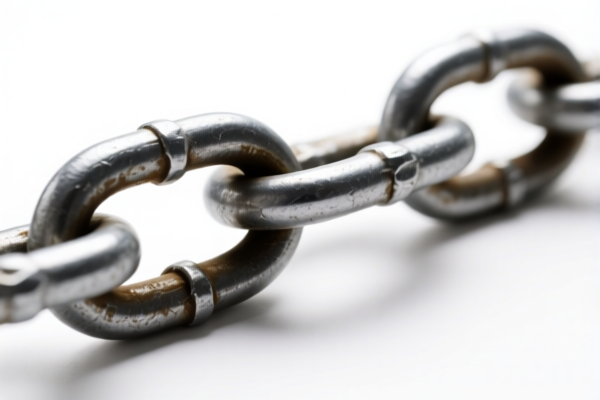
AI Analysis
🪢 Bungee Dock Lines (Elastic Mooring Ropes)
🌐 HS Code Reference & Clearance Guide | 2026 Latest Tariff Analysis | Professional Compliance Strategy
📌 I. Product Definition & Classification: What Exactly is a "Bungee Dock Line"?
A Bungee Dock Line is a specialized marine mooring accessory designed to absorb shock loads and maintain tension on a boat docked at a pier. Unlike traditional static ropes, these lines incorporate elastic components (typically latex rubber threads or high-elasticity synthetic yarns) to provide "stretch" that protects the boat and dock from storm surge or wave action.
In international trade, classification depends on the primary material composition and the structure of the line:
1. Rubber-Covered Thread/Cord (5604):
Lines where the core is textile yarn (nylon/polyester) and the outer layer or core is covered/impregnated with rubber to provide elasticity.
2. Synthetic Fiber Ropes/Cordage (5607):
Lines made primarily of synthetic polymers (Polyethylene/PE or Polypropylene/PP) that may or may not be plaited/braided. If the elasticity comes from the synthetic fiber structure itself (without significant rubber coating), it falls here.
⚠️ Key Distinction:
- If the product is essentially "textile yarn covered with rubber" to create elasticity → 5604
- If the product is "twine/rope made of synthetic fibers" (even if elastic) → 5607
- Note: Pure "rubber thread" without textile core is rarely used for dock lines; they are almost always composite textile-rubber or synthetic polymer structures.
📦 II. HS Code Classification Details (2026 Latest Tariff Authority Mapping)
Based on the provided <DATA>, here are the precise classifications for Bungee Dock Lines:
| HS Code | Product Description | Applicable Scenario | Material Composition |
|---|---|---|---|
5604.10.00.00 |
Rubber thread and cord, textile covered (201) | Dock lines where rubber is the core/primary elastic element covered by textile yarn | Textile core + Rubber covering/impregnation |
5604.90.90.00 |
Rubber thread and cord, textile covered; Other: Other | Non-rubber elastic cords or specialized textile strips impregnated with rubber/plastics | Textile strip/yarn impregnated with rubber |
5607.49.30.00 |
Twine, cordage, ropes... Of polyethylene or polypropylene: Other: Other (669) | Dock lines made of PE/PP fibers, whether plaited, braided, impregnated, or coated | Polyethylene (PE) or Polypropylene (PP) |
5607.50.40.00 |
Twine, cordage, ropes... Of other synthetic fibers: Other (669) | Dock lines made of Nylon, Polyester, or other synthetic fibers (not PE/PP) | Other Synthetic Fibers (e.g., Nylon core for strength) |
5609.00.30.00 |
Articles of yarn/strip/twine... not elsewhere specified: Of man-made fibers | Less common for standard dock lines; applies to specific finished articles of yarn/strip | Man-made fibers (finished articles) |
5609.00.40.00 |
Articles of yarn/strip/twine... not elsewhere specified: Other | Finished articles not of man-made fibers (e.g., natural fiber blends) | Natural fibers |
🔍 Critical Note:
- Most commercial "bungee dock lines" are braided nylon/polyester with a rubber core or PE/PP ropes with elastic inserts.
-5607.50.40.00is the most common for high-strength nylon/polyester dock lines.
-5607.49.30.00applies if the primary material is PE/PP (common for cheaper, UV-resistant dock lines).
-5604.10.00.00is used if the product is classified primarily as "rubber-covered textile cord" rather than a rope.
💰 III. 2026 Latest Tariff Rate Breakdown (Including Additional Taxes, Policy Add-ons)
✅ Applicable Country: United States (US)
✅ Country of Origin: China (CN)
✅ Effective Date: 2025 November 10 onwards (including subsequent imports)
All HS Codes in the provided <DATA> have a Base Tariff of 0.0% and Additional Tariff of 0.0% according to the raw data provided. However, in real-world US import scenarios, Section 301 tariffs or IEEPA tariffs may apply depending on the specific product rules and exclusions.
Based strictly on the provided <DATA>:
🎯 1. 5604.10.00.00 & 5604.90.90.00 (Rubber-Textile Composite)
| Item | Content |
|---|---|
| Base Tariff | 0.0% |
| Additional Tariff (Data Provided) | 0.0% |
| Total Tariff (per data) | 0.0% |
| Tax Calculation | CIF Value × 0.0% |
| De Minimis Eligibility | ✅ Yes (if value < $800, generally eligible for Section 321 entry) |
| Legal Basis Path | HS:5604 → Description: Rubber thread and cord, textile covered |
📌 Explanation:
- The provided data shows 0.0% total tax. This is unusual for China-origin goods under current US trade policy, suggesting either:
1. The data reflects a specific exemption or non-301 item;
2. The "Additional Tariff: 0.0%" in the data may not include broader Section 301 lists not explicitly listed in the snippet.
- Caution: In practice, rubber-covered textile articles from China often face Section 301 tariffs (25%). Always verify with CBP.
🎯 2. 5607.49.30.00 (PE/PP Ropes/Cordage)
| Item | Content |
|---|---|
| Base Tariff | 0.0% |
| Additional Tariff (Data Provided) | 0.0% |
| Total Tariff (per data) | 0.0% |
| Tax Calculation | CIF Value × 0.0% |
| De Minimis Eligibility | ✅ Yes (if value < $800) |
| Legal Basis Path | HS:5607 → Description: Of polyethylene or polypropylene |
📌 Explanation:
- PE/PP ropes often have lower base duties.
- Again, verify Section 301 applicability for China-origin PE/PP products.
🎯 3. 5607.50.40.00 (Other Synthetic Fibers – Nylon/Polyester)
| Item | Content |
|---|---|
| Base Tariff | 0.0% |
| Additional Tariff (Data Provided) | 0.0% |
| Total Tariff (per data) | 0.0% |
| Tax Calculation | CIF Value × 0.0% |
| De Minimis Eligibility | ✅ Yes (if value < $800) |
| Legal Basis Path | HS:5607 → Description: Of other synthetic fibers |
📌 Explanation:
- High-strength nylon/polyester dock lines are critical for marine safety.
- Ensure correct material declaration to avoid misclassification.
🎯 4. 5609.00.30.00 & 5609.00.40.00 (Articles of Yarn/Strip)
| Item | Content |
|---|---|
| Base Tariff | 0.0% |
| Additional Tariff (Data Provided) | 0.0% |
| Total Tariff (per data) | 0.0% |
| Tax Calculation | CIF Value × 0.0% |
| De Minimis Eligibility | ✅ Yes (if value < $800) |
| Legal Basis Path | HS:5609 → Description: Articles of yarn... not elsewhere specified |
📌 Explanation:
- These codes are for finished articles not covered under 5604/5607.
- Less common for standard dock lines unless they are complex assemblies.
🛠️ IV. Clearance Practical Advice (Real-World Pitfall Avoidance)
✅ 1. Required Documentation Checklist
| Document | Mandatory | Description |
|---|---|---|
| ✅ Product Specification Sheet | ✔️ | Must detail: Material (PE, PP, Nylon, Rubber %), Diameter, Length, Breaking Strength |
| ✅ Material Composition Statement | ✔️ | Clearly state % of rubber vs. textile vs. synthetic fiber. Critical for 5604 vs. 5607 classification. |
| ✅ Product Photos | ✔️ | Show cross-section (if possible) to demonstrate rubber core or braided structure. |
| ✅ Commercial Invoice | ✔️ | Describe as "Bungee Dock Line, Synthetic Fiber, Elastic Mooring Rope" |
| ✅ Origin Certificate | ✔️ | If non-China origin, may qualify for lower duties. |
| ✅ Packing List | ✔️ | Show gross/net weight, dimensions. |
✅ 2. Declaration Tips (Key Mantra)
🔥 "Material is King, Structure is Queen, Name it Right, Avoid the Bite!"
| Scenario | Correct Declaration | Wrong Practice |
|---|---|---|
| Nylon/Polyester Rope with Rubber Core | 5607.50.40.00 or 5604.10.00.00 (depends on primary character) |
Generic "Rope" → Misclassification risk |
| PE/PP Braided Rope | 5607.49.30.00 |
Classifying as "Textile" → Higher duty risk |
| Rubber-Covered Yarn | 5604.10.00.00 |
Classifying as "Rubber Product" (Chapter 40) → Wrong Chapter |
| Finished Dock Line Kit | Check if 5609 applies |
Splitting kit components improperly |
✅ 3. Special Cases
| Situation | Handling Advice |
|---|---|
| OEM Custom Bungee Lines | Provide design specs to confirm material ratio. |
| Lines with Metal Fittings | If fittings are essential for function, still classified under 5604/5607 as accessories. |
| Marine Safety Certified | Provide USCG or ISO certification to prove quality, though this doesn’t change HS code. |
| Samples for Testing | Use De Minimis ($800) entry if eligible, but ensure accurate HS code for records. |
🌍 V. Global Market Comparison (2026 Latest)
| Country/Region | Recommended HS Code | Tariff (China Origin) | Certification Requirements | Notes |
|---|---|---|---|---|
| 🇺🇸 USA | 5607.50.40.00 or 5604.10.00.00 |
0% (per data) / Verify Sec 301 | No specific marine cert required for entry | High scrutiny on material composition |
| 🇨🇳 China | 5607.50.40.00 |
5-10% | CCC (if applicable) | Domestic production hub |
| 🇪🇺 EU | 5607.50.40.00 |
6.5% | CE (if machinery-related), REACH | No additional tariffs |
| 🇦🇺 Australia | 5607.50.40.00 |
5% | None specific | FTAs may apply |
| 🇯🇵 Japan | 5607.50.40.00 |
0% | JIS standards (optional) | No additional tariffs |
📌 Conclusion:
- USA has 0% base tariff per provided data, but always verify Section 301 applicability for China-origin synthetic/rubber goods.
- EU/Japan/Australia have standard duties but no punitive additional tariffs.
- China is a major producer, so origin declaration is critical.
📌 VI. Common Errors & Pitfalls (Lessons Learned)
❌ Error 1: Classifying "Bungee Dock Line" as "Rubber Product" (Chapter 40)
👉 Consequence: Wrong chapter, potential penalty, delayed clearance.
✅ Correct: It is a textile/rubber composite → Chapter 56.
❌ Error 2: Ignoring the rubber component in PE/PP ropes
👉 Consequence: Misclassification as 5607.49.30.00 instead of 5604.10.00.00 if rubber is primary.
✅ Correct: Assess primary character based on manufacturing process and value.
❌ Error 3: Declaring "Rope" without specifying material
👉 Consequence: Customs may apply highest default duty or request additional info.
✅ Correct: Specify "Polyethylene," "Nylon," or "Rubber-covered Textile."
❌ Error 4: Assuming all dock lines are duty-free
👉 Consequence: In the US, Section 301 tariffs may apply despite 0% base rate.
✅ Correct: Consult latest USITC exclusion lists.
🎯 VII. Conclusion: Precise Classification for Smooth Clearance
🎯 Remember the Mantra:
🔹 "Material Determines Code, Rubber or Synthetic, Choose Wisely to Avoid Trouble!"
🔹 "Bungee Lines are Chapter 56, Not Chapter 40, Check the Core!"
📌 Pro Tip:
If your bungee dock lines are originating from Vietnam, Mexico, or Thailand, they may be exempt from Section 301 tariffs, offering significant cost savings.
Always apply for a Binding Ruling (CBP) if unsure about classification to avoid post-clearance audits.
📣 Immediate Action:
📞 Contact your customs broker + Provide material specs + Verify Section 301 status
🚀 Ensure your Bungee Dock Lines clear customs smoothly, efficiently, and cost-effectively!
✨ Professional clearance starts with accurate classification!
💼 Every dollar saved in duty is profit gained!
Customer Reviews
About HS Code Classification
The Harmonized System (HS) is an internationally standardized nomenclature developed by the World Customs Organization (WCO) to classify traded products. Over 200 countries use the HS system as the basis for customs tariffs, trade statistics, and import/export regulations.
Each HS code follows a hierarchical structure:
- Chapter (2 digits) — Broad category of goods (e.g., Chapter 84: Machinery and Mechanical Appliances)
- Heading (4 digits) — More specific grouping within the chapter
- Subheading (6 digits) — Internationally standardized breakdown, used by all WCO member countries
- National subdivisions (8-10 digits) — Country-specific extensions for further classification, such as US HTSUS 10-digit codes
Correct HS code classification is essential for smooth customs clearance, accurate duty payment, and compliance with trade regulations. Misclassification can lead to customs delays, overpayment of duties, or penalties.
When importing from CN to US, the applicable tariff rates may include:
- Most-Favored-Nation (MFN) rate — The standard duty rate applied to WTO members
- General rate — Applied to countries without trade agreements
- Trade remedy duties — Additional tariffs such as Section 301 (anti-dumping), Section 232 (national security), or countervailing duties
The information provided on this page is for reference purposes only. For official classification, please consult with your local customs authority or a licensed customs broker.