bus off road tire rim diameter less than 40.6 cm
CN → US| HS Code | Tariff Rate | Origin | Destination | Doc |
|---|---|---|---|---|
| 4012124035 | 39.0% | CN | US | Official Doc |
| 4011201035 | 39.0% | CN | US | Official Doc |
| 4012128050 | 38.4% | CN | US | Official Doc |
| 4011205050 | 38.4% | CN | US | Official Doc |
| 4011201035 | 39.0% | CN | US | Official Doc |
Product Images
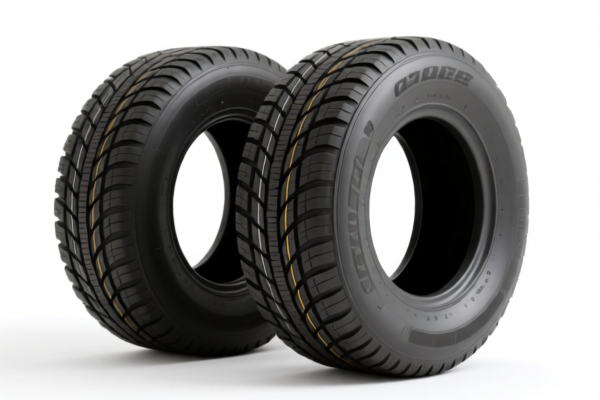
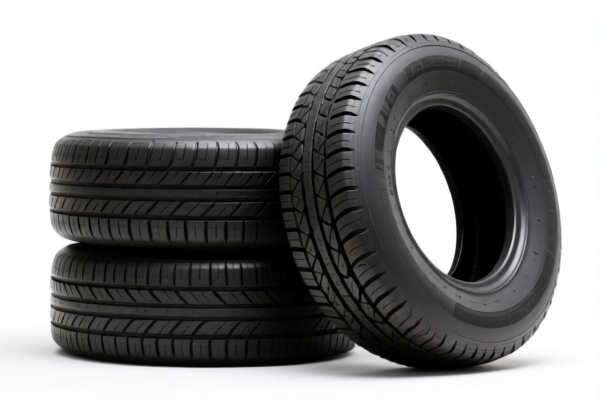


AI Analysis
🚐 Bus Off-Road Tires – Rim Diameter < 40.6 cm
🌐 HS Code & Tariff Guide | 2026 Updated Customs Classification | Proven Compliance Strategy
📌 One Product, Multiple HS Codes – Know the Difference to Avoid 40%+ Tariffs!
📌 I. Product Definition & Key Classification Factors
You're importing bus off-road tires with a rim diameter less than 40.6 cm (16 inches). This seemingly simple product actually splits into four distinct HS codes based on construction type and tire design, each with different tariff treatments.
⚠️ Critical Insight:
- Radial vs. Non-Radial construction changes the HS code — even if the tire looks identical!
- Standard vs. Off-Road (all-terrain) design determines the base tariff and add-on duties.
- Misclassification = 38%–39% tariffs instead of 30%+ savings!
📦 II. HS Code Breakdown (2026 Official Tariff List – US Focus)
| HS Code | Product Description | Key Features | Tax Rate | Critical Distinctions |
|---|---|---|---|---|
4012.12.40.35 |
Bus off-road tires, rim < 40.6 cm, standard size, rubber | Radial construction, standard tread pattern | 39.0% | ✅ Radial |
4011.20.10.35 |
Bus non-highway tires, rim < 40.6 cm, radial, rubber | Radial, designed for rough terrain (off-road) | 39.0% | ✅ Radial |
4012.12.80.50 |
Bus off-road tires, rim < 40.6 cm, standard size, other types | Non-radial, all-terrain or specialty tread | 38.4% | ❌ Non-radial |
4011.20.50.50 |
Bus non-highway tires, rim < 40.6 cm, non-radial, rubber | Non-radial, rugged tread, off-road capability | 38.4% | ❌ Non-radial |
🔍 Why This Matters:
- Radial tires (codes4012.12.40.35&4011.20.10.35) face higher base tariffs due to advanced construction.
- Non-radial tires (codes4012.12.80.50&4011.20.50.50) have slightly lower base rates, but still carry massive add-ons.
- All four codes are subject to same punitive add-ons — this is not optional.
💰 III. 2026 Tariff Breakdown (US – China Origin)
✅ Applicable to: U.S. imports from China (CN)
✅ Effective Date: November 10, 2025 (inclusive)
✅ Legal Basis: Section 301, IEEPA, and U.S. Trade Act 1974
🎯 1. 4012.12.40.35 & 4011.20.10.35 — Radial Off-Road Bus Tires
| Tax Component | Rate | Legal Basis | Notes |
|---|---|---|---|
| Base Tariff | 4.0% | HTSUS 4012.12.40.35 / 4011.20.10.35 | Standard rate for radial tires |
| Section 301 (USITC) | +25.0% | USITC Footnote 9903.88.01 | Applies to all Chinese-made tires |
| IEEPA (International Emergency Economic Powers Act) | +10.0% | IEEPA:9903.01.25 | Targeted at China/HK goods |
| Total Effective Tariff | 39.0% | — | Highest tier for radial off-road tires |
📌 Why 39%?
- Base 4% → Standard for radial tires
- +25% → Section 301 retaliation (China trade war)
- +10% → IEEPA emergency powers (China-specific)
- No de minimis exemption → Even $100 shipments pay full 39%
🎯 2. 4012.12.80.50 & 4011.20.50.50 — Non-Radial Off-Road Bus Tires
| Tax Component | Rate | Legal Basis | Notes |
|---|---|---|---|
| Base Tariff | 3.4% | HTSUS 4012.12.80.50 / 4011.20.50.50 | Slightly lower than radial |
| Section 301 (USITC) | +25.0% | USITC Footnote 9903.88.01 | Same as radial |
| IEEPA | +10.0% | IEEPA:9903.01.25 | Same as radial |
| Total Effective Tariff | 38.4% | — | 0.6% lower than radial |
📌 Why 38.4%?
- Base 3.4% → Reflects non-radial construction (less advanced)
- +25% +10% → Same punitive add-ons apply regardless of construction
- Still extremely high — 38.4% is NOT "low" — it’s still 3x average tariff
🛠️ IV. Customs Clearance Best Practices (Pro Tips)
✅ 1. Document Checklist (MUST-HAVE)
| Document | Required? | Why It Matters |
|---|---|---|
| ✅ Technical Specs Sheet | ✔️ | Must state: Radial/Non-Radial, Tread Pattern, Rim Diameter |
| ✅ Product Photos (360°) | ✔️ | Show tread design, sidewall markings, rim size |
| ✅ Manufacturer’s Drawing / CAD | ✔️ | Prove radial vs. non-radial structure |
| ✅ Commercial Invoice | ✔️ | Must include HS Code, origin, CIF value |
| ✅ Certificate of Origin (CO) | ✔️ | If from Vietnam/Mexico, may qualify for IEEPA exemption |
| ✅ Test Report (TUV, SGS, etc.) | ✔️ | Prove compliance with DOT/SAE standards |
| ✅ Packing List | ✔️ | Show tire count per container, weight per unit |
✅ 2. 申报技巧 (Golden Rules)
🔥 “Radial? 39%. Non-Radial? 38.4%. But both pay 35%+ in add-ons!”
| Scenario | Correct HS Code | Wrong Code | Risk |
|---|---|---|---|
| Radial tire, off-road tread | 4011.20.10.35 |
4012.12.40.35 |
❌ No difference — same tax |
| Non-radial, rugged tread | 4011.20.50.50 |
4012.12.80.50 |
❌ Same tariff |
| Claiming “standard” when off-road | 4012.12.40.35 |
4011.20.10.35 |
✅ Same rate — but must be truthful |
| Mislabeling radial as non-radial | 4012.12.80.50 |
4011.20.50.50 |
⚠️ Audit risk — duty underpayment |
✅ Correct Declaration Example:
"Bus Off-Road Tire, 15.5” Rim Diameter, Radial Construction, All-Terrain Tread, 100% Rubber, Made in China"
✅ 3. Special Cases & Workarounds
| Situation | Solution |
|---|---|
| Tires from Vietnam/Mexico | Apply for IEEPA exemption → 0% tariff (if eligible) |
| Tires for military/industrial use | Apply for non-commercial exemption — requires customs pre-approval |
| Used or recycled tires | May qualify for lower tariff — but must prove not new |
| OEM tires (branded) | Provide brand license — avoids suspicion of "rebranded" goods |
🌍 V. Global Tariff Comparison (2026)
| Country | Recommended HS Code | Tariff | Certification | Notes |
|---|---|---|---|---|
| 🇺🇸 USA | 4011.20.10.35 or 4011.20.50.50 |
38.4%–39.0% | DOT, SAE | Highest tariffs globally |
| 🇨🇳 China | 4011.20.10.35 |
5% | CCC | No extra duties |
| 🇪🇺 EU | 4011.20.10.35 |
0% (if CE) | CE | No 301/IEEPA |
| 🇦🇺 Australia | 4011.20.10.35 |
5% | RCM | No add-ons |
| 🇯🇵 Japan | 4011.20.10.35 |
0% | PSE | No extra taxes |
📌 Key Insight:
- Only the U.S. applies 301 + IEEPA tariffs on Chinese tires.
- All other markets charge standard or low tariffs — don’t import via U.S. if you want lower cost.
🚨 VI. Common Mistakes & Penalties (Avoid These!)
❌ Mistake 1: Using “standard tire” instead of “off-road” in description
👉 Result: Misclassification → duty underpayment → penalties up to 100% of duty
❌ Mistake 2: Not distinguishing radial vs. non-radial in申报
👉 Result: Audit risk — even if tax is same, documentation failure
❌ Mistake 3: Assuming non-radial = lower tariff → not true
👉 Reality: Base tariff is 3.4% vs 4.0%, but add-ons are identical → only 0.6% difference
❌ Mistake 4: Not providing photos or drawings
👉 Result: Customs delays → demurrage fees, storage costs
✅ Pro Tip:
Use "Radial" or "Non-Radial" in the product title and invoice description — this is your defense.
🎯 VII. Final Verdict: What You Must Do Now
🔹 Radial? → 39.0%
🔹 Non-Radial? → 38.4%
🔹 Both? → Same add-ons: +25% +10%
🔹 No de minimis exemption → Even small shipments pay full rate✅ Action Plan: 1. Verify tire construction (radial vs. non-radial)
2. Confirm tread pattern (off-road vs. standard)
3. Use correct HS Code (based on construction)
4. Prepare full documentation (photos, specs, CO)
5. Apply for IEEPA exemption if sourcing from Vietnam/Mexico
6. Request Advance Ruling (AR) from U.S. CBP for high-value shipments
📣 Call to Action: Don’t Pay 39% by Mistake!
📞 Contact a U.S. Customs Broker NOW
🚀 Get a pre-approval for your HS Code
💼 Save thousands in duty, avoid penalties, and ship with confidence
✨ Remember:
🔹 HS Code = Your Lifeline
🔹 Radial ≠ Lower Tax (in U.S.)
🔹 Non-Radial ≠ Safe — same 38.4%
🔹 Documentation is your armor
📌 Your Tire’s Future Starts with One Correct HS Code.
💼 Don’t let a typo cost you 39% of your profit.
🛡️ Be precise. Be compliant. Be profitable.
Customer Reviews
About HS Code Classification
The Harmonized System (HS) is an internationally standardized nomenclature developed by the World Customs Organization (WCO) to classify traded products. Over 200 countries use the HS system as the basis for customs tariffs, trade statistics, and import/export regulations.
Each HS code follows a hierarchical structure:
- Chapter (2 digits) — Broad category of goods (e.g., Chapter 84: Machinery and Mechanical Appliances)
- Heading (4 digits) — More specific grouping within the chapter
- Subheading (6 digits) — Internationally standardized breakdown, used by all WCO member countries
- National subdivisions (8-10 digits) — Country-specific extensions for further classification, such as US HTSUS 10-digit codes
Correct HS code classification is essential for smooth customs clearance, accurate duty payment, and compliance with trade regulations. Misclassification can lead to customs delays, overpayment of duties, or penalties.
When importing from CN to US, the applicable tariff rates may include:
- Most-Favored-Nation (MFN) rate — The standard duty rate applied to WTO members
- General rate — Applied to countries without trade agreements
- Trade remedy duties — Additional tariffs such as Section 301 (anti-dumping), Section 232 (national security), or countervailing duties
The information provided on this page is for reference purposes only. For official classification, please consult with your local customs authority or a licensed customs broker.