c9 copolymer petroleum resin
CN → US| HS Code | Tariff Rate | Origin | Destination | Doc |
|---|---|---|---|---|
| 390720 | 0.0% | CN | US | Official Doc |
| 390799 | 0.0% | CN | US | Official Doc |
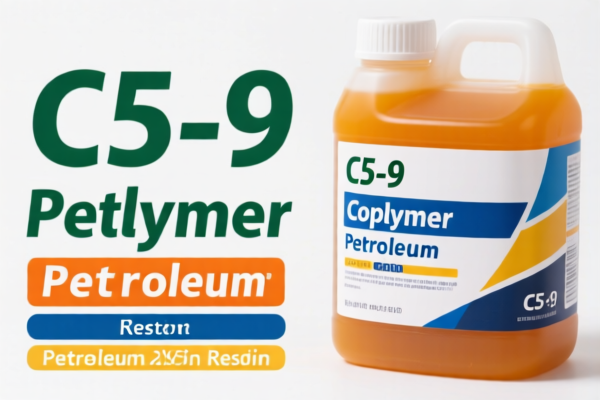
Product Images

AI Analysis
🧪 C9 Copolymer Petroleum Resin (Industrial Adhesive & Tackifier)
🌐 HS Code Classification & Customs Clearance Guide | 2026 Tariff Analysis | Strategic Import Strategy
📌 I. Product Definition & Classification: What Exactly is "C9 Copolymer Petroleum Resin"?
C9 Copolymer Petroleum Resin is a synthetic, aliphatic hydrocarbon resin derived from petroleum fractions (specifically C9 aromatics). It is primarily used as a tackifier (to increase stickiness) and binder in the manufacturing of adhesives, sealants, coatings, and rubber compounding.
In international trade, its classification depends heavily on its chemical composition and specific application, leading to two distinct HS Code pathways under Chapter 39 (Plastics and Articles Thereof):
1. Polymers of Propylene or of other Olefins (Homopolymers):
Strictly speaking, C9 resins are often copolymers. However, in many customs jurisdictions, if the primary polymer base is identified as poly-alpha-olefin or similar olefinic structures without distinct ethylene/vinyl acetate dominance, it may fall under 3907.20.
2. Other Synthetic Resins, Not Elsewhere Specified:
If the resin is a complex copolymer that does not fit the strict definition of homopolymers of olefins (like polyethylene or polypropylene), or if it is specifically described as "not elsewhere specified" (NES) in industrial applications (such as printing inks, rubber compounding), it falls under 3907.99.
⚠️ Key Distinction Point:
- If the product is explicitly defined as a homopolymer of propylene or a simple olefin polymer →归入 3907.20
- If the product is a complex copolymer, C9 aromatic copolymer, or NES synthetic resin used for general industrial tackification →归入 3907.99
📦 II. HS Code Classification Details (2026 Latest Tariff Authority Reference)
| HS Code | Product Description | Applicable Scenario | Chemical Nature |
|---|---|---|---|
3907.20 |
Copolymers of ethylene; Polymers of propylene; Other polymers of olefins | Homopolymers of propylene; Simple olefin copolymers | ✅ Olefin-based |
3907.99 |
Other synthetic resins, not elsewhere specified (including C9 Copolymer Petroleum Resin) | C9 aromatics copolymers; Industrial tackifiers; Rubber compounding agents; Printing ink binders | ✅ Complex/Aromatic Copolymer |
🔍 Critical Reminder:
- Most C9 Copolymer Petroleum Resins are aromatic copolymers. Since they are not simple homopolymers of propylene, they are frequently classified under 3907.99.
- If the manufacturer claims it is a "Propylene Homopolymer," it might go to 3907.20, but C9 resins are typically derived from C9 fractions, making 3907.99 the more accurate and common classification for C9-specific resins.
- Do not misclassify as 3906 (Acrylics) or 3907.10 (Polyacetal).
💰 III. 2026 Latest Tariff Rate Details (Including Surcharges & Policy Add-ons)
✅ Applicable Country: United States (US)
✅ Origin: China (CN)
✅ Effective Date: From 2025-11-10 (including subsequent imports)
🎯 1. 3907.20 —— Copolymers of Ethylene; Polymers of Propylene; Other Polymers of Olefins
| Item | Content |
|---|---|
| Base Duty Rate | 0% (ad valorem) |
| USITC Surcharge | +25% (from USITC Footnote 9903.88.01) |
| IEEPA Surcharge | +10% (against China/HK products, from 2025-11-10) |
| Total Rate | 45% |
| Tax Calculation | CIF Value × 45% |
| De Minimis Exemption | ❌ Not Available (deny_de_minimis) |
| Legal Basis Path | IEEPA:9903.01.25 → IEEPA:9903.01.24 → USITC:3907.20 → FOOTNOTE:9903.88.01 |
📌 Explanation:
- The "25% USITC surcharge" comes from the Section 301 tariffs under the US Trade Act;
- The "10% IEEPA surcharge" is the additional tariff under the International Emergency Economic Powers Act for Chinese products;
- Total 45%, which is a very high duty rate. Advance planning is essential!
🎯 2. 3907.99 —— Other Synthetic Resins (Including C9 Copolymer Petroleum Resin)
| Item | Content |
|---|---|
| Base Duty Rate | 0% (ad valorem) |
| USITC Surcharge | +25% |
| IEEPA Surcharge | +10% |
| Total Rate | 45% |
| Tax Calculation | CIF Value × 45% |
| De Minimis Exemption | ❌ Not Available |
| Legal Basis Path | IEEPA:9901.25 → IEEPA:9903.01.24 → USITC:3907.99 → FOOTNOTE:9903.88.01 |
📌 Note:
- Both subheadings carry the same surcharge structure under Section 301 and IEEPA;
- Whether classified as 3907.20 or 3907.99, the total effective tax rate is 45% for Chinese-origin goods.
- Ensure the technical data sheet clearly states "C9 Copolymer" to support the 3907.99 classification, as it is more specific to the product's aromatic nature.
🛠️ IV. Customs Clearance Practical Advice (Battle-Tested Pitfall Guide)
✅ 1. Required Documentation Checklist (None Can Be Missing)
| Document | Mandatory? | Description |
|---|---|---|
| ✅ Technical Data Sheet (TDS) | ✔️ | Must specify "C9 Copolymer," origin of raw materials, and softening point. |
| ✅ Chemical Structure Analysis | ✔️ | Proof of copolymer nature (aromatic vs. olefinic) to justify 3907.99. |
| ✅ Product Photos (with Label) | ✔️ | Clear view of packaging, brand, and HS code if printed. |
| ✅ Commercial Invoice | ✔️ | Must state "C9 Copolymer Petroleum Resin for Industrial Adhesive Use." |
| ✅ Packing List | ✔️ | Weight and dimensions of each package. |
| ✅ Certificate of Origin (CO) | ✔️ | If not from China, to claim preferential rates (if any). |
✅ 2. Declaration Tips (Key Mantra)
🔥 “Be Specific, Not Generic! ‘Resin’ is Not Enough!”
| Situation | Correct Declaration | Wrong Practice |
|---|---|---|
| C9 Resin for Adhesives | 3907.99.00.00 – C9 Copolymer Petroleum Resin |
“Plastic Resin” → Ambiguous, may trigger audit |
| C9 Resin for Rubber | 3907.99.00.00 – Tackifier for Rubber Compounding |
“Chemical Additive” → Wrong chapter |
| Bulk Resin Pellets | 3907.99.00.00 |
“Bulk Chemical” → May be misclassified |
| Liquid Resin Solution | Check if solvent content > polymer content → May shift to Chapter 38 | Claiming 3907.99 for solvent-heavy liquid |
✅ 3. Special Cases Handling
| Situation | Recommendation |
|---|---|
| OEM Custom Resin | Provide customer order + formula sheet to prove specific composition. |
| Blended Resins | If mixed with other polymers, the essential character determines classification. |
| Sample Shipments | Even small samples are subject to 45% duty; no de minimis exemption. |
| Lab Analysis Request | Be prepared for CBP to request a chemical analysis report to confirm C9 copolymer structure. |
🌍 V. Global Market Customs Comparison (2026 Latest)
| Country/Region | Recommended HS Code | Duty Rate (China Origin) | Certification Requirements | Remarks |
|---|---|---|---|---|
| 🇺🇸 USA | 3907.99.00.00 |
45% (3907.20 also 45%) | None specific for resin | High duty due to Section 301 |
| 🇨🇳 China | 3907.99.00.00 |
6.5% | None | Lower duty for imports |
| 🇪🇺 EU | 3907.99 |
6.5% | REACH Registration | REACH compliance is critical |
| 🇦🇺 Australia | 3907.99 |
5% | None | Moderate duty |
| 🇯🇵 Japan | 3907.99 |
6.0% | JIS Standards | Standard duty |
📌 Conclusion:
- USA is the most expensive market due to combined 301 + IEEPA tariffs.
- EU and Japan require REACH (EU) or JIS compliance documentation.
- China has a moderate 6.5% duty, but domestic supply is abundant.
📌 VI. Common Errors & Pitfall Guide (Blood-Teaching Lessons)
❌ Error 1: Declaring as “Plastic Raw Material” without specifying “C9 Copolymer”
👉 Consequence: Customs may reclassify or delay for clarification → Delays & Storage Fees
❌ Error 2: Misclassifying as “Chemical Product” (Chapter 38)
👉 Consequence: Wrong duty rate, possible penalty for misdeclaration
❌ Error 3: Ignoring REACH/EPA Compliance
👉 Consequence: Blocked at EU/US borders if toxicological data is missing
❌ Error 4: Not declaring “C9” specifically
👉 Consequence: Loss of precise classification support → Higher scrutiny
✅ Correct Declaration Example:
“C9 Copolymer Petroleum Resin, Solid Pellets, for Use in Adhesive Manufacturing, Model XYZ, REACH Registered”
🎯 VII. Conclusion: Professional Classification, Cost Efficiency!
🎯 Remember the Mantra:
🔹 “C9 is 3907.99, Not 3906.00!”
🔹 “45% Duty in USA, Plan Ahead or Lose Profit!”
📌 Pro Tip:
If your C9 Resin is sourced from Vietnam, Thailand, or Malaysia, you may qualify for IEEPA Exemption, reducing the duty to 0%~5%.
We recommend applying for an Advance Ruling before shipment to avoid clearance risks.
📣 Immediate Action:
📞 Contact a licensed customs broker + Provide TDS + Apply for HS Code Advance Ruling
🚀 Let your C9 Resin clear customs smoothly, reduce costs, and boost profits!
✨ Professional Clearance Starts with Accurate Classification!
💼 Every cent of cost deserves precise calculation!
Customer Reviews
About HS Code Classification
The Harmonized System (HS) is an internationally standardized nomenclature developed by the World Customs Organization (WCO) to classify traded products. Over 200 countries use the HS system as the basis for customs tariffs, trade statistics, and import/export regulations.
Each HS code follows a hierarchical structure:
- Chapter (2 digits) — Broad category of goods (e.g., Chapter 84: Machinery and Mechanical Appliances)
- Heading (4 digits) — More specific grouping within the chapter
- Subheading (6 digits) — Internationally standardized breakdown, used by all WCO member countries
- National subdivisions (8-10 digits) — Country-specific extensions for further classification, such as US HTSUS 10-digit codes
Correct HS code classification is essential for smooth customs clearance, accurate duty payment, and compliance with trade regulations. Misclassification can lead to customs delays, overpayment of duties, or penalties.
When importing from CN to US, the applicable tariff rates may include:
- Most-Favored-Nation (MFN) rate — The standard duty rate applied to WTO members
- General rate — Applied to countries without trade agreements
- Trade remedy duties — Additional tariffs such as Section 301 (anti-dumping), Section 232 (national security), or countervailing duties
The information provided on this page is for reference purposes only. For official classification, please consult with your local customs authority or a licensed customs broker.