cable pulling tool set
CN → US| HS Code | Tariff Rate | Origin | Destination | Doc |
|---|---|---|---|---|
| 7326902500 | 85.0% | CN | US | Official Doc |
| 7326908688 | 87.9% | CN | US | Official Doc |
| 8205591000 | 42.2% | CN | US | Official Doc |
| 8205906000 | 0.0% | CN | US | Official Doc |
Product Images
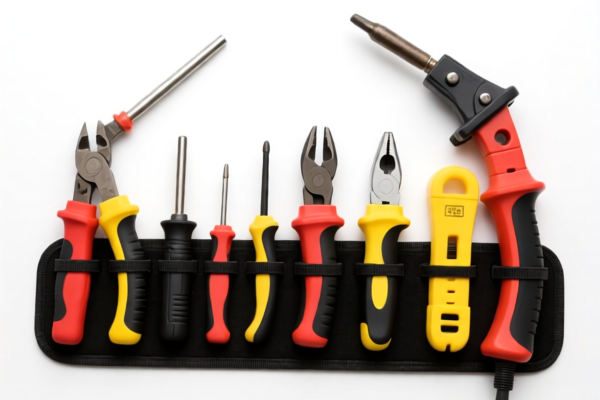
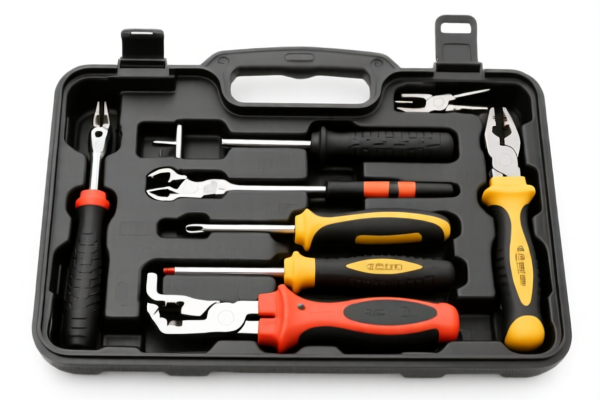
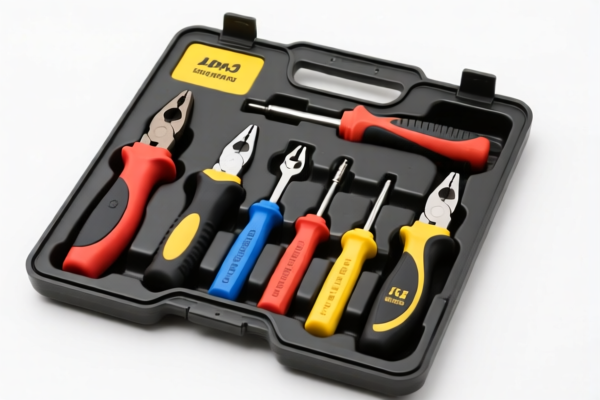
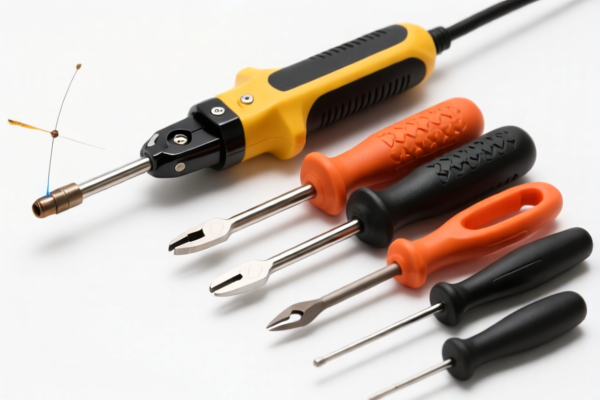
AI Analysis
🛠️ Cable Pulling Tools (Cable Pulling Tool Sets)
🌐 HS Code Reference & Customs Clearance Guide | 2026 Latest Tariff Analysis | Professional Entry Strategy
📌 I. Product Definition & Classification: What Exactly is a "Cable Pulling Tool Set"?
A Cable Pulling Tool Set typically consists of mechanical or manual devices designed to pull cables (electrical, fiber optic, or network) through conduits or ducts. Common components include fish tapes, pulling grips, cable rollers, and winches.
In international trade, the classification depends heavily on whether the items are: 1. Standalone Hand Tools (e.g., a specific pipe tool or a glass cutter-like mechanism). 2. Sets of Articles (a kit containing multiple types of tools). 3. General Iron/Steel Articles (simple cables, wires, or casing components).
⚠️ Key Distinction:
- If the product is a specialized tool (like a pipe wrench or specific pulling grip) defined under Heading 8205, it has a 0% Basic Duty.
- If the product is merely a steel cable/wire (inner wire for brakes or similar) without tool functions, it falls under Heading 7326.
- If the product is a "Set" (multiple tools in one package), customs apply the duty of the principal article or the most significant component, subject to additional tariffs.
📦 II. HS Code Classification Details (2026 Latest Tariff Authority对照)
Based on the provided data, here are the three possible classifications for Cable Pulling Tools/Sets:
| HS Code | Product Description | Applicable Scenario | Duty Implication |
|---|---|---|---|
7326.90.25.00 |
Other articles of iron or steel: Cable or inner wire for caliper and cantilever brakes and casing therefor, whether or not cut to length | Misclassification Risk: If the "cable" part of your set is identified as brake wire rather than a tool. | 75.0% (High) |
7326.90.86.88 |
Other articles of iron or steel: Other: Other: Other Other Other | General Steel Article: If the item is a generic steel rod, hook, or part not specified elsewhere. | 77.9% (Highest) |
8205.59.10.00 |
Handtools (including glass cutters)...: Other handtools...: Pipe tools, and parts thereof | Correct Classification for Tools: Specialized pipe or cable pulling tools (e.g., fish tapes, specialized grips) often fall here if deemed "pipe tools" or similar handtools. | 0.0% (Low) |
8205.90.60.00 |
Handtools...: Other, including sets of articles...: Sets of articles of two or more of the foregoing subheadings | Correct Classification for Kits: A "Tool Set" containing multiple handtools (e.g., grip + tape + roller). | Variable + 25% (See Below) |
🔍 Critical Note:
- Heading 8205 is the most favorable for handtools.
- Heading 7326 applies if the item is considered a generic steel article or brake cable, which is highly penalized.
- Sets (8205.90.60.00) inherit the duty of the principal item but add a 25% surcharge.
💰 III. 2026 Latest Tariff Rate Details (Including Surcharges & Policy Additions)
✅ Applicable Country: United States (US)
✅ Origin: China (CN)
✅ Effective Time: Current US Trade Policies (Section 301 / IEEPA)
🎯 1. 7326.90.25.00 —— Steel Cable/Inner Wire (Misclassification Risk)
| Item | Content |
|---|---|
| Basic Duty | 0.0% |
| Section 301 Surcharge | +25.0% (Steel/Aluminum/Copper Products) |
| IEEPA Surcharge | +50.0% (Steel, Aluminum, Copper Products) |
| Total Tax | 75.0% |
| Tax Calculation | CIF Value × 75% |
| De Minimis Exemption | ❌ Not Eligible |
| Legal Basis | High risk of reclassification if not strictly "brake cable." |
📌 Explanation:
- This rate applies if the customs officer views the "cable" component as a steel article subject to the 50% IEEPA tariff for steel, plus the 25% Section 301.
- Warning: Do not use this code unless the item is strictly "cable for caliper brakes."
🎯 2. 7326.90.86.88 —— Other Steel Articles (Generic)
| Item | Content |
|---|---|
| Basic Duty | 2.9% |
| Section 301 Surcharge | +25.0% |
| IEEPA Surcharge | +50.0% |
| Total Tax | 77.9% |
| Tax Calculation | CIF Value × 77.9% |
| De Minimis Exemption | ❌ Not Eligible |
| Legal Basis | Catch-all for steel articles not specified elsewhere. |
📌 Explanation:
- This is the worst-case scenario. If your tool is seen as a generic steel hook or rod without specific "tool" classification, you pay nearly 78% duty.
- Avoid this code for cable pulling tools if possible.
🎯 3. 8205.59.10.00 —— Pipe Tools / Handtools (Optimal for Single Tools)
| Item | Content |
|---|---|
| Basic Duty | 0.0% |
| Section 301 Surcharge | 0.0% |
| IEEPA Surcharge | 0.0% |
| Total Tax | 0.0% |
| Tax Calculation | $0 |
| De Minimis Exemption | ❌ Not needed (0% anyway) |
| Legal Basis | Handtools not elsewhere specified. |
📌 Explanation:
- If the cable pulling tool is classified as a "handtool" (specifically under "Pipe tools" or similar), the basic duty is 0%.
- Crucially, many handtools under 8205 are exempt from the additional 25% Section 301 tariff if they are not "steel articles" but "base metal handtools."
- Verify: Check if your specific tool fits the "Pipe tools" description or general "Handtools" exemption.
🎯 4. 8205.90.60.00 —— Sets of Handtools (Optimal for Kits)
| Item | Content |
|---|---|
| Basic Duty | "The rate of duty applicable to that article in the set subject to..." (Usually 0% for individual tools) |
| Section 301 Surcharge | +25.0% |
| IEEPA Surcharge | 0.0% (If classified as handtools, not steel articles) |
| Total Tax | ~25.0% (Depends on the principal item's base rate) |
| Tax Calculation | (Base Rate of Principal Item + 25%) |
| De Minimis Exemption | ❌ Not Eligible |
| Legal Basis | Sets of handtools. |
📌 Explanation:
- For a Kit/Set, customs apply the duty of the principal article (the most significant tool).
- If the principal item is a tool with 0% base duty, the total is 0% + 25% = 25%.
- If the principal item is considered a steel article, it could jump to 50-75%.
- Strategy: Ensure the "principal item" is clearly a handtool (8205.59.10.00) to keep the base rate at 0%.
🛠️ IV. Customs Clearance Practical Advice (Battle-Tested Guide)
✅ 1. Preparation Checklist (Non-Negotiable)
| Document | Required | Description |
|---|---|---|
| ✅ Product Photos | ✔️ | Show the tool gripping a cable, not just the raw steel. |
| ✅ Function Description | ✔️ | Explicitly state: "Manual tool for pulling cables through conduits." |
| ✅ Bill of Materials (BOM) | ✔️ | List each item in the set. If it's a set, identify the principal item. |
| ✅ Material Specification | ✔️ | Confirm base metal (Steel, Aluminum, etc.). Base metal vs. Steel Article matters. |
| ✅ Commercial Invoice | ✔️ | Use precise descriptions: "Cable Pulling Tool Set, Model XYZ, Handtools." Avoid "Steel Cable." |
| ✅ Origin Certificate | ✔️ | For US-China trade, this is critical for tariff determination. |
✅ 2. Classification Strategy (Key Mnemonics)
🔥 "Tools are Handtools, Steel is Steel. Don't Mix Them!"
| Scenario | Correct Classification | Wrong Classification | Result |
|---|---|---|---|
| Single Tool (e.g., Fish Tape) | 8205.59.10.00 (Handtool) |
7326.90.86.88 (Steel Article) |
0% vs 77.9% |
| Tool Set (Grip + Tape + Roller) | 8205.90.60.00 (Set) |
7326.90.25.00 (Brake Cable) |
25% vs 75% |
| Brake Cable (Actual) | 7326.90.25.00 |
8205.59.10.00 |
75% vs 0% (Penalty for Misclassification) |
📌 Key Advice:
- Avoid "Steel Cable" language in your invoice if the product is a tool. Use "Cable Pulling Tool" or "Handtool."
- For Sets: Clearly define the Principal Item. If the set contains a drill (8205) and a steel rod (7326), the drill (0% base) usually dictates the set's classification, but you still pay the 25% surcharge.
✅ 3. Special Cases
| Case | Handling Advice |
|---|---|
| Electric Cable Pullers | If electric, it may fall under 8501 (Motors) or 8543 (Electrical Machines), not 8205. Check separately. |
| Fiber Optic Pulling Tools | Often classified as handtools (8205) if manual. If precision optical, check 9013. |
| OEM Branded Tools | Ensure the brand matches the invoice. Mismatches cause delays. |
| Used Tools | Must declare as "Used." Some duties may apply differently, but tariffs remain. |
🌍 V. Global Market Comparison (2026 Latest)
| Country/Region | Recommended HS Code | Tariff (China Origin) | Certification | Note |
|---|---|---|---|---|
| 🇺🇸 USA | 8205.59.10.00 (Handtool) |
0% (Base) + 0-25% (Surcharge) | None | Best for Handtools. Avoid 7326. |
| 🇺🇸 USA | 7326.90.86.88 (Steel) |
77.9% | None | Avoid. High penalty. |
| 🇨🇳 China | 8205.59.10.00 |
0% | None | No surcharge. |
| 🇪🇺 EU | 8205.59.00 |
4.7% | CE | No Section 301. |
| 🇬🇧 UK | 8205.59.00 |
4.7% | UKCA | No Section 301. |
📌 Conclusion:
- USA is the most complex due to Section 301 and IEEPA tariffs.
- Classify as Handtools (8205) to minimize US duties.
- Avoid Steel Article codes (7326) unless absolutely necessary.
📌 VI. Common Mistakes & Pitfalls (Lessons Learned)
❌ Mistake 1: Describing the product as "Steel Cable" in the invoice.
👉 Consequence: Classified under 7326, taxed at 75-77.9%.
👉 Fix: Use "Cable Pulling Tool" or "Handtool."
❌ Mistake 2: Forgetting to identify the Principal Item in a Set.
👉 Consequence: Customs may choose the highest-tariff item in the set.
👉 Fix: Clearly label the main tool in the kit and declare it as the principal item.
❌ Mistake 3: Misclassifying Electric Tools as Handtools.
👉 Consequence: If the tool is motorized, 8205 is incorrect. It should be 8501 or similar.
👉 Fix: Verify if the tool is manual or motorized.
❌ Mistake 4: Assuming "Handtools" are always exempt from all surcharges.
👉 Consequence: Even 0% base duty handtools may incur 25% Section 301 if not specifically exempted.
👉 Fix: Check the latest USITC Footnotes for handtool exemptions.
✅ Correct Declaration Example:
"Cable Pulling Tool Set, Model XYZ, Includes Fish Tape and Pulling Grip, Handheld Manual Tools, Base Metal, Not for Use as Brake Cable."
🎯 VII. Conclusion: Smart Classification Saves Money!
🎯 Remember the Mantra:
🔹 "Tools are Handtools, Not Steel. 0% Base, 25% Set. Avoid 7326!"
🔹 "HS Code Determines Fate. Misclassification Costs 75%!"
📌 Pro Tip:
If your tool set contains both handtools and steel cables, consider shipping them separately to avoid the "Set" classification surcharge and potential misclassification risks.
👉 Handtools: 8205.59.10.00 (0% Base)
👉 Cables: 7326.90.25.00 (75% Base) – Only if necessary.
📣 Immediate Action:
📞 Consult a Customs Broker for a Pre-Ruling if the product is a complex set.
🚀 Classify as Handtools (8205) to optimize US import duties.
💼 Precision in Description is Key to Saving 70%+ in Tariffs!
✨ Professional Clearance Starts with Accurate Classification!
💼 Every Dollar Saved is a Dollar Earned!
Customer Reviews
About HS Code Classification
The Harmonized System (HS) is an internationally standardized nomenclature developed by the World Customs Organization (WCO) to classify traded products. Over 200 countries use the HS system as the basis for customs tariffs, trade statistics, and import/export regulations.
Each HS code follows a hierarchical structure:
- Chapter (2 digits) — Broad category of goods (e.g., Chapter 84: Machinery and Mechanical Appliances)
- Heading (4 digits) — More specific grouping within the chapter
- Subheading (6 digits) — Internationally standardized breakdown, used by all WCO member countries
- National subdivisions (8-10 digits) — Country-specific extensions for further classification, such as US HTSUS 10-digit codes
Correct HS code classification is essential for smooth customs clearance, accurate duty payment, and compliance with trade regulations. Misclassification can lead to customs delays, overpayment of duties, or penalties.
When importing from CN to US, the applicable tariff rates may include:
- Most-Favored-Nation (MFN) rate — The standard duty rate applied to WTO members
- General rate — Applied to countries without trade agreements
- Trade remedy duties — Additional tariffs such as Section 301 (anti-dumping), Section 232 (national security), or countervailing duties
The information provided on this page is for reference purposes only. For official classification, please consult with your local customs authority or a licensed customs broker.