cake balls
CN → US| HS Code | Tariff Rate | Origin | Destination | Doc |
|---|---|---|---|---|
| 1806310049 | 23.1% | CN | US | Official Doc |
| 1806909011 | 23.5% | CN | US | Official Doc |
Product Images

AI Analysis
🍬 Cake Balls (Confectionery & Food Preparations)
🌐 HS Code Reference & Customs Clearance Guide | 2026 Latest Tariff Analysis | Professional Compliance Strategy
📌 I. Product Definition & Classification: Do You Really Understand "Cake Balls"?
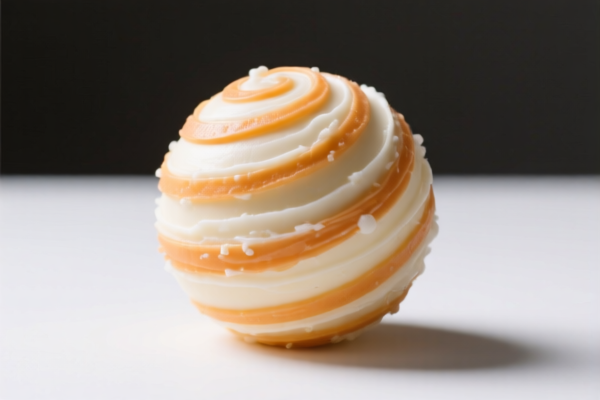
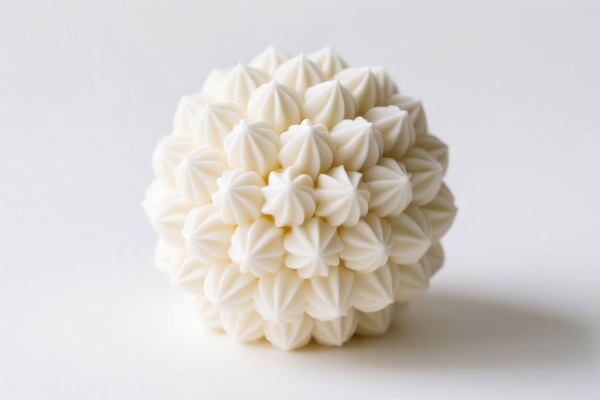
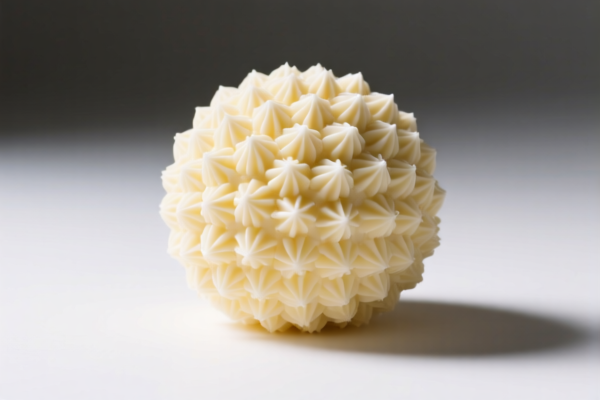
Cake Balls, also known as Candy Cakes or Cake Pops, are small, bite-sized confectionery treats made from crumbled cake mixed with frosting or filling, formed into spheres, and often coated in chocolate, candy melts, or decorative sprinkles.
In international trade, they are strictly classified under Chapter 18: Cocoa and Cocoa Preparations. The critical distinction lies in the primary composition and filling:
- Standard Cake Balls (Chocolate-Coated/Cocoa-Containing):
If the coating or the mix contains cocoa, it falls under HS 1806.31 (Filled Confectionery) or 1806.90 (Other). - Filled Confectionery:
If the cake ball is filled with a distinct layer (e.g., cream, jam, ganache) and the overall product contains cocoa, it is classified as "Other, in blocks, slabs or bars: Filled Confectionery." - Non-Chocolate/Other Confectionery:
If the product contains peanuts or peanut products but is not primarily defined as "filled confectionery" under the specific subheading, or if it lacks cocoa entirely, it may fall under HS 1806.90.90 (Other food preparations containing cocoa) or other Chapter 17/19 headings (though cocoa-containing items are usually pulled into Chapter 18).
⚠️ Key Distinction Point:
- If it is a "Filled Confectionery" (e.g., center + coating, both cocoa-based or mixed) → Goes to 1806.31.00.49.
- If it contains peanuts/peanut products and is "Other" (not strictly "filled confectionery" as defined by customs ruling) → Goes to 1806.90.90.11.
📦 II. HS Code Classification Details (2026 Latest Tariff Authority Reference)
| HS Code | Product Description | Applicable Scenario | Key Classification Criteria |
|---|---|---|---|
1806.31.00.49 |
Chocolate and other food preparations containing cocoa: Other, in blocks, slabs or bars: Filled Confectionery: Other | Standard cake balls with chocolate/cocoa coating and cocoa-based filling | ✅ Contains Cocoa + Filled Structure |
1806.90.90.11 |
Chocolate and other food preparations containing cocoa: Other: Other: Other: Other: Other Confectionery: Containing peanuts or peanut products | Cake balls with peanut coating or peanut-based filling (not classified as "filled confectionery" in the strict sense) | ✅ Contains Cocoa + Peanut Products |
🔍 Key Reminder:
- HS 1806.31 is for "Filled Confectionery." If your cake ball has a distinct filling (like a cream center) and is cocoa-based, this is the likely path.
- HS 1806.90.90.11 is specifically for products containing peanuts or peanut products. If your cake ball has a peanut coating or peanut butter center, this specific subheading applies.
- Do Not Split: The entire unit (cake + filling + coating) is declared as one product.
💰 III. 2026 Latest Tariff Rate Breakdown (Including Additional Taxes)
✅ Applicable Country: United States (US)
✅ Country of Origin: China (CN)
✅ Effective Date: 2025/2026 (Current Trade Regime)
🎯 1. 1806.31.00.49 —— Filled Confectionery (Other)
| Item | Content |
|---|---|
| Base Tariff Rate | 0.0% (General Rate) |
| Section 301 Tariff (USITC) | 0.0% (List 4B Exclusion Applied to Many Food Items) |
| Total Tax Rate | 0.0% |
| Tax Calculation | CIF Value × 0% = $0 |
| De Minimis Eligibility | ✅ Yes (If value <$800 per shipment) |
| Legal Basis Path | HTSUS:1806.31.00.49 → USITC:List 4B → Excluded from Additional Tariffs |
📌 Explanation:
- This category often enjoys a 0% total tariff because many food confectionery items are excluded from Section 301 tariffs under List 4B.
- Verify Exclusion: Always check the latest USITC List 4B exclusion list, as it can change.
🎯 2. 1806.90.90.11 —— Other Confectionery Containing Peanuts
| Item | Content |
|---|---|
| Base Tariff Rate | 6.0% (ad valorem) |
| Section 301 Tariff (USITC) | +7.5% (Additional Tariff) |
| Total Tax Rate | 13.5% |
| Tax Calculation | CIF Value × 13.5% |
| De Minimis Eligibility | ❌ No (If value >$800) |
| Legal Basis Path | HTSUS:1806.90.90.11 → USITC:Section 301 → Subject to Additional Tariffs |
📌 Explanation:
- Products containing peanuts are NOT exempt from Section 301 tariffs in the same way as some general cocoa products.
- The 7.5% additional tariff is applied on top of the 6% base rate, resulting in a 13.5% total tax.
- This is a significant cost driver. Importers must account for this in pricing.
🛠️ IV. Customs Clearance Practical Advice (Avoid Pitfalls)
✅ 1. Documentation Checklist (Mandatory)
| Document | Required | Description |
|---|---|---|
| ✅ Product Specification Sheet | ✔️ | Must list ingredients, specifically cocoa content and peanut content. |
| ✅ Ingredient List | ✔️ | Critical for determining if it falls under 1806.31 (filled) or 1806.90 (peanut-specific). |
| ✅ Commercial Invoice | ✔️ | Clearly state "Cake Balls" and specify "Contains Peanuts" if applicable. |
| ✅ Certificate of Origin (CO) | ✔️ | If claiming any preferential rates (though US-China has limited preferences). |
| ✅ FCC/USDA Compliance (if applicable) | ✔️ | Food products require USDA FSIS compliance; ensure no restricted additives. |
✅ 2. Declaration Strategy (Key Tips)
🔥 "Identify the Filling, Declare the Peanut, Avoid the 13.5%!"
| Scenario | Correct HS Code | Risk if Incorrect |
|---|---|---|
| Standard Cake Ball (Cocoa, No Peanuts, Filled) | 1806.31.00.49 |
✅ 0% Tax |
| Cake Ball with Peanut Coating/Cream | 1806.90.90.11 |
⚠️ 13.5% Tax |
| Non-Cocoa Cake Ball (e.g., vanilla) | NOT in DATA | ❌ Must check Chapter 17/19 (Not covered in this DATA) |
Important:
- If your product contains peanuts, you MUST use1806.90.90.11. There is no exemption for peanut-containing cocoa products from Section 301 tariffs.
- If your product is filled but does NOT contain peanuts,1806.31.00.49is the correct code with 0% tax.
✅ 3. Special Cases
| Scenario | Recommendation |
|---|---|
| OEM Private Label | Provide brand authorization and ingredient lists to avoid classification disputes. |
| Mixed Shipments | Declare each HS Code separately. Do not lump peanut and non-peanut items together. |
| High Cocoa Content | Ensure cocoa content is clearly stated. If cocoa is <5%, it might not fall under Chapter 18. |
🌍 V. Global Market Comparison (2026)
| Country/Region | Recommended HS Code | Tariff (China Origin) | Certification | Notes |
|---|---|---|---|---|
| 🇺🇸 USA | 1806.31.00.49 |
0.0% | USDA FSIS | Best for non-peanut filled |
| 🇺🇸 USA | 1806.90.90.11 |
13.5% | USDA FSIS | High tariff for peanut products |
| 🇨🇳 China | 1806.31 |
~10% | HACCP | Different tariff structure |
| 🇪🇺 EU | 1806.31 |
~10% | EFSA | No Section 301, but base duty applies |
📌 Conclusion:
- USA offers 0% tariff for filled confectionery (1806.31.00.49) if it is not peanut-specific.
- Peanut-containing products face 13.5% total tax in the USA.
- Consider reformulating to remove peanuts if possible to access the 0% rate.
📌 VI. Common Mistakes & Pitfalls (Lessons Learned)
❌ Mistake 1: Declaring peanut cake balls as "Filled Confectionery" (1806.31.00.49)
👉 Consequence: Underpayment of tariffs → Back taxes + Penalties + 13.5% shortfall!
❌ Mistake 2: Not declaring peanuts in the ingredient list
👉 Consequence: USDA rejection → Detention + Destruction or Re-export!
❌ Mistake 3: Assuming all cocoa products are 0%
👉 Consequence: Unexpected 13.5% bill for peanut-containing items → Margin erosion!
✅ Correct Approach:
"Cake Balls, Cocoa-Flavored, Filled with Cream, NO Peanuts" →
1806.31.00.49(0%)
"Cake Balls, Cocoa-Flavored, Peanut Butter Center" →1806.90.90.11(13.5%)
🎯 VII. Conclusion: Precision Classification Saves Money!
🎯 Key Takeaway:
🔹 "Filled = 0%, Peanut = 13.5%."
🔹 "Check Ingredients First, Then Choose HS Code."
📌 Pro Tip:
If you can reformulate your cake balls to remove peanuts, you can save 13.5% on every shipment. This is a significant margin booster!
📣 Immediate Action:
📞 Contact a Customs Broker to verify your specific product formulation.
📝 Ensure Ingredient Lists Are Accurate on all documentation.
🚀 Optimize Your Supply Chain by choosing the 0% tariff path if possible!
✨ Smart Classification, Smarter Profits!
💼 Every Percent Matters in International Trade!
Customer Reviews
About HS Code Classification
The Harmonized System (HS) is an internationally standardized nomenclature developed by the World Customs Organization (WCO) to classify traded products. Over 200 countries use the HS system as the basis for customs tariffs, trade statistics, and import/export regulations.
Each HS code follows a hierarchical structure:
- Chapter (2 digits) — Broad category of goods (e.g., Chapter 84: Machinery and Mechanical Appliances)
- Heading (4 digits) — More specific grouping within the chapter
- Subheading (6 digits) — Internationally standardized breakdown, used by all WCO member countries
- National subdivisions (8-10 digits) — Country-specific extensions for further classification, such as US HTSUS 10-digit codes
Correct HS code classification is essential for smooth customs clearance, accurate duty payment, and compliance with trade regulations. Misclassification can lead to customs delays, overpayment of duties, or penalties.
When importing from CN to US, the applicable tariff rates may include:
- Most-Favored-Nation (MFN) rate — The standard duty rate applied to WTO members
- General rate — Applied to countries without trade agreements
- Trade remedy duties — Additional tariffs such as Section 301 (anti-dumping), Section 232 (national security), or countervailing duties
The information provided on this page is for reference purposes only. For official classification, please consult with your local customs authority or a licensed customs broker.