camera lens cap
CN → US| HS Code | Tariff Rate | Origin | Destination | Doc |
|---|---|---|---|---|
| 9002909500 | 35.0% | CN | US | Official Doc |
| 9002908500 | 35.0% | CN | US | Official Doc |
| 3926909989 | 22.8% | CN | US | Official Doc |
| 3926901000 | 20.9% | CN | US | Official Doc |
Product Images
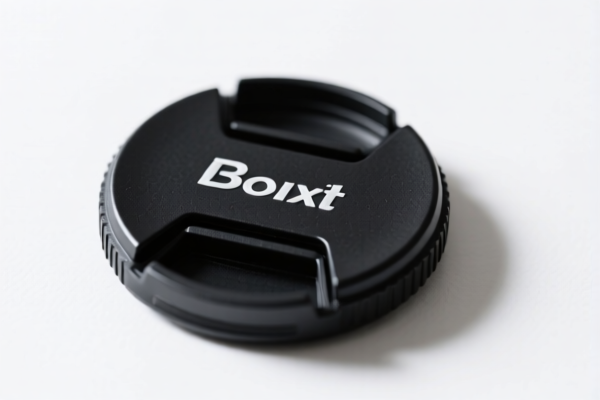
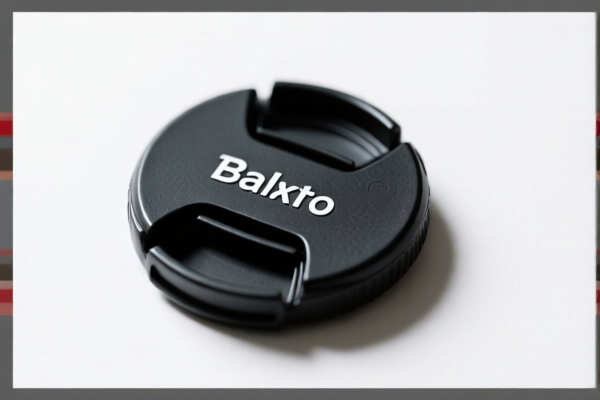
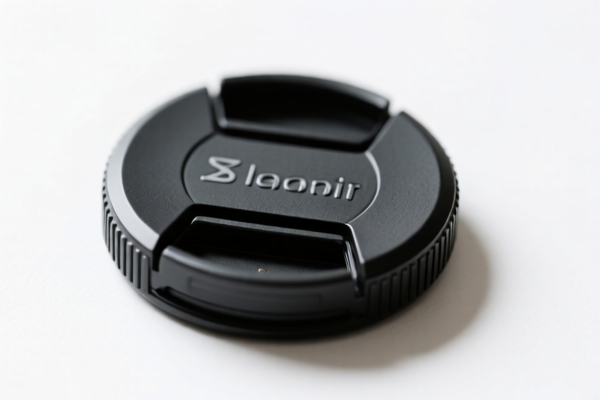
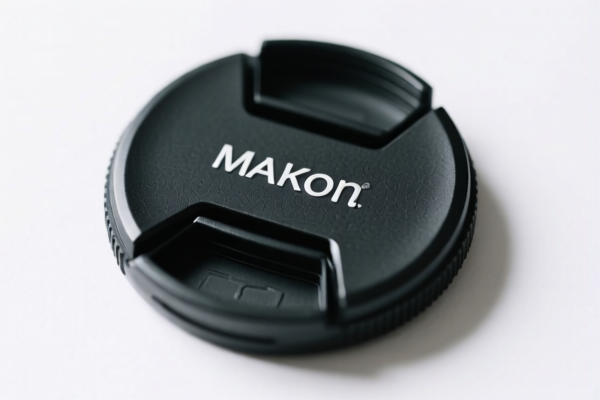
AI Analysis
📷 Camera Lens Cap: The Ultimate Guide to HS Classification & Customs Clearance (2026)
🌐 HS Code Reference & Customs Clearance Strategy | 2026 Latest Tariff Analysis | Professional Compliance Guide
📌 I. Product Definition & Classification: Is a Lens Cap Just a Cap?
A Camera Lens Cap is a simple yet critical accessory used to protect the front element of a camera lens from dust, scratches, and impacts when not in use. While it appears trivial, its classification depends heavily on material composition and whether it is considered an integral part of an optical instrument or a standalone plastic article.
In international trade, customs authorities often scrutinize these items under two main headings: 1. Optical Accessories (Heading 9002): If deemed a "part or accessory" of optical instruments. 2. Plastic Articles (Heading 3926): If made of plastics and classified as "other articles."
⚠️ Key Distinction Point:
- If the lens cap is specifically designed for optical instruments but lacks optical working (it’s just a cover), it may fall under 9002.90. However, many customs administrations view simple plastic caps without optical elements as general plastic goods.
- If it is made of plastics and does not fit the strict definition of an optical accessory (e.g., simple snap-on plastic covers), it is often归类 to 3926.90.
- Note: Based on the provided DATA, we must analyze the specific HS Codes provided.
📦 II. HS Code Classification Details (Based on Provided DATA)
| HS Code | Product Description | Applicable Scenario | Key Characteristics |
|---|---|---|---|
9002.90.95.00 |
Lenses, prisms, mirrors... mounted... parts/accessories thereof: Other: Other: Other | Optical instrument parts not specifically listed elsewhere | Non-optical glass/plastic parts, fittings for instruments |
9002.90.85.00 |
...Mounted lenses suitable for use in closed-circuit television (CCTV) cameras... | CCTV Camera Accessories | Specifically for CCTV systems with connectors/motors |
3926.90.99.89 |
Other articles of plastics and articles of other materials of headings 3901 to 3914: Other: Other Other | General plastic accessories, non-bucket items | Simple plastic parts, not buckets/pails |
3926.90.10.00 |
Other articles of plastics...: Buckets and pails | Plastic buckets/pails | Not applicable to lens caps |
🔍 Critical Analysis for Lens Caps:
-9002.90.95.00is the most likely candidate if the lens cap is considered a fitting or accessory for optical instruments (camera lenses). It covers "other" parts not elsewhere specified.
-3926.90.99.89is the alternative if customs authorities classify it strictly as a plastic article rather than an optical accessory. This is common for simple plastic caps without complex integration.
-9002.90.85.00is not applicable unless the lens cap is specifically for CCTV cameras and includes electrical connectors/motors (which standard lens caps do not).
-3926.90.10.00is not applicable as lens caps are not buckets or pails.
💰 III. 2026 Latest Tariff Rate Details (US Market Context)
✅ Applicable Country: United States (US)
✅ Origin: China (CN)
✅ Effective Date: Current rates apply (25% Section 301 tariffs still in effect for many goods)
🎯 1. 9002.90.95.00 — Optical Instrument Parts/Accessories (Other)
| Item | Details |
|---|---|
| Description | Parts and accessories of optical instruments (not elsewhere specified) |
| Base Duty Rate | 0.0% (General Rate) |
| Section 301 Additional Duty | +25.0% (China-origin goods) |
| Total Duty Rate | 25.0% |
| Calculation | CIF Value × 25% |
| De Minimis Exemption | ❌ Not Applicable (Section 301 duties often apply regardless of de minimis thresholds for certain goods, but typically small parcels may still be subject. Check latest CBP guidance.) |
| Legal Basis Path | USITC:9002.90.95.00 → Section 301: 25% |
📌 Explanation:
- This code falls under Heading 9002, which covers optical elements and parts.
- The 25% additional tariff is applied because goods from China are subject to Section 301 duties for many industrial and consumer goods, including parts of measuring/controlling instruments.
- Total Effective Rate: 25%
🎯 2. 3926.90.99.89 — Other Plastic Articles (Other)
| Item | Details |
|---|---|
| Description | Other articles of plastics (not buckets/pails) |
| Base Duty Rate | 5.3% (General Rate) |
| Section 301 Additional Duty | +7.5% (China-origin goods) |
| Total Duty Rate | 12.8% |
| Calculation | CIF Value × 12.8% |
| De Minimis Exemption | ❌ Not Applicable (Section 301 duties apply) |
| Legal Basis Path | USITC:3926.90.99.89 → Section 301: 7.5% |
📌 Explanation:
- If customs classifies the lens cap as a plastic good rather than an optical accessory, it falls under Heading 3926.
- The base rate is 5.3%, but an additional 7.5% is applied for China-origin goods.
- Total Effective Rate: 12.8%
- Cost Advantage: This rate is lower than the optical accessory classification (12.8% vs. 25%).
🛠️ IV. Customs Clearance Practical Advice (Avoiding Pitfalls)
✅ 1. Document Checklist (Essential for Smooth Clearance)
| Document | Required? | Notes |
|---|---|---|
| Product Specification Sheet | ✔️ | Clearly state material (e.g., ABS Plastic), dimensions, and function (protective cover). |
| Product Photos | ✔️ | Show the cap attached to a lens to prove it is an accessory. |
| Commercial Invoice | ✔️ | Describe as "Plastic Camera Lens Cap, Accessory for Optical Instrument." Avoid vague terms like "plastic cap." |
| Origin Declaration | ✔️ | Confirm country of origin (China) to apply correct tariffs. |
| HS Code Justification | ✔️ | Provide reasoning for HS Code selection (see below). |
✅ 2. Classification Strategy & Naming Tips
🔥 Key Rule: "Material & Function Determine Code!"
| Scenario | Recommended HS Code | Duty Rate | Why? |
|---|---|---|---|
| Simple Plastic Snap-On Cap | 3926.90.99.89 |
12.8% | Classified as a plastic article. Lower duty. |
| Complex Optical Accessory | 9002.90.95.00 |
25.0% | Classified as an optical instrument part. Higher duty. |
| CCTV Lens Cover with Electronics | 9002.90.85.00 |
25.0% | Only if it includes motors/connectors for CCTV. |
📌 Naming Convention for Invoice:
- Preferred: "Plastic Camera Lens Cap, Accessory for Optical Instruments, Model XYZ"
- Avoid: "Lens Cap" (too vague) or "Optical Element" (misleading, as it’s not optically worked).
✅ 3. Special Handling Notes
| Situation | Recommendation |
|---|---|
| High Volume Imports | Consider pre-classification via CBP Ruling to ensure consistent classification. |
| Mixed Shipments | If shipping with other optical accessories, clearly separate them on the packing list to avoid misclassification. |
| De Minimis (Section 321) | Warning: While Section 321 allows duty-free entry for shipments under $800, Section 301 duties (25% or 7.5%) still apply to China-origin goods. Do not assume duty-free entry for Chinese lens caps under $800. |
| Material Change | If made of metal or glass, classification may change. Stick to plastic for 3926 or optical parts for 9002. |
🌍 V. Global Market Comparison (2026)
| Country/Region | Recommended HS Code | Total Duty (China Origin) | Key Requirements | Notes |
|---|---|---|---|---|
| 🇺🇸 USA | 3926.90.99.89 |
12.8% | Standard | Lower duty than optical classification. |
| 🇺🇸 USA | 9002.90.95.00 |
25.0% | Standard | Higher duty if classified as optical part. |
| 🇨🇳 China | 3926.90.99.89 |
~5-10% | Standard | Import duties into China may vary. |
| 🇪🇺 EU | 3926.90.99 |
4.5% | CE/RoHS if applicable | No Section 301 equivalents. |
| 🇬🇧 UK | 3926.90.99 |
4.5% | UKCA | Post-Brexit tariffs. |
📌 Conclusion:
- USA is the most complex due to Section 301 tariffs.
- Choosing3926.90.99.89(12.8%) over9002.90.95.00(25.0%) can save 12.2% in duties.
- Ensure your product description supports the plastic article classification to benefit from the lower rate.
📌 VI. Common Mistakes & Pitfalls (Lessons Learned)
❌ Mistake 1: Classifying a plastic lens cap as 9002.90.95.00 without justification
👉 Consequence: Pay 25% instead of 12.8% → Overpayment!
❌ Mistake 2: Assuming Section 321 (de minimis) exempts Section 301 duties
👉 Consequence: Seizure or back-tariffs of 7.5%-25% on Chinese goods under $800.
❌ Mistake 3: Vague description on invoice ("Lens Cap")
👉 Consequence: Customs delays for classification review → Storage fees & delays.
✅ Correct Approach:
"Plastic Lens Cap for Camera, Protective Accessory, ABS Material, Model XYZ"
🎯 VII. Conclusion: Smart Classification Saves Money!
🎯 Remember:
🔹 "Plastic Cap = 12.8%, Optical Part = 25%"
🔹 "Section 301 applies to de minimis too!"
🔹 "Be specific on invoice to avoid delays!"
📌 Pro Tip:
If you are importing large volumes, consider applying for a CBP Advance Ruling to lock in the 3926.90.99.89 classification at 12.8%. This provides legal certainty and prevents unexpected duties at the border.
📣 Immediate Action:
📞 Consult your freight forwarder
📝 Use precise product descriptions
📄 Prepare for Section 301 duties (even under $800)
✨ Accurate Classification = Lower Costs = Faster Clearance!
💼 Every percentage point saved is profit earned!
Customer Reviews
About HS Code Classification
The Harmonized System (HS) is an internationally standardized nomenclature developed by the World Customs Organization (WCO) to classify traded products. Over 200 countries use the HS system as the basis for customs tariffs, trade statistics, and import/export regulations.
Each HS code follows a hierarchical structure:
- Chapter (2 digits) — Broad category of goods (e.g., Chapter 84: Machinery and Mechanical Appliances)
- Heading (4 digits) — More specific grouping within the chapter
- Subheading (6 digits) — Internationally standardized breakdown, used by all WCO member countries
- National subdivisions (8-10 digits) — Country-specific extensions for further classification, such as US HTSUS 10-digit codes
Correct HS code classification is essential for smooth customs clearance, accurate duty payment, and compliance with trade regulations. Misclassification can lead to customs delays, overpayment of duties, or penalties.
When importing from CN to US, the applicable tariff rates may include:
- Most-Favored-Nation (MFN) rate — The standard duty rate applied to WTO members
- General rate — Applied to countries without trade agreements
- Trade remedy duties — Additional tariffs such as Section 301 (anti-dumping), Section 232 (national security), or countervailing duties
The information provided on this page is for reference purposes only. For official classification, please consult with your local customs authority or a licensed customs broker.