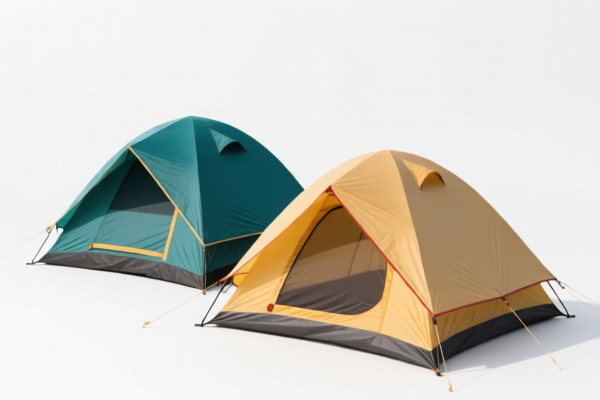
camping tent
CN → US| HS Code | Tariff Rate | Origin | Destination | Doc |
|---|---|---|---|---|
| 6601990000 | 18.2% | CN | US | Official Doc |
| 6601100000 | 16.5% | CN | US | Official Doc |
| 9406900190 | 87.9% | CN | US | Official Doc |
| 9406900130 | 87.9% | CN | US | Official Doc |
| 6306221000 | 10.0% | CN | US | Official Doc |
| 6306229030 | 26.3% | CN | US | Official Doc |
Product Images



AI Analysis
🏕️ Camping Tents (Camping Goods & Temporary Canopies)
🌐 HS Code Reference & Clearance Guide | 2026 Latest Tariff Breakdown | Professional Customs Strategy
📌 I. Product Definition & Classification: Do You Really Know "Camping Tents"?
Camping tents are temporary shelters made of fabric, designed for outdoor activities, military use, events, or emergency relief. In international trade, they are primarily classified under Chapter 63 (Other made up textile articles).
The key distinction lies in the material (synthetic fibers vs. natural fibers) and the specific type (backpacking vs. general use).
⚠️ Critical Differentiation:
- Backpacking Tents (lightweight, small volume, high-tech synthetic fabrics) → 6306.22.10.00
- Other Synthetic Fiber Tents (larger, event tents, general camping) → 6306.22.90.30
- Note: The provided data only lists synthetic fiber tent variants. Natural fiber tents (cotton/wool) are not included in this dataset.
📦 II. HS Code Classification Details (2026 Latest Tariff Reference)
Based strictly on the provided DATA content, here is the authoritative breakdown:
| HS Code | Product Description | Material/Type | Specific Category |
|---|---|---|---|
6306.22.10.00 |
Tents of synthetic fibers: Backpacking tents | Synthetic Fibers (Nylon/Polyester) | High-performance, lightweight, for hiking/backpacking |
6306.22.90.30 |
Tents of synthetic fibers: Other Other (669) | Synthetic Fibers (Nylon/Polyester) | General camping, family tents, event canopies, large shelters |
🔍 Key Clarification:
- Both codes fall under Tents (including temporary canopies and similar articles).
- The data excludes "Tarpaulins," "Awnings," or "Sunblinds" unless they are structurally integrated as tents.
- 6306.22.90.30 acts as a "catch-all" for synthetic fiber tents that are not specifically designed for backpacking.
💰 III. 2026 Latest Tariff Rate Breakdown (Detailed Tax Clauses)
✅ Applicable Country: US (United States)
✅ Origin: China (CN) - Assumed based on "Additional Tariff" context
✅ Validity: Current/2026 Policy Context
🎯 1. 6306.22.10.00 —— Backpacking Tents (Synthetic Fibers)
| Item | Content |
|---|---|
| Base Tariff (MFN) | 0.0% (Ad Valorem) |
| Section 301 / Additional Tariff | +7.5% (Specific to this subheading) |
| Total Tariff Rate | 7.5% |
| Tax Calculation | CIF Value × 7.5% |
| Additional Notes | No "Steel, Aluminum, Copper" surcharge applies (Textile product). |
📌 Explanation:
- The 7.5% additional tariff is explicitly listed for this HS Code in the provided data.
- Unlike steel/aluminum products, textiles do not trigger the "Steel, Aluminum, Copper" surcharge (50%).
- Total Cost Impact: You must pay 7.5% on top of the CIF value.
🎯 2. 6306.22.90.30 —— Other Synthetic Fiber Tents
| Item | Content |
|---|---|
| Base Tariff (MFN) | 0.0% (Ad Valorem) |
| Section 301 / Additional Tariff | 0.0% |
| Total Tariff Rate | 0.0% |
| Tax Calculation | CIF Value × 0.0% |
| Tax Details | "Base Tariff: 0.0%, Additional Tariff: 0.0%" |
📌 Explanation:
- This is a Duty-Free item under current conditions provided in the data.
- Crucial Warning: Misdeclaring a "Backpacking Tent" as "Other Tent" (6306.22.90.30) to avoid the 7.5% tax is high risk. If the tent is designed/advertised as "Backpacking," it must use the 10.00 subheading, resulting in a 7.5% duty.
- No Steel/Aluminum surcharge applies.
🛠️ IV. Customs Clearance Practical Advice (Avoiding Pitfalls)
✅ 1. Material Declaration is King
| Requirement | Must Provide | Why? |
|---|---|---|
| Material Composition | ✔️ Certify "100% Synthetic Fibers" (Polyester/Nylon) | Ensures classification under 6306.22. If cotton is >5%, it shifts to Chapter 63.94 (Natural fibers), changing tax rates. |
| Product Usage | ✔️ "Backpacking" vs. "Family Camping" | Determines if you pay 7.5% (Backpacking) or 0% (Other). |
| Structure | ✔️ "Tent" vs. "Tarpaulin" | Tarpaulins (6306.91/92) have different tax rates. Do not confuse a tent frame with a tarp. |
✅ 2. Declaration Strategy (The "Backpacking" Trap)
🔥 Rule: "If it fits in a backpack, it pays the tax!"
| Scenario | Correct Declaration | Risk if Wrong |
|---|---|---|
| Lightweight, small stuff sack, high-tech fabric | 6306.22.10.00 |
7.5% Duty applied |
| Family dome tent, large poles, car camping | 6306.22.90.30 |
0% Duty (If truly not backpacking) |
| Mistake: Declaring Backpacking Tent as "Other" | 6306.22.90.30 |
❌ Audit Risk: Customs will re-classify + back taxes + 7.5% penalty |
✅ 3. Special Note on "Other" Items (Umbrellas)
Although not tents, your data includes related outdoor gear:
- Garden Umbrellas (6601.10.00): 6.5% Total Tax (6.5% Base).
- Other Umbrellas (6601.99.00): 0% Total Tax.
- Advice: Do not pack umbrellas with tents in the same "HS Code" line if the tax rates differ (0% vs 7.5% vs 6.5%). Separate them on the commercial invoice.
🌍 V. Global Market Comparison (2026 Context)
| Country | Tent Category | Tariff Rate | Certification |
|---|---|---|---|
| 🇺🇸 USA | Backpacking Tents | 7.5% | No specific certs, but must be synthetic |
| 🇺🇸 USA | Other Synthetic Tents | 0.0% | N/A |
| 🇺🇸 USA | Garden Umbrellas | 6.5% | N/A |
| 🇪🇺 EU | Tents (General) | Varies (0-6%) | CE, REACH |
| 🇨🇳 China | Exports to US | See Above | CCC (Domestic) |
📌 Conclusion:
- Backpacking tents are the only high-tax item (7.5%) in the tent category for the US market.
- Family/Event tents are duty-free (0%), providing a strong incentive to classify correctly as "Other" if the design allows.
📌 VI. Common Errors & Pitfalls (Lessons Learned)
❌ Error 1: Labeling a "Backpacking Tent" as "Other Tent" to get 0% duty.
👉 Consequence: Customs inspection finds "lightweight," "stuff sack," or "hiking" in specs → Re-classify + 7.5% back tax + Penalties.
❌ Error 2: Mixing "Tents" with "Tarpaulins" in one HS Code.
👉 Consequence: Tarpaulins (6306.91) may have different duties. Mixing them causes declaration errors.
❌ Error 3: Ignoring the "Steel, Aluminum, Copper" surcharge myth.
👉 Correction: This 50% surcharge DOES NOT apply to tents or umbrellas (Textiles). It applies ONLY to HS Codes like 9406.90.01 (Prefabricated Buildings made of metal).
🎯 VII. Strategic Conclusion: Maximize Profit, Minimize Tax
🎯 The Golden Rule for Tents:
🔹 "Backpacking = 7.5% (Pay it); General Tent = 0% (Use it); Umbrella = Check Type (6.5% or 0%)."
🔹 "Do not overpay, but never underdeclare. If it's for backpacking, the 7.5% is inevitable."
📌 Pro Tip:
If you are importing prefabricated metal buildings (HS Code 9406), beware! The data shows a 50% tax rate due to the "Steel, Aluminum, Copper" surcharge.
- Tents (Fabric): Max 7.5%
- Metal Buildings: 50%
✅ Action Plan:
📦 For Tents: Separate "Backpacking" from "Other" on invoices.
📦 For Umbrellas: Verify if it's a "Garden" umbrella (6.5%) or "Other" (0%).
📦 For Buildings: Prepare for 50% tax if made of metal alloys.
📣 Ready to Ship?
🚀 Verify Material: Synthetic vs. Natural?
🚀 Verify Usage: Backpacking vs. General?
🚀 Verify Structure: Tent vs. Tarp vs. Umbrella?
✨ Accurate Classification = Lower Costs + Faster Clearance!
💼 Don't let a 7.5% or 50% surprise eat your margin!
Customer Reviews
About HS Code Classification
The Harmonized System (HS) is an internationally standardized nomenclature developed by the World Customs Organization (WCO) to classify traded products. Over 200 countries use the HS system as the basis for customs tariffs, trade statistics, and import/export regulations.
Each HS code follows a hierarchical structure:
- Chapter (2 digits) — Broad category of goods (e.g., Chapter 84: Machinery and Mechanical Appliances)
- Heading (4 digits) — More specific grouping within the chapter
- Subheading (6 digits) — Internationally standardized breakdown, used by all WCO member countries
- National subdivisions (8-10 digits) — Country-specific extensions for further classification, such as US HTSUS 10-digit codes
Correct HS code classification is essential for smooth customs clearance, accurate duty payment, and compliance with trade regulations. Misclassification can lead to customs delays, overpayment of duties, or penalties.
When importing from CN to US, the applicable tariff rates may include:
- Most-Favored-Nation (MFN) rate — The standard duty rate applied to WTO members
- General rate — Applied to countries without trade agreements
- Trade remedy duties — Additional tariffs such as Section 301 (anti-dumping), Section 232 (national security), or countervailing duties
The information provided on this page is for reference purposes only. For official classification, please consult with your local customs authority or a licensed customs broker.