canvas outer layer insulated beverage bags
CN → US| HS Code | Tariff Rate | Origin | Destination | Doc |
|---|---|---|---|---|
| 3923900080 | 38.0% | CN | US | Official Doc |
| 3923900012 | 38.0% | CN | US | Official Doc |
| 4202920809 | 42.0% | CN | US | Official Doc |
| 4202920807 | 42.0% | CN | US | Official Doc |
| 6307909891 | 24.5% | CN | US | Official Doc |
| 6307908940 | 17.0% | CN | US | Official Doc |
Product Images
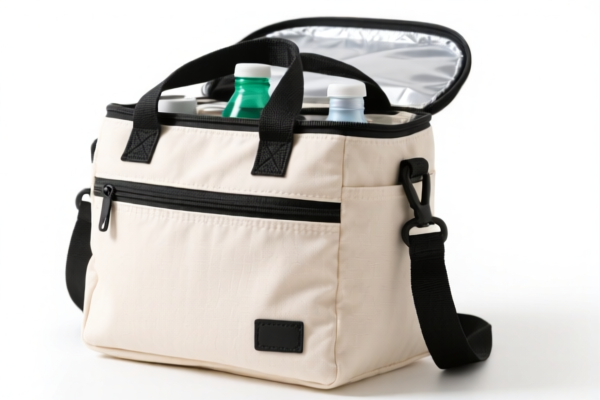
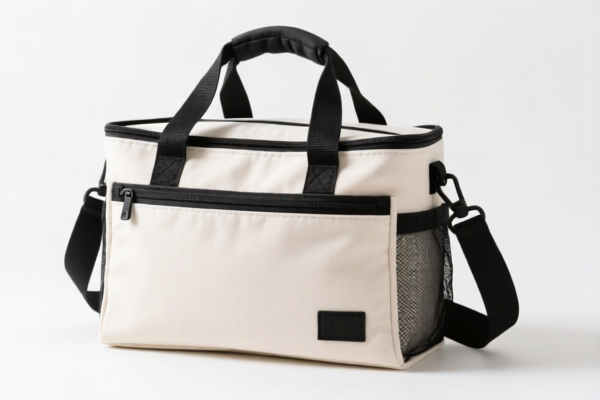
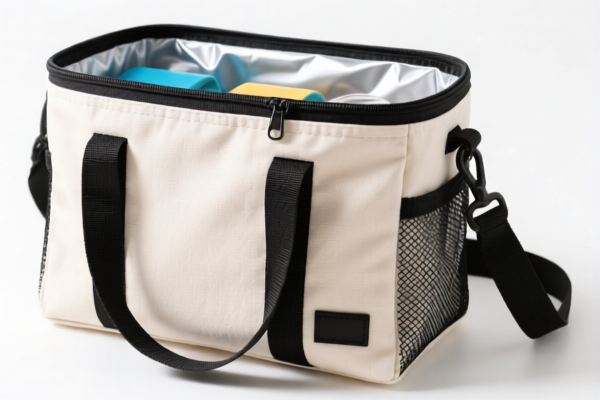
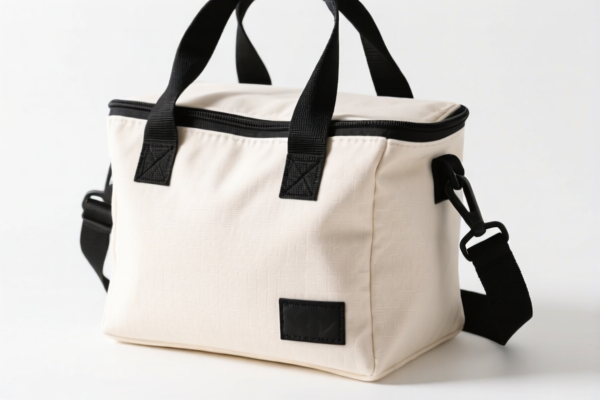
AI Analysis
🎒 Canvas Outer Layer Insulated Beverage Bags
🌐 HS Code Reference & Customs Clearance Guide | 2026 Latest Tariff Analysis | Professional-Level Strategy
📌 Part I: Product Definition & Classification: Do You Really Understand "Insulated Beverage Bags"?
Insulated beverage bags are essential accessories for modern lifestyles, used in food delivery, picnics, outdoor sports, and office lunches. In international trade, the classification of these bags depends heavily on their outer material, function, and specific design features.
For Canvas Outer Layer Insulated Beverage Bags, the key distinction lies in whether they are classified as "Trunks, Suitcases... and Similar Containers" (Chapter 42) or "Textile Articles" (Chapter 63).
⚠️ Key Distinction Point:
- If the bag has an outer surface of textile materials (including canvas, cotton, polyester, etc.) and is designed for carrying beverages/food, it generally falls under Chapter 42.
- Specifically, if it is an insulated food or beverage bag with an outer surface of textile materials, it is classified under 4202.92.08.xx.
📦 Part II: HS Code Classification Details (2026 Latest Tariff Authority Reference)
Based on the provided data, here are the relevant HS Codes for Canvas (Textile) Insulated Beverage Bags:
| HS Code | Product Description | Application Scenario | Key Characteristics |
|---|---|---|---|
4202.92.08.09 |
Insulated food or beverage bags; With outer surface of textile materials; Other Other | Canvas totes, generic insulated lunch bags, multi-purpose canvas beverage carriers | Outer Material: Textile (Canvas, Cotton, etc.) Feature: "Other Other" (Non-specific brand/material sub-category) |
4202.92.08.07 |
Insulated food or beverage bags; With outer surface of textile materials; Other Of man-made fibers | Canvas bags made primarily of synthetic fibers (e.g., polyester canvas, nylon canvas) | Outer Material: Textile (Man-made fibers) Feature: Specifically "Of man-made fibers" |
🔍 Critical Note:
- The term "Canvas" usually implies a textile material. If the canvas is made from cotton, it may also fall under textile articles, but insulated beverage bags are predominantly classified under Chapter 42 (Articles of apparel, accessories, and similar containers) rather than Chapter 63, because Chapter 42 specifically covers "traveling bags, insulated food or beverage bags... of textile materials." - Chapter 63 (e.g.,6307.90) is typically for textile articles like towels, pillowcases, or general-purpose bags that do not fit the specific "traveling/insulated bag" definition of Chapter 42. However, insulated beverage bags are explicitly listed in Chapter 42. - Do NOT confuse with Chapter 63: Articles like6307.90.98.91("Other made up articles") are too generic and usually not the primary classification for dedicated insulated beverage bags, which have a specific heading in Chapter 42.
💰 Part III: 2026 Latest Tariff Rate Detailed Explanation (Including Surcharge)
✅ Applicable Country: United States (US)
✅ Origin: China (CN)
✅ Effective Date: 2025–2026 (Current Trade Policy)
🎯 1. 4202.92.08.09 —— Insulated Food or Beverage Bags (Textile Surface, Other)
| Item | Content |
|---|---|
| Product Description | Trunks, suitcases... insulated food or beverage bags; With outer surface of textile materials; Other Other |
| Base Tariff Rate | 0.0% (Ad Valorem) |
| Additional Surcharge | 0.0% (No Section 301 or IEEPA surcharge applicable to this specific subheading as per provided data) |
| Total Tax Rate | 0.0% |
| Tax Calculation | CIF Value × 0.0% = $0 |
| De Minimis Exemption | ✅ Available (If under $800, usually duty-free anyway; if over, still 0%) |
| Legal Basis Path | USITC:4202.92.08.09 → General Tariff Schedule |
📌 Explanation:
- This code has a 0% base tariff and 0% additional surcharge.
- This makes it highly competitive for US importers.
- "Other Other" is a residual category, often used when the bag doesn't fit more specific sub-categories (like "Of man-made fibers" under4202.92.08.07, which also has 0% tax).
🎯 2. 4202.92.08.07 —— Insulated Food or Beverage Bags (Textile Surface, Of Man-Made Fibers)
| Item | Content |
|---|---|
| Product Description | Trunks, suitcases... insulated food or beverage bags; With outer surface of textile materials; Other Of man-made fibers |
| Base Tariff Rate | 0.0% (Ad Valorem) |
| Additional Surcharge | 0.0% (No Section 301 or IEEPA surcharge applicable) |
| Total Tax Rate | 0.0% |
| Tax Calculation | CIF Value × 0.0% = $0 |
| De Minimis Exemption | ✅ Available |
| Legal Basis Path | USITC:4202.92.08.07 → General Tariff Schedule |
📌 Explanation:
- If the canvas is made of synthetic fibers (e.g., polyester, nylon, acrylic), use this code.
- Like the previous code, it has 0% total tax.
- Why two codes? The distinction is purely material-based (Man-made fibers vs. Other/Non-specified). Both enjoy 0% tariff.
🛠️ Part IV: Customs Clearance Practical Advice (Battle-Tested Pitfall Avoidance Guide)
✅ 1. Document Checklist (Must-Have)
| Document | Must Provide | Explanation |
|---|---|---|
| ✅ Product Specifications | ✔️ | Material composition (e.g., "100% Cotton Canvas Outer, PE Insulation Liner") |
| ✅ Product Photos | ✔️ | Clear images showing the bag's structure, insulation layer, and outer material |
| ✅ Commercial Invoice | ✔️ | Clearly state: "Insulated Beverage Bag, Outer Material: Canvas (Textile), Inner Lining: Insulated" |
| ✅ Packing List | ✔️ | Quantity, dimensions, weight |
| ✅ Certificate of Origin | ✔️ | If applicable for preferential treatment (though rates are 0% anyway) |
| ✅ Material Declaration | ✔️ | Confirm if canvas is natural (cotton) or synthetic (polyester) to choose between .09 or .07 |
✅ 2. Declaration Tips (Key Mnemonic)
🔥 “Insulated Bag, Textile Outer, 4202 is the way!”
| Scenario | Correct Declaration | Wrong Practice |
|---|---|---|
| Canvas Insulated Bag | 4202.92.08.09 (if cotton/general) or 4202.92.08.07 (if synthetic) |
❌ Misclassify as 6307.90.98.91 (Other made-up articles) → Risk of 7% + 7.5% tax |
| Plastic-Outer Insulated Bag | 4202.92.08.xx (if textile/plastic composite) or 3923.xx (if mostly plastic) |
❌ Use textile code for plastic bag → Classify Error |
| Cotton Towel | 6307.90.89.40 |
❌ Use beverage bag code → Incorrect HS Code |
📌 Critical Warning:
- Do NOT misclassify insulated beverage bags as "Other made up articles" (Chapter 63).
- Chapter 63 items like6307.90.98.91have a 14.5% total tax (7% base + 7.5% surcharge).
- Chapter 42 insulated bags have 0% tax.
- Error Impact: A $1000 shipment would cost $145 extra due to misclassification.
✅ 3. Special Situations
| Situation | Handling Advice |
|---|---|
| Mixed Materials | If the outer layer is 60% cotton, 40% polyester, it’s still "textile." Use .09 (Other) if not exclusively man-made, or .07 if man-made dominates. |
| Branded vs. Unbranded | No difference in HS Code classification, but ensure commercial invoice reflects the true value. |
| Set with Bottles | If sold as a "Beverage Carrier Set" (bag + bottles), the primary character is the bag (Chapter 42). The bottles may be classified separately or together depending on packing, but the bag’s tax rate remains 0%. |
| Plastic Outer Layer | If the bag is made of plastic sheeting (not textile), it may fall under 3923.90.00.80 (Plastic Articles), which has a 28% tax. Ensure the outer material is truly textile (canvas). |
🌍 Part V: Global Market Clearance Comparison (2026 Latest)
| Country/Region | Recommended HS Code | Tariff Rate | Certification Requirements | Remarks |
|---|---|---|---|---|
| 🇺🇸 United States | 4202.92.08.09 / 4202.92.08.07 |
0% | No specific US certification required for bags | Best Market for Low Duty |
| 🇨🇳 China | 4202.92.08.09 / 4202.92.08.07 |
5% | No specific CCC required | Import tax applies |
| 🇪🇺 European Union | 4202.92.00 |
4% | CE (if applicable), REACH | No surcharges |
| 🇬🇧 United Kingdom | 4202.92.00 |
4% | UKCA (if applicable) | Post-Brexit rules apply |
| 🇯🇵 Japan | 4202.92.00 |
3% | No specific certification | Low duty |
📌 Conclusion:
- USA is the most favorable market for Canvas Insulated Beverage Bags due to 0% tariff.
- Ensure the outer material is clearly declared as textile (canvas) to avoid being misclassified as plastic (28% tax) or other textile articles (14.5% tax).
📌 Part VI: Common Mistakes & Pitfall Avoidance (Lessons Learned)
❌ Mistake 1: Classifying insulated beverage bags as "Other made up articles" (6307.90.98.91)
👉 Consequence: 14.5% tax instead of 0% → $145 extra per $1000.
✅ Fix: Always check if Chapter 42 has a specific entry for "insulated bags." It does.
❌ Mistake 2: Misdeclaring canvas material as plastic
👉 Consequence: If declared as plastic, it may fall under 3923.90.00.80 with 28% tax.
✅ Fix: Clearly state "Textile Material (Canvas)" in the description.
❌ Mistake 3: Not specifying "Insulated" in the description
👉 Consequence: Customs may classify as a regular tote bag, which could have different rates or require additional documentation.
✅ Fix: Always include "Insulated" in the product name and description.
🎯 Part VII: Conclusion: Professional Declaration, Save Costs!
🎯 Remember the Mnemonic:
🔹 “Canvas Insulated, Chapter 42 is key, 0% tax if you’re free!
❌ Don’t go to 6307, that’s 14.5%, that’s a lot!
✅ Check material, textile is right, 0% tariff in sight!”
📌 Pro Tip:
If your bag’s outer layer is 100% cotton canvas, use 4202.92.08.09.
If it’s polyester canvas, use 4202.92.08.07.
Both have 0% tax in the US.
📣 Immediate Action:
📞 Contact a professional customs broker + Provide product photos + Declare "Insulated Beverage Bag, Outer Material: Textile (Canvas)"
🚀 Ensure smooth clearance, maximize profits, and enjoy 0% duty!
✨ Professional Clearance, Start with Accurate Classification!
💼 Every cent saved is a cent earned!
Customer Reviews
About HS Code Classification
The Harmonized System (HS) is an internationally standardized nomenclature developed by the World Customs Organization (WCO) to classify traded products. Over 200 countries use the HS system as the basis for customs tariffs, trade statistics, and import/export regulations.
Each HS code follows a hierarchical structure:
- Chapter (2 digits) — Broad category of goods (e.g., Chapter 84: Machinery and Mechanical Appliances)
- Heading (4 digits) — More specific grouping within the chapter
- Subheading (6 digits) — Internationally standardized breakdown, used by all WCO member countries
- National subdivisions (8-10 digits) — Country-specific extensions for further classification, such as US HTSUS 10-digit codes
Correct HS code classification is essential for smooth customs clearance, accurate duty payment, and compliance with trade regulations. Misclassification can lead to customs delays, overpayment of duties, or penalties.
When importing from CN to US, the applicable tariff rates may include:
- Most-Favored-Nation (MFN) rate — The standard duty rate applied to WTO members
- General rate — Applied to countries without trade agreements
- Trade remedy duties — Additional tariffs such as Section 301 (anti-dumping), Section 232 (national security), or countervailing duties
The information provided on this page is for reference purposes only. For official classification, please consult with your local customs authority or a licensed customs broker.