capacitor
CN → US| HS Code | Tariff Rate | Origin | Destination | Doc |
|---|---|---|---|---|
| 8532220020 | 35.0% | CN | US | Official Doc |
| 8532210020 | 35.0% | CN | US | Official Doc |
| 8548000000 | 35.0% | CN | US | Official Doc |
Product Images
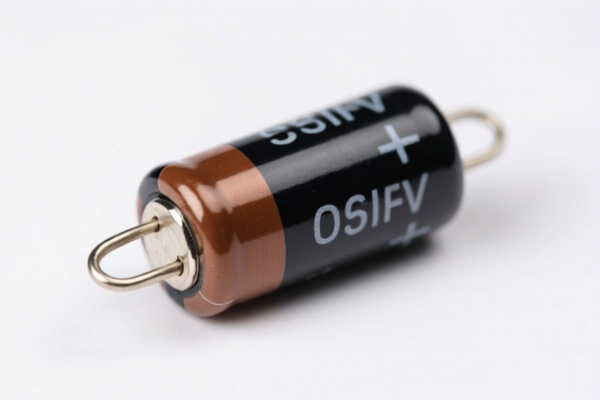
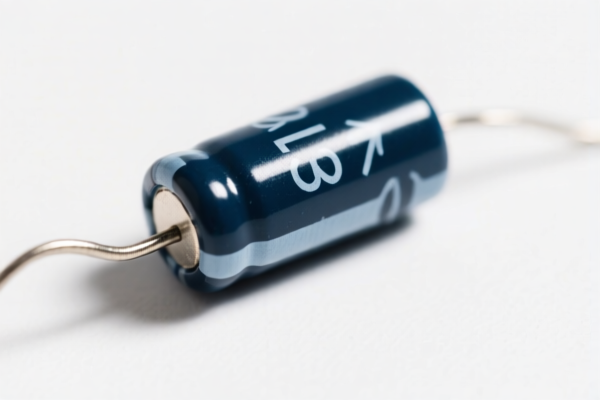
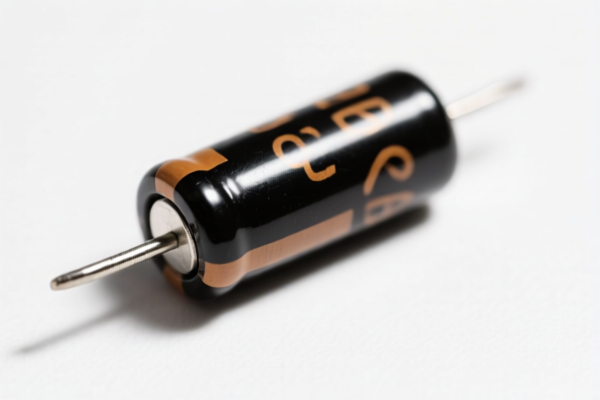
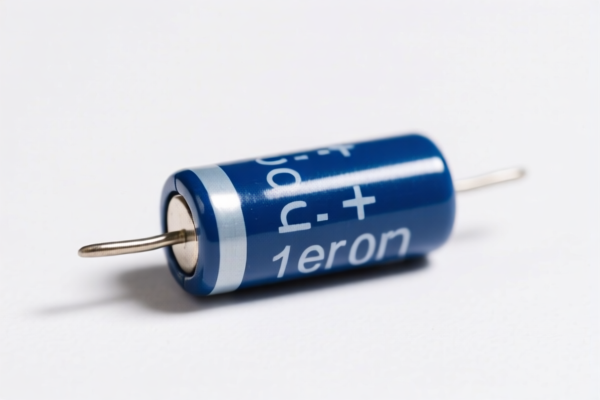
AI Analysis
⚡️ Capacitor (Electrical Storage Components)
🌐 HS Code Reference & Customs Clearance Guide | 2026 Tariff Analysis for US Imports | Professional Clearance Strategy
📌 I. Product Definition & Classification: Do You Know Your Capacitors?
Capacitors are essential passive electronic components used to store electrical energy in an electric field. In international trade, they are generally classified under Chapter 85 (Electrical machinery and equipment). However, precise classification depends heavily on specific material, packaging form, and technical specifications, which are often missing in simple descriptions like "Capacitor."
⚠️ Critical Classification Logic:
- If the description lacks specific material (e.g., ceramic, electrolytic, film) or package type (SMD, through-hole, radial), customs may apply default matching rules based on common usage or functional definitions.
- Broad categories often default to specific subheadings under 8532 (Fixed capacitors) or 8548 (Waste and scrap of electrical parts).
📦 II. HS Code Classification Details (Based on Provided Data)
The following HS codes are derived from the specific risk assessment provided in the data, highlighting scenarios where detailed descriptions are missing or where the component is viewed broadly as an electrical part.
| HS Code | Product Description & Logic | Tax Rate | Legal Basis / Note |
|---|---|---|---|
8532.22.00.20 |
Capacitors: Default match due to missing description rules. | 35.0% | Base 0% + Section 301 (25%) + Section 122 (10%) |
8532.21.00.20 |
Capacitors: Preliminary match assuming possible compliance; lacks specific material/package details. | 35.0% | Base 0% + Section 301 (25%) + Section 122 (10%) |
8548.00.00.00 |
Capacitors: Classified as electrical parts/components based on functional definition. | 35.0% | Base 0% + Section 301 (25%) + Section 122 (10%) |
🔍 Key Insight:
- All three recommended HS codes in the provided data carry the same total tax rate of 35.0%.
- The primary difference lies in the justification:
-8532.x1/x2focuses on the type of capacitor (often defaulting when details are absent).
-8548.00takes a broader approach, viewing the capacitor simply as an "electrical part" rather than a specific electronic component.
💰 III. Detailed Breakdown of 2026 Tariff Rates
✅ Applicable Country: United States (US)
✅ Country of Origin: China (CN)
✅ Effective Date: Current trade policies apply (including Section 301 and Section 122 provisions).
🎯 1. General Tax Structure for Capacitors (All Listed Codes)
| Component | Rate | Description |
|---|---|---|
| Base Tariff | 0.0% | Most electrical parts enter duty-free under standard MFN rates. |
| Section 301 Additional Tariff | +25.0% | Imposed on specific Chinese-origin goods under US Trade Act Section 301. |
| Section 122 Tariff | +10.0% | Additional duty applied to certain electronics/components (as per provided data). |
| Total Tax Rate | 35.0% | Sum of all applicable duties. |
📌 Explanation of Tax Clauses:
- Base Tariff (0.0%): Under normal Most Favored Nation (MFN) status, many capacitors fall under duty-free categories.
- Section 301 Tariff (25%): A punitive tariff targeting Chinese imports, affecting most electronic components manufactured in China.
- Section 122 Tariff (10%): A specific additional duty noted in the data, likely related to recent executive orders or specific trade remedies affecting electrical goods.
- Total Impact: The 35% total tax significantly increases the landed cost. For a $10,000 shipment, expect $3,500 in duties.🚫 De Minimis Exemption:
- Not Eligible: These items cannot utilize the $800 de minimis exemption (Section 321) if they are subject to Section 301/122 tariffs and are part of a commercial shipment. Even small B2C packages may face scrutiny if declared as commercial goods.
🛠️ IV. Customs Clearance Practical Advice
✅ 1. Document Preparation Checklist
| Document | Required? | Purpose |
|---|---|---|
| Product Specification Sheet | ✅ Mandatory | Must specify: Dielectric material (ceramic, film, electrolytic), capacitance value, voltage rating, package type (SMD, radial). |
| Circuit Diagram / Function Description | ✅ Recommended | Proves the item is a functional electronic component (HS 8532) rather than general waste or scrap (HS 8548). |
| Commercial Invoice | ✅ Mandatory | Clearly state "Capacitor, Ceramic, SMD, 10uF 50V" instead of just "Capacitor." |
| Certificate of Origin | ✅ Mandatory | Essential for confirming Chinese origin to apply the correct 301/122 tariffs. |
| Manufacturer Details | ✅ Mandatory | Name and address of the factory producing the capacitors. |
✅ 2. Declaration Strategy (Crucial for Accuracy)
🔥 "Specific Description, Specific Code!"
| Scenario | Recommended Declaration | Risk if Vague |
|---|---|---|
| Standard Industrial Capacitors | "Fixed Capacitor, Ceramic, SMD, [Specs]" → 8532.21.00.20 or 8532.22.00.20 |
If described only as "Capacitor," customs may default to 8532.22.00.20 or 8548.00.00.00, all carrying 35%, but may trigger audits for lack of detail. |
| Bulk Waste/Scrap Capacitors | "Electronic Waste, Capacitors" → 8548.00.00.00 |
Misclassifying new components as waste can lead to fraud allegations or severe penalties. |
| Mixed Shipments | List each type separately with exact HS codes | Mixing descriptions can delay customs clearance and lead to higher temporary bonds. |
⚠️ Warning:
- Do not use generic terms like "Electrical Part" without supporting documentation. If you declare as8548.00.00.00(Electrical Parts) but the goods are clearly fixed capacitors (8532), customs may reclassify and impose additional penalties or delays. - Ensure the Section 122 surcharge is accounted for in your cost model, as it is a significant additional cost not always present in all tariff classifications.
✅ 3. Cost Optimization Tips
- Review HS Code Specificity: If your capacitors are non-standard (e.g., specialized automotive grade), consult a licensed customs broker to see if any exemptions apply (though unlikely for standard Chinese-made capacitors).
- Verify Section 122 Applicability: Confirm with your broker that the specific capacitor type is indeed subject to the 10% Section 122 tariff in the current year. Rates can change with executive actions.
- Supply Chain Diversification: If possible, source capacitors from non-Chinese countries (e.g., Vietnam, Singapore, Malaysia) to potentially avoid the 25% Section 301 tariff, reducing the total rate to 10% (Section 122 only) or lower depending on current US trade agreements.
🌍 V. Global Market Comparison (Brief Overview)
| Region | Typical HS Code | Base Tariff | US-Specific Note |
|---|---|---|---|
| 🇺🇸 USA | 8532.21.00.20 / 8532.22.00.20 |
0% + 25% + 10% = 35% | High tariff burden due to 301 & 122 provisions. |
| 🇪🇺 EU | 8532.21 / 8532.22 |
~0-2.5% | No Section 301/122 equivalents; generally lower tariffs. |
| 🇨🇳 China | 8532.21 / 8532.22 |
0% | Import duties are low; export controls may apply instead. |
| 🇯🇵 Japan | 8532.21 / 8532.22 |
0-5% | Generally favorable trade terms. |
📌 VI. Common Mistakes & Pitfalls
❌ Mistake 1: Declaring "Capacitor" without material or package details.
👉 Consequence: Customs may assign the most generic or highest-risk code, leading to audits or delays.
❌ Mistake 2: Ignoring the Section 122 10% tariff.
👉 Consequence: Underpaying duties by 10%, resulting in back taxes, interest, and penalties upon review.
❌ Mistake 3: Confusing 8532 (New Components) with 8548 (Waste/Scrap).
👉 Consequence: Misdeclaration of new goods as scrap is considered fraud. Always provide proof of new condition.
✅ Best Practice:
Always provide a detailed technical specification sheet with every shipment. Specify:
- Type (Ceramic, Tantalum, Film, Electrolytic)
- Package (SMD, Radial, Axial)
- Value (µF, nF, pF)
- Voltage Rating (V)
🎯 VII. Conclusion: Precise Classification Saves Money
🎯 Key Takeaway:
🔹 35% Total Tax is the standard for Chinese-made capacitors under current US rules (Base 0% + 301 25% + 122 10%).
🔹 Detail is Key: The HS code may vary (8532.21vs8532.22vs8548), but the tax impact remains the same in this dataset. However, accurate classification prevents customs holds and legal risks.
🔹 Proactive Clearance: Work with a customs broker to confirm the exact subheading based on your product’s specific physical attributes.
📌 Action Item:
📞 Contact a Licensed Customs Broker to verify the exact HS code based on your product's datasheet.
💡 Calculate Landed Cost: Include the full 35% duty in your pricing model to ensure profitability.
🚀 Optimize Supply Chain: Consider sourcing from non-China origins if volume is high to mitigate tariff risks.
✨ Clear Compliance, Smooth Clearance, Lower Costs!
💼 Your capacitor classification determines your customs fate!
Customer Reviews
About HS Code Classification
The Harmonized System (HS) is an internationally standardized nomenclature developed by the World Customs Organization (WCO) to classify traded products. Over 200 countries use the HS system as the basis for customs tariffs, trade statistics, and import/export regulations.
Each HS code follows a hierarchical structure:
- Chapter (2 digits) — Broad category of goods (e.g., Chapter 84: Machinery and Mechanical Appliances)
- Heading (4 digits) — More specific grouping within the chapter
- Subheading (6 digits) — Internationally standardized breakdown, used by all WCO member countries
- National subdivisions (8-10 digits) — Country-specific extensions for further classification, such as US HTSUS 10-digit codes
Correct HS code classification is essential for smooth customs clearance, accurate duty payment, and compliance with trade regulations. Misclassification can lead to customs delays, overpayment of duties, or penalties.
When importing from CN to US, the applicable tariff rates may include:
- Most-Favored-Nation (MFN) rate — The standard duty rate applied to WTO members
- General rate — Applied to countries without trade agreements
- Trade remedy duties — Additional tariffs such as Section 301 (anti-dumping), Section 232 (national security), or countervailing duties
The information provided on this page is for reference purposes only. For official classification, please consult with your local customs authority or a licensed customs broker.