car dent puller
CN → US| HS Code | Tariff Rate | Origin | Destination | Doc |
|---|---|---|---|---|
| 8205595560 | 40.3% | CN | US | Official Doc |
| 8467891000 | 17.5% | CN | US | Official Doc |
| 8467191000 | 22.0% | CN | US | Official Doc |
| 8205598000 | 38.7% | CN | US | Official Doc |
| 8206000000 | 0.0% | CN | US | Official Doc |
Product Images
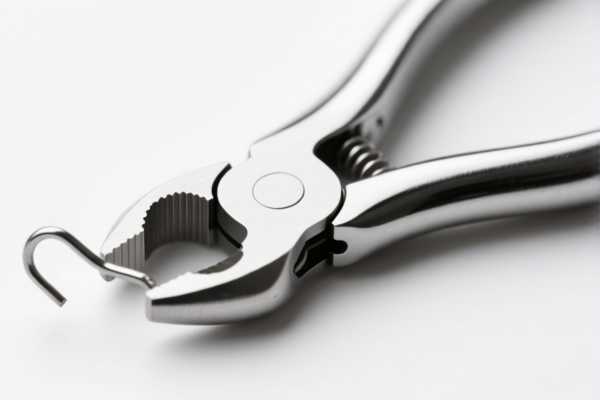
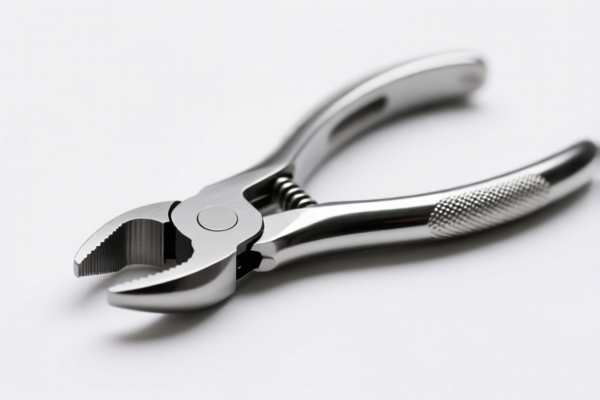
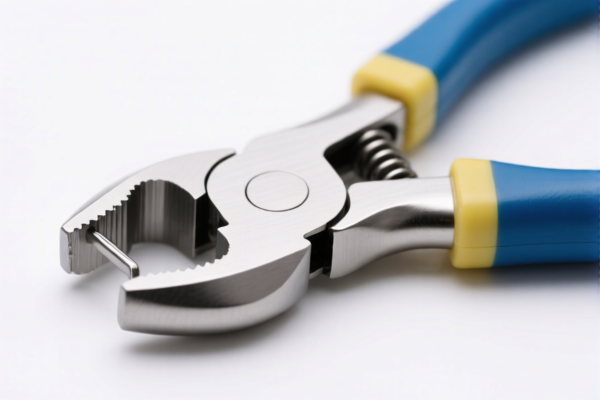
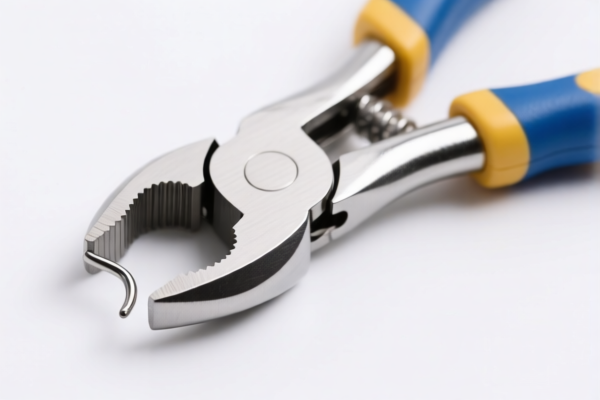
AI Analysis
🛠️ Car Dent Puller (Auto Body Repair Tools)
🌐 HS Code Reference & Customs Clearance Guide | 2024-2025 Latest Tariff Analysis | Professional Compliance Strategy
📌 I. Product Definition & Classification: What Exactly is a "Dent Puller"?
A Car Dent Puller is a specialized tool used in auto body repair to remove dents, dings, and minor structural deformities from vehicle panels without damaging the paint (Paintless Dent Repair - PDR) or with minimal repainting. In international trade, classification depends heavily on the power source and mechanism:
Manual Tools (Hand Tools): Devices operated purely by human force (e.g., slide hammers, glue pullers, metal rods, suction cups). These fall under Chapter 82 (Tools, Implements, Cutlery...).
Powered Tools (Electro-Pneumatic/Electric): Devices that use electric motors, pneumatics, or combustion engines to generate pulling force (e.g., electric stud welders, pneumatic suction lifters). These fall under Chapter 84 (Machinery and Mechanical Appliances).
⚠️ Key Distinction Point:
- If the tool is manually operated (requires no external power source) → Classified as Hand Tools (8205 or 8206).
- If the tool is powered (electric, pneumatic, or self-contained battery) → Classified as Power Tools (8467 or 8467).
📦 II. HS Code Classification Details (Based on Provided Data)
| HS Code | Product Description | Applicability Scenario | Power Source |
|---|---|---|---|
8205.59.55.60 |
Other hand tools; metal hand tools | Manual pullers, slide hammers, metal rods used for dent removal | ❌ No (Manual) |
8467.89.10.00 |
Other power tools; pneumatic or self-contained power-driven tools for metalworking | Pneumatic dent pullers, electric stud welders for metal整形 | ✅ Yes (Power) |
8467.19.10.00 |
Other power tools for working in the hand; pneumatic or electric | Electric suction lifters, specialized powered pulling devices | ✅ Yes (Power) |
8205.59.80.00 |
Other hand tools; manual repair tools | Manual repair kits, non-powered pulling bars | ❌ No (Manual) |
8206.00.00.00 |
Hand tools forming part of a set | Retail sets containing multiple types of dent repair tools (e.g., glue, tabs, pullers) | ❌/✅ Mixed (Set) |
🔍 Key Insight:
- Manual vs. Powered is the critical decision point.
- 8205 covers standard metal hand tools.
- 8467 covers tools driven by electricity, pneumatics, or batteries.
- 8206 applies if the product is sold as a retail set containing various tools.
💰 III. 2024-2025 Latest Tariff Rate Breakdown (Including Surtaxes & Policy Add-ons)
✅ Applicable Country: USA (US)
✅ Origin: China (CN)
✅ Effective Date: Current rates apply as per recent trade policies (Section 301 & IEEPA).
🎯 1. 8205.59.55.60 —— Metal Hand Tools (Manual Dent Pullers)
| Item | Content |
|---|---|
| Base Tariff | 5.3% (ad valorem) |
| Section 301 Surtax | +25.0% (USITC Footnote 9903.88.01) |
| Section 122 Surtax | +10.0% (Additional duty for certain Chinese goods) |
| Total Rate | 40.3% |
| Tax Calculation | CIF Value × 40.3% |
| De Minimis Exemption | ❌ Not Applicable (Section 301 goods are generally excluded from de minimis benefits for large shipments) |
| Legal Basis Path | USITC:8205.59.55.60 → Section301:9903.88.01 → Section122:Additional |
📌 Explanation:
- Manual dent pullers (slide hammers, rods) are classified as metal hand tools.
- Subject to 25% Section 301 and 10% Section 122 surcharges.
- Total tariff burden is high (40.3%), impacting profit margins significantly.
🎯 2. 8467.89.10.00 —— Pneumatic/Self-Contained Power Tools
| Item | Content |
|---|---|
| Base Tariff | 0.0% (ad valorem) |
| Section 301 Surtax | +7.5% (Reduced rate for certain power tools under specific conditions) |
| Section 122 Surtax | +10.0% |
| Total Rate | 17.5% |
| Tax Calculation | CIF Value × 17.5% |
| De Minimis Exemption | ❌ Not Applicable |
| Legal Basis Path | USITC:8467.89.10.00 → Section301:9903.88.01 → Section122 |
📌 Explanation:
- Pneumatic or self-contained power dent pullers benefit from a lower Section 301 rate (7.5%) compared to hand tools.
- Total tariff is significantly lower (17.5%) than manual tools.
- Recommendation: If feasible, design tools with pneumatic/electric drive to reduce tariff burden.
🎯 3. 8467.19.10.00 —— Other Power Tools for Hand Use
| Item | Content |
|---|---|
| Base Tariff | 4.5% (ad valorem) |
| Section 301 Surtax | +7.5% |
| Section 122 Surtax | +10.0% |
| Total Rate | 22.0% |
| Tax Calculation | CIF Value × 22.0% |
| De Minimis Exemption | ❌ Not Applicable |
| Legal Basis Path | USITC:8467.19.10.00 → Section301:9903.88.01 → Section122 |
📌 Explanation:
- Electric or pneumatic tools that don’t fit the "metalworking" category precisely may fall here.
- Total rate is 22.0%, higher than8467.89.10.00due to the higher base tariff (4.5%).
🎯 4. 8205.59.80.00 —— Other Hand Tools (Manual Repair)
| Item | Content |
|---|---|
| Base Tariff | 3.7% (ad valorem) |
| Section 301 Surtax | +25.0% |
| Section 122 Surtax | +10.0% |
| Total Rate | 38.7% |
| Tax Calculation | CIF Value × 38.7% |
| De Minimis Exemption | ❌ Not Applicable |
| Legal Basis Path | USITC:8205.59.80.00 → Section301:9903.88.01 → Section122 |
📌 Explanation:
- Similar to8205.59.55.60but with a slightly lower base tariff.
- Still subject to 25% + 10% surcharges.
- Total rate 38.7% remains very high.
🎯 5. 8206.00.00.00 —— Hand Tools Forming Part of a Set
| Item | Content |
|---|---|
| Base Tariff | Varies (Rate applicable to the principal article in the set) |
| Section 301 Surtax | +25.0% (Applied to the principal article) |
| Section 122 Surtax | +10.0% |
| Total Rate | Dependent on Principal Article + 35.0% |
| Tax Calculation | CIF Value × (Base Rate + 25% + 10%) |
| De Minimis Exemption | ❌ Not Applicable |
| Legal Basis Path | USITC:8206.00.00.00 → Section301 → Section122 |
📌 Explanation:
- If the dent puller is sold in a retail set (e.g., with glue tabs, hooks, and pullers), it may be classified as a set.
- The tariff is determined by the principal article (the main tool) in the set.
- Additional surcharges apply based on the principal article’s classification.
🛠️ IV. Customs Clearance Practical Advice (Battle-Tested Pitfall Guide)
✅ 1. Documentation Checklist (All Required)
| Document | Mandatory | Notes |
|---|---|---|
| ✅ Product Specifications | ✔️ | Material (metal/aluminum), dimensions, weight |
| ✅ Power Source Declaration | ✔️ | Clearly state "Manual", "Pneumatic", or "Electric" |
| ✅ Product Photos (with Labels) | ✔️ | Show tool, model number, power switch (if any) |
| ✅ Commercial Invoice | ✔️ | Describe as "Dent Puller Tool" or "Power Dent Remover" |
| ✅ Packing List | ✔️ | Detail items if sold as a set |
| ✅ Origin Certificate (CO) | ✔️ | If non-China origin, may qualify for reduced tariffs |
✅ 2. Classification Tips (Key Mantra)
🔥 "Manual = 8205 (High Tax); Powered = 8467 (Lower Tax); Set = 8206 (Complex)"
| Scenario | Correct Classification | Wrong Approach |
|---|---|---|
| Manual Slide Hammer | 8205.59.55.60 |
Misclassified as power tool → Risk of penalty |
| Pneumatic Dent Puller | 8467.89.10.00 |
Misclassified as hand tool → Underpayment risk |
| Electric Stud Welder | 8467.89.10.00 |
Misclassified as 8467.19.10.00 → Higher base tax |
| Retail Dent Repair Kit | 8206.00.00.00 |
Splitting items → Each item taxed separately at high rates |
✅ 3. Special Cases Handling
| Situation | Recommendation |
|---|---|
| OEM Custom Tools | Provide design specs to prove if it’s a standard hand tool or specialized power tool |
| Pneumatic Tools | Emphasize "Pneumatic" in description to justify 8467.89.10.00 |
| Sets with Mixed Items | Clearly identify the "principal article" to determine the base rate |
| Non-China Origin | If assembled in Vietnam/Mexico, apply for preferential tariffs where applicable |
🌍 V. Global Market Comparison (2024-2025)
| Country/Region | Recommended HS Code | Tariff Rate | Certification | Notes |
|---|---|---|---|---|
| 🇺🇸 USA | 8467.89.10.00 |
17.5% (Powered) / 40.3% (Manual) | None specific | High tariffs due to Section 301/122 |
| 🇨🇳 China | 8205.59.55.60 |
~5-10% | CCC (if applicable) | Lower tariffs than US |
| 🇪🇺 EU | 8205.59.55.60 |
0-4% | CE | No surcharges |
| 🇦🇺 Australia | 8205.59.55.60 |
5% | RCM | Moderate tariffs |
| 🇯🇵 Japan | 8205.59.55.60 |
0-3% | PSE (if powered) | Low tariffs |
📌 Conclusion:
- USA has the highest tariff burden due to Section 301 and Section 122.
- Powered tools (8467) have significantly lower tariffs than manual tools (8205) in the US.
- EU and Asia are more tariff-friendly.
📌 VI. Common Errors & Pitfall Guide (Lessons Learned)
❌ Error 1: Misclassifying pneumatic tools as manual hand tools
👉 Consequence: Overpayment of tariffs (40.3% vs 17.5%) → Lost Profit!
❌ Error 2: Splitting a retail kit into separate items for customs
👉 Consequence: Each item taxed individually → Total Tax Exceeds 100%!
❌ Error 3: Not declaring power source clearly
👉 Consequence: Customs inspection delay → Storage Fees & Demurrage!
❌ Error 4: Using vague descriptions like "Auto Repair Tool"
👉 Consequence: Customs assigns incorrect HS Code → Penalties & Back Taxes!
✅ Correct Approach:
"Pneumatic Dent Puller, Model XYZ, 110 PSI Operating Pressure, Made in China, for Auto Body Repair"
🎯 VII. Conclusion: Professional Classification Saves Money!
🎯 Remember the Mantra:
🔹 "Manual is Expensive (40.3%); Powered is Cheaper (17.5%); Set is Complex."
🔹 "HS Code Decides Fate; 25% Difference Means Thousands Saved!"
📌 Pro Tip:
If your dent puller is powered (pneumatic/electric), ensure it is classified under 8467.89.10.00 to benefit from the lower Section 301 rate (7.5%).
For manual tools, consider redesigning to include powered features if feasible, or explore third-country manufacturing (e.g., Vietnam) to avoid Section 301 duties.
📣 Take Action Now:
📞 Consult a licensed customs broker + Provide product specs + Apply for Advance Ruling
🚀 Optimize your supply chain, reduce tariff costs, and boost profits!
✨ Professional Customs Clearance Starts with Accurate Classification!
💼 Every Percent of Tariff Saved is Pure Profit!
Customer Reviews
About HS Code Classification
The Harmonized System (HS) is an internationally standardized nomenclature developed by the World Customs Organization (WCO) to classify traded products. Over 200 countries use the HS system as the basis for customs tariffs, trade statistics, and import/export regulations.
Each HS code follows a hierarchical structure:
- Chapter (2 digits) — Broad category of goods (e.g., Chapter 84: Machinery and Mechanical Appliances)
- Heading (4 digits) — More specific grouping within the chapter
- Subheading (6 digits) — Internationally standardized breakdown, used by all WCO member countries
- National subdivisions (8-10 digits) — Country-specific extensions for further classification, such as US HTSUS 10-digit codes
Correct HS code classification is essential for smooth customs clearance, accurate duty payment, and compliance with trade regulations. Misclassification can lead to customs delays, overpayment of duties, or penalties.
When importing from CN to US, the applicable tariff rates may include:
- Most-Favored-Nation (MFN) rate — The standard duty rate applied to WTO members
- General rate — Applied to countries without trade agreements
- Trade remedy duties — Additional tariffs such as Section 301 (anti-dumping), Section 232 (national security), or countervailing duties
The information provided on this page is for reference purposes only. For official classification, please consult with your local customs authority or a licensed customs broker.