car door stickers
CN → US| HS Code | Tariff Rate | Origin | Destination | Doc |
|---|---|---|---|---|
| 8708291500 | 0.0% | CN | US | Official Doc |
| 8708295160 | 0.0% | CN | US | Official Doc |
Product Images
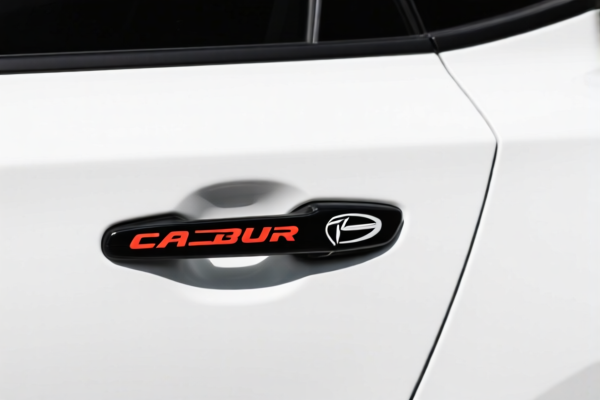
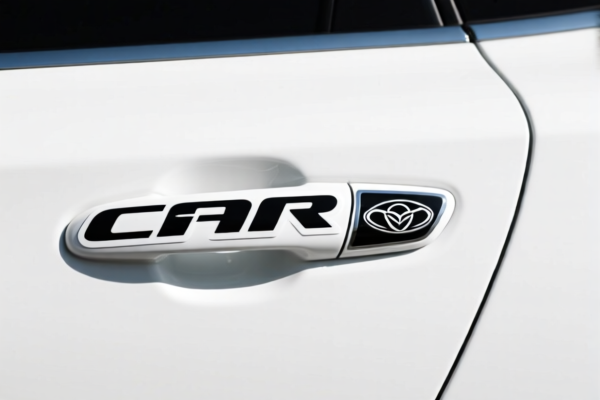
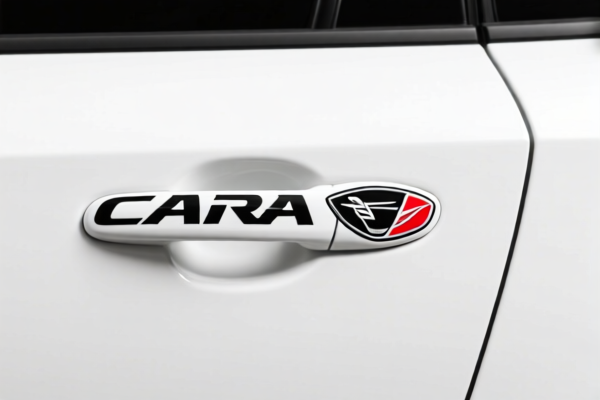
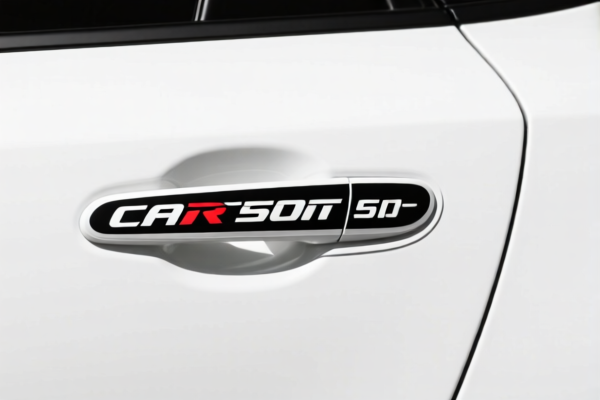
AI Analysis
🚗 Car Door Stickers: The Ultimate Guide to HS Code Classification & US Customs Clearance (2026)
🌐 HS Code Reference & Customs Guide | 2026 Latest Tariff Analysis | Professional Clearance Strategy
📌 I. Product Definition & Classification: What Are "Car Door Stickers"?
"Car Door Stickers" generally refer to adhesive labels, badges, or graphic films applied to the exterior doors of motor vehicles (Headings 8701–8705). In international trade, their classification is critical because they are considered "Parts and Accessories of Bodies".
The core distinction lies in whether the item is a complete "Door Assembly" (structural) or a "Other Part/Accessory" (cosmetic/minor structural).
⚠️ Key Classification Point:
- If the product is a structural door assembly (metal/plastic shell with windows, hinges, locks): It may fall under specific "Door Assembly" codes.
- If the product is a sticker, decal, emblem, or non-structural trim: It falls under "Other parts and accessories of bodies".
- For "Stickers" specifically: They are almost exclusively classified as "Other Other" under Heading 8708.29, as they are not structural assemblies but rather accessories/decorations.
📦 II. HS Code Classification Details (2026 Official Tariff对照)
Based on your input, there are two primary HS Codes relevant to motor vehicle body parts. Here is the precise breakdown for Car Door Stickers:
| HS Code | Product Description | Applicable Scenario | Is it a "Door Assembly"? |
|---|---|---|---|
8708.29.15.00 |
Door assemblies | Structural metal/plastic door units (with glass, locks, etc.) | ✅ Yes (Structural) |
8708.29.51.60 |
Other parts and accessories of bodies (including cabs): Other Other | Car door stickers, decals, emblems, trim strips | ❌ No (Non-structural accessory) |
🔍 Critical Insight:
- Car door stickers are NOT "Door Assemblies" (8708.29.15.00). A door assembly is a heavy, structural component.
- Stickers/Decals are classified under8708.29.51.60("Other Other") because they are accessories to the body that do not constitute a complete assembly.
- Misclassification Risk: If you declare a sticker as a "Door Assembly" (15.00), you may face customs scrutiny for incorrect valuation and description. Always use8708.29.51.60for stickers/decorative parts.
💰 III. 2026 US Tariff Rate Breakdown (China-Origin Goods)
✅ Applicable Country: United States (US)
✅ Origin: China (CN)
✅ Effective Date: Current 2026 Tariff Schedule
🎯 1. 8708.29.15.00 — Door Assemblies (Structural)
| Item | Details |
|---|---|
| Base Tariff | 2.5% (ad valorem) |
| Section 301 Additional Tariff | +25.0% |
| Section 301 Steel/Aluminum/Copper Additional Tariff | N/A (unless the door is made of steel/aluminum/copper and specifically targeted; however, stickers are not metal articles) |
| Total Tariff Rate | 27.5% |
| Calculation | CIF Value × 27.5% |
| De Minimis Eligibility | ❌ No (Deny de minimis) |
📌 Note: This rate applies only if you are importing actual door frames/assemblies, not stickers.
🎯 2. 8708.29.51.60 — Other Parts and Accessories (Including Car Door Stickers) ✅ RECOMMENDED FOR STICKERS
| Item | Details |
|---|---|
| Base Tariff | 2.5% (ad valorem) |
| Section 301 Additional Tariff | +25.0% |
| Steel/Aluminum/Copper Additional Tariff | +50% (⚠️ Critical Check: If the sticker contains metalized layers, aluminum foil, or is made of metal/plated material, this 50% may apply in addition or instead, depending on USITC rulings. However, standard vinyl/paper stickers typically fall under the base +25%. See Clarification Below) |
| Total Tariff Rate (Standard Sticker) | 27.5% (2.5% + 25%) |
| Total Tariff Rate (Metalized/Metal Component) | 77.5% (2.5% + 25% + 50%) |
| Calculation | CIF Value × (27.5% or 77.5%) |
| De Minimis Eligibility | ❌ No (Deny de minimis) |
📌 Clarification on the "50% Steel/Aluminum Tariff":
The input data specifies: "加征关税: 25.0%钢,铝铜制品加征关税: 50%".
- For standard plastic/vinyl stickers: You pay 2.5% Base + 25% Section 301 = 27.5%.
- For metallic/emblem stickers containing significant metal content: You may be subject to the +50% additional tariff on steel/aluminum/copper articles.
- Safe Bet: For most decorative vinyl stickers, the rate is 27.5%. For chrome badges or metal plates, it could be 77.5%.
🛠️ IV. Customs Clearance Practical Advice (Pitfall Avoidance)
✅ 1. Required Documentation Checklist
| Document | Mandatory? | Description |
|---|---|---|
| ✅ Commercial Invoice | ✔️ | Must clearly state: "Car Door Stickers/Decals, Material: Vinyl, No Structural Function" |
| ✅ Packing List | ✔️ | Detail quantity, weight, and dimensions |
| ✅ Product Photos | ✔️ | Show the sticker, packaging, and any material composition info |
| ✅ Material Composition Statement | ✔️ | Crucial to prove it is not a metal article (to avoid the 50% surcharge). Specify: "100% Vinyl/Polyester, Adhesive Backing" |
| ✅ Origin Certificate | ✔️ | To confirm China origin for Section 301 calculation |
✅ 2. Declaration Tips (Key Mnemonics)
🔥 "Don't Call it a Door, Call it an Accessory! Be Clear on Material, Avoid Metal Tax Surprise!"
| Scenario | Correct Declaration | Incorrect Declaration | Consequence |
|---|---|---|---|
| Vinyl Sticker | HS 8708.29.51.60 |
HS 8708.29.15.00 (Door Assembly) |
Delayed clearance, request for extra docs |
| Metal Badge | HS 8708.29.51.60 + Declare Metal Content |
HS 8708.29.51.60 (Undeclared) |
Potential 50% retroactive tax + penalty |
| Glass Door | HS 8708.29.15.00 |
HS 8708.29.51.60 |
Underpayment of duties |
✅ 3. Special Cases
| Situation | Handling Advice |
|---|---|
| Stickers with Metal Foil | Declare as "Metal Parts" if >50% metal by value. Expect 77.5% tariff. |
| Custom Brand Logos | Ensure no trademark infringement (CBP IP Recordation). |
| Small Quantities | No de minimis exemption for China-origin auto parts. All duties apply. |
| Pre-Installed Stickers | If sold with the door, declare as part of the assembly if value is minor, but separate is safer for clarity. |
🌍 V. Global Market Comparison (2026)
| Country/Region | Recommended HS Code | Estimated Tariff (China Origin) | Notes |
|---|---|---|---|
| 🇺🇸 USA | 8708.29.51.60 |
27.5% (Standard) / 77.5% (Metal) | High Section 301 duties apply |
| 🇨🇳 China | 8708.29.51.60 |
0% (Imported into China) | No tariff for imports into China |
| 🇪🇺 EU | 8708.29.99 |
0% (Most FTA benefits) | Low duty, but check VAT |
| 🇨🇦 Canada | 8708.29.51.00 |
0% (CUSMA Benefits) | Duty-free if Canadian/Mexican origin |
| 🇦🇺 Australia | 8708.29.99.00 |
5% | No Section 301 equivalent |
📌 Conclusion:
- USA is the most expensive market for auto parts due to Section 301 tariffs.
- Vinyl/Paper Stickers: 27.5% total tariff.
- Metal/Chrome Stickers: Up to 77.5% total tariff.
- Always declare material composition to avoid unexpected 50% surcharges.
📌 VI. Common Errors & Pitfalls (Lessons Learned)
❌ Error 1: Declaring stickers as "Door Assemblies" (8708.29.15.00)
👉 Consequence: Customs may reject due to mismatched physical description. Stickers are not assemblies.
❌ Error 2: Failing to disclose metal content in metallic stickers
👉 Consequence: If CBP determines the sticker is a "steel/aluminum article," they will add the 50% additional tariff. Result: Pay 77.5% instead of 27.5%.
❌ Error 3: Assuming de minimis ($800) exemption
👉 Consequence: Does not apply to China-origin auto parts. Duties must be paid on all values.
✅ Best Practice:
"Vinyl Car Door Stickers, Decorative, Non-Structural, Material: 100% Polyester, Model XYZ, HS Code: 8708.29.51.60"
🎯 VII. Conclusion: Smart Classification Saves Money!
🎯 Remember:
🔹 "Stickers are Accessories, Not Assemblies!"
🔹 "Vinyl Pays 27.5%, Metal Pays 77.5%!"
🔹 "Declare Material Clearly to Avoid Surprises!"
📌 Pro Tip:
If you are importing high-value chrome badges, consider sourcing from Vietnam or Mexico to qualify for IEEPA exemptions or lower tariffs.
For vinyl stickers, ensure your supplier provides a Material Safety Data Sheet (MSDS) or composition letter to prove non-metal content.
📣 Immediate Action:
📞 Contact your customs broker with product photos and material specs.
🚀 Apply for a Binding Ruling if you have large, recurring shipments of metalized stickers.
💼 Precision in classification = Predictable costs.
✨ Professional clearance starts with precise HS Codes!
💼 Every dollar of duty saved is pure profit!
Customer Reviews
About HS Code Classification
The Harmonized System (HS) is an internationally standardized nomenclature developed by the World Customs Organization (WCO) to classify traded products. Over 200 countries use the HS system as the basis for customs tariffs, trade statistics, and import/export regulations.
Each HS code follows a hierarchical structure:
- Chapter (2 digits) — Broad category of goods (e.g., Chapter 84: Machinery and Mechanical Appliances)
- Heading (4 digits) — More specific grouping within the chapter
- Subheading (6 digits) — Internationally standardized breakdown, used by all WCO member countries
- National subdivisions (8-10 digits) — Country-specific extensions for further classification, such as US HTSUS 10-digit codes
Correct HS code classification is essential for smooth customs clearance, accurate duty payment, and compliance with trade regulations. Misclassification can lead to customs delays, overpayment of duties, or penalties.
When importing from CN to US, the applicable tariff rates may include:
- Most-Favored-Nation (MFN) rate — The standard duty rate applied to WTO members
- General rate — Applied to countries without trade agreements
- Trade remedy duties — Additional tariffs such as Section 301 (anti-dumping), Section 232 (national security), or countervailing duties
The information provided on this page is for reference purposes only. For official classification, please consult with your local customs authority or a licensed customs broker.