car hydraulic shock
CN → US| HS Code | Tariff Rate | Origin | Destination | Doc |
|---|---|---|---|---|
| 8708801300 | 37.5% | CN | US | Official Doc |
| 4016995500 | 37.5% | CN | US | Official Doc |
| 8708801600 | 37.5% | CN | US | Official Doc |
| 4016993000 | 35.0% | CN | US | Official Doc |
Product Images
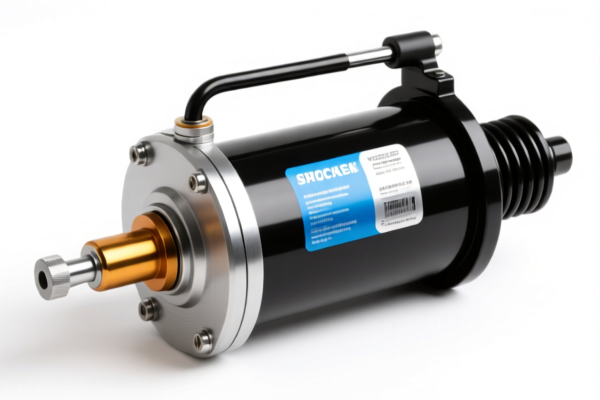
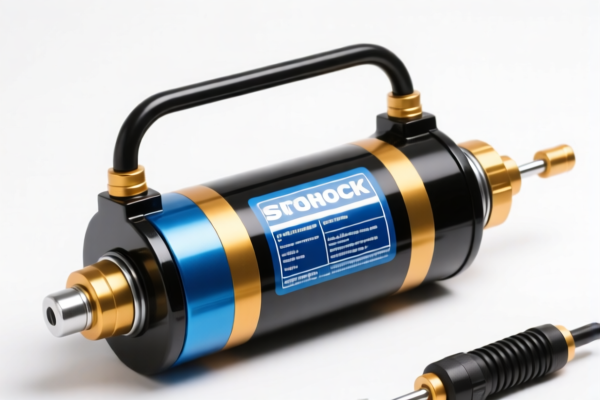
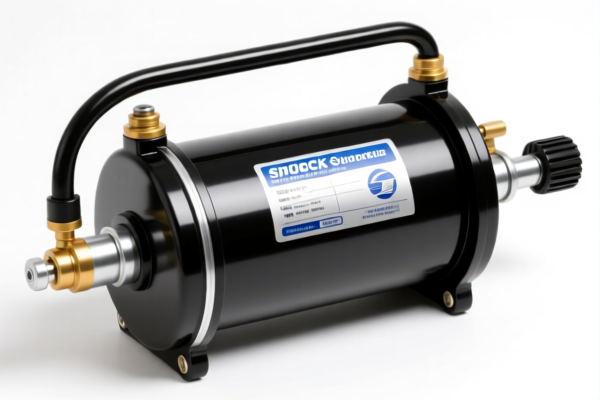
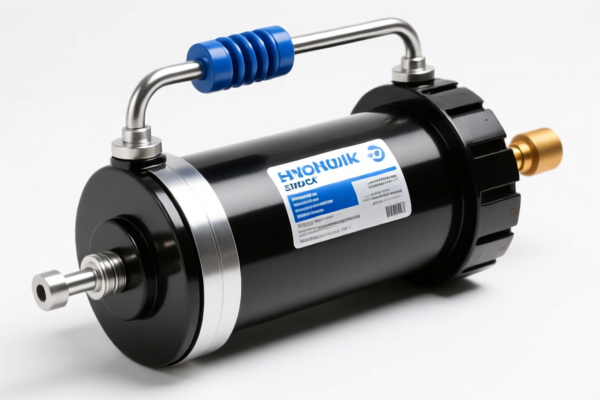
AI Analysis
🚗 Car Hydraulic Shock Absorbers (Automotive Suspension Components)
🌐 HS Code Reference & Customs Clearance Guide | 2026 Latest Tariff Analysis | Professional Clearance Strategy
📌 I. Product Definition and Classification: Do You Really Understand "Hydraulic Shock Absorbers"?
Hydraulic shock absorbers are core components of a vehicle's suspension system, responsible for damping spring oscillations and ensuring ride comfort and handling stability. In international trade, they are primarily classified based on their functional integration within the vehicle's chassis system.
Hydraulic Shock Absorbers: Typically consisting of a cylinder, piston, valves, and hydraulic fluid, designed to absorb impact energy. Suspension System Components: Often grouped under "suspension systems and parts" due to their integral role in vehicle dynamics.
⚠️ Key Classification Point:
- If the shock absorber is explicitly identified as a part of the suspension system (which is the standard definition for automotive hydraulic shocks), it falls under Chapter 87 (Vehicles).
- If classified as a general rubber/metal hydraulic damping product not specifically for vehicles, it might fall under Chapter 40 (Rubber Products) or Chapter 84/90 (Mechanical/Industrial Parts), but this is rare for standard "car" shocks.
- Primary Match: Chapter 87.08 (Parts and accessories of motor vehicles).
📦 II. HS Code Classification Details (2026 Latest Tariff Authority Comparison)
| HS Code | Product Description | Application Scenario | Material/Function Match |
|---|---|---|---|
8708.80.13.00 |
Shock absorbers for vehicles (Suspension system parts) | Automotive hydraulic shock absorbers | ✅ Matches "Suspension systems and parts (including shock absorbers)" |
8708.80.16.00 |
Other parts of suspension systems (Including shock absorbers) | General automotive suspension components | ✅ Direct match for "Suspension systems (including shock absorbers)" |
4016.99.55.00 |
Other articles of vulcanized rubber other than hard rubber | Rubber-metal composite dampers | ✅ Reasonable inference: Rubber + Metal components |
4016.99.30.00 |
Other articles of rubber | Rubber-based damping products | ✅ Fallback category: "Damping products" with rubber/metal mix |
🔍 Important Reminder:
- Automotive hydraulic shocks are predominantly classified under HS 8708 because they are "parts of motor vehicles" specifically for the suspension system.
- Classification under HS 4016 is possible if the product is considered a generic "rubber article" with damping function, but this is less common for standard car parts.
- The summary provided in the data confirms that HS 8708 codes align perfectly with the function of "suspension systems and parts."
💰 III. 2026 Latest Tariff Rate Breakdown (Including Surcharges, Policy Add-ons)
✅ Applicable Country: United States (US)
✅ Origin: China (CN)
✅ Effective Date: Current rates apply (including subsequent imports)
🎯 1. 8708.80.13.00 —— Hydraulic Shock Absorbers (Suspension Parts)
| Item | Content |
|---|---|
| Basic Tariff Rate | 2.5% (ad valorem) |
| Section 301 Surcharge | +25.0% |
| Section 122 Tariff | +10.0% |
| Total Tariff Rate | 37.5% |
| Tax Calculation | CIF Value × 37.5% |
| De Minimis Exemption | ❌ Not Eligible (High tariff rate exceeds de minimis threshold benefits) |
| Legal Basis Path | USITC:8708.80.13.00 → Section 301 Footnote → Section 122 Addition |
📌 Explanation:
- "Section 301 Surcharge 25%" is imposed under the U.S. Trade Act Section 301 on Chinese goods;
- "Section 122 Tariff 10%" is an additional surcharge for specific categories;
- Combined Rate: 37.5%, which is high. Importers must plan accordingly.
🎯 2. 8708.80.16.00 —— Suspension System Parts (Including Shock Absorbers)
| Item | Content |
|---|---|
| Basic Tariff Rate | 2.5% |
| Section 301 Surcharge | +25.0% |
| Section 122 Tariff | +10.0% |
| Total Tariff Rate | 37.5% |
| Tax Calculation | CIF × 37.5% |
| De Minimis Exemption | ❌ Not Eligible |
| Legal Basis Path | USITC:8708.80.16.00 → Section 301 → Section 122 |
📌 Note:
- Identical tariff structure to8708.80.13.00;
- Both HS 8708 codes reflect the automotive parts classification with full surcharges.
🎯 3. 4016.99.55.00 —— Rubber Articles (Damping Control Products)
| Item | Content |
|---|---|
| Basic Tariff Rate | 2.5% |
| Section 301 Surcharge | +25.0% |
| Section 122 Tariff | +10.0% |
| Total Tariff Rate | 37.5% |
| Tax Calculation | CIF × 37.5% |
| De Minimis Exemption | ❌ Not Eligible |
| Legal Basis Path | USITC:4016.99.55.00 → Section 301 → Section 122 |
📌 Note:
- If customs classifies the shock absorber as a rubber article (due to rubber-metal composition), this code applies;
- Tariff rate is identical (37.5%) due to uniform surcharge policies on Chinese rubber products.
🎯 4. 4016.99.30.00 —— Other Rubber Articles (Damping Products)
| Item | Content |
|---|---|
| Basic Tariff Rate | 0.0% |
| Section 301 Surcharge | +25.0% |
| Section 122 Tariff | +10.0% |
| Total Tariff Rate | 35.0% |
| Tax Calculation | CIF × 35.0% |
| De Minimis Exemption | ❌ Not Eligible |
| Legal Basis Path | USITC:4016.99.30.00 → Section 301 → Section 122 |
📌 Note:
- This code has a 0% basic rate, resulting in a lower total rate (35%) compared to 8708 codes (37.5%);
- This is the most favorable tariff among the provided options for Chinese-origin shock absorbers;
- Suitable if the product is classified as a general damping rubber product rather than a specific automotive part.
🛠️ IV. Customs Clearance Practical Advice (Best Practices & Pitfalls)
✅ 1. Documentation Checklist (All Required)
| Document | Required | Description |
|---|---|---|
| ✅ Product Specification Sheet | ✔️ | Include dimensions, type (hydraulic/gas), vehicle model compatibility |
| ✅ Material Composition Proof | ✔️ | Clarify rubber vs. metal ratio to support HS 4016 vs 8708 |
| ✅ Product Photos (Labeled) | ✔️ | Show part number, brand, and mounting points |
| ✅ Third-Party Test Report | ✔️ | SAE standards, durability tests, if available |
| ✅ Commercial Invoice | ✔️ | Clearly state "Hydraulic Shock Absorber for Suspension System" |
| ✅ Certificate of Origin (CO) | ✔️ | Confirm Chinese origin for surcharge calculation |
| ✅ Packing List | ✔️ | Detail individual units and packaging to avoid bulk misclassification |
✅ 2. Declaration Tips (Key Strategies)
🔥 “Clarify Function, Choose Chapter Wisely, Lower Rate by 2.5%!”
| Scenario | Correct Declaration | Risk if Incorrect |
|---|---|---|
| Standard Car Shock Absorber | 8708.80.13.00 or 8708.80.16.00 |
Misclassification under 4016 may lead to duty adjustments |
| Rubber-Metal Damping Part (Non-Standard) | 4016.99.30.00 |
Lower tax (35%) but requires strong justification |
| Generic Rubber Dampers | 4016.99.55.00 |
Tax 37.5%, same as 8708 |
| Complete Suspension Assembly | Not Applicable (Shocks are parts) | Do not declare as assembly |
📌 Strategy:
- If possible, argue for HS 4016.99.30.00 to benefit from the 0% basic rate (Total 35% vs 37.5%).
- However, if the product is clearly identified as a replacement part for a specific car model, customs will likely insist on HS 8708 (37.5%).
- Ensure product description emphasizes material composition (rubber/metal) if aiming for 4016 classification.
✅ 3. Special Cases Handling
| Scenario | Advice |
|---|---|
| OEM Replacement Parts | Provide OEM part number and vehicle fitment list to justify HS 8708 |
| Aftermarket Universal Shocks | May support HS 4016 classification if not model-specific |
| Gas-Charged vs Hydraulic | Both fall under similar codes; specify "Hydraulic" in description |
| Mixed Shipments (Shocks + Mounts) | Declare separately; mounts may have different HS codes |
🌍 V. Global Market Comparison (2026 Latest)
| Country/Region | Recommended HS Code | Total Tariff (China Origin) | Notes |
|---|---|---|---|
| 🇺🇸 USA | 8708.80.13.00 / 4016.99.30.00 |
37.5% / 35.0% | High surcharges apply; choose lowest applicable rate |
| 🇨🇳 China | 8708.80.13.00 |
2.5% | No surcharges for imports into China |
| 🇪🇺 EU | 8708.80.90 |
~4.5% | Standard auto parts rate; no Section 301/122 |
| 🇲🇽 Mexico | 8708.80.99 |
0% (if under USMCA) | Check rules of origin |
| 🇬🇧 UK | 8708.80.90 |
~4.5% | Post-Brexit tariff regime |
📌 Conclusion:
- USA has the highest effective tariffs due to Section 301 and 122 surcharges;
- HS 4016.99.30.00 offers a 2.5% advantage over HS 8708 codes if classification allows;
- For other markets, tariffs are significantly lower; plan supply chain accordingly.
📌 VI. Common Mistakes & Pitfalls
❌ Mistake 1: Declaring shock absorbers as "General Machinery Parts" (HS 8483)
👉 Result: Incorrect classification; customs may reassess and apply higher duties or penalties.
❌ Mistake 2: Ignoring Material Composition
👉 Result: Failure to justify HS 4016 classification leads to automatic assignment of HS 8708 (37.5%).
❌ Mistake 3: Using Vague Descriptions ("Car Parts")
👉 Result: Customs holds shipment for inspection; delays and potential audits.
✅ Best Practice:
"Hydraulic Shock Absorber, Steel/Rubber Construction, For Automotive Suspension System, Model XYZ, Compatible with [Vehicle Make/Model]"
🎯 VII. Conclusion: Smart Classification, Cost Efficiency
🎯 Key Takeaways:
🔹 "Choose HS 4016.99.30.00 if possible to save 2.5% (Total 35% vs 37.5%)"
🔹 "If clearly an auto part, accept HS 8708 at 37.5%"
🔹 "Always document material composition to support classification choice"📌 Pro Tip:
- For large-volume imports, consider applying for a Binding Ruling from U.S. Customs and Border Protection (CBP) to confirm the correct HS code and tariff rate;
- This reduces audit risk and ensures cost predictability.
📣 Immediate Action:
📞 Consult a licensed customs broker
📄 Provide detailed product specs and material breakdown
🚀 Optimize your HS code selection to minimize landed costs!
✨ Professional Classification Starts with Precision
💼 Every 2.5% Saves Money; Every Mistake Costs Time and Dollars!
Customer Reviews
About HS Code Classification
The Harmonized System (HS) is an internationally standardized nomenclature developed by the World Customs Organization (WCO) to classify traded products. Over 200 countries use the HS system as the basis for customs tariffs, trade statistics, and import/export regulations.
Each HS code follows a hierarchical structure:
- Chapter (2 digits) — Broad category of goods (e.g., Chapter 84: Machinery and Mechanical Appliances)
- Heading (4 digits) — More specific grouping within the chapter
- Subheading (6 digits) — Internationally standardized breakdown, used by all WCO member countries
- National subdivisions (8-10 digits) — Country-specific extensions for further classification, such as US HTSUS 10-digit codes
Correct HS code classification is essential for smooth customs clearance, accurate duty payment, and compliance with trade regulations. Misclassification can lead to customs delays, overpayment of duties, or penalties.
When importing from CN to US, the applicable tariff rates may include:
- Most-Favored-Nation (MFN) rate — The standard duty rate applied to WTO members
- General rate — Applied to countries without trade agreements
- Trade remedy duties — Additional tariffs such as Section 301 (anti-dumping), Section 232 (national security), or countervailing duties
The information provided on this page is for reference purposes only. For official classification, please consult with your local customs authority or a licensed customs broker.