car model
CN → US| HS Code | Tariff Rate | Origin | Destination | Doc |
|---|---|---|---|---|
| 9503000071 | 10.0% | CN | US | Official Doc |
| 8526925000 | 35.0% | CN | US | Official Doc |
| 8703210150 | 37.5% | CN | US | Official Doc |
| 9503000073 | 10.0% | CN | US | Official Doc |
| 8703105060 | 20.0% | CN | US | Official Doc |
Product Images
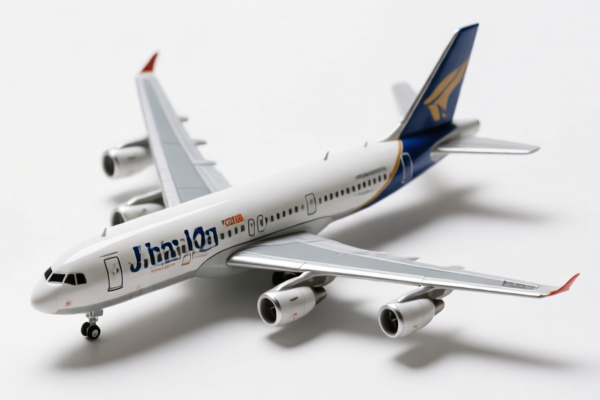
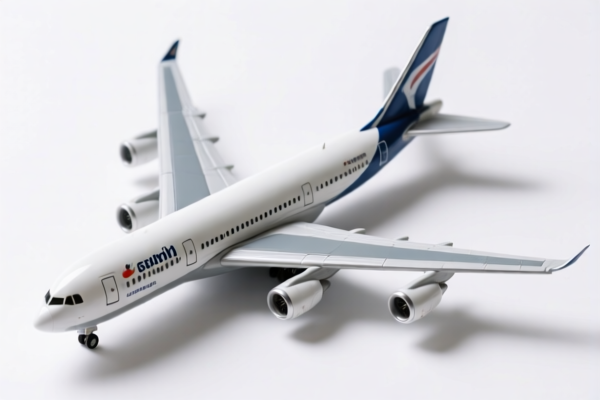
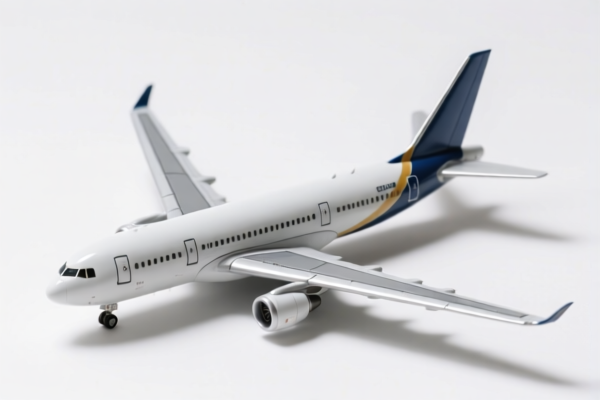
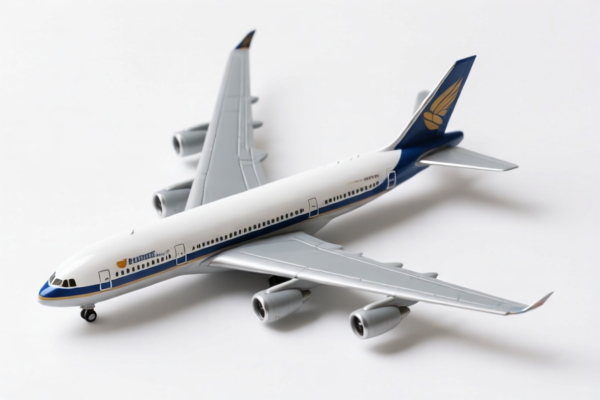
AI Analysis
🚗 Car Model (Remote-Controlled Automotive Model)
🌐 HS Code Classification & Customs Clearance Guide | 2026 Latest Tariff Analysis | Professional Import Strategy
📌 One, Product Definition & Classification: What Exactly Is a "Car Model"?
A remote-controlled car model is a miniature, functional vehicle designed primarily for recreational or entertainment use, often resembling real automobiles in shape and operation. It typically features:
- Remote control via radio frequency (RF) or infrared (IR);
- Electronic control systems (motors, receivers, batteries);
- Plastic or metal body;
- Wheels, steering, and drivetrain mechanisms.
In international trade, such products can be classified under multiple HS codes, depending on primary function, design, and intended use. The key lies in determining whether it is seen as a toy, a radio-controlled device, or a vehicle.
⚠️ Critical Determination Factors: - If it's small-scale, non-functional as a real vehicle, and used for play → Toy category (9503)
- If it contains electronic control components and functions as a remote-controlled device → Radio remote control (8526)
- If it resembles a real car, has driving capability, and is used for transportation-like function → Automotive vehicle (8703)
📦 Two, HS Code Classification Breakdown (2026 Official Tariff Reference)
| HS Code | Product Description | Primary Use Case | Key Features | Tax Rate |
|---|---|---|---|---|
9503.00.00.71 |
Remote-controlled car model, classified as a toy | Entertainment, children's play | Plastic/metal, scale model, non-vehicle use | 10.0% |
8526.92.50.00 |
Radio remote control device with electronic control components | Remote operation, control function | Contains receiver, motor driver, circuit board | 35.0% |
8703.21.01.50 |
Motor vehicle for passenger transport, including model vehicles | Vehicle-like function, mobility | Realistic design, capable of driving, resembles real car | 37.5% |
9503.00.00.73 |
Car model named as a "model" — scale replica for entertainment | Toy, hobby, collectible | Smaller scale, similar to model toys, not intended for transport | 10.0% |
8703.10.50.60 |
Other vehicles not specified elsewhere — catch-all category | General vehicle model, no specific conflict | No material or form conflict with other categories | 20.0% |
🔍 Important Insight:
- Same product, different HS codes → drastically different tariffs
- The correct classification hinges on intended use, function, and design intent
- No single "correct" code — it depends on how you declare it and what evidence you provide
💰 Three, 2026 Latest Tariff Breakdown (With Detailed Tax Clauses)
✅ Applicable Country: United States (US)
✅ Origin: China (CN)
✅ Effective Date: November 10, 2025 (including subsequent imports)
🎯 1. 9503.00.00.71 — Car Model as Toy (Entertainment Use)
| Item | Detail |
|---|---|
| Base Tariff | 0% (ad valorem) |
| Additional Duty (USITC) | 0% |
| Section 122 Clause Duty | 10% (IEEPA – International Emergency Economic Powers Act) |
| Total Tax Rate | 10.0% |
| Tax Calculation | CIF Value × 10% |
| De Minimis Threshold | ✅ Yes (eligible for $800 de minimis exemption) |
| Legal Basis Path | IEEPA:9903.01.25 → IEEPA:9903.01.24 → 9503.00.00.71 → FOOTNOTE:9903.88.01 |
📌 Explanation:
- Classified as a toy, so no USITC 25% tariff applies;
- Only 10% IEEPA 122 Clause duty applies to Chinese-origin goods;
- Lowest tax rate among all options — ideal for toy-focused declarations.
🎯 2. 8526.92.50.00 — Radio Remote Control Device (Electronic Control Component)
| Item | Detail |
|---|---|
| Base Tariff | 0% |
| Additional Duty (USITC) | 25% (Section 301 – China Trade War Tariff) |
| Section 122 Clause Duty | 10% (IEEPA) |
| Total Tax Rate | 35.0% |
| Tax Calculation | CIF Value × 35% |
| De Minimis Threshold | ❌ No (denied due to IEEPA) |
| Legal Basis Path | IEEPA:9903.01.25 → USITC:8526.92.50.00 → FOOTNOTE:9903.88.01 |
📌 Explanation:
- Contains electronic control components → falls under radio remote control category;
- 25% USITC + 10% IEEPA = 35% total;
- No de minimis — even small shipments face full duty;
- Highest risk if misclassified — high penalty for under-declaration.
🎯 3. 8703.21.01.50 — Motor Vehicle for Passenger Transport (Vehicle-Like Function)
| Item | Detail |
|---|---|
| Base Tariff | 2.5% |
| Additional Duty (USITC) | 25.0% |
| Section 122 Clause Duty | 10% |
| Total Tax Rate | 37.5% |
| Tax Calculation | CIF Value × 37.5% |
| De Minimis Threshold | ❌ No |
| Legal Basis Path | IEEPA:9903.01.25 → USITC:8703.21.01.50 → FOOTNOTE:9903.88.01 |
📌 Explanation:
- If the model resembles a real car, has driving function, and is used for mobility, it may be classified as a vehicle;
- Even though it's small, form and function override size;
- Highest total tariff — 37.5% — due to 2.5% base + 25% USITC + 10% IEEPA.
🎯 4. 9503.00.00.73 — Car Model as "Model" for Entertainment
| Item | Detail |
|---|---|
| Base Tariff | 0% |
| Additional Duty (USITC) | 0% |
| Section 122 Clause Duty | 10% |
| Total Tax Rate | 10.0% |
| Tax Calculation | CIF Value × 10% |
| De Minimis Threshold | ✅ Yes |
| Legal Basis Path | IEEPA:9903.01.25 → IEEPA:9903.01.24 → 9503.00.00.73 → FOOTNOTE:9903.88.01 |
📌 Explanation:
- Explicitly states: “model” = miniature, similar to entertainment model;
- Clearly not a real vehicle, but a toy model;
- Same as 9503.00.00.71 — lowest tax rate;
- Best choice for toy-oriented declarations.
🎯 5. 8703.10.50.60 — Other Vehicles (Catch-All Category)
| Item | Detail |
|---|---|
| Base Tariff | 2.5% |
| Additional Duty (USITC) | 7.5% |
| Section 122 Clause Duty | 10% |
| Total Tax Rate | 20.0% |
| Tax Calculation | CIF Value × 20% |
| De Minimis Threshold | ❌ No |
| Legal Basis Path | IEEPA:9903.01.25 → USITC:8703.10.50.60 → FOOTNOTE:9903.88.01 |
📌 Explanation:
- Used when no better fit exists — fallback category;
- 2.5% base + 7.5% USITC + 10% IEEPA = 20%;
- Moderate risk — not the worst, but not optimal;
- Avoid unless no other category applies.
🛠️ Four, Customs Clearance Best Practices (Pro Tips to Avoid Penalties)
✅ 1. Required Documentation (Must-Have Checklist)
| Document | Required? | Why It Matters |
|---|---|---|
| ✅ Product Specifications | ✔️ | Shows size, weight, function, battery type |
| ✅ Circuit Diagram / PCB Layout | ✔️ | Proves presence/absence of control components |
| ✅ High-Resolution Product Photos | ✔️ | Shows design, wheels, remote, battery, size |
| ✅ Commercial Invoice | ✔️ | Must clearly state “Remote-Controlled Car Model for Entertainment” |
| ✅ Certificate of Origin (CO) | ✔️ | Essential for tariff eligibility |
| ✅ Third-Party Test Reports | ✔️ | FCC, CE, RoHS (if applicable) |
| ✅ Packing List | ✔️ | Shows full package contents (model, remote, battery, charger) |
✅ 2.申报技巧(Key Rules of Thumb)
🔥 “Declare by Use, Not by Name!”
| Scenario | Correct HS Code | Wrong Choice | Risk |
|---|---|---|---|
| Toy-like, small, used for play | 9503.00.00.71 or 9503.00.00.73 |
8526.92.50.00 |
Tax jump from 10% → 35% |
| Has remote control, electronics, circuit board | 8526.92.50.00 |
9503.00.00.71 |
Under-declaration → penalties |
| Looks like a real car, drives on ground | 8703.21.01.50 |
9503.00.00.71 |
High risk of seizure or refund |
| No clear category, no conflict | 8703.10.50.60 |
Random code | Higher tax, no benefit |
✅ 3. Special Cases & Risk Mitigation
| Situation | Recommended Action |
|---|---|
| OEM/White-label model | Provide customer PO + design specs; avoid "generic" labels |
| Model with LED lights, sound effects | Still qualify as toy if used for play — use 9503 code |
| Model used in film/TV production | Apply for non-commercial use exemption — requires proof |
| Military or industrial use model | Apply for special-purpose classification — consult customs lawyer |
| High-value or bulk shipment | Apply for Advance Ruling (Pre-Ruling) to lock in HS Code and tariff |
🌍 Five, Global Market Comparison (2026)
| Country | Recommended HS Code | Tariff | Certification | Notes |
|---|---|---|---|---|
| 🇺🇸 USA | 9503.00.00.71 or 9503.00.00.73 |
10% | FCC, RoHS | 10% IEEPA only |
| 🇨🇳 China | 9503.00.00.73 |
5% | CCC | No extra tariffs |
| 🇪🇺 EU | 9503.00.00.73 |
0% | CE | No IEEPA/USITC |
| 🇦🇺 Australia | 9503.00.00.73 |
5% | RCM | No extra duties |
| 🇯🇵 Japan | 9503.00.00.73 |
0% | PSE | No附加税 |
📌 Key Takeaway:
- USA has the highest risk due to IEEPA + USITC;
- China, EU, Japan, Australia are much more favorable for toy models;
- Avoid US if you want low tariffs — unless you declare as toy.
📌 Six, Common Mistakes & How to Avoid Them
❌ Mistake 1: Declaring a toy model as 8526.92.50.00
👉 Result: 35% tax instead of 10% → 25% extra cost
❌ Mistake 2: Calling it a "car" on invoice, but declaring as toy
👉 Result: Customs may reclassify as vehicle → 37.5% tax + penalties
❌ Mistake 3: Not providing circuit diagrams or photos
👉 Result: Customs can’t verify function → delay or rejection
❌ Mistake 4: Using "remote control car" as product name without context
👉 Result: Triggers electronics classification → higher tax
✅ Correct Way to Write the Description:
"Remote-Controlled Plastic Car Model, 1:24 Scale, for Children's Entertainment, Includes Remote, Rechargeable Battery, and Charging Cable, FCC & RoHS Certified"
🎯 Seven, Final Verdict: Choose Wisely, Save Big!
🎯 Best HS Code for Most Cases:
✅
9503.00.00.71or9503.00.00.73— 10% total tax, de minimis eligible, lowest risk
🎯 Avoid If Possible:
❌
8526.92.50.00(35%) — only if it's clearly a remote control device
❌8703.21.01.50(37.5%) — only if it functions like a real car🔥 Pro Tip:
- Use the name "model" and emphasize entertainment use;
- Show photos of kids playing with it;
- Avoid terms like "vehicle", "driving", "transport" in description.
📣 Call to Action: Secure Your Import Now!
📞 Contact a licensed customs broker + provide product photos + request HS Code pre-ruling
🚀 Lock in the 10% rate before shipment arrives
💼 Save thousands in tariffs — one smart declaration at a time!
✨ Professional Customs, Starts with Accurate Classification!
💼 Your profit margin depends on the right HS code — don’t gamble!
Customer Reviews
About HS Code Classification
The Harmonized System (HS) is an internationally standardized nomenclature developed by the World Customs Organization (WCO) to classify traded products. Over 200 countries use the HS system as the basis for customs tariffs, trade statistics, and import/export regulations.
Each HS code follows a hierarchical structure:
- Chapter (2 digits) — Broad category of goods (e.g., Chapter 84: Machinery and Mechanical Appliances)
- Heading (4 digits) — More specific grouping within the chapter
- Subheading (6 digits) — Internationally standardized breakdown, used by all WCO member countries
- National subdivisions (8-10 digits) — Country-specific extensions for further classification, such as US HTSUS 10-digit codes
Correct HS code classification is essential for smooth customs clearance, accurate duty payment, and compliance with trade regulations. Misclassification can lead to customs delays, overpayment of duties, or penalties.
When importing from CN to US, the applicable tariff rates may include:
- Most-Favored-Nation (MFN) rate — The standard duty rate applied to WTO members
- General rate — Applied to countries without trade agreements
- Trade remedy duties — Additional tariffs such as Section 301 (anti-dumping), Section 232 (national security), or countervailing duties
The information provided on this page is for reference purposes only. For official classification, please consult with your local customs authority or a licensed customs broker.