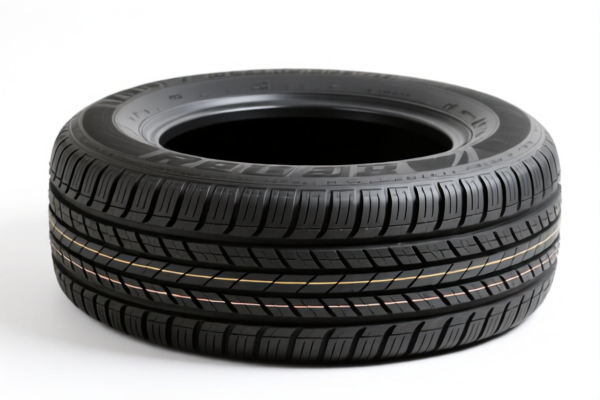
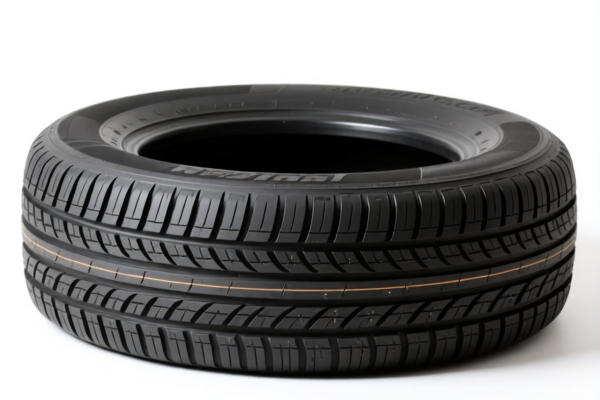
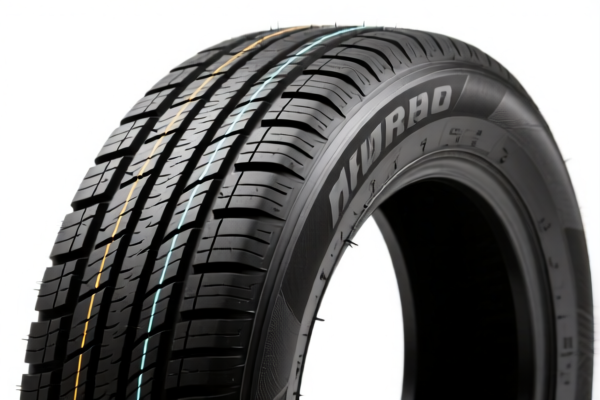
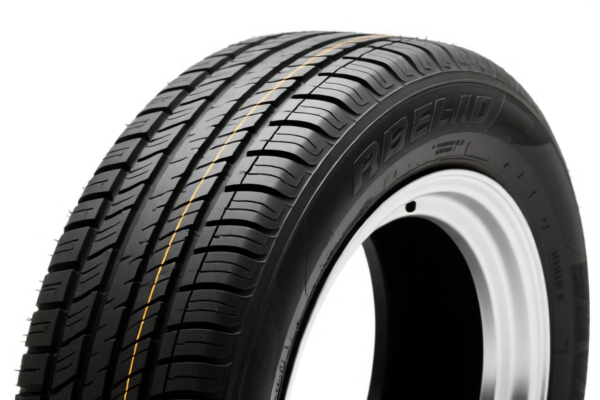
car radial tires 16 17 inch
CN → US| HS Code | Tariff Rate | Origin | Destination | Doc |
|---|---|---|---|---|
| 4011101050 | 39.0% | CN | US | Official Doc |
| 4012114000 | 39.0% | CN | US | Official Doc |
| 4011101060 | 39.0% | CN | US | Official Doc |
| 4011101070 | 39.0% | CN | US | Official Doc |
| 8708704560 | 37.5% | CN | US | Official Doc |
Product Images
AI Analysis
🛞 Car Radial Tires (16-17 Inch) – HS Code & US Customs Clearance Guide
🌐 HS Code Reference & Customs Clearance Guide | 2026 Latest Tariff Analysis | Professional Strategy
📌 One, Product Definition & Classification: What Are "Car Radial Tires"?
Radial tires are the standard tire type for modern passenger vehicles. They are characterized by their cord plies running radially from bead to bead. When imported into the US from China, these goods face significant tariff barriers due to Section 301 and Section 122 actions.
Key Characteristics for Classification: * Application: Passenger Cars (not trucks, buses, or motorcycles). * Construction: Radial (cord plies are laid at 90 degrees to the direction of travel). * Wheel Rim Diameter: Specifically 16–17 inches. * Material: Primarily Rubber, potentially with composite reinforcements.
⚠️ Critical Distinction:
- If the tire is a standard passenger car tire (16-17 inch rim) → Goes to 4011.10.10.x0 series.
- If the tire is a Racing Tire (even if 16-17 inch) → Goes to 4011.10.10.70 or 8708.70.45.60 (if considered a part/rim assembly).
- Note: The provided data does not cover non-radial tires (bias-ply) or tires for other vehicle types.
📦 Two, HS Code Classification Details (Based on Provided Data)
The following table maps the specific product descriptions to their corresponding HS Codes and tax structures from the provided <DATA>.
| HS Code | Product Summary | Key Features | Total Tax Rate |
|---|---|---|---|
| 4011.10.10.50 | Passenger Car Radial Tires | Wheel Rim Diameter: 16-17 inches | 39.0% |
| 4011.10.10.60 | Radial Tires (Subcategory) | Wheel Rim Diameter: 17-18 inches* | 39.0% |
| 4011.10.10.70 | Radial Racing Tires | Wheel Rim Diameter: Includes 18 inches* | 39.0% |
| 8708.70.45.60 | Road Wheels for Racing | Form: Radial Tire; Material: Rubber/Composite | 37.5% |
| 4012.11.40.00 | Radial Tires for Cars | General description; Matches core form/material | 39.0% |
🔍 Important Note on Rim Sizes:
- 4011.10.10.50 explicitly covers 16-17 inch rims.
- 4011.10.10.60 covers 17-18 inch rims.
- If your tires are exactly 16-17 inches, 4011.10.10.50 is the most precise match from the provided data.
- 4012.11.40.00 is a broader category that may apply if the specific sub-codes (50, 60, 70) are not suitable for your exact product configuration.
💰 Three, 2026 Latest Tariff Rate Breakdown (Detailed)
✅ Applicable Country: United States (US)
✅ Origin: China (CN)
✅ Effective Time: Rates apply as per current trade regulations (Section 301 + Section 122)
🎯 1. Standard Passenger Car Radial Tires (e.g., HS Code: 4011.10.10.50, 4011.10.10.60, 4012.11.40.00)
| Item | Content |
|---|---|
| Basic Tariff | 4.0% (Ad Valorem) |
| Section 301 Tariff | 25.0% (Additional Tariff) |
| Section 122 Tariff | 10.0% (Additional Tariff) |
| Total Tax Rate | 39.0% |
| Tax Calculation | CIF Value × 39.0% |
| De Minimis Exemption | ❌ Not Applicable |
| Legal Basis Path | USITC:4011.10.10.50 → Section 301: +25% → Section 122: +10% |
📌 Explanation:
- The 4.0% is the standard Most Favored Nation (MFN) duty for radial tires.
- The 25.0% is the Section 301 tariff imposed on Chinese goods under the US Trade Act.
- The 10.0% is the Section 122 tariff (under the International Emergency Economic Powers Act or similar emergency provisions).
- Total: 39.0%. This is a very high effective duty rate. Cost must be factored into pricing.
🎯 2. Racing Tires & Road Wheels (e.g., HS Code: 4011.10.10.70, 8708.70.45.60)
| Item | Content |
|---|---|
| Basic Tariff | 4.0% (for 4011.10.10.70) or 2.5% (for 8708.70.45.60) |
| Section 301 Tariff | 25.0% |
| Section 122 Tariff | 10.0% |
| Total Tax Rate | 39.0% (for 4011.10.10.70) or 37.5% (for 8708.70.45.60) |
| Tax Calculation | CIF Value × Rate |
| De Minimis Exemption | ❌ Not Applicable |
| Legal Basis Path | USITC:8708.70.45.60 → Section 301: +25% → Section 122: +10% |
📌 Note:
- 8708.70.45.60 has a lower base rate (2.5%) resulting in a 37.5% total. This code is for "Road Wheels" used in racing, which may be classified differently than standard tires. Ensure your product fits the "Road Wheel/Racing Part" definition.
- 4011.10.10.70 is for "Radial Racing Tires" and carries the same 39.0% total rate as standard tires.
🛠️ Four, Customs Clearance Practical Advice
✅ 1. Documentation Checklist (Must-Have)
| Document | Required? | Notes |
|---|---|---|
| ✅ Commercial Invoice | ✔️ | Must clearly state: "Radial Tires for Passenger Cars", Rim Size (e.g., 16-17"), Origin (China). |
| ✅ Packing List | ✔️ | Detail quantity, weight, and dimensions per box/pallet. |
| ✅ Bill of Lading/Air Waybill | ✔️ | Standard shipping document. |
| ✅ Origin Certificate | ✔️ | Proves Chinese origin (triggers 39% tax). |
| ✅ Product Specifications | ✔️ | Confirm radial construction and rim diameter. |
| ✅ Section 301 Exclusion Proof | ❌ | Unless you have a specific exclusion, assume 39% applies. |
✅ 2. Classification Strategy (Key Tips)
🔥 "Be Specific: Rim Size is Key!"
| Scenario | Recommended HS Code | Why? |
|---|---|---|
| Standard Passenger Car Tires (16-17") | 4011.10.10.50 |
Most accurate match for "Passenger Car Radial" with 16-17" rims. |
| Racing Tires (16-17") | 4011.10.10.70 |
Classified as "Racing Tires" under radial tires. Same tax rate. |
| Racing Wheels/Assemblies | 8708.70.45.60 |
If sold as "Road Wheels" for racing, may qualify for 37.5% rate. |
| General Radial Tires | 4012.11.40.00 |
Fallback if specific sub-codes don't fit. Same 39% rate. |
⚠️ Warning:
- Do not classify racing tires as standard tires if they are specifically designed for competition, as this may lead to misdeclaration penalties.
- Ensure the rim diameter is explicitly stated on the invoice. Customs may reclassify if ambiguous.
✅ 3. Special Cases
| Case | Advice |
|---|---|
| OEM Tires for Car Manufacturers | Still subject to 39%. No automatic exemption. |
| Tires with Different Rim Sizes | Use 4011.10.10.50 for 16-17", 4011.10.10.60 for 17-18". Do not mix codes on one invoice line if sizes differ. |
| Composite Material Tires | If 8708.70.45.60 applies (Road Wheels), ensure documentation highlights "Racing Application" to justify classification. |
🌍 Five, Global Market Comparison (2026)
| Market | HS Code | Tariff Rate | Notes |
|---|---|---|---|
| 🇺🇸 USA | 4011.10.10.50 |
39.0% | High tariffs due to Section 301 + 122. |
| 🇨🇳 China | 4011.10.10.50 |
~5-10% | Lower import duties from non-China origins. |
| 🇪🇺 EU | 4011.20 |
~4% | No Section 301/122 equivalent. |
| 🇬🇧 UK | 4011.20 |
~4% | Post-Brexit trade policy. |
📌 Conclusion:
- The US market is significantly more expensive for Chinese tires due to layered tariffs.
- Cost planning must include 39% duty on top of product and shipping costs.
📌 Six, Common Mistakes & Pitfalls
❌ Mistake 1: Misclassifying Racing Tires as Standard Tires
👉 Consequence: While tax rate is similar (39%), misdeclaration can lead to audits or penalties if product description doesn't match HS code intent.
❌ Mistake 2: Ignoring Rim Diameter
👉 Consequence: Customs may reclassify to a different sub-code, causing delays or disputes.
❌ Mistake 3: Assuming De Minimis Exemption Applies
👉 Consequence: Tires do not qualify for de minimis (Section 321) relief from China. Expect full duty payment.
❌ Mistake 4: Not Specifying "Radial" Construction
👉 Consequence: If misclassified as "Bias Ply," the HS code changes, potentially affecting duty rates and regulatory requirements.
✅ Correct Practice:
"Radial Tires for Passenger Cars, 205/55R16, Made in China, Section 301 Applicable"
🎯 Seven, Conclusion: Professional Clearance for High-Tariff Goods
🎯 Remember:
🔹 "Radial Tires from China = 39% Duty."
🔹 "Rim Size Matters: 16-17" = 4011.10.10.50."
🔹 "No De Minimis: Pay Full Duty."
📌 Pro Tip:
If you are importing tires from China to the US, calculate landed cost carefully. A 39% duty can erase margins. Consider:
1. Pre-shipment Cost Analysis: Include all duties in your pricing.
2. Supplier Negotiation: Share some of the duty burden with suppliers.
3. Supply Chain Diversification: Consider sourcing from non-China countries (e.g., Vietnam, Thailand) if tariffs remain high.
📣 Immediate Action:
📞 Contact a Licensed Customs Broker to verify HS Code classification for your specific tire model.
📄 Prepare Detailed Product Descriptions including rim size, construction type, and intended use.
🚀 Plan for 39% Duty in your financial projections.
✨ Accurate Classification Saves Money!
💼 Every percentage point of duty affects your bottom line.
Customer Reviews
About HS Code Classification
The Harmonized System (HS) is an internationally standardized nomenclature developed by the World Customs Organization (WCO) to classify traded products. Over 200 countries use the HS system as the basis for customs tariffs, trade statistics, and import/export regulations.
Each HS code follows a hierarchical structure:
- Chapter (2 digits) — Broad category of goods (e.g., Chapter 84: Machinery and Mechanical Appliances)
- Heading (4 digits) — More specific grouping within the chapter
- Subheading (6 digits) — Internationally standardized breakdown, used by all WCO member countries
- National subdivisions (8-10 digits) — Country-specific extensions for further classification, such as US HTSUS 10-digit codes
Correct HS code classification is essential for smooth customs clearance, accurate duty payment, and compliance with trade regulations. Misclassification can lead to customs delays, overpayment of duties, or penalties.
When importing from CN to US, the applicable tariff rates may include:
- Most-Favored-Nation (MFN) rate — The standard duty rate applied to WTO members
- General rate — Applied to countries without trade agreements
- Trade remedy duties — Additional tariffs such as Section 301 (anti-dumping), Section 232 (national security), or countervailing duties
The information provided on this page is for reference purposes only. For official classification, please consult with your local customs authority or a licensed customs broker.