car trash bin
CN → US| HS Code | Tariff Rate | Origin | Destination | Doc |
|---|---|---|---|---|
| 4202999000 | 55.0% | CN | US | Official Doc |
| 7326908688 | 87.9% | CN | US | Official Doc |
| 3926901000 | 20.9% | CN | US | Official Doc |
| 3926909989 | 22.8% | CN | US | Official Doc |
Product Images
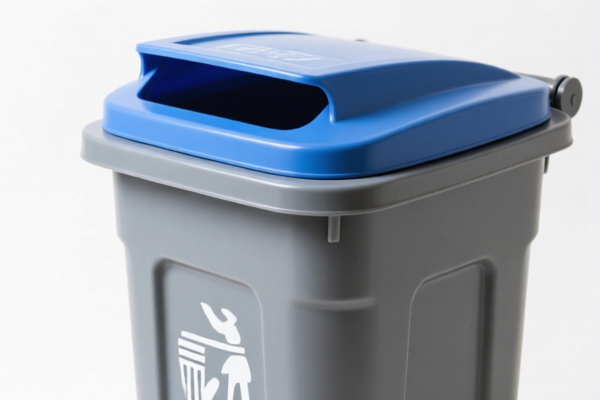
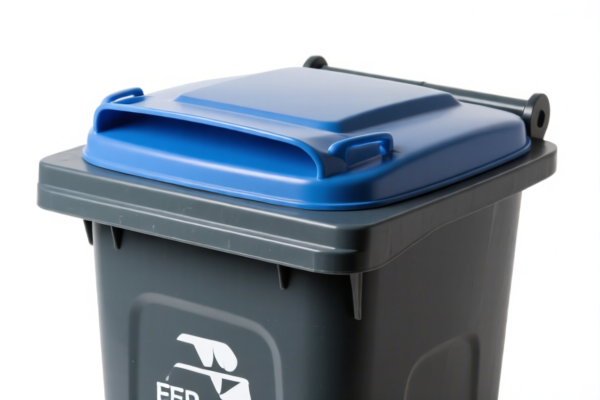
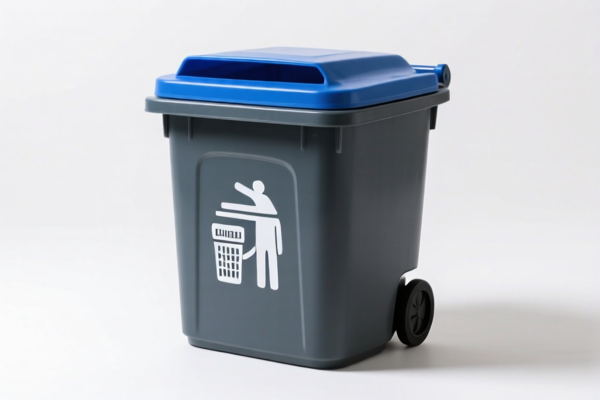
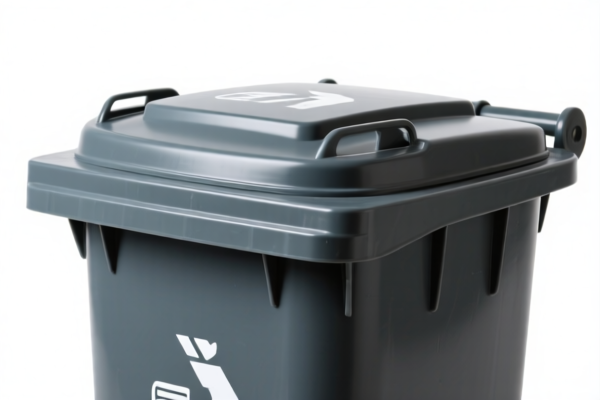
AI Analysis
🚗 Car Trash Bin (车载垃圾桶)
🌐 HS Code Reference & Clearance Guide | 2026 Latest Tariff Analysis | Professional Customs Strategy
📌 I. Product Definition & Classification: What Exactly is a "Car Trash Bin"?
A Car Trash Bin is a compact, portable container designed for waste disposal within a vehicle. In international trade, its classification depends heavily on material composition and specific design features. Since the input provides only the generic name "Car Trash Bin," we must infer attributes based on common market products (typically plastic or metal) to determine the correct HS Code.
⚠️ Key Classification Logic:
- If made of Plastic → Likely falls under Chapter 39 (Plastics and articles thereof).
- If made of Metal (Steel/Iron) → Likely falls under Chapter 73 (Articles of iron or steel).
- If Material is Unknown/Mixed → May fall under Chapter 42 (Articles of leather/plastics/textiles) or Chapter 39 (Other plastics articles).
📦 II. HS Code Classification Details (2026 Latest Tariff Authority Comparison)
| HS Code | Product Description | Material Inference | Applicability & Notes |
|---|---|---|---|
3926.90.10.00 |
Buckets and pails, of plastics | Plastic | ✅ Best Match for Common Plastic Bins: Specifically covers plastic buckets/pails. No material conflict. Low tax burden. |
3926.90.99.89 |
Other articles of plastics and articles of other materials of heading 39.01 to 39.14 | Plastic | ✅ Alternative Plastic Match: For plastic bins that don't fit the strict "bucket/pail" definition but are still plastic articles. |
4202.99.90.00 |
Containers and similar articles of all kinds, for the carriage or packing of goods; toiletry bags, briefcases, etc., not specified | Plastic/Textile | ⚠️ Broad Category: Used if the item is considered a "container" but not a "bucket." Often used for mixed-material or fabric-covered bins. |
7326.90.86.88 |
Other articles of iron or steel, not elsewhere specified or included | Metal (Steel/Iron) | ✅ Metal Match: For metal car trash bins. High tax due to steel/aluminum surcharges. |
🔍 Critical Note:
- Plastic bins (3926.xx) are significantly cheaper to import due to lower base tariffs.
- Metal bins (7326.xx) incur high additional tariffs.
- If the material is not clearly specified, customs may default to the most common material (plastic), but misclassification can lead to penalties.
💰 III. 2026 Latest Tariff Rate Breakdown (Including Surcharges & Policy Add-ons)
✅ Applicable Country: United States (US)
✅ Country of Origin: China (CN)
✅ Effective Date: November 10, 2025 onwards
🎯 1. 3926.90.10.00 – Buckets and Pails, of Plastics
| Item | Details |
|---|---|
| Base Tariff | 3.4% (ad valorem) |
| Section 301 Surcharge | +7.5% |
| IEEPA Surcharge (122 Clause) | +10% |
| Total Tariff Rate | 20.9% |
| Tax Calculation | CIF Value × 20.9% |
| De Minimis Exemption | ❌ Not Eligible |
| Legal Basis Path | IEEPA:9903.01.24 → USITC:3926.90.10.00 → FOOTNOTE:Section 301 |
📌 Explanation:
- This is the most cost-effective option if the bin is plastic.
- The total duty is 20.9%, which is relatively moderate compared to metal products.
🎯 2. 3926.90.99.89 – Other Articles of Plastics
| Item | Details |
|---|---|
| Base Tariff | 5.3% (ad valorem) |
| Section 301 Surcharge | +7.5% |
| IEEPA Surcharge (122 Clause) | +10% |
| Total Tariff Rate | 22.8% |
| Tax Calculation | CIF Value × 22.8% |
| De Minimis Exemption | ❌ Not Eligible |
| Legal Basis Path | IEEPA:9903.01.24 → USITC:3926.90.99.89 → FOOTNOTE:Section 301 |
📌 Note:
- Slightly higher than3926.90.10.00due to a higher base tariff (5.3% vs 3.4%).
- Suitable for plastic bins that do not meet the strict "bucket/pail" definition.
🎯 3. 4202.99.90.00 – Containers of All Kinds (Plastic/Textile)
| Item | Details |
|---|---|
| Base Tariff | 20.0% (ad valorem) |
| Section 301 Surcharge | +25.0% |
| IEEPA Surcharge (122 Clause) | +10% |
| Total Tariff Rate | 55.0% |
| Tax Calculation | CIF Value × 55.0% |
| De Minimis Exemption | ❌ Not Eligible |
| Legal Basis Path | IEEPA:9903.01.24 → USITC:4202.99.90.00 → FOOTNOTE:Section 301 |
📌 Warning:
- This code carries a very high tariff (55%).
- Only use if the product is made of textiles or mixed materials that cannot be classified under Chapter 39.
- Avoid if possible to reduce costs.
🎯 4. 7326.90.86.88 – Other Articles of Iron or Steel
| Item | Details |
|---|---|
| Base Tariff | 2.9% (ad valorem) |
| Section 301 Surcharge | +25.0% |
| IEEPA Surcharge (122 Clause) | +10% |
| Steel/Aluminum Surcharge | +50.0% |
| Total Tariff Rate | 87.9% |
| Tax Calculation | CIF Value × 87.9% |
| De Minimis Exemption | ❌ Not Eligible |
| Legal Basis Path | IEEPA:9903.01.24 → USITC:7326.90.86.88 → FOOTNOTE:Steel/Aluminum Surcharge |
📌 Critical Warning:
- This is the most expensive option due to the additional 50% steel/aluminum tariff.
- Metal car trash bins are not recommended for US import from China due to prohibitive costs.
🛠️ IV. Customs Clearance Practical Advice (Field Guide to Avoid Pitfalls)
✅ 1. Required Documentation Checklist
| Document | Must Provide | Notes |
|---|---|---|
| ✅ Product Specification Sheet | ✔️ | Must explicitly state Material (e.g., "100% PP Plastic") and Dimensions. |
| ✅ Product Photos | ✔️ | Clear images showing the bin, including any logos, vents, or metal parts. |
| ✅ Commercial Invoice | ✔️ | Description must be precise: "Plastic Car Trash Bin" or "Metal Car Trash Bin." Avoid vague terms like "Container." |
| ✅ Packing List | ✔️ | Detail the number of units, gross weight, and net weight. |
| ✅ Certificate of Origin (CO) | ✔️ | Required for origin determination. |
✅ 2. Declaration Tips (Key Mantras)
🔥 "Material First, Code Second; Plastic Wins, Metal Loses!"
| Scenario | Correct Declaration | Incorrect Action |
|---|---|---|
| Plastic Bin | 3926.90.10.00 (20.9%) |
Misdeclaring as Metal → 87.9% penalty |
| Metal Bin | 7326.90.86.88 (87.9%) |
Misdeclaring as Plastic → 20.9% (but high risk of penalty) |
| Mixed Material | 4202.99.90.00 (55.0%) |
Guessing material → Risk of audit |
| Vague Name | "Car Trash Bin" | "Plastic Container" without specs → Delay |
✅ 3. Special Situations
| Situation | Handling Advice |
|---|---|
| Plastic with Metal Frame | Declare as Plastic (3926.xx) if plastic is the essential character. Provide proof. |
| Textile-Covered Bin | Declare as 4202.99.90.00. Expect 55% tax. |
| Sample for Testing | Still subject to duties. No de minimis exemption for China origin. |
| OEM Custom Design | Provide design files to prove material composition. |
🌍 V. Global Market Clearance Comparison (2026 Latest)
| Country/Region | Recommended HS Code | Tariff (China Origin) | Certification | Notes |
|---|---|---|---|---|
| 🇺🇸 USA | 3926.90.10.00 |
20.9% (Plastic) | None | 87.9% for Metal |
| 🇨🇳 China | 3926.90.10.00 |
3.4% + 0% (Section 301) | None | Lower burden |
| 🇪🇺 EU | 3926.90.99 |
4.5% + 0% | CE + REACH | No Section 301 |
| 🇦🇺 Australia | 3926.90.10.00 |
5% + 0% | None | Moderate duty |
| 🇯🇵 Japan | 3926.90.10.00 |
5% + 0% | PSE (if electronic) | No Section 301 |
📌 Conclusion:
- USA has the highest total duty burden due to Section 301 and IEEPA tariffs.
- Plastic bins are the only viable option for profitable export to the US from China.
- Metal bins should be avoided for US market due to 87.9% total duty.
📌 VI. Common Mistakes & Pitfalls (Lessons Learned)
❌ Mistake 1: Declaring a Metal Bin as Plastic
👉 Consequence: Customs inspection reveals metal content → Refund of difference + Penalty + Possible Fraud Charges.
❌ Mistake 2: Using Vague Description ("Container")
👉 Consequence: Customs assigns 4202.99.90.00 → 55% Tax instead of 20.9%.
❌ Mistake 3: Ignoring Material Composition
👉 Consequence: Mixed material bin classified as Plastic → Underpayment of Duty.
❌ Mistake 4: Assuming De Minimis Exemption
👉 Consequence: Shipments under $800 from China are NOT exempt due to Section 301 and IEEPA.
✅ Correct Practice:
"Plastic Car Trash Bin, PP Material, 1L Capacity, Black Color, Model XYZ"
🎯 VII. Conclusion: Professional Declaration, Cost Savings, Efficient Clearance!
🎯 Remember the Mantra:
🔹 "Plastic Wins, Metal Loses; Code 3926 is King, 4202 is Expensive, 7326 is Forbidden!"
🔹 "HS Code determines cost; 20.9% vs 87.9% is a 67% difference!"
📌 Tips:
- If your car trash bin is made of recycled plastic, ensure it meets US EPA standards.
- Consider shifting production to Southeast Asia (Vietnam, Thailand) to avoid Section 301 tariffs (0% duty for plastics).
- Request an Advance Ruling from US Customs if unsure about material classification.
📣 Immediate Action:
📞 Contact a licensed customs broker + Provide product samples + Apply for HS Code Advance Ruling
🚀 Let your car trash bins clear smoothly, save costs, and boost profits!
✨ Professional Customs Clearance Starts with Accurate Classification!
💼 Every Dollar of Duty Counts!
Customer Reviews
About HS Code Classification
The Harmonized System (HS) is an internationally standardized nomenclature developed by the World Customs Organization (WCO) to classify traded products. Over 200 countries use the HS system as the basis for customs tariffs, trade statistics, and import/export regulations.
Each HS code follows a hierarchical structure:
- Chapter (2 digits) — Broad category of goods (e.g., Chapter 84: Machinery and Mechanical Appliances)
- Heading (4 digits) — More specific grouping within the chapter
- Subheading (6 digits) — Internationally standardized breakdown, used by all WCO member countries
- National subdivisions (8-10 digits) — Country-specific extensions for further classification, such as US HTSUS 10-digit codes
Correct HS code classification is essential for smooth customs clearance, accurate duty payment, and compliance with trade regulations. Misclassification can lead to customs delays, overpayment of duties, or penalties.
When importing from CN to US, the applicable tariff rates may include:
- Most-Favored-Nation (MFN) rate — The standard duty rate applied to WTO members
- General rate — Applied to countries without trade agreements
- Trade remedy duties — Additional tariffs such as Section 301 (anti-dumping), Section 232 (national security), or countervailing duties
The information provided on this page is for reference purposes only. For official classification, please consult with your local customs authority or a licensed customs broker.