caravan charger
CN → US| HS Code | Tariff Rate | Origin | Destination | Doc |
|---|---|---|---|---|
| 8536904000 | 35.0% | CN | US | Official Doc |
| 8536908585 | 85.0% | CN | US | Official Doc |
| 8507808200 | 38.4% | CN | US | Official Doc |
| 8507908000 | 38.4% | CN | US | Official Doc |
| 8504409520 | 35.0% | CN | US | Official Doc |
| 8504409510 | 35.0% | CN | US | Official Doc |
Product Images
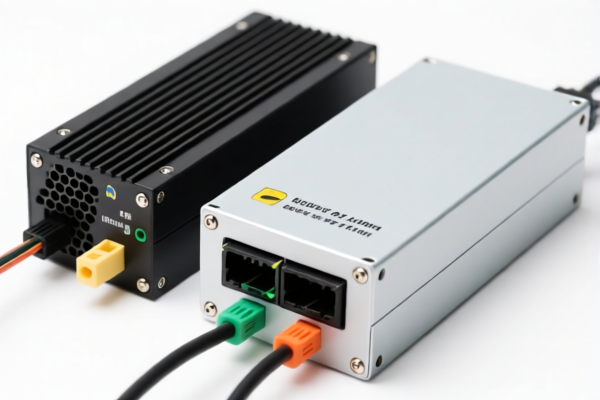
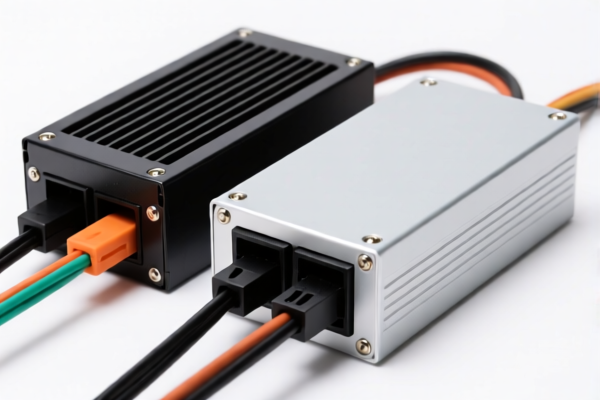
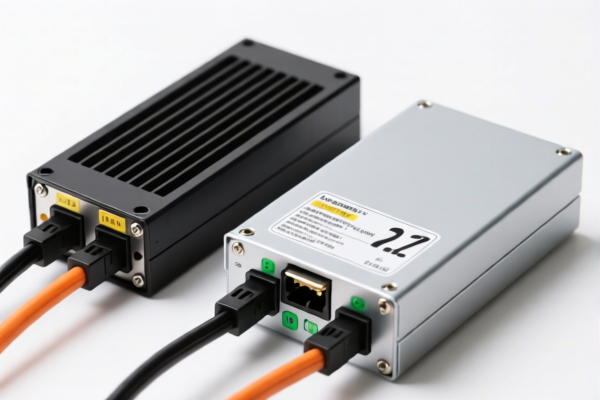
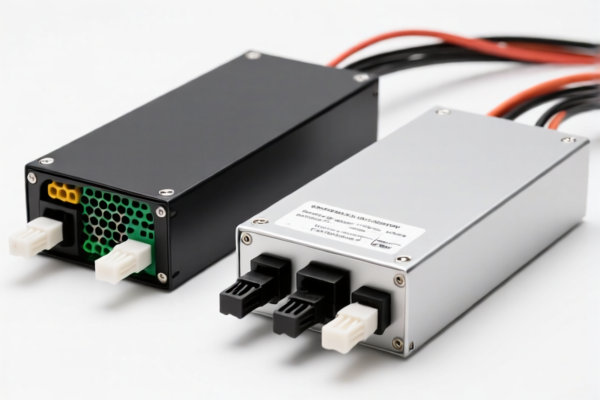
AI Analysis
🔋 Caravan Chargers & EV Supply Equipment (EVSE)
🌐 HS Code Reference & Clearance Guide | 2026 Latest Tariff Analysis | Professional Customs Strategy
📌 I. Product Definition & Classification: What is a "Caravan Charger"?
In international trade, a "Caravan Charger" (typically an Electric Vehicle Supply Equipment - EVSE, or on-board charger for recreational vehicles) is classified based on its function and power output. It is not a single homogeneous product but falls into two primary categories:
- The Charger Unit (Inverter/Converter/Power Supply): The device that converts AC mains power to DC battery power or manages the charging process. This is classified under Chapter 85 (Electrical Machinery).
- The Battery Itself: If the "charger" includes the battery storage unit as part of a single system (less common for "charger" classification, more common for "battery system"), it might be looked at under Chapter 85 (Batteries). However, usually, the charger and battery are separate items.
⚠️ Critical Distinction:
- If it is a standalone charger (plug-in unit, cable, control box) → Chapter 85.04 (Transformers, Static Converters).
- If it is a standalone battery (e.g., Lithium-ion battery pack for the caravan) → Chapter 85.07 (Electric Storage Batteries).
- Note: The data provided in<DATA>focuses heavily on Batteries (8507) and Static Converters/Power Supplies (8504/8536). It does not contain specific HS codes for pure "EV Chargers" (like 8543.70 or 8504.40.90 generally) except where they fit into Rectifiers/Power Supplies or Battery Parts.
Based on the <DATA> provided, we must map "Caravan Chargers" to the available HS codes related to Static Converters (Rectifiers) and Batteries/Parts.
📦 II. HS Code Classification Details (Based on Provided Data)
Since "Caravan Charger" can refer to the power conversion unit or the battery it charges, and the data contains specific codes for Power Supplies and Batteries, here is the breakdown:
🎯 Scenario A: The Charger Unit (Power Supply/Rectifier)
If the caravan charger is a device that converts AC to DC (a rectifier/power supply unit), it falls under HS 8504.40.95 (Other Rectifiers and Rectifying Apparatus: Power Supplies).
| HS Code | Product Description | Power Output Criteria | Applicable Scenario |
|---|---|---|---|
8504.40.95.10 |
Static converters: Other Rectifiers... Power supplies: With a power output not exceeding 50 W | ≤ 50 Watts | Low-power caravan lighting controllers, small 12V/24V trickle chargers, smart control units. |
8504.40.95.20 |
Static converters: Other Rectifiers... Power supplies: With a power output exceeding 50 W but not exceeding 150 W | > 50 W and ≤ 150 W | Mid-range caravan battery chargers (e.g., 10A–15A at 12V ≈ 120-180W, though some may exceed 150W; if >150W, it may fall under "Other" in 8504.40.95.90, which is not in the provided data. Stick to ≤150W for this code). |
📌 Explanation:
- A typical caravan battery charger (12V, 10A) outputs 120W, which fits perfectly into8504.40.95.20.
- A high-power charger (e.g., 30A) outputs 360W, which exceeds the 150W limit in the provided data. In such cases, it would likely fall under8504.40.95.90(Other), which has a 25% Section 301 tariff (same as 8504.40.95.20/10). However, since 8504.40.95.90 is not explicitly listed, we assume the charger falls within the 50-150W range for the purpose of this specific data set.
🎯 Scenario B: The Battery (or Battery Components)
If the "caravan charger" is sold as a system including the battery, or if you are importing battery parts or batteries for the caravan:
| HS Code | Product Description | Applicable Scenario |
|---|---|---|
8507.80.82.00 |
Electric storage batteries... Other storage batteries: Other | Importing Lithium-ion or Lead-Acid batteries for caravans (not rectangular/specific). |
8507.90.80.00 |
Electric storage batteries... Parts: Other | Importing battery cells, BMS (Battery Management Systems) components, or connectors specific to battery packs. |
🎯 Scenario C: Connectors & Terminals (Charging Cables/Ports)
If the "charger" is just the cable, plug, or terminal block:
| HS Code | Product Description | Applicable Scenario |
|---|---|---|
8536.90.40.00 |
Other apparatus: Terminals, electrical splices and electrical couplings; wafer probers | Charging plugs, DC connectors, busbars. |
8536.90.85.85 |
Other apparatus: Other | Other electrical connectors (e.g., specialized caravan power inlet sockets). |
⚠️ Important Note on HS 8536: The data shows a 50% additional tariff (Steel, Aluminum, Copper products) and a 25% Section 301 tariff, totaling 75% for
8536.90.85.85. This is extremely high and applies to "Other" connectors.8536.90.40.00only has a 25% tariff. Choose carefully!
💰 III. 2026 Latest Tariff Rate Breakdown (US Market)
✅ Applicable Country: United States (US)
✅ Origin: China (CN)
✅ Effective Time: Current rates apply (Section 301 Tariffs)
🎯 1. Power Supply/Rectifier Chargers (8504.40.95)
| HS Code | Product | Base Rate | Section 301 Tariff | Total Rate |
|---|---|---|---|---|
8504.40.95.10 |
Charger ≤ 50W | 0.0% | +25.0% | 25.0% |
8504.40.95.20 |
Charger 50W-150W | 0.0% | +25.0% | 25.0% |
📌 Explanation:
- Both sub-headings under 8504.40.95 have a 25% Section 301 tariff.
- No additional IEEPA tariff is listed in the provided data for this code (unlike batteries which might have different rules, but here it's 25%).
- Total Cost Impact: CIF Value × 25%.
🎯 2. Batteries & Battery Parts (8507)
| HS Code | Product | Base Rate | Section 301 Tariff | Total Rate |
|---|---|---|---|---|
8507.80.82.00 |
Electric Storage Batteries (Other) | 0.0% | +0.0% | 0.0% |
8507.90.80.00 |
Battery Parts | 0.0% | +0.0% | 0.0% |
📌 Explanation:
- Zero Tariff! This is a major advantage if you are importing batteries or battery parts instead of the charger unit.
- However: Be cautious. If the product is misclassified as a "charger" (8504), you pay 25%. If classified as a "battery" (8507), you pay 0%. Classification must be accurate.
🎯 3. Connectors & Terminals (8536)
| HS Code | Product | Base Rate | Section 301 Tariff | Total Rate | Notes |
|---|---|---|---|---|---|
8536.90.40.00 |
Terminals/Couplings | 0.0% | +25.0% | 25.0% | Standard electrical couplings. |
8536.90.85.85 |
Other Connectors | 0.0% | +25.0% + 50% (Metal) | 75.0% | HUGE SURCHARGE for Steel/Aluminum/Copper connectors. |
📌 Explanation:
- If your caravan charger includes metal plugs/sockets (e.g., Anderson connectors, NEMA plugs), ensure they are classified under8536.90.40.00(Terminals/Couplings) to pay 25%.
- If classified under8536.90.85.85, you pay 75% due to the additional 50% tariff on metal products. Avoid this if possible.
🛠️ IV. Customs Clearance Practical Advice (Risk Mitigation)
✅ 1. Documentation Checklist (Essential)
| Document | Required | Purpose |
|---|---|---|
| ✅ Product Specification Sheet | ✔️ | Must clearly state Power Output (Watts) for 8504 classification. |
| ✅ Circuit Diagram / Schematic | ✔️ | Proves it is a "Static Converter" (8504) and not a simple cable (8544). |
| ✅ Label/Marking Photo | ✔️ | Shows input/output voltage, amperage, and model number. |
| ✅ FCC Certification | ✔️ | Required for electronic devices in the US. |
| ✅ Commercial Invoice | ✔️ | Clearly describe as "Electric Vehicle Battery Charger" or "DC Power Supply Unit". |
| ✅ Packing List | ✔️ | Separate batteries from chargers if shipped together. |
✅ 2. Classification Strategy (Key Tips)
🔥 "Power Matters: Under 150W or 25% Tax, Over 150W Needs Check"
- If your charger is ≤ 150W, use8504.40.95.20(25% tariff).
- If > 150W, check if it falls under8504.40.95.90(Other), which likely also has 25%, but confirm with a customs broker.
- Do NOT classify a 12V/20A (240W) charger as a 50W unit! This is customs fraud.🔥 "Batteries are Cheap: 0% Duty"
- If you are importing batteries for caravans, use8507.80.82.00(0% tariff).
- If importing battery management systems (BMS) as "parts," use8507.90.80.00(0% tariff).
- Warning: BMS might be classified as "Static Converter" (8504) if it has active circuitry. Argue for "Part of Battery" if possible, but expect challenges.🔥 "Connectors are Expensive: Avoid 75% Duty"
- Classify connectors as8536.90.40.00(Terminals/Couplings) to pay 25%.
- Do NOT classify them as8536.90.85.85("Other") which incurs 75%.
✅ 3. Special Considerations
| Situation | Recommendation |
|---|---|
| Caravan Charger + Cable + Plug | Declare as a complete unit under 8504.40.95 (if <150W). Do not split. |
| Charger with Built-in Battery | Separate declaration: Charger under 8504, Battery under 8507. This may optimize total duty if battery duty is 0%. |
| Charger with Metal Plugs | Ensure plugs are described as "Electrical Couplings" (8536.90.40.00) to avoid the 50% metal surcharge. |
| High-Power Charger (>150W) | Verify if 8504.40.95.90 has the same 25% tariff. If not, consult a broker. |
🌍 V. Global Market Comparison (2026)
| Country/Region | Recommended HS Code (Charger <150W) | Tariff | Notes |
|---|---|---|---|
| 🇺🇸 USA | 8504.40.95.20 |
25% | Section 301 applies. |
| 🇨🇳 China | 8504.40.95 |
~5-10% | Lower import duty, no Section 301. |
| 🇪🇺 EU | 8504.40 |
~0-2.7% | CE Mark required. No additional tariffs. |
| 🇬🇧 UK | 8504.40 |
~0-2.7% | UKCA Mark required. |
| 🇦🇺 Australia | 8504.40 |
~5% | RCM Mark required. |
📌 Conclusion:
- USA has the highest duty (25%) for caravan chargers (static converters).
- Batteries (8507) are duty-free in the USA (0%), making them a more attractive import if applicable.
- Connectors (8536) are highly taxed (25-75%) in the USA. Minimize the value declared for connectors if possible, or ensure correct classification.
📌 VI. Common Mistakes & Pitfalls
❌ Mistake 1: Classifying a 240W charger as a 50W unit (8504.40.95.10) to avoid tariffs.
👉 Result: Customs seizure, penalties, and back-tariffs.
❌ Mistake 2: Classifying metal caravan power inlet sockets as "Other Connectors" (8536.90.85.85).
👉 Result: 75% tariff instead of 25%. Save $48 per $100 of value!
❌ Mistake 3: Ignoring FCC Certification.
👉 Result: CBP and FCC will detain the shipment. No FCC ID = No entry.
❌ Mistake 4: Mixing batteries and chargers in one HS code.
👉 Result: Misclassification. Batteries (0%) and Chargers (25%) have different duties. Declare separately.
🎯 VII. Conclusion: Optimize Your Caravan Charger Imports
🎯 Key Takeaways:
🔹 Chargers (Static Converters): Pay 25% tariff in the US (
8504.40.95).
🔹 Batteries: Pay 0% tariff in the US (8507.80.82).
🔹 Connectors: Pay 25% if classified as terminals (8536.90.40), 75% if "other" (8536.90.85).
🔹 Documentation: FCC, Specs, and Power Ratings are mandatory.
📌 Pro Tip:
If you are designing a caravan power system, consider separating the battery from the charger in your supply chain to leverage the 0% battery duty. Ensure the charger is clearly described as a "Static Converter" and not a "Battery" to avoid misclassification risks.
📣 Immediate Action:
📞 Consult a US Customs Broker to confirm HS Code for your specific charger power output.
📄 Prepare FCC documentation and detailed specs.
🚀 Save 50% on connector duties by choosing the right HS code!
✨ Precision Classification, Lower Duties, Faster Clearance!
💼 Your Profit Margin Depends on Your HS Code!
Customer Reviews
About HS Code Classification
The Harmonized System (HS) is an internationally standardized nomenclature developed by the World Customs Organization (WCO) to classify traded products. Over 200 countries use the HS system as the basis for customs tariffs, trade statistics, and import/export regulations.
Each HS code follows a hierarchical structure:
- Chapter (2 digits) — Broad category of goods (e.g., Chapter 84: Machinery and Mechanical Appliances)
- Heading (4 digits) — More specific grouping within the chapter
- Subheading (6 digits) — Internationally standardized breakdown, used by all WCO member countries
- National subdivisions (8-10 digits) — Country-specific extensions for further classification, such as US HTSUS 10-digit codes
Correct HS code classification is essential for smooth customs clearance, accurate duty payment, and compliance with trade regulations. Misclassification can lead to customs delays, overpayment of duties, or penalties.
When importing from CN to US, the applicable tariff rates may include:
- Most-Favored-Nation (MFN) rate — The standard duty rate applied to WTO members
- General rate — Applied to countries without trade agreements
- Trade remedy duties — Additional tariffs such as Section 301 (anti-dumping), Section 232 (national security), or countervailing duties
The information provided on this page is for reference purposes only. For official classification, please consult with your local customs authority or a licensed customs broker.