carbon dioxide fire extinguisher refill
CN → US| HS Code | Tariff Rate | Origin | Destination | Doc |
|---|---|---|---|---|
| 2811210000 | 38.7% | CN | US | Official Doc |
| 2811196190 | 39.2% | CN | US | Official Doc |
| 3813001000 | 35.0% | CN | US | Official Doc |
| 3813005000 | 38.7% | CN | US | Official Doc |
Product Images
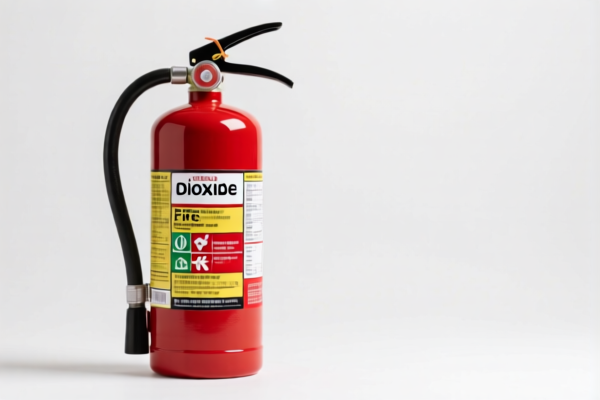
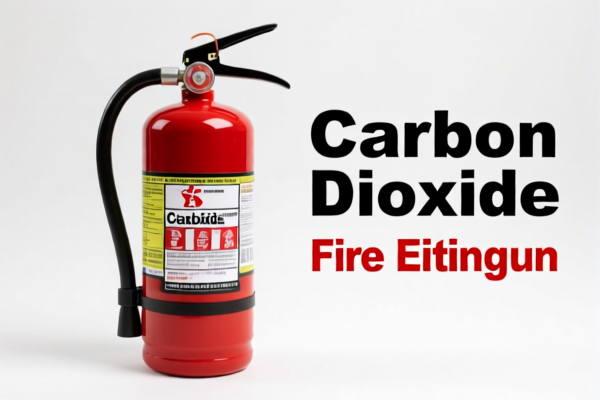

AI Analysis
🔥 Carbon Dioxide (CO2) Fire Extinguisher Refill
🌐 HS Code Reference & Customs Clearance Guide | 2026 Latest Tariff Full Analysis | Professional通关 Strategy
📌 I. Product Definition and Classification: Do You Really Understand "CO2 Fire Extinguisher Refill"?
Carbon Dioxide Fire Extinguisher Refill refers to the bulk supply of liquid or compressed gaseous CO2 used to recharge fire extinguishing units. In international trade, it is classified based on its chemical nature and intended use. The core ambiguity lies in whether it is declared as a pure chemical substance (Chapter 28) or a prepared firefighting agent (Chapter 38).
Pure Chemical Substance (CO2 Gas/Liquid):
Defined as an inorganic non-metallic oxide. If the product is sold purely as a chemical raw material without additional proprietary formulations specifically for firefighting (though CO2 itself is the extinguishing agent), it may fall under chemical headings.
Prepared Firefighting Agent:
Defined as a product consisting of CO2, potentially mixed with other components or packaged specifically for direct use in extinguishers. If the primary function and labeling clearly indicate it is a "Fire Extinguishing Agent," it falls under Chapter 38.
⚠️ Key Distinction Point:
- If the product is bulk CO2 primarily used as a chemical feedstock but used for refill → Consider Chapter 28.
- If the product is packaged specifically for fire safety, labeled as "Extinguishing Agent," or contains proprietary additives → Consider Chapter 38.
- Customs Reality: Most CO2 refills are scrutinized under Chapter 38 if packaged as a finished firefighting good, but Chapter 28 if declared as pure industrial chemical gas.
📦 II. HS Code Classification Details (2026 Latest Tariff Authority Comparison)
Based on the provided data, here are the four potential HS Codes for Carbon Dioxide Fire Extinguisher Refill. Note that while the summary descriptions vary slightly, they all target CO2. The critical difference is the Base Tariff Rate.
| HS Code | Product Description & Logic | Total Tax Rate | Tax Detail Breakdown |
|---|---|---|---|
2811.21.00.00 |
CO2 as Inorganic Non-Metallic Oxide: Matches the chemical component "Carbon Dioxide" directly. Focuses on the chemical identity. | 38.7% | Base Tariff: 3.7% Additional Tariff: 25.0% Section 301 (122 Clause): 10% |
2811.19.61.90 |
Other Inorganic Oxides: CO2 fits the category of "Other inorganic acids and non-metallic inorganic oxides." A broader chemical classification. | 39.2% | Base Tariff: 4.2% Additional Tariff: 25.0% Section 301 (122 Clause): 10% |
3813.00.10.00 |
Matched Fire Extinguisher Use & Chemical Composition: Specifically matches the usage (fire extinguisher) and the chemical nature. Often the most accurate for "Refill" products intended for safety equipment. | 35.0% | Base Tariff: 0.0% Additional Tariff: 25.0% Section 301 (122 Clause): 10% |
3813.00.50.00 |
CO2 Material & Fire Extinguisher Use: Matches the material (CO2) with the fire extinguisher application. Falls under the broader "Prepared Firefighting Agents" category. | 38.7% | Base Tariff: 3.7% Additional Tariff: 25.0% Section 301 (122 Clause): 10% |
🔍 Key Reminder:
-3813.00.10.00offers the lowest total tax burden (35.0%) because its Base Tariff is 0.0%.
-2811.21.00.00and3813.00.50.00have identical total taxes (38.7%) but different base rates (3.7% vs 3.7%).
-2811.19.61.90is the most expensive (39.2%) due to a higher base rate (4.2%).
- Crucial Decision: If customs accepts the classification as a "Prepared Fire Extinguishing Agent" under3813.00.10.00, you save 3.7% on the CIF value compared to the Chapter 28 options.
💰 III. 2026 Latest Tariff Rate Detail Explanation (Including Surcharges & Policy Add-ons)
✅ Applicable Country: United States (US)
✅ Origin: China (CN)
✅ Effective Time: Post-November 10, 2025 (Including subsequent imports)
🎯 1. 2811.21.00.00 —— Carbon Dioxide (Chemical Classification)
| Item | Content |
|---|---|
| Base Tariff | 3.7% (ad valorem) |
| USITC Additional Tariff | +25% (Section 301) |
| IEEPA Additional Tariff | +10% (Targeting China/HK products, effective Nov 10, 2025) |
| Total Effective Rate | 38.7% |
| Tax Calculation | CIF Value × 38.7% |
| De Minimis Eligibility | ❌ No (High tariff rate exceeds de minimis thresholds) |
| Legal Basis Path | USITC:2811.21.00.00 → FOOTNOTE:301 → IEEPA:9903.01.25 |
📌 Explanation:
- This classification treats CO2 purely as a chemical commodity.
- The 3.7% base rate is standard for many industrial gases.
- Combined with the 25% Section 301 and 10% IEEPA surcharges, the total hit is significant.
- Risk: If customs disputes the "chemical" nature and argues it's a "fire safety product," you may be reassigned to Chapter 38, but the tax difference is minimal here.
🎯 2. 2811.19.61.90 —— Other Inorganic Oxides (Broad Chemical Classification)
| Item | Content |
|---|---|
| Base Tariff | 4.2% |
| USITC Additional Tariff | +25% |
| IEEPA Additional Tariff | +10% |
| Total Effective Rate | 39.2% |
| Tax Calculation | CIF Value × 39.2% |
| De Minimis Eligibility | ❌ No |
| Legal Basis Path | USITC:2811.19.61.90 → FOOTNOTE:301 → IEEPA:9903.01.25 |
📌 Warning:
- This is the least favorable chemical classification.
- The 0.5% higher base rate compared to2811.21.00.00makes it strictly avoidable unless2811.21.00.00is explicitly rejected by customs for specific regulatory reasons.
🎯 3. 3813.00.10.00 —— Prepared Fire Extinguishing Agents (Recommended for Lowers Tax)
| Item | Content |
|---|---|
| Base Tariff | 0.0% |
| USITC Additional Tariff | +25% |
| IEEPA Additional Tariff | +10% |
| Total Effective Rate | 35.0% |
| Tax Calculation | CIF Value × 35.0% |
| De Minimis Eligibility | ❌ No |
| Legal Basis Path | USITC:3813.00.10.00 → FOOTNOTE:301 → IEEPA:9903.01.25 |
📌 Strategic Advantage:
- This is the optimal classification if your product is clearly labeled as a "Fire Extinguishing Agent" or "Refill for Fire Extinguishers."
- The 0% base tariff saves you 3.7% compared to the most common chemical classification (2811.21.00.00).
- Condition: You must provide documentation (spec sheets, labeling) proving it is a "prepared" agent for firefighting use, not just bulk industrial gas.
🎯 4. 3813.00.50.00 —— Other Fire Extinguishing Agents
| Item | Content |
|---|---|
| Base Tariff | 3.7% |
| USITC Additional Tariff | +25% |
| IEEPA Additional Tariff | +10% |
| Total Effective Rate | 38.7% |
| Tax Calculation | CIF Value × 38.7% |
| De Minimis Eligibility | ❌ No |
| Legal Basis Path | USITC:3813.00.50.00 → FOOTNOTE:301 → IEEPA:9903.01.25 |
📌 Comparison:
- Similar total tax to Chapter 28 options.
- Use this if3813.00.10.00is rejected but you still want to argue for Chapter 38.
- No significant advantage over2811.21.00.00.
🛠️ IV. Customs Clearance Operational Advice (Practical Pitfall Avoidance Guide)
✅ 1. Document Checklist (All Required)
| Document | Mandatory? | Description |
|---|---|---|
| ✅ Product Specification Sheet | ✔️ | Must state: "Carbon Dioxide," "Purity %," "Intended Use: Fire Extinguisher Refill." |
| ✅ Safety Data Sheet (SDS) | ✔️ | Critical for hazardous material (compressed gas) classification. Must comply with US OSHA/Hazmat standards. |
| ✅ Commercial Invoice | ✔️ | Clearly describe as: "Carbon Dioxide Gas for Fire Extinguisher Refill, HS Code 3813.00.10.00." Avoid vague terms like "Industrial Gas." |
| ✅ Certificate of Analysis (COA) | ✔️ | Proof of purity to justify chemical classification if challenged. |
| ✅ Packing List | ✔️ | Detail cylinder types, pressure ratings, and net/gross weight. |
| ✅ Hazmat Declaration | ✔️ | Required for DOT/PHMSA compliance for compressed gases. |
✅ 2. Declaration Strategy (Key Mantra)
🔥 "Use Determines Code: For Fire Safety, Use 38; For Chem Raw, Use 28. Lowest Base Rate Wins!"
| Scenario | Correct Declaration | Wrong Practice |
|---|---|---|
| Labeled "Fire Extinguisher Refill" | 3813.00.10.00 (35.0%) |
Declare as 2811.21.00.00 → Pay 3.7% extra unnecessarily. |
| Bulk Industrial CO2 (No Fire Label) | 2811.21.00.00 (38.7%) |
Declare as Fire Agent → Customs may reject "Fire" label mismatch. |
| Mixed Package (Cylinders + Refill) | Single HS Code for the main commodity | Split declaration → Complicates clearance, high risk of error. |
| Pure CO2 Chemical Feedstock | 2811.19.61.90 (Only if 2811.21 rejected) |
Use this only as backup for chemical classification. |
✅ 3. Special Circumstances Handling
| Situation | Handling Advice |
|---|---|
| OEM Private Label CO2 | Provide customer order showing "Fire Extinguisher" brand. Helps justify 3813.00.10.00. |
| Empty Cylinders Included | Declare cylinders separately if they have significant value, or include in "Refill" value if negligible. Do not misclassify empty cylinders as chemical goods. |
| Hazmat Compliance | Ensure DOT placards are on cylinders. US Customs and CBP work closely with DOT for hazardous materials. Non-compliance leads to detention. |
| Section 301 Exemptions | Check if CO2 refills are on the current USITC exclusion list. Most industrial chemicals are not exempt, but verify specific HTS codes. |
🌍 V. Global Market Clearance Comparison (2026 Latest)
| Country/Region | Recommended HS Code | Tariff (China Origin) | Certification Requirements | Remarks |
|---|---|---|---|---|
| 🇺🇸 USA | 3813.00.10.00 |
35.0% | DOT Hazmat + FCC (if electronic ignition) | Lowest base rate in Ch 38. |
| 🇨🇳 China | 2811.21.00.00 |
3.7% (Import) | CCC (if fire safety certified) | Domestic exports back to China may differ. |
| 🇪🇺 EU | 3813.00.00 |
0% (Most likely) | CE Marking + ADR Transport | EU generally favors Chapter 38 for extinguishers. |
| 🇬🇧 UK | 3813.00.00 |
0% | UKCA Marking | Post-Brexit rules align with old EU standards. |
| 🇯🇵 Japan | 3813.00.90 |
Various (Check List) | JIS Standard | Japan has specific fire safety standards. |
📌 Conclusion:
- USA is the most costly market due to Section 301 + IEEPA surcharges on all classifications.
- Choosing3813.00.10.00is the best strategy for the US to minimize the base tariff.
- Europe/UK generally offers better duty rates, but certification (CE/UKCA) is strict.
📌 VI. Common Mistakes & Pitfall Guide (Lessons from Blood and Tears)
❌ Mistake 1: Declaring as "General Industrial Gas" (2811.21.00.00) when labeled "Fire Extinguisher Refill."
👉 Consequence: Customs may accept it, but you pay 3.7% more than necessary. If they argue it's a "fire equipment component," they might reassess, causing delays.
❌ Mistake 2: Failing to declare Hazmat status.
👉 Consequence: Detention by CBP/DOT. Fines for improper hazardous material shipping can exceed $50,000.
❌ Mistake 3: Using "Fire Extinguisher" as the product name for pure CO2 gas without context.
👉 Consequence: Confusion between Chapter 84 (Fire Extinguishers themselves) and Chapter 38 (Agents). Ensure the name is "CO2 Refill Gas," not "Fire Extinguisher."
❌ Mistake 4: Ignoring IEEPA 10% surcharge.
👉 Consequence: Underpayment of duties. The 10% IEEPA tax is mandatory for Chinese-origin goods in many categories, including chemicals and prepared agents.
✅ Correct Practice:
"Carbon Dioxide Gas (Liq.), Grade: Fire Extinguisher Quality, HS Code: 3813.00.10.00, Compliant with DOT 4BA Specification, Net Weight: 10kg, Origin: China."
🎯 VII. Conclusion: Professional Declaration Saves Money!
🎯 Remember the Mantra:
🔹 "Fire Agent, Zero Base! (3813.00.10.00)"
🔹 "Chemical Gas, Three Point Seven! (2811.21.00.00)"
🔹 "Plus Twenty-Five, Plus Ten, Total Cost Has Begun!"
🔹 "Hazmat Docs, Always Show, Or You'll Get Detained, That's So!"
📌 Pro Tip:
If your CO2 is sourced from Vietnam, India, or Thailand, you may avoid Section 301 and IEEPA surcharges, reducing the total tax to just the Base Tariff (0% or 3.7%).
Recommendation:
📞 Consult a licensed customs broker for an Advance Ruling on HS Code3813.00.10.00vs2811.21.00.00.
🚀 Optimize your supply chain by considering non-China origins to eliminate the 35% surcharge, dropping your total tax to 0-3.7%.
📣 Immediate Action:
📞 Contact professional customs broker + Provide SDS + Apply for HS Code Advance Ruling
🚀 Let your CO2 refill, clear customs smoothly, efficiently export, and double profits!
✨ Professional Clearance Starts with Precise Classification!
💼 Every Cent of Your Cost Deserves Accurate Calculation!
Customer Reviews
About HS Code Classification
The Harmonized System (HS) is an internationally standardized nomenclature developed by the World Customs Organization (WCO) to classify traded products. Over 200 countries use the HS system as the basis for customs tariffs, trade statistics, and import/export regulations.
Each HS code follows a hierarchical structure:
- Chapter (2 digits) — Broad category of goods (e.g., Chapter 84: Machinery and Mechanical Appliances)
- Heading (4 digits) — More specific grouping within the chapter
- Subheading (6 digits) — Internationally standardized breakdown, used by all WCO member countries
- National subdivisions (8-10 digits) — Country-specific extensions for further classification, such as US HTSUS 10-digit codes
Correct HS code classification is essential for smooth customs clearance, accurate duty payment, and compliance with trade regulations. Misclassification can lead to customs delays, overpayment of duties, or penalties.
When importing from CN to US, the applicable tariff rates may include:
- Most-Favored-Nation (MFN) rate — The standard duty rate applied to WTO members
- General rate — Applied to countries without trade agreements
- Trade remedy duties — Additional tariffs such as Section 301 (anti-dumping), Section 232 (national security), or countervailing duties
The information provided on this page is for reference purposes only. For official classification, please consult with your local customs authority or a licensed customs broker.