carbon paper spiral binding
CN → US| HS Code | Tariff Rate | Origin | Destination | Doc |
|---|---|---|---|---|
| 4809202000 | 35.0% | CN | US | Official Doc |
| 4811493000 | 35.0% | CN | US | Official Doc |
| 4816200000 | 35.0% | CN | US | Official Doc |
| 4816900100 | 35.0% | CN | US | Official Doc |
| 4809204000 | 35.0% | CN | US | Official Doc |
Product Images
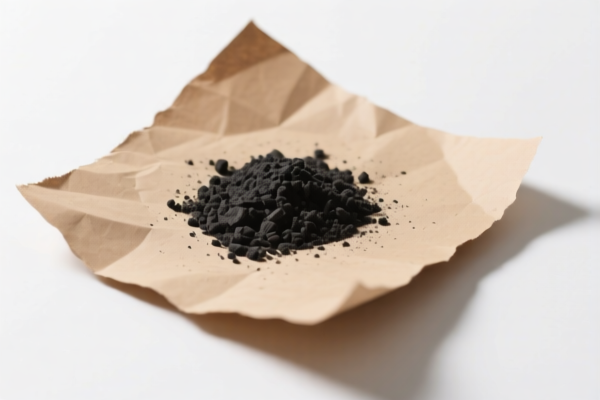
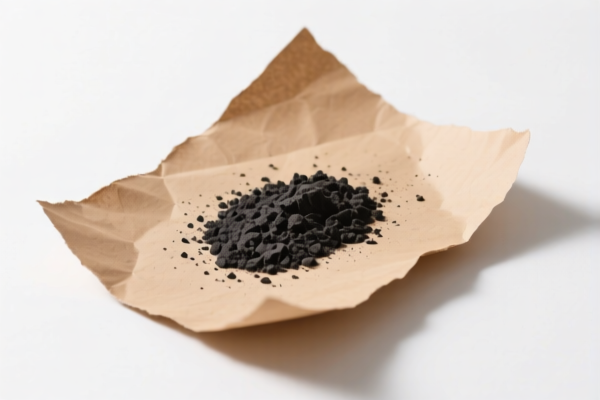
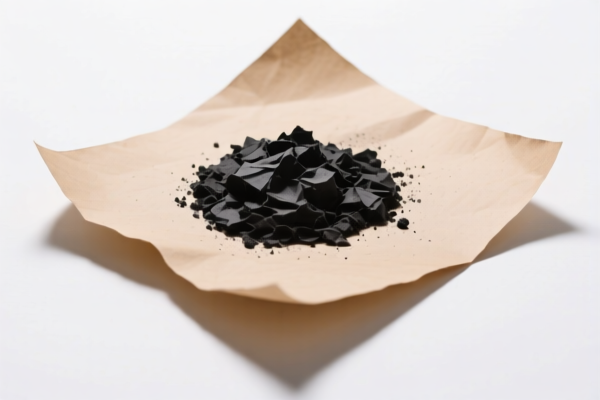
AI Analysis
📄 Carbon Paper with Spiral Binding
🌐 HS Code Reference & Customs Clearance Guide | 2026 Latest Tariff Analysis | Professional Strategy for Office Supplies
📌 1. Product Definition & Classification: What is "Carbon Paper with Spiral Binding"?
Carbon paper is a thin paper impregnated with a dry ink layer that transfers an image to a sheet placed underneath it when pressure is applied. When spiral bound (also known as coil-bound), it forms a multi-part form book or a "book of carbon pages" designed for easy tearing off after use.
In international trade, the key classification challenge is determining whether the product is viewed primarily as paper material (impregnated paper) or as a printed stationery item. However, according to the Harmonized System (HS), carbon paper is specifically categorized under heading 4809 or 4816 based on its specific manufacturing method and form.
⚠️ Key Distinction:
- If it is a standalone sheet of carbon paper → 4809.20
- If it is bound into a book/format for immediate commercial use (like a tear-off pad) → It may still fall under 4809 or 4816 depending on the exact nature of the binding and paper type.
- Crucial Note: The spiral binding itself is usually considered an accessory to the paper product and does not change the primary classification of the carbon paper itself, unless it fundamentally transforms the product into a "printed book" under Chapter 49 (which is generally not the case for simple carbon transfer sheets).
📦 2. HS Code Classification Details (2026 Latest Tariff Authority)
Based on the provided data, the following HS Codes are applicable for "Carbon Paper" products entering the US market. The spiral binding does not typically move the classification to Chapter 49 (Books) because the primary function is the transfer of writing, not the reading of text.
| HS Code | Product Description | Applicable Scenario | Binding Type |
|---|---|---|---|
4809.20.20.00 |
Carbon papers, including dupliters, without adhesive backs | Standard carbon paper sheets or bound sets; material and use fully match | ✅ Any (Spiral is considered accessory) |
4811.49.30.00 |
Coated or impregnated paper products, including self-writing carbon papers | Fits adhesive or coated paper/cardboard attributes; often used for self-writing forms | ✅ Yes |
4816.20.00.00 |
Carbon papers, of a kind used in duplicating machines or for carbon copies | Use and form fully match; often used for multipart forms | ✅ Yes |
4816.90.01.00 |
Carbon papers, other (including non-standard formats) | Use and form fully match; covers specific bound configurations not explicitly listed elsewhere | ✅ Yes |
4809.20.40.00 |
Self-writing carbon papers (dupliters), with or without adhesive | Material and usage attributes consistent with self-writing pads | ✅ Yes |
🔍 Important Reminder:
- All HS codes above result in a 35% Total Tariff Rate due to current trade policies.
- The spiral binding is considered a minor assembly step and does not change the essential character of the product as "carbon paper."
- Do not classify under Chapter 49 (Books) unless the product contains printed text/graphics intended for reading, rather than writing. Carbon paper is for writing transfer, so it remains in Chapter 48.
💰 3. 2026 Latest Tariff Rate Breakdown (Including Surtaxes & Policy Add-ons)
✅ Applicable Country: United States (US)
✅ Country of Origin: China (CN)
✅ Effective Date: From November 10, 2025 (including subsequent imports)
🎯 1. All Listed HS Codes (4809.20.20.00, 4811.49.30.00, 4816.20.00.00, 4816.90.01.00, 4809.20.40.00)
| Item | Content |
|---|---|
| Base Duty Rate | 0% (ad valorem) |
| Section 301 Surtax | +25% (from USITC Footnote 9903.88.01 / Section 301) |
| IEEPA Surtax | +10% (Targeting China/HK products, effective Nov 10, 2025) |
| Total Tariff Rate | 35% |
| Tax Calculation | CIF Value × 35% |
| De Minimis Exemption Eligible? | ❌ No (deny_de_minimis) |
| Legal Authority Path | IEEPA:9903.01.25 → IEEPA:9903.01.24 → USITC:[HS_CODE] → FOOTNOTE:9903.88.01 |
📌 Explanation:
- The 25% Section 301 tariff is the primary surtax on Chinese-made paper products.
- The 10% IEEPA tariff is an additional levy targeting specific Chinese goods under the International Emergency Economic Powers Act.
- Combined Total: 35%. This is a high tariff rate that must be factored into your landed cost calculation.
- No De Minimis Exemption: Shipments valued under $800 (Section 321) do not qualify for tax exemption for these HS codes if they originate from China. Full duties apply.
🛠️ 4. Customs Clearance Practical Advice (Battle-Tested Pitfall Guide)
✅ 1. Required Documentation Checklist (Missing any may cause delays)
| Document | Mandatory? | Description |
|---|---|---|
| ✅ Product Specification Sheet | ✔️ | Must detail paper weight, size, number of parts (e.g., NCR, carbonyl), and binding type. |
| ✅ Product Photos | ✔️ | Clear images showing the spiral binding, the carbon layer, and the product in use (multipart form). |
| ✅ Commercial Invoice | ✔️ | Must explicitly state "Carbon Paper" or "Carbonless Copy Paper" and not just "Office Supplies." |
| ✅ Packing List | ✔️ | Detail the number of books/sheets per carton. |
| ✅ Certificate of Origin (CO) | ✔️ | Required to prove origin as China (if applicable). |
| ✅ Test Reports (Optional) | ✔️ | If claimed as "Non-Toxic" or specific chemical compliance (e.g., for children's products), provide relevant tests. |
✅ 2. Declaration Tips (Key Mnemonic)
🔥 “Paper is Key, Binding is Accessory, Declare as Paper, Avoid Chapter 49 Trap!”
| Scenario | Correct Declaration | Incorrect Practice |
|---|---|---|
| Spiral-bound carbon paper pad | 4809.20.20.00 (Carbon Paper) |
Declaring as "Book" or "Notebook" → Chapter 49 (Higher risk of reclassification & penalties) |
| Loose carbon paper sheets | 4809.20.20.00 |
Declaring as "Printing Paper" → Wrong subheading, potential duty mismatch |
| Carbon paper + Pen Set | Split Declaration | Bundling as one item → Complex valuation, potential misclassification |
✅ 3. Special Case Handling
| Situation | Handling Advice |
|---|---|
| Private Label (OEM) | Ensure the invoice lists the manufacturer and the brand clearly. The HS code remains the same regardless of branding. |
| Self-Writing (NCR) Paper | If the product is "Carbonless" (no separate carbon sheet), use 4811.49.30.00 or 4809.20.40.00 as per the data. Ensure description says "Carbonless Copy Paper" if applicable. |
| Mixed Containers | If shipping with other paper products (e.g., blank notebooks), ensure they are packed and declared separately to avoid confusion. |
🌍 5. Global Market Comparison (2026 Latest)
| Country/Region | Recommended HS Code | Tariff (China Origin) | Certification Requirements | Notes |
|---|---|---|---|---|
| 🇺🇸 United States | 4809.20.20.00 etc. |
35% (25% + 10%) | None specific for basic paper | High cost due to Section 301 + IEEPA |
| 🇨🇳 China | 4809.20.20.00 |
~5-7% (Import Duty) | GB Standards | No surtaxes for domestic production |
| 🇪🇺 European Union | 4809.20.00 |
0-3% | REACH Compliance (Chemicals) | No Section 301 equivalent |
| 🇬🇧 United Kingdom | 4809.20.00 |
0-3% | UKCA Mark (if applicable) | Post-Brexit rules apply |
| 🇯🇵 Japan | 4809.20.00 |
0% | JIS Standards | Low tariffs, no surtaxes |
📌 Conclusion:
- The US market is significantly more expensive for carbon paper due to the combined 35% tariff.
- Consider alternative sourcing (e.g., Vietnam, Mexico) if possible to leverage trade agreements or avoid surtaxes, though paper products may still have base duties.
- Ensure accurate classification to avoid penalties from US Customs and Border Protection (CBP).
📌 6. Common Mistakes & Pitfalls (Blood & Tears Lessons)
❌ Mistake 1: Classifying spiral-bound carbon paper as a "Book" (Chapter 49)
👉 Consequence: CBP may reject the declaration, impose back duties, and delay clearance. Carbon paper is paper, not a bound book of text.
❌ Mistake 2: Assuming De Minimis ($800) exemption applies
👉 Consequence: Incorrect. Shipments from China for these HS codes are explicitly excluded from de minimis treatment. Full 35% duty applies regardless of value.
❌ Mistake 3: Vague Description ("Office Supplies")
👉 Consequence: CBP may request additional info, leading to detention and storage fees. Always specify "Carbon Paper" and HS Code.
✅ Correct Approach:
"Carbon Paper, Spiral Bound, Multi-Part Forms, 5 Pairs per Pad, Product Size 8.5x11 inches, HS Code 4809.20.20.00"
🎯 7. Conclusion: Professional Declaration, Cost Efficiency!
🎯 Remember the Key Points:
🔹 "Carbon Paper is Paper, Not a Book."
🔹 "Total Tariff is 35% (25% + 10%)."
🔹 "No De Minimis Exemption for China-Origin Paper."
📌 Pro Tip:
- If you are importing in large volumes, consider applying for a Tariff Classification Ruling from CBP in advance to confirm the specific HS code for your exact product configuration (e.g., specific binding methods).
- Evaluate Landed Cost carefully: Add 35% duty + freight + insurance to your product cost to ensure profitability.
📣 Immediate Action:
📞 Consult with a licensed customs broker.
📝 Prepare detailed product descriptions and photos.
📊 Calculate your landed cost including the 35% tariff.
✨ Professional Customs Clearance Starts with Accurate Classification!
💼 Every Dollar Counts – Optimize Your Tariff Strategy!
Customer Reviews
About HS Code Classification
The Harmonized System (HS) is an internationally standardized nomenclature developed by the World Customs Organization (WCO) to classify traded products. Over 200 countries use the HS system as the basis for customs tariffs, trade statistics, and import/export regulations.
Each HS code follows a hierarchical structure:
- Chapter (2 digits) — Broad category of goods (e.g., Chapter 84: Machinery and Mechanical Appliances)
- Heading (4 digits) — More specific grouping within the chapter
- Subheading (6 digits) — Internationally standardized breakdown, used by all WCO member countries
- National subdivisions (8-10 digits) — Country-specific extensions for further classification, such as US HTSUS 10-digit codes
Correct HS code classification is essential for smooth customs clearance, accurate duty payment, and compliance with trade regulations. Misclassification can lead to customs delays, overpayment of duties, or penalties.
When importing from CN to US, the applicable tariff rates may include:
- Most-Favored-Nation (MFN) rate — The standard duty rate applied to WTO members
- General rate — Applied to countries without trade agreements
- Trade remedy duties — Additional tariffs such as Section 301 (anti-dumping), Section 232 (national security), or countervailing duties
The information provided on this page is for reference purposes only. For official classification, please consult with your local customs authority or a licensed customs broker.