carbon tetrachloride fluorine solvent high purity
CN → US| HS Code | Tariff Rate | Origin | Destination | Doc |
|---|---|---|---|---|
| 2903196050 | 40.5% | CN | US | Official Doc |
| 3824995500 | 38.7% | CN | US | Official Doc |
| 2903799070 | 38.7% | CN | US | Official Doc |
| 2903140000 | 37.3% | CN | US | Official Doc |
| 3824995000 | 41.5% | CN | US | Official Doc |
Product Images
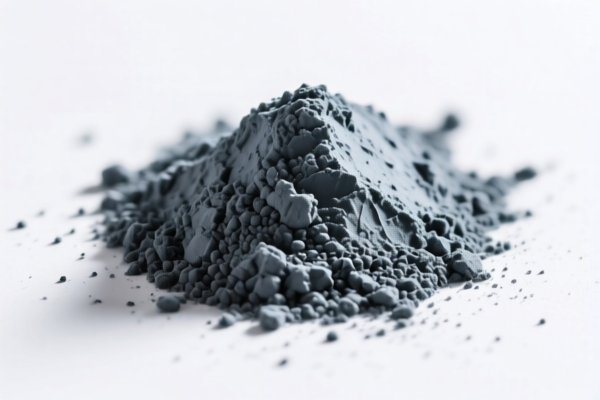
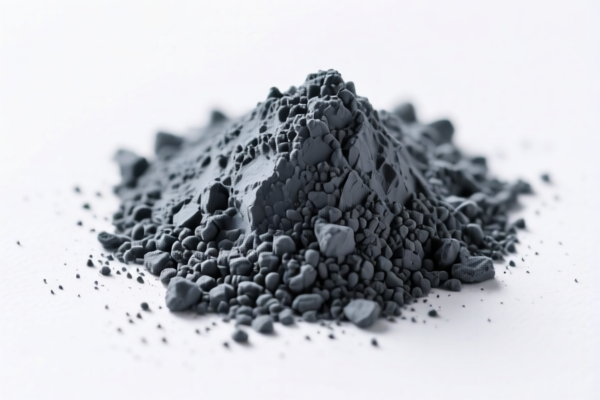
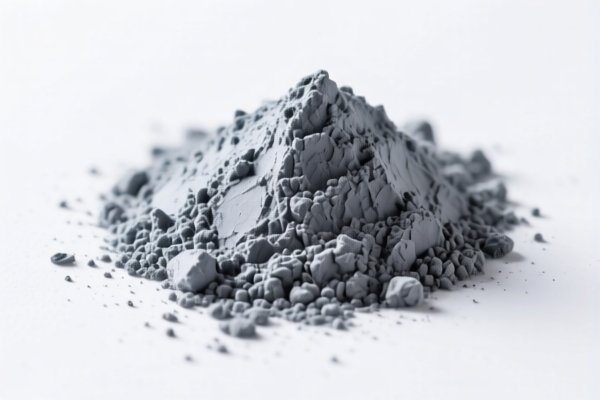
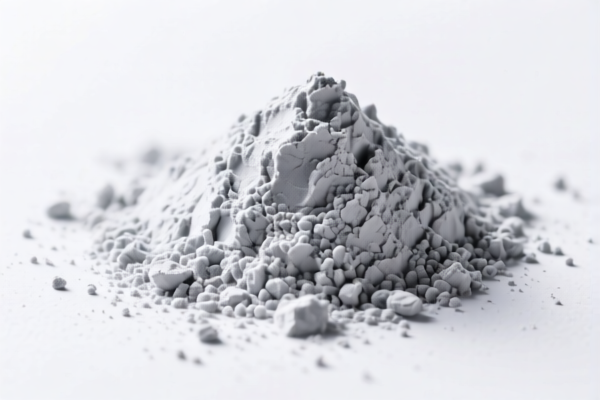
AI Analysis
🧪 Carbon Tetrachloride (Fluorine Solvent / High Purity)
🌐 HS Code Reference & Customs Clearance Guide | 2026 Latest Tariff Analysis | Professional Clearance Strategy 📌 I. Product Definition & Classification: Do You Really Understand "Carbon Tetrachloride"?
Carbon Tetrachloride ($CCl_4$), often referred to in trade as a Halogenated Hydrocarbon Solvent, is a dense, non-flammable liquid historically used in fire extinguishers, dry cleaning, and metal degreasing. In the context of "high purity fluorine solvent" requests, it is crucial to clarify that Carbon Tetrachloride contains Chlorine (Cl), not Fluorine (F). However, it is frequently grouped with halogenated solvents for classification purposes.
In international trade, it is primarily classified under two logical categories: 1. Halogenated Derivatives of Hydrocarbons: Pure chemical compounds falling under Chapter 29. 2. Mixed Chemical Preparations: Industrial solvent blends or formulations falling under Chapter 38.
⚠️ Key Distinction: - If the product is pure $CCl_4$ (chemical substance) → Classified under Chapter 29 (Specific HS codes: 2903.19, 2903.79, 2903.14). - If the product is a mixture, solution, or industrial preparation containing $CCl_4$ → Classified under Chapter 38 (Specific HS codes: 3824.99).
📦 II. HS Code Classification Details (2026 Latest Tariff Authority Comparison)
| HS Code | Product Description | Applicable Scenario | Basis for Classification |
|---|---|---|---|
2903.19.60.50 |
Halogenated derivatives of acyclic hydrocarbons (saturated chlorinated) | Pure solvent, fits "saturated chlorinated non-cyclic hydrocarbon derivative" logic | ✅ Chemical Substance |
3824.99.55.00 |
Halogenated hydrocarbon mixtures, solvent form fits chemical preparation logic | Industrial solvent blends, mixtures | ✅ Mixture/Preparation |
2903.79.90.70 |
Chlorinated acyclic hydrocarbon derivatives | Fits general "halogenated derivative of hydrocarbons" characteristics | ✅ Chemical Substance |
2903.14.00.00 |
Carbon tetrachloride (Specific match) | Explicitly named "Carbon Tetrachloride," exact material match | ✅ Exact Match |
3824.99.50.00 |
Halogenated hydrocarbon mixtures (chlorinated but not halogenated other elements) | Mixtures where $CCl_4$ is the primary halogenated component | ✅ Mixture |
🔍 Critical Reminder: - Pure $CCl_4$ should ideally be classified under
2903.14.00.00for the lowest base tax, as it explicitly matches the substance name. - If the customs authority views it as a generic "chlorinated derivative" or "mixture," it may fall into2903.19.60.50or3824.99series, resulting in higher base tariffs. - Never misdeclare: Calling it a "Fluorine solvent" when it is Chlorine-based can lead to severe compliance penalties. It is a Chlorinated solvent.
💰 III. 2026 Latest Tariff Rate Breakdown (Including Surtaxes & Policy Add-ons)
✅ Applicable Country: United States (US) ✅ Origin: China (CN) ✅ Effective Date: November 10, 2025 (including subsequent imports)
🎯 1. 2903.19.60.50 — Halogenated Acyclic Hydrocarbon Derivatives (Saturated)
| Item | Details |
|---|---|
| Base Tariff | 5.5% (ad valorem) |
| Retaliatory Tariff (Section 301) | +25.0% |
| 122 Clause Tariff | +10.0% |
| Total Tax Rate | 40.5% |
| Tax Calculation | CIF Value × 40.5% |
| De Minimis Exemption | ❌ Not Eligible |
| Legal Basis Path | Base: 5.5% + Section 301: 25% + 122 Clause: 10% |
📌 Explanation: - This classification treats $CCl_4$ as a generic "saturated chlorinated derivative." - The 25% Section 301 tariff applies to most Chinese chemical products. - The 10% "122 Clause" (likely referring to specific retaliatory measures or additional surcharges) adds significant cost. - Total 40.5% is a heavy burden. Ensure the purity and use case justify this specific subheading.
🎯 2. 3824.99.55.00 — Halogenated Hydrocarbon Mixtures (Solvent Form)
| Item | Details |
|---|---|
| Base Tariff | 3.7% (ad valorem) |
| Retaliatory Tariff (Section 301) | +25.0% |
| 122 Clause Tariff | +10.0% |
| Total Tax Rate | 38.7% |
| Tax Calculation | CIF Value × 38.7% |
| De Minimis Exemption | ❌ Not Eligible |
| Legal Basis Path | Base: 3.7% + Section 301: 25% + 122 Clause: 10% |
📌 Explanation: - If declared as a "mixture" or "industrial preparation," the base rate drops to 3.7%. - However, the 38.7% total is still extremely high due to surcharges. - Risk: Customs may challenge "mixture" status if the product is >99% pure $CCl_4$.
🎯 3. 2903.79.90.70 — Other Halogenated Acyclic Hydrocarbons
| Item | Details |
|---|---|
| Base Tariff | 3.7% (ad valorem) |
| Retaliatory Tariff (Section 301) | +25.0% |
| 122 Clause Tariff | +10.0% |
| Total Tax Rate | 38.7% |
| Tax Calculation | CIF Value × 38.7% |
| De Minimis Exemption | ❌ Not Eligible |
| Legal Basis Path | Base: 3.7% + Section 301: 25% + 122 Clause: 10% |
📌 Explanation: - Similar to
3824.99.55.00, this is a catch-all for unspecified halogenated derivatives. - 38.7% total tax. Lower base rate, but surcharges remain identical.
🎯 4. 2903.14.00.00 — Carbon Tetrachloride (Exact Match)
| Item | Details |
|---|---|
| Base Tariff | 2.3% (ad valorem) |
| Retaliatory Tariff (Section 301) | +25.0% |
| 122 Clause Tariff | +10.0% |
| Total Tax Rate | 37.3% |
| Tax Calculation | CIF Value × 37.3% |
| De Minimis Exemption | ❌ Not Eligible |
| Legal Basis Path | Base: 2.3% + Section 301: 25% + 122 Clause: 10% |
📌 Explanation: - This is the OPTIMAL classification if the product is pure Carbon Tetrachloride. - It has the lowest base rate (2.3%) among all listed options. - Total 37.3% is the lowest possible rate in this dataset. - Requirement: Must prove exact identity as $CCl_4$ (CAS No. 56-23-5).
🎯 5. 3824.99.50.00 — Halogenated Hydrocarbon Mixtures (Chlorinated)
| Item | Details |
|---|---|
| Base Tariff | 6.5% (ad valorem) |
| Retaliatory Tariff (Section 301) | +25.0% |
| 122 Clause Tariff | +10.0% |
| Total Tax Rate | 41.5% |
| Tax Calculation | CIF Value × 41.5% |
| De Minimis Exemption | ❌ Not Eligible |
| Legal Basis Path | Base: 6.5% + Section 301: 25% + 122 Clause: 10% |
📌 Explanation: - Highest total tax rate (41.5%). - Use this only if the product is a mixture that doesn't fit other specific codes. Avoid if pure $CCl_4$.
🛠️ IV. Customs Clearance Practical Advice (Battle-Tested Pitfall Guide)
✅ 1. Required Document Checklist (Non-negotiable)
| Document | Must Provide | Notes |
|---|---|---|
| ✅ Safety Data Sheet (SDS) | ✔️ | Must list CAS No. 56-23-5. Crucial for chemical identification. |
| ✅ Certificate of Analysis (COA) | ✔️ | Prove High Purity (e.g., ≥99.9%). Essential for justifying 2903.14.00.00. |
| ✅ Product Photo (Label + Container) | ✔️ | Show clear chemical name, hazard symbols (Toxic, Environmental Hazard). |
| ✅ Commercial Invoice | ✔️ | Must state "Carbon Tetrachloride, CAS 56-23-5." Do NOT use vague terms like "Fluorine Solvent." |
| ✅ Packing List | ✔️ | Detail net/gross weight. Hazardous material packaging certification required. |
| ✅ Origin Certificate | ✔️ | If claiming preferential treatment (unlikely for US/China), but good for record-keeping. |
✅ 2. Declaration Tips (Key Mantras)
🔥 "Pure = 2903.14, Mixture = 3824.99. Name = CAS. Hazard = Clear!"
| Scenario | Correct Declaration | Wrong Practice |
|---|---|---|
| Pure $CCl_4$ | 2903.14.00.00 (37.3%) |
Misdeclare as "Solvent Mixture" → 38.7%-41.5% |
| Mixture/Blend | 3824.99.55.00 (38.7%) |
Declare as pure chemical → Rejection/Fine |
| Wrong Name | "Carbon Tetrachloride" | "Fluorine Solvent" → Compliance Violation |
| Hazardous | Declare HazMat | Hide hazard info → Seizure/Blacklist |
✅ 3. Special Handling
| Situation | Recommendation |
|---|---|
| "Fluorine" Misnomer | If the buyer calls it "Fluorine solvent," correct them immediately. It is Chlorine-based. Use "Chlorinated Solvent" in docs. |
| High Purity Request | Provide COA showing ≥99.9% purity to support 2903.14.00.00 (lowest base tax). |
| Environmental Compliance | $CCl_4$ is an ozone-depleting substance. Ensure EPA/OSHA compliance documentation is ready for US import. |
| Small Quantities | No De Minimis Exemption. Even small shipments face 37%+ tax. Plan accordingly. |
🌍 V. Global Market Comparison (2026 Latest)
| Country/Region | Recommended HS Code | Tariff (China Origin) | Certification | Notes |
|---|---|---|---|---|
| 🇺🇸 USA | 2903.14.00.00 |
37.3% | EPA + OSHA | Highest tax due to surcharges. Strict hazmat rules. |
| 🇨🇳 China | 2903.14.00.00 |
~0-5% | GB Standard | Lower import duties, but strict production/export controls. |
| 🇪🇺 EU | 2903.14.00 |
~0-5% | REACH + SVHC | Heavy REACH registration required. Banned/Restricted in many uses. |
| 🇦🇺 Australia | 2903.14.00 |
~5% | AICIS | Hazardous chemical reporting mandatory. |
| 🇯🇵 Japan | 2903.14.00 |
~0% | PRTR Act | Strict pollution control reporting. |
📌 Conclusion: - USA is the most expensive market for $CCl_4$ due to the 37.3% total tariff. - Global Restrictions: $CCl_4$ is heavily regulated globally due to ozone depletion. Ensure your buyer has the necessary permits.
📌 VI. Common Mistakes & Pitfalls (Lessons Learned)
❌ Mistake 1: Calling it "Fluorine Solvent" 👉 Result: Customs rejects due to chemical mismatch. Delay + Storage Fees.
❌ Mistake 2: Misdeclaring pure chemical as "Mixture" 👉 Result: Higher tax (38.7% vs 37.3%) + Audit Risk.
❌ Mistake 3: Ignoring Hazmat Declaration 👉 Result: Shipment held at port. Potential fines for misdeclaring hazardous goods.
❌ Mistake 4: Assuming De Minimis Exemption 👉 Result: No exemption. Even $100 shipment pays ~$37 in tax.
✅ Correct Action:
"Carbon Tetrachloride, CAS 56-23-5, Purity ≥99.9%, Hazard Class: Toxic/Environmental. HS Code: 2903.14.00.00."
🎯 VII. Conclusion: Precision Classification Saves Money!
🎯 Remember the Mantra:
🔹 "Pure $CCl_4$ = 2903.14 (37.3%). Mixture = 3824.99 (38-41%). Name = CAS. No Fluorine!" 🔹 "HS Code defines cost. 1% base difference matters. Hazmat declaration is mandatory."
📌 Pro Tip: If your $CCl_4$ is for research/lab use, ensure you have the EPA Import Permit or exemption. For industrial use, verify state-level regulations (some US states ban $CCl_4$ entirely).
📣 Immediate Action:
📞 Consult a licensed customs broker + Provide CAS 56-23-5 + Request Pre-Ruling from US CBP 🚀 Ensure smooth clearance, zero penalties, and cost efficiency!
✨ Professional Clearance Starts with Accurate Classification! 💼 Every Percent of Tax Matters!
Customer Reviews
About HS Code Classification
The Harmonized System (HS) is an internationally standardized nomenclature developed by the World Customs Organization (WCO) to classify traded products. Over 200 countries use the HS system as the basis for customs tariffs, trade statistics, and import/export regulations.
Each HS code follows a hierarchical structure:
- Chapter (2 digits) — Broad category of goods (e.g., Chapter 84: Machinery and Mechanical Appliances)
- Heading (4 digits) — More specific grouping within the chapter
- Subheading (6 digits) — Internationally standardized breakdown, used by all WCO member countries
- National subdivisions (8-10 digits) — Country-specific extensions for further classification, such as US HTSUS 10-digit codes
Correct HS code classification is essential for smooth customs clearance, accurate duty payment, and compliance with trade regulations. Misclassification can lead to customs delays, overpayment of duties, or penalties.
When importing from CN to US, the applicable tariff rates may include:
- Most-Favored-Nation (MFN) rate — The standard duty rate applied to WTO members
- General rate — Applied to countries without trade agreements
- Trade remedy duties — Additional tariffs such as Section 301 (anti-dumping), Section 232 (national security), or countervailing duties
The information provided on this page is for reference purposes only. For official classification, please consult with your local customs authority or a licensed customs broker.