card case
CN → US| HS Code | Tariff Rate | Origin | Destination | Doc |
|---|---|---|---|---|
| 4820900000 | 35.0% | CN | US | Official Doc |
| 4820300040 | 35.0% | CN | US | Official Doc |
| 3926909989 | 22.8% | CN | US | Official Doc |
| 4202399000 | 55.0% | CN | US | Official Doc |
| 3926903300 | 16.5% | CN | US | Official Doc |
Product Images
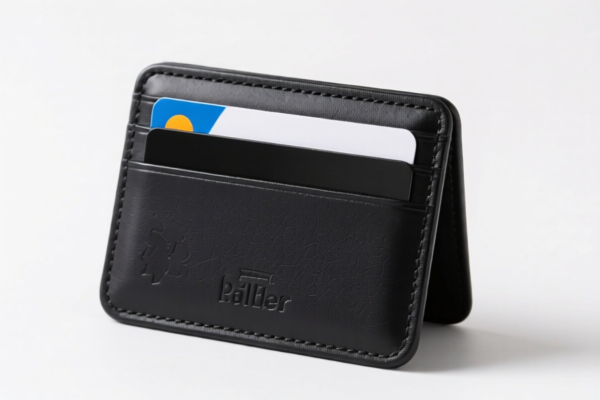
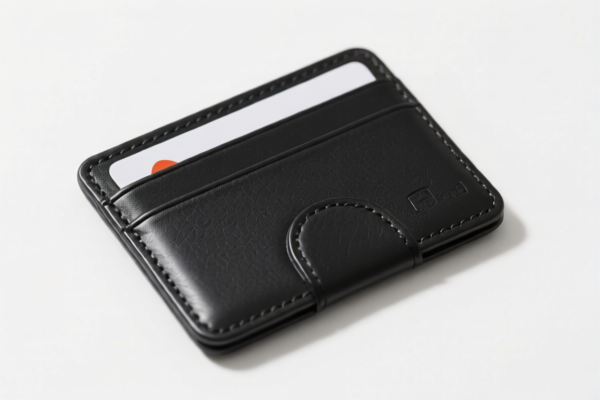
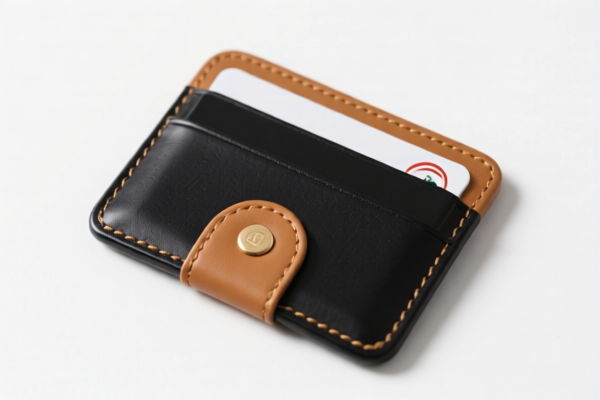
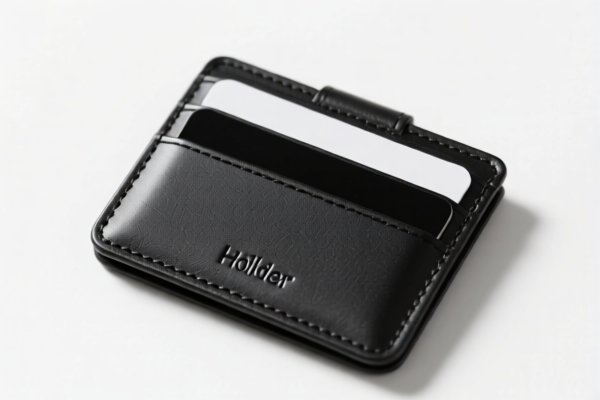
AI Analysis
💳 Card Cases (Wallets, Holders & Organizers)
🌐 HS Code Reference & Customs Clearance Guide | 2026 Latest Tariff Analysis | Professional Strategy for Low-Cost Entry
📌 I. Product Definition & Classification: What Exactly is a "Card Case"?
In international trade, "Card Case" is a generic term that covers various items used to hold credit cards, ID cards, business cards, or SIM cards. The crucial factor for HS Code classification is material composition and design function.
International Customs (US CBP) strictly differentiate between: 1. General Purpose Carriers (Leather/Textile): Items designed to be carried in a pocket or handbag, holding multiple cards but also potentially money, IDs, etc. → Chapter 42 (Articles of Leather). 2. Specific Paper Goods: Simple holders, sleeves, or folders made of paper/cardboard. → Chapter 48 (Paper & Paperboard). 3. Other Plastic/Non-Lather Articles: Small, specialized plastic holders that don't fit the definition of a "handbag" or "wallet." → Chapter 39 (Plastics).
⚠️ Critical Distinction Point:
- If it is made of Leather or resembles a standard wallet/pouch → 4202.39.90.00 (Highest Duty).
- If it is made of Plastic but is a simple sleeve/holder → 3926.90.33.00 (Lowest Duty).
- If it is made of Paper/Cardboard → 4820.90.00.00 or 4820.30.00.40 (High Duty due to Trade War).
📦 II. HS Code Classification Details (2026 Latest Tariff Authority)
| HS Code | Product Description | Applicable Scenario | Material | Duty Risk Level |
|---|---|---|---|---|
3926.90.33.00 |
Plastic card holders/sleeves, classified under "Other plastic articles: Handbags, pouches, etc." | Thin PVC/TPU card sleeves, credit card wallets (plastic only) | Plastic | ⭐ Lowest Risk |
4820.90.00.00 |
Paper/cardboard card cases, classified as "File covers, folders, and stationery accessories" | Paper card sleeves, business card holders made of thick paper/card | Paper/Cardboard | 🔴 High Risk |
4820.30.00.40 |
Paper/cardboard card cases, classified as "File covers/folders" | Simple paper sleeves, single-card paper holders | Paper/Cardboard | 🔴 High Risk |
3926.90.99.89 |
Plastic/Leather/Synthetic card cases, classified as "Other plastic articles" | Mixed material or complex plastic cases not fitting specific "handbag" definition | Plastic/Composite | 🟡 Medium Risk |
4202.39.90.00 |
Leather/Plastic/Textile card cases, classified as "Articles normally carried in pocket or handbag" | Standard Wallets, multi-slot leather/plastic card holders, bi-fold card cases | Leather/Textile/Plastic | 🔴 Highest Risk |
🔍 Key Reminder:
- Leather = 55% Total Duty. Even if it looks like a "card case," if it's leather or leather-like, US Customs often classifies it under 4202.39.90.00 as a "wallet/holder for pocket/handbag."
- Plastic = 16.5% Total Duty. To get this rate, you must prove it is pure plastic and fits the sub-heading for "plastic articles" like sleeves. Avoid mentioning "leather" or "textile" in descriptions.
- Paper = 35% Total Duty. High due to Section 301 tariffs.
💰 III. 2026 Latest Tariff Rate Breakdown (Including Additional Taxes)
✅ Applicable Country: United States (US)
✅ Origin: China (CN)
✅ Effective Date: From 2025 November 10 (and subsequent imports)
🎯 1. 3926.90.33.00 —— Plastic Card Cases (Best Option for Cost)
| Item | Details |
|---|---|
| Base Tariff | 6.5% (Ad Valorem) |
| Section 301 Additional Tariff | 0.0% |
| IEEPA Additional Tariff (Section 122/EO) | 10.0% |
| Total Effective Duty Rate | 16.5% |
| Tax Calculation | CIF Value × 16.5% |
| De Minimis Eligibility | ❌ No (For shipments > $800, duties apply. For < $800, see Note below) |
| Legal Basis Path | USITC:3926.90.33.00 → IEEPA:10% |
📌 Explanation:
- This is the most cost-effective classification for plastic card cases.
- The "0% Section 301" is a significant advantage over other plastic goods.
- Total 16.5% is relatively low for personal accessories.
🎯 2. 4820.90.00.00 & 4820.30.00.40 —— Paper Card Cases
| Item | Details |
|---|---|
| Base Tariff | 0.0% |
| Section 301 Additional Tariff | 25.0% |
| IEEPA Additional Tariff (Section 122/EO) | 10.0% |
| Total Effective Duty Rate | 35.0% |
| Tax Calculation | CIF Value × 35.0% |
| De Minimis Eligibility | ❌ No |
| Legal Basis Path | USITC:4820.90.00.00 → USITC:4820.30.00.40 → Section 301: 25% |
📌 Note:
- Even though the Base Tariff is 0%, the 25% Section 301 tariff makes the total 35%.
- This is cheaper than Leather (55%) but more expensive than Plastic (16.5%).
- Only choose this if the product is strictly paper/cardboard and cannot be made of plastic.
🎯 3. 3926.90.99.89 —— Other Plastic/Composite Card Cases
| Item | Details |
|---|---|
| Base Tariff | 5.3% |
| Section 301 Additional Tariff | 7.5% |
| IEEPA Additional Tariff (Section 122/EO) | 10.0% |
| Total Effective Duty Rate | 22.8% |
| Tax Calculation | CIF Value × 22.8% |
| De Minimis Eligibility | ❌ No |
| Legal Basis Path | USITC:3926.90.99.89 → Section 301: 7.5% |
📌 Note:
- Use this if the plastic case is complex (e.g., has metal springs, mixed materials) and doesn't fit "33.00".
- 12.8% higher than3926.90.33.00.
🎯 4. 4202.39.90.00 —— Leather/Textile/Plastic Wallets (Highest Risk)
| Item | Details |
|---|---|
| Base Tariff | 20.0% |
| Section 301 Additional Tariff | 25.0% |
| IEEPA Additional Tariff (Section 122/EO) | 10.0% |
| Total Effective Duty Rate | 55.0% |
| Tax Calculation | CIF Value × 55.0% |
| De Minimis Eligibility | ❌ No |
| Legal Basis Path | USITC:4202.39.90.00 → Section 301: 25% |
📌 Warning:
- This is the most expensive classification.
- Many sellers try to declare leather card cases as "plastic" to avoid this, but US Customs conducts strict audits.
- 55% duty can destroy profit margins.
🛠️ IV. Customs Clearance Practical Advice (Battle-Tested)
✅ 1. Preparation Checklist (Non-Negotiable)
| Document | Required | Notes |
|---|---|---|
| ✅ Product Photos | ✔️ | Clear images showing material texture (leather grain vs. plastic smoothness). |
| ✅ Material Specification | ✔️ | Must explicitly state "100% PVC," "100% Paper," or "Genuine Leather." |
| ✅ Commercial Invoice | ✔️ | Use precise description: "Plastic Credit Card Holder" (NOT "Wallet"). |
| ✅ Packing List | ✔️ | Ensure weight and dimensions match the declared HS Code category. |
| ✅ Sample for Review | ✔️ | If unsure, provide a sample to your broker for pre-classification. |
✅ 2. Declaration Strategy (Key Tips)
🔥 "Material Determines Cost, Description Determines Fate!"
| Scenario | Correct HS Code | Wrong Classification | Consequence |
|---|---|---|---|
| Plastic Sleeve | 3926.90.33.00 (16.5%) |
4202.39.90.00 (55%) |
Overpay 38.5%! |
| Paper Holder | 4820.90.00.00 (35%) |
3926.90.33.00 (16.5%) |
Smuggling Risk (False Declaration) |
| Leather Wallet | 4202.39.90.00 (55%) |
3926.90.33.00 (16.5%) |
Heavy Penalties + Back Taxes |
| Mixed Material | 3926.90.99.89 (22.8%) |
4202.39.90.00 (55%) |
Overpay 32.2% |
✅ 3. Special Handling for E-Commerce & Dropshipping
| Situation | Advice |
|---|---|
| De Minimis (< $800) | If shipping to US consumers individually, all these goods qualify for $0 duty under Section 321 (De Minimis). No HS Code needed for duty, but still need it for data. |
| Bulk Import (> $800) | Must pay duties. Choose Plastic (3926.90.33.00) for lowest cost. |
| OEM/Private Label | Ensure the supplier provides material certificates. If they say "synthetic leather," classify as Plastic (3926...) if it lacks leather grain/pore structure. |
| Amazon FBA | Amazon may require HS Code for import. Use 3926.90.33.00 for plastic cards to reduce import costs if self-ship. |
🌍 V. Global Market Comparison (2026)
| Country/Region | Recommended HS Code | Total Duty (China Origin) | Notes |
|---|---|---|---|
| 🇺🇸 USA | 3926.90.33.00 |
16.5% | Best for Plastic. 4202 is 55%. |
| 🇪🇺 EU | 4202.32.00 (Plastic) |
~2.7% + VAT | Lower base duty, but VAT is high. |
| 🇬🇧 UK | 4202.32.00 |
2.7% + VAT | Similar to EU. |
| 🇨🇳 China | 4202.32.00 |
10% | Import tax is lower than US. |
| 🇯🇵 Japan | 4202.32.00 |
8% | Lower duty than US. |
📌 Conclusion:
- USA is the most expensive market for card cases due to Section 301 and IEEPA tariffs.
- Plastic (3926.90.33.00) is the only viable low-cost option for the US market.
- Avoid Leather for US exports unless the product price is high enough to absorb 55% duty.
📌 VI. Common Mistakes & Pitfalls (Lessons Learned)
❌ Mistake 1: Declaring Leather Card Cases as "Plastic" to save 38.5%.
👉 Result: Customs audit fails. You pay back taxes + 10% penalty + interest.
❌ Mistake 2: Using generic "Card Holder" without specifying material.
👉 Result: Customs assigns highest duty rate (4202.39.90.00) by default. Total 55%.
❌ Mistake 3: Confusing "Card Sleeve" (Paper) with "Card Wallet" (Plastic/Leather).
👉 Result: Paper (4820) is 35%. If you meant Plastic (3926), you overpaid. If you meant Leather, you underpaid (illegal).
❌ Mistake 4: Ignoring Section 122/IEEPA 10% in calculations.
👉 Result: Budgets are off by 10%. Always include this in your landed cost model.
✅ Correct Practice:
"100% PVC Credit Card Holder, Transparent, 6 Slots, No Leather Components, Model XYZ"
→ Use HS Code:3926.90.33.00→ Duty: 16.5%
🎯 VII. Conclusion: Smart Classification, Maximum Profit!
🎯 Remember the Mantra:
🔹 "Plastic is King (16.5%), Paper is Middle (35%), Leather is King of Cost (55%)."
🔹 "De Minimis is your friend (<$800). Bulk is your enemy."
📌 Pro Tip:
If your card cases are small, lightweight, and shipped individually to US customers, use De Minimis ($0 duty).
If shipping bulk to a warehouse, strictly use3926.90.33.00for plastic items.
📣 Immediate Action:
📞 Contact your customs broker with product photos.
📝 Confirm material composition in writing.
🚀 Optimize your HS Code to save up to 38.5% in duties!
✨ Professional Clearance Starts with Accurate Classification!
💼 Every Percent Saved is Pure Profit!
Customer Reviews
About HS Code Classification
The Harmonized System (HS) is an internationally standardized nomenclature developed by the World Customs Organization (WCO) to classify traded products. Over 200 countries use the HS system as the basis for customs tariffs, trade statistics, and import/export regulations.
Each HS code follows a hierarchical structure:
- Chapter (2 digits) — Broad category of goods (e.g., Chapter 84: Machinery and Mechanical Appliances)
- Heading (4 digits) — More specific grouping within the chapter
- Subheading (6 digits) — Internationally standardized breakdown, used by all WCO member countries
- National subdivisions (8-10 digits) — Country-specific extensions for further classification, such as US HTSUS 10-digit codes
Correct HS code classification is essential for smooth customs clearance, accurate duty payment, and compliance with trade regulations. Misclassification can lead to customs delays, overpayment of duties, or penalties.
When importing from CN to US, the applicable tariff rates may include:
- Most-Favored-Nation (MFN) rate — The standard duty rate applied to WTO members
- General rate — Applied to countries without trade agreements
- Trade remedy duties — Additional tariffs such as Section 301 (anti-dumping), Section 232 (national security), or countervailing duties
The information provided on this page is for reference purposes only. For official classification, please consult with your local customs authority or a licensed customs broker.