card clip
CN → US| HS Code | Tariff Rate | Origin | Destination | Doc |
|---|---|---|---|---|
| 3926909989 | 22.8% | CN | US | Official Doc |
| 4202399000 | 55.0% | CN | US | Official Doc |
| 3926908700 | 40.3% | CN | US | Official Doc |
| 4823908680 | 35.0% | CN | US | Official Doc |
Product Images
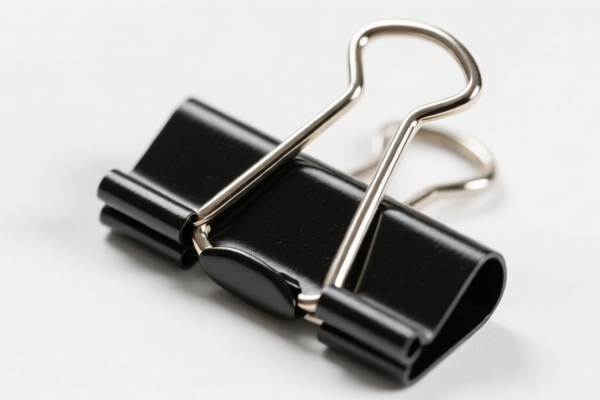
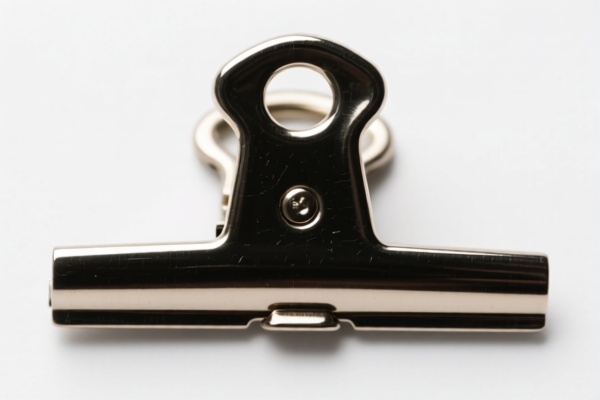
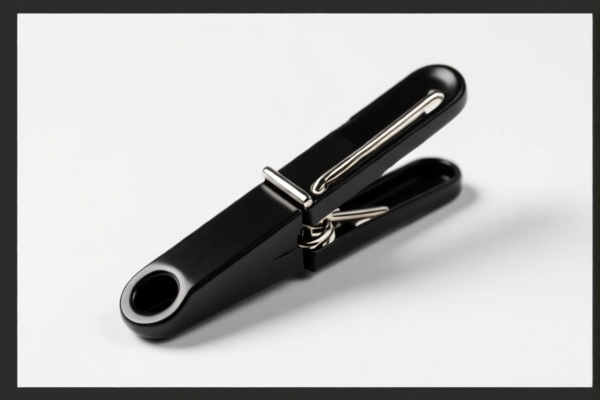
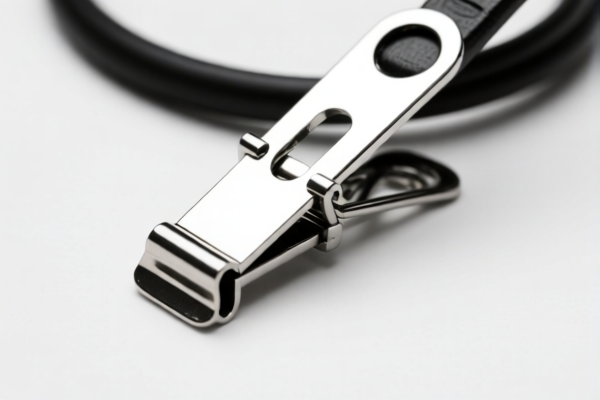
AI Analysis
🎨 Card Holders & Wallets (Card Clips / Card Cases)
🌐 HS Code Reference & Customs Clearance Guide | 2026 Latest Tariff Analysis | Professional-Level Strategy
📌 I. Product Definition: What Exactly Is a "Card Clip"?
A "Card Clip" (often referred to as a cardholder, card wallet, or card case) is a small container designed specifically to store and organize credit cards, IDs, or business cards. In international trade, its classification depends heavily on material and function.
There are three primary categories for card clips: 1. Plastic/Synthetic Material Clips: Rigid or semi-rigid plastic holders. 2. General Accessories (Leather/Fabric): Portable containers made of leather, textile, or other materials. 3. Paper/Cardboard Clips: Disposable or semi-rigid paper-based holders.
⚠️ Key Distinction Point:
- If made of plastic with specific filing/storage functions → Often falls under 3926 (Other plastic articles).
- If made of leather/textile as a general carrying accessory → Often falls under 4202 (Travel goods, saddlebags, etc.).
- If made of paper → Falls under 4823 (Other paper articles).
📦 II. HS Code Classification Details (2026 Latest Tariff Authority Comparison)
Based on the provided data, here are the four most relevant HS codes for card clips, along with their tax implications.
| HS Code | Product Description & Rationale | Total Tax Rate | Tax Breakdown (China Origin → US) |
|---|---|---|---|
3926.90.99.89 |
Plastic Articles (General): Card clips made of plastic or synthetic materials, classified as "other articles of plastics." | 22.8% | Base: 5.3% + Sec. 301: 7.5% + Section 122: 10% |
4202.39.90.00 |
Portable Containers (Leather/Textile): Card clips classified as portable containers, implying materials like leather, plastic, or textile. | 55.0% | Base: 20.0% + Sec. 301: 25.0% + Section 122: 10% |
3926.90.87.00 |
Plastic Storage/Filing Articles: Plastic card clips with specific filing/storage attributes. | 40.3% | Base: 5.3% + Sec. 301: 25.0% + Section 122: 10% |
4823.90.86.80 |
Paper/Cardboard Articles: Card clips made primarily of paper or cardboard. | 35.0% | Base: 0.0% + Sec. 301: 25.0% + Section 122: 10% |
🔍 Important Note:
- Section 122 Tariff (10%) applies uniformly across all categories in the provided data for Chinese origin.
- Section 301 Tariffs vary significantly:
- Plastic items under3926.90.99.89enjoy a lower 7.5% rate.
- Plastic items under3926.90.87.00and most paper/leather items face the higher 25% rate.
- Base Rates also differ: Plastic items (3926) have a low base (5.3%), while general accessories (4202) have a high base (20.0%).
💰 III. 2026 Latest Tariff Rate Details (Including Additional Taxes)
✅ Applicable Country: United States (US)
✅ Origin: China (CN)
✅ Effective Date: As per current trade policies (including Section 122 and Section 301)
🎯 1. 3926.90.99.89 —— Plastic Articles (General)
| Item | Detail |
|---|---|
| Base Tariff | 5.3% |
| Section 301 Tariff | +7.5% |
| Section 122 Tariff | +10.0% |
| Total Tax Rate | 22.8% |
| Tax Calculation | CIF Value × 22.8% |
| De Minimis Exemption | ❌ Not Applicable (Subject to full assessment) |
| Legal Basis Path | USITC:3926.90.99.89 → Section 301: 7.5% → Section 122: 10% |
📌 Interpretation:
- This is the lowest tax option among plastic card clips.
- It applies when the card clip is broadly classified as an "other plastic article" without specific filing characteristics.
- Cost-Saving Potential: By arguing for this classification over3926.90.87.00, you save 17.5% in total taxes.
🎯 2. 3926.90.87.00 —— Plastic Storage/Filing Articles
| Item | Detail |
|---|---|
| Base Tariff | 5.3% |
| Section 301 Tariff | +25.0% |
| Section 122 Tariff | +10.0% |
| Total Tax Rate | 40.3% |
| Tax Calculation | CIF Value × 40.3% |
| De Minimis Exemption | ❌ Not Applicable |
| Legal Basis Path | USITC:3926.90.87.00 → Section 301: 25.0% → Section 122: 10% |
📌 Interpretation:
- This code is used when the plastic card clip is explicitly described as having filing or storage functions.
- The higher Section 301 rate (25%) makes this significantly more expensive than3926.90.99.89.
- Risk: If customs authorities view your plastic card holder as a "storage device" rather than a general plastic item, this rate applies.
🎯 3. 4202.39.90.00 —— Portable Containers (Leather/Textile/Plastic)
| Item | Detail |
|---|---|
| Base Tariff | 20.0% |
| Section 301 Tariff | +25.0% |
| Section 122 Tariff | +10.0% |
| Total Tax Rate | 55.0% |
| Tax Calculation | CIF Value × 55.0% |
| De Minimis Exemption | ❌ Not Applicable |
| Legal Basis Path | USITC:4202.39.90.00 → Section 301: 25.0% → Section 122: 10% |
📌 Interpretation:
- This is the highest tax option in the dataset.
- It applies to card clips made of leather, textile, or even plastic if classified as "portable containers."
- Avoidance Strategy: If your product is plastic, try to argue for classification under Chapter 39 (Plastics) instead of Chapter 42 (Leather Goods) to reduce taxes by 32.2%.
🎯 4. 4823.90.86.80 —— Paper/Cardboard Articles
| Item | Detail |
|---|---|
| Base Tariff | 0.0% |
| Section 301 Tariff | +25.0% |
| Section 122 Tariff | +10.0% |
| Total Tax Rate | 35.0% |
| Tax Calculation | CIF Value × 35.0% |
| De Minimis Exemption | ❌ Not Applicable |
| Legal Basis Path | USITC:4823.90.86.80 → Section 301: 25.0% → Section 122: 10% |
📌 Interpretation:
- Paper card clips have zero base tariff, but the high Section 301 tariff (25%) brings the total to 35%.
- This is more expensive than the low-rate plastic classification (3926.90.99.89at 22.8%) but cheaper than the leather/general accessory classification (4202at 55%).
🛠️ IV. Customs Clearance Practical Advice (Battle-Tested Pitfall Avoidance)
✅ 1. Documentation Checklist (Non-Negotiable)
| Document | Required | Notes |
|---|---|---|
| ✅ Product Specifications | ✔️ | Material composition (e.g., "100% PVC," "Recycled Paper"). |
| ✅ Product Photos | ✔️ | Clear images showing structure, material texture, and any branding. |
| ✅ Commercial Invoice | ✔️ | Must clearly state "Card Holder" and material type. Avoid vague terms like "Accessory." |
| ✅ Packing List | ✔️ | Item count and weight per package. |
| ✅ Material Declaration | ✔️ | Explicitly state if the item is plastic, leather, or paper to justify HS Code choice. |
✅ 2. Declaration Strategy (Key Mnemonics)
🔥 "Material First, Function Second, Name Precise, Tax Can Be Reduced!"
| Scenario | Recommended HS Code | Reasoning |
|---|---|---|
| Plastic Card Holder (General) | 3926.90.99.89 |
Lowest tax (22.8%). Argue as "general plastic article." |
| Plastic Card Holder (Filing/Special) | 3926.90.87.00 |
Higher tax (40.3%). Only if explicitly designed for filing/organizing. |
| Leather/Textile Card Holder | 4202.39.90.00 |
Highest tax (55.0%). Inevitable for genuine leather/textile. |
| Paper/Cardboard Card Holder | 4823.90.86.80 |
Medium tax (35.0%). Avoid if plastic alternatives exist due to higher Section 301. |
📌 Critical Tip:
- If your product is plastic, aggressively argue for3926.90.99.89over3926.90.87.00. The difference is 17.5% in total taxes.
- If your product is paper, compare it against plastic. Plastic (3926.90.99.89at 22.8%) is cheaper than paper (4823.90.86.80at 35%).
✅ 3. Special Cases & Mitigation
| Situation | Handling Advice |
|---|---|
| Mixed Material (e.g., Plastic Frame + Leather Insert) | Classify based on the essential character. If plastic dominates, aim for 3926. If leather dominates, 4202. Provide material weight percentages. |
| OEM Custom Card Holders | Ensure the design does not resemble "filing devices" if you want to avoid 3926.90.87.00. Keep it simple. |
| Promotional Paper Cards | If disposable, consider if 4823 is the only option. No alternative HS code lowers the Section 301 burden. |
🌍 V. Global Market Comparison (2026 Latest)
| Country/Region | Recommended HS Code | Estimated Tax (China Origin) | Notes |
|---|---|---|---|
| 🇺🇸 United States | 3926.90.99.89 |
22.8% | Lowest rate for plastic. 4202 hits 55%. |
| 🇨🇳 China | 3926.90.99.89 |
~5-10% | No Section 301/122. Lower overall cost. |
| 🇪🇺 European Union | 3926.90.90 |
~0-6.5% | No Section 301/122. Varies by country. |
| 🇯🇵 Japan | 3926.90.90 |
~6-10% | No Section 301/122. |
📌 Conclusion:
- US Market is the most complex due to Section 301 and Section 122 tariffs.
- Plastic classification under3926.90.99.89is the most tax-efficient path for US imports.
📌 VI. Common Mistakes & Pitfall Guide (Lessons from the Field)
❌ Mistake 1: Classifying a plastic card holder as 4202 (General Accessories)
👉 Consequence: Tax jumps from 22.8% to 55.0%.
👉 Fix: Emphasize "Plastic Article" in documentation.
❌ Mistake 2: Classifying a general plastic card holder as 3926.90.87.00 (Filing/Storage)
👉 Consequence: Tax jumps from 22.8% to 40.3%.
👉 Fix: Avoid words like "Organizer," "Filer," or "Storage System" in product descriptions. Use "Card Holder" or "Card Clip."
❌ Mistake 3: Ignoring Section 122 (10%)
👉 Consequence: Unexpected compliance issues or fines.
👉 Fix: Ensure all declarations acknowledge Section 122 applicability for Chinese goods.
❌ Mistake 4: Using vague terms like "Accessory" without material specification
👉 Consequence: Customs assigns the highest default rate or delays clearance.
👉 Fix: Always specify "100% Plastic," "Paper," or "Leather."
✅ Correct Practice:
"Plastic Card Holder, Rectangular, 100% PVC, No Filing Mechanism, Model XYZ" → Target HS:
3926.90.99.89
🎯 VII. Conclusion: Precision in Classification Saves Millions
🎯 Remember the Golden Rule:
🔹 "Plastic General > Plastic Filing > Paper > Leather/Textile" in terms of tax efficiency for US imports.
🔹 "Avoid 'Filing' keywords if you are Plastic!"
🔹 "Total Tax: 22.8% (Win) vs. 55.0% (Loss)!"
📌 Pro Tip:
- If your card holders are plastic, insist on 3926.90.99.89.
- If they are leather, 4202.39.90.00 is unavoidable, but ensure accurate material description to avoid penalties.
- Pre-ruling: Consider filing an Advance Ruling with US Customs if the volume is high, to lock in the 22.8% rate.
📣 Immediate Action:
📞 Consult your customs broker with material specs and product photos.
🚀 Optimize your HS Code to3926.90.99.89for maximum profit margins!
✨ Smart Customs, Smarter Profits!
💼 Every percentage point saved is pure profit!
Customer Reviews
About HS Code Classification
The Harmonized System (HS) is an internationally standardized nomenclature developed by the World Customs Organization (WCO) to classify traded products. Over 200 countries use the HS system as the basis for customs tariffs, trade statistics, and import/export regulations.
Each HS code follows a hierarchical structure:
- Chapter (2 digits) — Broad category of goods (e.g., Chapter 84: Machinery and Mechanical Appliances)
- Heading (4 digits) — More specific grouping within the chapter
- Subheading (6 digits) — Internationally standardized breakdown, used by all WCO member countries
- National subdivisions (8-10 digits) — Country-specific extensions for further classification, such as US HTSUS 10-digit codes
Correct HS code classification is essential for smooth customs clearance, accurate duty payment, and compliance with trade regulations. Misclassification can lead to customs delays, overpayment of duties, or penalties.
When importing from CN to US, the applicable tariff rates may include:
- Most-Favored-Nation (MFN) rate — The standard duty rate applied to WTO members
- General rate — Applied to countries without trade agreements
- Trade remedy duties — Additional tariffs such as Section 301 (anti-dumping), Section 232 (national security), or countervailing duties
The information provided on this page is for reference purposes only. For official classification, please consult with your local customs authority or a licensed customs broker.