cardboard box
CN → US| HS Code | Tariff Rate | Origin | Destination | Doc |
|---|---|---|---|---|
| 4819100040 | 35.0% | CN | US | Official Doc |
| 4805924010 | 35.0% | CN | US | Official Doc |
| 4805934010 | 35.0% | CN | US | Official Doc |
| 4819400040 | 35.0% | CN | US | Official Doc |
| 4823908680 | 35.0% | CN | US | Official Doc |
Product Images
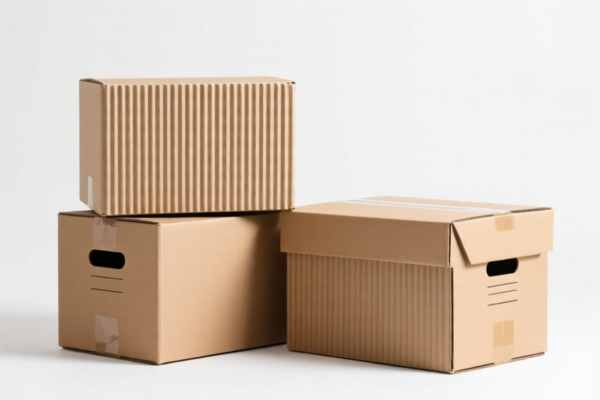
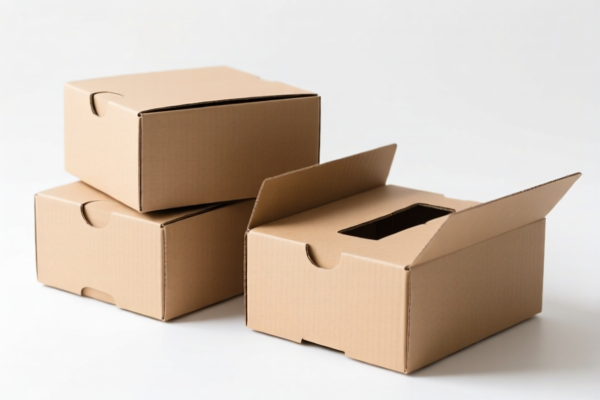


AI Analysis
📦 Cardboard Box (Paper/Board Packaging)
🌐 HS Code Reference & Customs Clearance Guide | 2026 Tariff Breakdown | Professional Entry Strategy
📌 I. Product Definition & Classification: Do You Really Know "Cardboard Box"?
Cardboard boxes are among the most ubiquitous packaging materials in global trade, used across industries from e-commerce to food logistics. In international customs classification, they are categorized based on material composition and structural design:
- Standard Cartons (e.g., corrugated or folded cartons): Made from paper/cardboard, often with flaps for folding.
- Paper Bags (e.g., retail shopping bags): Flat or tubular, used for carrying goods.
- Other Paper Packaging: Non-standard shapes, non-foldable, or specialized paper products.
⚠️ Key Differentiators:
- If the item is a foldable box (e.g., product packaging for electronics, cosmetics) →归入 4819.10.00.40 or 4805.92.40.10 / 4805.93.40.10.
- If the item is a paper bag (e.g., shopping bags, gift bags) →归入 4819.40.00.40.
- If the item is a non-standard paper product (e.g., decorative paper, non-foldable containers) →归入 4823.90.86.80.
📦 II. HS Code Classification Details (2026 Official Tariff Reference)
| HS Code | Product Description | Application Scenarios | Foldable? | Material |
|---|---|---|---|---|
4819.10.00.40 |
Standard Cardboard Boxes (Corrugated/Folded) | Consumer goods packaging, shipping boxes, retail cartons | ✅ Yes | Paper/Cardboard |
4805.92.40.10 |
Folding Carton Board (e.g., cereal boxes, cosmetic boxes) | Retail packaging, consumer electronics | ✅ Yes | Paper/Cardboard |
4805.93.40.10 |
Folding Cartons (Folding Carton Board) | Specialized folding cartons (e.g., pharmaceuticals, luxury goods) | ✅ Yes | Paper/Cardboard |
4819.40.00.40 |
Paper Bags (e.g., shopping bags, gift bags) | Retail, e-commerce, gift packaging | ❌ No | Paper |
4823.90.86.80 |
Other Paper Products (Non-standard, non-foldable) | Decorative paper, industrial paper, non-packaging uses | ❌ No | Paper |
🔍 Critical Note:
- All foldable cartons must be classified under 4819.10.00.40 or 4805.92/93.40.10, NOT generic "paper" codes.
- Paper bags are strictly 4819.40.00.40, even if they have handles or printed designs.
- If the item is not foldable (e.g., rigid paper tubes, decorative paper), use 4823.90.86.80.
💰 III. 2026 Tariff Breakdown (US Market – China Origin)
✅ Applicable Country: United States (US)
✅ Origin: China (CN)
✅ Effective Date: November 10, 2025 (and ongoing imports)
🎯 1. 4819.10.00.40 – Standard Cardboard Boxes
| Item | Details |
|---|---|
| Base Tariff | 0% |
| Section 301 Additional Duty | +25% (USITC Footnote 9903.88.01) |
| IEEPA Additional Duty | +10% (China-specific, effective 2025-11-10) |
| Total Tariff | 35% |
| Duty Calculation | CIF Value × 35% |
| De Minimis Exemption | ❌ No (Denied) |
| Legal Basis | IEEPA:9903.01.25 → IEEPA:9903.01.24 → USITC:4819.10.00.40 → FOOTNOTE:9903.88.01 |
📌 Explanation:
- 25% Section 301 Duty: Imposed under US Trade Act Section 301 (China trade policy).
- 10% IEEPA Duty: Additional tariff under International Emergency Economic Powers Act.
- Total 35%: High tariff rate – requires pre-clearance planning!
🎯 2. 4805.92.40.10 & 4805.93.40.10 – Folding Carton Board
| Item | Details |
|---|---|
| Base Tariff | 0% |
| Section 301 Additional Duty | +25% |
| IEEPA Additional Duty | +10% |
| Total Tariff | 35% |
| Duty Calculation | CIF × 35% |
| De Minimis Exemption | ❌ No |
| Legal Basis | IEEPA:9903.01.24 → USITC:4805.92.40.10 / 4805.93.40.10 → FOOTNOTE:9903.88.01 |
📌 Note:
- Both codes apply to foldable cartons (e.g., cereal boxes, cosmetic packaging).
- Even custom-designed folding cartons must use these codes – not generic paper codes.
🎯 3. 4819.40.00.40 – Paper Bags
| Item | Details |
|---|---|
| Base Tariff | 0% |
| Section 301 Additional Duty | +25% |
| IEEPA Additional Duty | +10% |
| Total Tariff | 35% |
| Duty Calculation | CIF × 35% |
| De Minimis Exemption | ❌ No |
| Legal Basis | IEEPA:9903.01.24 → USITC:4819.40.00.40 → FOOTNOTE:9903.88.01 |
📌 Note:
- Applies to all paper bags (e.g., shopping bags, gift bags).
- Even reusable paper bags are subject to 35% tariff.
🎯 4. 4823.90.86.80 – Other Paper Products
| Item | Details |
|---|---|
| Base Tariff | 0% |
| Section 301 Additional Duty | +25% |
| IEEPA Additional Duty | +10% |
| Total Tariff | 35% |
| Duty Calculation | CIF × 35% |
| De Minimis Exemption | ❌ No |
| Legal Basis | IEEPA:9903.01.24 → USITC:4823.90.86.80 → FOOTNOTE:9903.88.01 |
📌 Note:
- Applies to non-foldable, non-bag paper products (e.g., decorative paper, industrial paper).
- Must be clearly distinguished from foldable cartons and paper bags.
🛠️ IV. Customs Clearance Tips (Avoid Costly Mistakes)
✅ 1. Required Documentation (All Must Be Provided)
| Document | Must Have | Explanation |
|---|---|---|
| Product Specifications | ✔️ | Dimensions, material type, folding mechanism (if applicable). |
| Material Composition Report | ✔️ | Confirms "paper/cardboard" (no plastic/metal). |
| Photos of Product | ✔️ | Clear images of folding design, handles, labels. |
| Commercial Invoice | ✔️ | Must state "Cardboard Box" or "Paper Bag" – NOT "Packaging Material". |
| Packing List | ✔️ | Show how boxes/bags are packaged (e.g., folded vs. flat). |
| Certificate of Origin (CO) | ✔️ | If non-China origin, may qualify for reduced rates. |
✅ 2. Declaration Strategy (Key Rules)
🔥 Golden Rule:
"Foldable = Box Code, Non-foldable = Paper Code, Bags = Bag Code!"
| Scenario | Correct Declaration | Incorrect Declaration |
|---|---|---|
| Foldable carton (e.g., cereal box) | 4819.10.00.40 |
4823.90.86.80 → 35% vs. 35% (but risk of audit) |
| Paper bag (e.g., shopping bag) | 4819.40.00.40 |
4819.10.00.40 → 35% (but higher audit risk) |
| Non-foldable paper (e.g., decorative tube) | 4823.90.86.80 |
4819.10.00.40 → 35% (but risk of penalty) |
| Mixed box/bag shipment | Split declaration | Combined declaration → 35% (but delay/penalty) |
✅ 3. Special Cases & Solutions
| Case | Action |
|---|---|
| OEM Custom Boxes | Provide design specs + customer order to avoid "generic" classification. |
| Paper Bags with Plastic Handles | Still 4819.40.00.40 if paper dominates; if plastic >50%, may be 3923.10.00.00 (0% tariff, but requires proof). |
| Boxes for Medical Devices | If specialized,可申请"non-commercial" exemption (需提供证明). |
| Bulk Shipment of Flat Boxes | Declare as "Folded Cartons" – NOT "Paper" – to avoid 35% penalty. |
🌍 V. Global Tariff Comparison (2026)
| Country/Region | Recommended HS Code | Tariff | Certification | Notes |
|---|---|---|---|---|
| 🇺🇸 USA | 4819.10.00.40 |
35% | FCC + RoHS | 35% is very high for China origin. |
| 🇨🇳 China | 4819.10.00.40 |
5% | CCC + RoHS | No additional duties. |
| 🇪🇺 EU | 4819.10.00.40 |
0% (if CE) | CE + EPR | No additional duties. |
| 🇦🇺 Australia | 4819.10.00.40 |
5% | RCM | No additional duties. |
| 🇯🇵 Japan | 4819.10.00.40 |
0% | PSE | No additional duties. |
📌 Conclusion:
- USA is the only major market with 35% tariff for Chinese cardboard boxes.
- Other markets have 0%~5% – consider shifting production or supply chain to EU/Asia.
📌 VI. Common Errors & Pitfalls (Learn from Others' Mistakes)
❌ Error 1: Declaring foldable boxes as "paper" (4823.90.86.80).
👉 Result: 35% tariff + audit risk (even if tax rate is same, classification error = penalty).
❌ Error 2: Declaring paper bags as "boxes" (4819.10.00.40).
👉 Result: 35% tariff + delayed clearance (customs may reject mismatched codes).
❌ Error 3: Omitting material composition (e.g., "paper" without specifying "cardboard").
👉 Result: Customs may reclassify as 3923.10.00.00 (plastic) → 0% tariff, but requires proof.
❌ Error 4: Combining boxes + bags in one declaration.
👉 Result: 35% for all items + high audit risk.
✅ Best Practice:
"Foldable Cardboard Box, 20x10x5 inches, Corrugated Paper, Model XYZ, No Plastic Components, FCC & RoHS Certified"
🎯 VII. Conclusion: Precision Classification = Cost Savings!
🎯 Remember:
🔹 "Foldable = Box, Non-foldable = Paper, Bags = Bag!"
🔹 "35% tariff is the rule for China origin – avoid errors!"
🔹 "Documentation is key – no specs = no clearance!"
📌 Pro Tip:
If your boxes/bags are originated from Vietnam, Mexico, Thailand, or Malaysia, you may qualify for IEEPA exemptions (tariff drops to 0%~5%).
Apply for Advance Ruling before shipping to avoid surprises!
📣 Act Now:
📞 Contact a licensed customs broker + provide product photos + apply for HS Code pre-ruling.
🚀 Ensure your cardboard boxes pass customs smoothly, reduce costs, and boost profits!
✨ Professional Customs Clearance Starts with Accurate Classification!
💼 Every cent of your cost deserves precise calculation!
Customer Reviews
About HS Code Classification
The Harmonized System (HS) is an internationally standardized nomenclature developed by the World Customs Organization (WCO) to classify traded products. Over 200 countries use the HS system as the basis for customs tariffs, trade statistics, and import/export regulations.
Each HS code follows a hierarchical structure:
- Chapter (2 digits) — Broad category of goods (e.g., Chapter 84: Machinery and Mechanical Appliances)
- Heading (4 digits) — More specific grouping within the chapter
- Subheading (6 digits) — Internationally standardized breakdown, used by all WCO member countries
- National subdivisions (8-10 digits) — Country-specific extensions for further classification, such as US HTSUS 10-digit codes
Correct HS code classification is essential for smooth customs clearance, accurate duty payment, and compliance with trade regulations. Misclassification can lead to customs delays, overpayment of duties, or penalties.
When importing from CN to US, the applicable tariff rates may include:
- Most-Favored-Nation (MFN) rate — The standard duty rate applied to WTO members
- General rate — Applied to countries without trade agreements
- Trade remedy duties — Additional tariffs such as Section 301 (anti-dumping), Section 232 (national security), or countervailing duties
The information provided on this page is for reference purposes only. For official classification, please consult with your local customs authority or a licensed customs broker.