cardboard decoration box
CN → US| HS Code | Tariff Rate | Origin | Destination | Doc |
|---|---|---|---|---|
| 4821904000 | 35.0% | CN | US | Official Doc |
| 4819100040 | 35.0% | CN | US | Official Doc |
| 4819200040 | 35.0% | CN | US | Official Doc |
| 4823908680 | 35.0% | CN | US | Official Doc |
| 4819100040 | 35.0% | CN | US | Official Doc |
Product Images
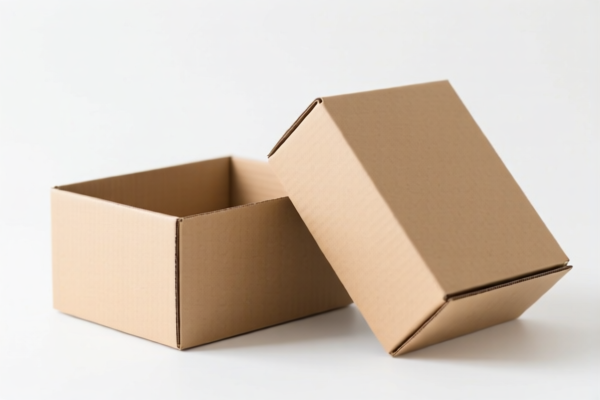



AI Analysis
📦 Cardboard Decoration Box: HS Code Classification & U.S. Customs Clearance Strategy
🌐 HS Code Reference & Clearance Guide | 2026 Latest Tariff Analysis | Professional Customs Strategy
📌 I. Product Definition & Classification: Do You Truly Understand "Cardboard Decoration Boxes"?
In international trade, a "Cardboard Decoration Box" is not a single, unified commodity. Its classification depends entirely on its function, form, and physical characteristics. Is it a simple lid? A structural component of a packaging container? Or a flat piece cut to size?
The following four HS Codes represent the most common classifications for cardboard boxes/lids imported into the US, each with distinct tax implications.
⚠️ Critical Distinction:
- If it is a lid/cover without structural integrity for storage → Likely 4821.90.40.00 (Label/Accessory).
- If it is a structural part of a box/container → Likely 4819.10.00.40 or 4819.20.00.40 (Packaging).
- If it is a flat-cut sheet or irregular shape not designed as a container → Likely 4823.90.86.80 (Cut Paper Products).
📦 II. HS Code Classification Details (2026 Latest Tariff Authority)
Based on the provided data, here are the four possible classifications for "Cardboard Decoration Box":
| HS Code | Product Description | Key Classification Criteria | Typical Use Case |
|---|---|---|---|
| 4821.90.40.00 | Cardboard Box Lid | Material: Cardboard. Form: Regarded as paper labels/accessories. |
Decorative lids, flat covers, non-structural attachments. |
| 4819.10.00.40 | Cardboard Box Lid | Material: Cardboard. Form: Part of a packaging container (box lid). |
Standard rigid boxes where the lid is a functional component. |
| 4819.20.00.40 | Cardboard Box Lid | Material: Cardboard. Form: Box/shell type packaging container (other category). |
Foldable cartons, folding boxboard containers. |
| 4823.90.86.80 | Cardboard Box Lid | Material: Cardboard. Form: Paper products cut to size/shape. |
Pre-cut blanks, flat decorative panels, non-folded structures. |
🔍 Key Reminder:
- All four categories listed above incur the exact same total tax rate due to US trade policies.
- The difference lies in customs scrutiny. Misclassification can lead to delays, even if the tax amount is the same.
- 4819.10/4819.20 are for containers. 4821.90 is for accessories/labels. 4823.90 is for cut paper.
💰 III. 2026 Latest Tariff Rate Breakdown (Including Surtaxes & Policy Add-ons)
✅ Applicable Country: United States (US)
✅ Country of Origin: China (CN)
✅ Effective Date: November 10, 2025 (and onwards)
🎯 Universal Tariff Structure for All 4 HS Codes
All four HS codes (4821.90.40.00, 4819.10.00.40, 4819.20.00.40, 4823.90.86.80) share the identical tax profile:
| Item | Content |
|---|---|
| Base Duty Rate | 0.0% (Ad Valorem) |
| USITC Surtax (Section 301) | +25.0% (Section 301 Tariff on Chinese Goods) |
| IEEPA Surtax (Section 122) | +10.0% (Additional tariff under 122 Provision for Chinese Imports) |
| Total Tax Rate | 35.0% |
| Tax Calculation | CIF Value × 35% |
| De Minimis Exemption | ❌ Not Eligible (deny_de_minimis) |
| Legal Basis Path | Section 301 → Section 122 → USITC:4819/4821/4823 |
📌 Explanation:
- 0% Base Rate: Cardboard packaging items typically have low or zero base MFN rates.
- 25% Section 301: Applies to most Chinese-manufactured paper products and packaging.
- 10% Section 122: Additional surcharge specifically targeting imports from China under recent executive authorities.
- Total 35%: This is a high-cost tariff bracket. You must factor this into your landed cost calculation immediately.
🛠️ IV. Customs Clearance Practical Advice (Avoid Pitfalls)
✅ 1. Required Documentation Checklist (No Exceptions)
| Document | Mandatory? | Notes |
|---|---|---|
| ✅ Product Specification Sheet | ✔️ | Must detail material type (e.g., Corrugated, Chipboard), dimensions, and weight. |
| ✅ Technical Drawing / CAD File | ✔️ | Crucial to prove if it is a "container" (4819) or "flat cut" (4823). |
| ✅ Product Photos (Clear) | ✔️ | Show the box in both folded and assembled states. Include labels/markings. |
| ✅ Commercial Invoice | ✔️ | Must explicitly state: "Cardboard Decoration Box Lid" or "Packaging Container". |
| ✅ Packing List | ✔️ | Specify net/gross weight. Do not split one box into multiple line items artificially. |
| ✅ Certificate of Origin | ✔️ | Required to verify Chinese origin and apply correct surtaxes. |
✅ 2. Declaration Strategy (Key Mantra)
🔥 "Define Form, Not Just Name! Container vs. Cut Sheet!"
| Scenario | Correct Declaration | Incorrect Declaration | Risk |
|---|---|---|---|
| Structural Box Lid | 4819.10.00.40 or 4819.20.00.40 |
"Cardboard Box" | May be reclassified as general paper (4823) or accessory (4821). |
| Flat Decorative Panel | 4823.90.86.80 |
"Decoration Box" | Misleading description → Customs holds for inspection. |
| Non-Structural Lid | 4821.90.40.00 |
"Packaging Box" | If it doesn't hold items, it's not a container. |
| Mixed Contents | Declare separately | Combine lids + products | Bundling hides the true nature of the cardboard. |
✅ 3. Special Handling Tips
| Situation | Recommendation |
|---|---|
| Custom Printed Designs | Provide print proof. If ink coverage >60%, it may still be paper, but design helps identification. |
| Embossed/Foil Stamped | Clearly state "Decorative Finish". This confirms it is a "decoration box" and not raw packaging material. |
| Samples vs. Bulk | Even samples are subject to the 35% tariff. Do not misdeclare as "Samples Value $1" to avoid tax. |
| Origin Marking | Ensure boxes are marked "Made in China" if required, to match the tariff data. |
🌍 V. Global Market Comparison (2026 Update)
| Market | Recommended HS Code | Approx. Tax Rate (China Origin) | Notes |
|---|---|---|---|
| 🇺🇸 USA | 4819.10.00.40 / 4821.90.40.00 etc. |
35% (0% Base + 25% Sec 301 + 10% Sec 122) | Highest Cost. Plan margin accordingly. |
| 🇨🇳 China | 4819.10.00.00 |
0% - 5% | Import duty is low; VAT applies. |
| 🇪🇺 EU | 4819.10.00 |
0% | No Section 301 equivalent. Standard EU duty. |
| 🇬🇧 UK | 4819.10.00 |
0% | Post-Brexit tariffs may vary, but generally low for packaging. |
📌 Conclusion:
- The US market is uniquely expensive for Chinese cardboard packaging due to the 35% combined surtax.
- Competitors in EU/Asia do not face this burden. Consider supply chain diversification if margins are thin.
📌 VI. Common Mistakes & Pitfalls (Blood Lessons)
❌ Mistake 1: Calling it "Gift Box" without specifying material.
👉 Result: Customs may classify it under general consumer goods, triggering different rules or delays.
❌ Mistake 2: Declaring as "Paper Labels" (4821) when it is a structural box (4819).
👉 Result: Even though tax is the same (35%), misdeclaration is fraud. Can lead to seizures and fines.
❌ Mistake 3: Ignoring the "122 Provision" (10% surtax).
👉 Result: Underpaying duty. You will owe the back taxes + penalties upon audit.
❌ Mistake 4: Assuming "De Minimis" applies.
👉 Result: Cardboard imports from China do not qualify for the $800 de minimis exemption. Full inspection and taxation apply.
✅ Correct Declaration Example:
"Cardboard Decoration Box Lid, Corrugated Fiberboard, Printed, For Retail Packaging, Model XYZ, Made in China"
🎯 VII. Conclusion: Professional Clearance Saves Costs!
🎯 Remember This Mantra:
🔹 "35% is the floor, not the ceiling!"
🔹 "Define Form: Container vs. Cut Sheet."
🔹 "No De Minimis, No Exemptions for China Origin."
📌 Pro Tip:
- If you have high-volume shipments, apply for a Customs Bond to ensure smooth entry.
- For design-heavy boxes, keep artwork proofs ready to prove "decorative" nature, which may help in disputes over "functional packaging."
- Pre-clearance: Submit documents to your broker 48 hours before arrival.
📣 Immediate Action:
📞 Contact your customs broker with the 4 HS Codes listed above.
📄 Provide technical drawings to confirm if it’s 4819 (Container) or 4823 (Cut).
🚀 Factor 35% into your landed cost immediately to avoid margin collapse!
✨ Professional Clearance Starts with Precise Classification!
💼 Your every dollar of profit deserves precise calculation!
Customer Reviews
About HS Code Classification
The Harmonized System (HS) is an internationally standardized nomenclature developed by the World Customs Organization (WCO) to classify traded products. Over 200 countries use the HS system as the basis for customs tariffs, trade statistics, and import/export regulations.
Each HS code follows a hierarchical structure:
- Chapter (2 digits) — Broad category of goods (e.g., Chapter 84: Machinery and Mechanical Appliances)
- Heading (4 digits) — More specific grouping within the chapter
- Subheading (6 digits) — Internationally standardized breakdown, used by all WCO member countries
- National subdivisions (8-10 digits) — Country-specific extensions for further classification, such as US HTSUS 10-digit codes
Correct HS code classification is essential for smooth customs clearance, accurate duty payment, and compliance with trade regulations. Misclassification can lead to customs delays, overpayment of duties, or penalties.
When importing from CN to US, the applicable tariff rates may include:
- Most-Favored-Nation (MFN) rate — The standard duty rate applied to WTO members
- General rate — Applied to countries without trade agreements
- Trade remedy duties — Additional tariffs such as Section 301 (anti-dumping), Section 232 (national security), or countervailing duties
The information provided on this page is for reference purposes only. For official classification, please consult with your local customs authority or a licensed customs broker.