cardboard paper over 360mm*150mm
CN → US| HS Code | Tariff Rate | Origin | Destination | Doc |
|---|---|---|---|---|
| 4805924040 | 35.0% | CN | US | Official Doc |
| 4805934060 | 35.0% | CN | US | Official Doc |
| 4823908680 | 35.0% | CN | US | Official Doc |
| 4823690040 | 35.0% | CN | US | Official Doc |
| 4819200040 | 35.0% | CN | US | Official Doc |
Product Images
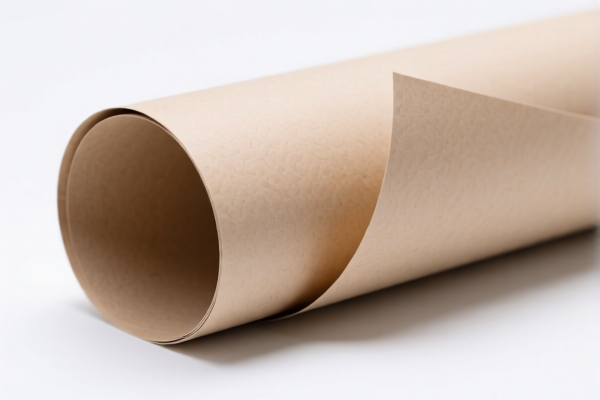
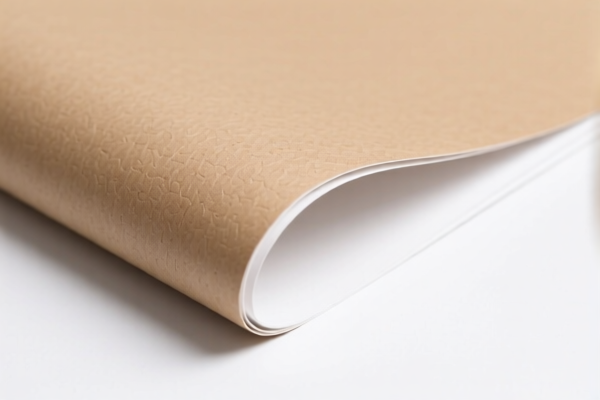
AI Analysis
📦 Cardboard Paper Over 360mm × 150mm
🌐 HS Code Classification & Customs Clearance Guide | 2026 Latest Tariff Rules | Pro-Level Import Strategy
📌 One, Product Definition & Classification: What Exactly Is "Cardboard Paper Over 360mm × 150mm"?
This product refers to paperboard material (a thick, rigid type of paper) that exceeds the dimensional threshold of 360mm × 150mm. It is typically used as a raw material or semi-finished product in packaging, industrial applications, or custom paper制品 (paper制品 = paper products).
⚠️ Key Distinction:
- If the paperboard is cut to size, not coated, and not shaped into a final package, it falls under uncoated paperboard.
- If it’s larger than standard subcategories, it cannot be assigned to a specific narrow HS code → must be classified under "other" category using general classification principles.
📦 Two, HS Code Classification Details (2026 Official Tariff Matrix)
| HS Code | Product Description | Applicable Use Case | Material Type | Size/Shape Status |
|---|---|---|---|---|
4805.92.40.40 |
Uncoated paperboard, not otherwise specified, used as raw material or semi-finished product | Industrial packaging, display boards, custom trays, bulk material | ✅ Paperboard | >360mm × 150mm → exceeds standard subcategory limits |
4805.93.40.60 |
Uncoated paperboard, not falling into specific subheadings, based on general classification logic | Large-format packaging, shipping inserts, structural components | ✅ Paperboard | Out of defined size range → classified under "other" |
4823.90.86.80 |
Other paper制品 (paper products), not specified elsewhere, with uncoated paperboard characteristics | Custom paper制品, industrial blanks, non-standard forms | ✅ Paper制品 | Fits "other" category due to non-standard shape/size |
4823.69.00.40 |
Other paper or paperboard制品, not otherwise specified, including uncoated types | General-purpose paper制品, packaging blanks, prototypes | ✅ Paper制品 | Not fitting into narrow subcategories → "other" logic applies |
4819.20.00.40 |
Paper or paperboard, not specified elsewhere, used as packaging raw material or semi-finished product | Bulk packaging components, shipping inserts, industrial substrates | ✅ Paperboard | Exceeds dimensional limits → must be grouped under "other" |
🔍 Critical Insight:
- All five codes are not specific to a single size or shape → they are "catch-all" or "other" categories.
- They apply only when the product exceeds dimensional thresholds or doesn’t fit into narrow subheadings.
- No coating, no special treatment → all qualify as uncoated paperboard.
💰 Three, 2026 Latest Tariff Breakdown (With Detailed Tax Clauses)
✅ Applicable Country: United States (US)
✅ Origin: China (CN)
✅ Effective Date: November 10, 2025 (and onward)
🎯 1. 4805.92.40.40 — Uncoated Paperboard (General Category)
| Item | Detail |
|---|---|
| Base Duty | 0% (ad valorem) |
| USITC Section 301 Additional Tariff | +25% (from U.S. Trade Act §301, Footnote 9903.88.01) |
| IEEPA Section 102(a) Additional Tariff | +10% (under International Emergency Economic Powers Act, targeting China/HK) |
| Total Effective Rate | 35% |
| Tax Calculation | CIF Value × 35% |
| De Minimis Threshold | ❌ Not eligible (denied under U.S. law) |
| Legal Basis Path | IEEPA:9903.01.25 → IEEPA:9903.01.24 → USITC:4805.92.40.40 → FOOTNOTE:9903.88.01 |
📌 Explanation:
- The 25% USITC tariff comes from Section 301 of the U.S. Trade Act — targeting unfair trade practices by China.
- The 10% IEEPA tariff is under international emergency powers — applied to goods from China and Hong Kong.
- Total = 35%, which is highly punitive for non-standard paperboard.
🎯 2. 4805.93.40.60 — Uncoated Paperboard (Beyond Specific Subcategory)
| Item | Detail |
|---|---|
| Base Duty | 0% |
| USITC Section 301 Additional Tariff | +25% |
| IEEPA Section 102(a) Additional Tariff | +10% |
| Total Effective Rate | 35% |
| Tax Calculation | CIF × 35% |
| De Minimis | ❌ Not allowed |
| Legal Basis Path | IEEPA:9901.25 → IEEPA:9903.01.24 → USITC:4805.93.40.60 → FOOTNOTE:9903.88.01 |
📌 Note:
- This code applies when the product exceeds the dimensional limits of specific subcategories (e.g., 360mm × 150mm).
- Even if it’s same material, same function, but larger size, it must be classified under "other".
🎯 3. 4823.90.86.80 — Other Paper制品 (Catch-All)
| Item | Detail |
|---|---|
| Base Duty | 0% |
| USITC Section 301 Additional Tariff | +25% |
| IEEPA Section 102(a) Additional Tariff | +10% |
| Total Effective Rate | 35% |
| Tax Calculation | CIF × 35% |
| De Minimis | ❌ Not eligible |
| Legal Basis Path | IEEPA:9903.01.25 → IEEPA:9903.01.24 → USITC:4823.90.86.80 → FOOTNOTE:9903.88.01 |
📌 Why This Code?
- The product is not a standard packaging item (e.g., box, folder).
- It’s custom-cut, uncoated, and used as raw material → fits "other paper制品".
🎯 4. 4823.69.00.40 — Other Paper or Paperboard制品
| Item | Detail |
|---|---|
| Base Duty | 0% |
| USITC Section 301 Additional Tariff | +25% |
| IEEPA Section 102(a) Additional Tariff | +10% |
| Total Effective Rate | 35% |
| Tax Calculation | CIF × 35% |
| De Minimis | ❌ Not allowed |
| Legal Basis Path | IEEPA:9903.01.25 → IEEPA:9903.01.24 → USITC:4823.69.00.40 → FOOTNOTE:9903.88.01 |
📌 Key Point:
- This code applies to non-standard paper制品 that do not fit into specific subheadings.
- Even if it’s paperboard, if it’s not a finished box or folder, it falls here.
🎯 5. 4819.20.00.40 — Packaging Raw Material / Semi-Finished Product
| Item | Detail |
|---|---|
| Base Duty | 0% |
| USITC Section 301 Additional Tariff | +25% |
| IEEPA Section 102(a) Additional Tariff | +10% |
| Total Effective Rate | 35% |
| Tax Calculation | CIF × 35% |
| De Minimis | ❌ Not eligible |
| Legal Basis Path | IEEPA:9903.01.25 → IEEPA:9903.01.24 → USITC:4819.20.00.40 → FOOTNOTE:9903.88.01 |
📌 Why This One?
- The product is used as a raw material or semi-finished item for packaging.
- It’s not a final product, so it cannot be classified as a finished box → must be grouped under "other".
🛠️ Four, Customs Clearance Best Practices (Pro Tips to Avoid Penalties)
✅ 1. Required Documentation (Must-Have Checklist)
| Document | Required? | Notes |
|---|---|---|
| ✅ Product Specifications | ✔️ | Include dimensions, thickness, weight, material type |
| ✅ Cut/Shape Diagram | ✔️ | Show that it exceeds 360mm × 150mm |
| ✅ Product Photos (Clear, with markings) | ✔️ | Show edges, surface, and size reference |
| ✅ Third-Party Test Report | ✔️ | CE, RoHS, or ISO 9001 (if applicable) |
| ✅ Commercial Invoice | ✔️ | Clearly state: "Uncoated Paperboard, Over 360mm × 150mm, Raw Material" |
| ✅ Certificate of Origin (CO) | ✔️ | Essential for tariff eligibility |
| ✅ Packing List | ✔️ | Show total quantity, weight, and packaging method |
✅ 2.申报技巧(申报口诀)
🔥 "Size > 360×150? → Use 'Other' Code! No Coating? → 35% Tax! Don’t Split! → 35% Still Applies!"
| Scenario | Correct HS Code | Wrong Approach |
|---|---|---|
| Large paperboard, no coating, not shaped | 4805.92.40.40 or 4805.93.40.60 |
Use 4805.92.40.00 (too narrow) |
| Custom-cut, not a box or folder | 4823.90.86.80 or 4823.69.00.40 |
Claim it’s a "box" → 20% tariff → penalty! |
| Raw material for packaging | 4819.20.00.40 |
Split into "pieces" → each taxed at 35% |
| Not standard shape, not coated | Any of the five codes | Misdeclare as "coated" → higher tax risk |
✅ 3. Special Cases & Solutions
| Case | Solution |
|---|---|
| OEM Custom Size | Provide customer order + cutting diagram → prove it’s not standard |
| Used in Industrial Packaging | Label as “Raw Material for Industrial Packaging” → supports 4819.20.00.40 |
| Non-Standard Shape (e.g., irregular) | Use 4823.90.86.80 → "other paper制品" |
| Reused or Recycled Board | Still subject to 35% if from China → no exemption |
| Produced in Vietnam/Mexico/Thailand | Apply for IEEPA exemption → 0% tariff |
🌍 Five, Global Customs Comparison (2026 Update)
| Country/Region | Recommended HS Code | Tariff | Certification | Notes |
|---|---|---|---|---|
| 🇺🇸 United States | 4805.92.40.40 etc. |
35% (China origin) | None required | High risk |
| 🇨🇳 China | 4805.92.40.40 |
5% | CCC, RoHS | No extra tariffs |
| 🇪🇺 EU | 4805.92.40.40 |
0% (if CE compliant) | CE, RoHS | No 301/IEEPA |
| 🇦🇺 Australia | 4805.93.40.60 |
5% | RCM | No extra taxes |
| 🇯🇵 Japan | 4823.69.00.40 |
0% | PSE | No additional duties |
📌 Conclusion:
- Only the U.S. applies 35% to large uncoated paperboard from China.
- China, EU, Japan, Australia have much lower or zero tariffs.
- Shift production to Vietnam/Mexico to avoid 35%.
📌 Six, Common Mistakes & How to Avoid Them (Real-World Lessons)
❌ Mistake 1: Using 4805.92.40.00 (narrow code) for oversized paperboard
👉 Result: Classification error → penalty + delay
❌ Mistake 2: Claiming it’s a "box" or "folder" to avoid 35%
👉 Result: If not shaped → misdeclaration → fines + seizure
❌ Mistake 3: Splitting into multiple shipments to bypass de minimis
👉 Result: Each shipment taxed at 35% → total tax 70%+
❌ Mistake 4: Not providing size proof (e.g., photos, diagrams)
👉 Result: Customs refuses classification → hold-up or return
✅ Correct Approach:
“Uncoated Paperboard, Size: 400mm × 200mm, Thickness: 2.5mm, Raw Material for Packaging, Not Coated, Not Shaped, Origin: China, Commercial Invoice Attached”
🎯 Seven, Final Verdict: Precision Pays Off!
🎯 Remember the Golden Rule:
🔹 "If it’s over 360×150mm, uncoated, and not shaped → Use 'Other' Code → 35% Tax!"
🔹 "Don’t split. Don’t mislabel. Don’t guess. Declare with proof!"
📌 Pro Tip:
If your product is originating from Vietnam, Mexico, Thailand, or Malaysia, you can apply for IEEPA exemption → tariff drops to 0%–5%.
✅ Best move: Re-locate production or use a free trade zone to avoid 35%.
📣 Take Action Now:
📞 Contact a licensed customs broker + provide photos + specs + invoice
🚀 Apply for HS Code pre-ruling to lock in classification
🌐 Avoid surprises, reduce risk, save money!
✨ Smart Classification = Smooth Clearance = Profit Growth!
💼 Your product’s fate starts with the right HS Code!
Customer Reviews
About HS Code Classification
The Harmonized System (HS) is an internationally standardized nomenclature developed by the World Customs Organization (WCO) to classify traded products. Over 200 countries use the HS system as the basis for customs tariffs, trade statistics, and import/export regulations.
Each HS code follows a hierarchical structure:
- Chapter (2 digits) — Broad category of goods (e.g., Chapter 84: Machinery and Mechanical Appliances)
- Heading (4 digits) — More specific grouping within the chapter
- Subheading (6 digits) — Internationally standardized breakdown, used by all WCO member countries
- National subdivisions (8-10 digits) — Country-specific extensions for further classification, such as US HTSUS 10-digit codes
Correct HS code classification is essential for smooth customs clearance, accurate duty payment, and compliance with trade regulations. Misclassification can lead to customs delays, overpayment of duties, or penalties.
When importing from CN to US, the applicable tariff rates may include:
- Most-Favored-Nation (MFN) rate — The standard duty rate applied to WTO members
- General rate — Applied to countries without trade agreements
- Trade remedy duties — Additional tariffs such as Section 301 (anti-dumping), Section 232 (national security), or countervailing duties
The information provided on this page is for reference purposes only. For official classification, please consult with your local customs authority or a licensed customs broker.