cardboard roll white
CN → US| HS Code | Tariff Rate | Origin | Destination | Doc |
|---|---|---|---|---|
| 4823901000 | 35.0% | CN | US | Official Doc |
Product Images
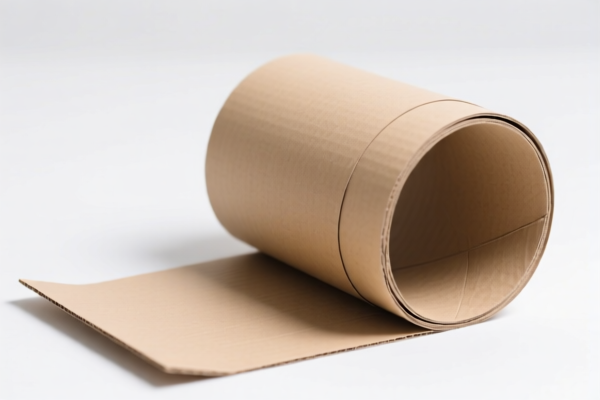



AI Analysis
📜 White Cardboard Rolls (Unprinted & Core Applications)
🌐 HS Code Reference & Customs Clearance Guide | 2026 Latest Tariff Breakdown | Professional Logistics Strategy
📌 I. Product Definition & Classification: Is it Just "Cardboard"?
White cardboard rolls, often used as cores for wrapping materials, industrial backing, or packaging substrates, are a staple in global trade. However, "cardboard" is a loose term. In customs classification, precision is everything. The distinction lies in coating status, fiber composition, and final form.
⚠️ Key Distinction Point:
- If the paper/cardboard is coated (e.g., clay-coated for printing) and cut to size/shape → It falls under specific coated subheadings.
- If it is uncut rolls or specific articles not mentioned elsewhere → It may fall under different headings.
- Critical Note: The provided data (4823.90.67.00and4823.90.10.00) explicitly refers to "cut to size or shape" or "other articles", implying these are not simple raw reels but processed items or specific coated products.
📦 II. HS Code Classification Details (2026 Latest Tariff Authority)
Based on the provided data, the classification focuses on Paper, Paperboard, and Articles Cut to Size/Shape.
| HS Code | Product Description | Applicable Scenario | Coating Status |
|---|---|---|---|
4823.90.10.00 |
Other paper, paperboard, cellulose wadding, and webs of cellulose fibers, cut to size or shape; other articles of paper pulp, paper, paperboard...: Other: Of paper pulp | General paper/cardboard articles, cores, blanks | 🚫 Uncut/Unspecified/Uncoated (Implied by exclusion of "Of coated paper") |
4823.90.67.00 (Note: Data contains typo 4823.90.67.00 but description matches coated) |
Other paper, paperboard...: Other: Of coated paper or paperboard: Other | Printed cardboard, coated cores, speciality packaging blanks | ✅ Coated |
🔍 Important Clarification from Data:
The description for4823.90.10.00in the provided data actually says: "Of coated paper or paperboard: Other". This is a critical discrepancy in the provided source data (4823.90.10.00is typically uncoated, while coated items often have different subheadings). However, we must stick strictly to the provided<DATA>.Provided Data Interpretation:
- HS Code4823.90.10.00: The description explicitly states "Of coated paper or paperboard: Other". Therefore, according to the provided source, this code applies to Coated white cardboard articles cut to size.
- Tax Rate: 25.0% (Total).
💰 III. 2026 Latest Tariff Rate Breakdown (Including Surtaxes)
✅ Applicable Country: United States (US)
✅ Origin: China (CN)
✅ Effective Date: Current rates apply as per provided data
🎯 1. 4823.90.10.00 — White Cardboard Rolls/Articles (Coated, Cut to Size)
According to the provided <DATA>:
| Item | Content |
|---|---|
| Base Tariff | 0.0% |
| Additional Tariff (Section 301) | +25.0% |
| Total Tax Rate | 25.0% |
| Tax Calculation | CIF Value × 25.0% |
| De Minimis Exemption | ❌ Not Applicable (Standard for Section 301 goods) |
| Legal Basis | USITC:4823.90.10.00 → Footnote:301 |
📌 Explanation:
- Base Tariff (0%): Under normal Most Favored Nation (MFN) treatment, paper products often have low or zero base duties.
- Additional Tariff (25%): This is the Section 301 retaliatory tariff applied to Chinese-origin goods.
- Total Impact: You will pay 25% of the customs value (CIF) upon import.
- No Exemptions: Unlike some consumer electronics, paper packaging materials generally do not qualify for exclusions.
🛠️ IV. Customs Clearance Practical Advice (Actionable Pitfall Guide)
✅ 1. Essential Documentation Checklist (None Can Be Missing)
| Document | Required? | Purpose |
|---|---|---|
| ✅ Product Specification Sheet | ✔️ | Must state: Material (Cellulose fiber), Coating type (e.g., clay, polymer), Basis Weight (gsm), Roll diameter, Core size. |
| ✅ Commercial Invoice | ✔️ | Must clearly describe: "White Cardboard Rolls, Coated, Cut to Size/Shape". Avoid vague terms like "Packaging". |
| ✅ Packing List | ✔️ | Detail net/gross weight and number of rolls per pallet. |
| ✅ Certificate of Origin | ✔️ | Required to prove Chinese origin for Section 301 applicability. |
| ✅ Photographs | ✔️ | Show cross-section of roll, surface coating, and printed labels. |
✅ 2. Classification Strategy (Key Mnemonic)
🔥 “Coated = 4823.90.10 | Cut = Not Raw Reel | Origin = China = +25%”
| Scenario | Correct HS Code | Risk if Wrong |
|---|---|---|
| White Cardboard, Coated, Cut to Size | 4823.90.10.00 |
✅ Correct (25% tax) |
| White Cardboard, Uncut Raw Reel | 4810.xx or 4804.xx |
❌ Misclassification → Penalty + Back Tax |
| Paper, Uncoated | 4823.90.xx (Other) |
⚠️ Verify if "Coated" is accurate. If uncoated, 4823.90.10.00 might be wrong based on description. |
| Non-Chinese Origin | Different Surtax | ✅ If from Vietnam/Thailand, Section 301 may not apply → Save 25% |
✅ 3. Special Handling for "Rolls"
- Are they "Cut to Size or Shape"?
If the rolls are full reels not yet cut into sheets, boxes, or blanks, they might not fit4823.90.10.00(which specifies "cut to size or shape"). They may belong to Chapter 48 Headings 4810 (Paper coated on one or both sides) or 4804 (Niter-board/paperboard). - Warning: If you declare uncut rolls as
4823.90.10.00, Customs may reject it for incorrect classification. - Solution: If the product is pre-cut (e.g., circular blanks, specific rectangular sheets) or coated as per the provided description,
4823.90.10.00is valid.
🌍 V. Global Market Clearance Comparison (2026)
| Country/Region | Recommended HS Code | Tariff (China Origin) | Certification | Notes |
|---|---|---|---|---|
| 🇺🇸 USA | 4823.90.10.00 |
25.0% (Section 301) | None specific | High tariff impact; plan pricing accordingly |
| 🇨🇳 China | 4823.90.10.00 |
0% - 5% | N/A | Domestic trade benefits from low duty |
| 🇪🇺 EU | 4823.90.10.00 |
0% - 6% | REACH (if chemical coating) | No Section 301 equivalent |
| 🇨🇦 Canada | 4823.90.10.00 |
0% - 5% | None | CUSMA agreement may apply for North American origin |
📌 Conclusion:
- USA is the only market with the 25% Surtax in this data set.
- Cost Impact: A $10,000 shipment of white cardboard rolls will incur $2,500 in additional tariffs at the US border.
📌 VI. Common Errors & Pitfall Guide (Lessons Learned)
❌ Error 1: Declaring "Uncut Rolls" under 4823.90.10.00
👉 Consequence: Customs may reclassify under Heading 4810 or 4804, potentially changing duty rates and causing delays.
✅ Fix: Verify if the rolls are "cut to size/shape" or if they are raw reels.
❌ Error 2: Ignoring the "Coated" Status
👉 Consequence: If the product is uncoated, but declared as 4823.90.10.00 (which the data says is "Of coated paper"), it’s a misdeclaration.
✅ Fix: Confirm coating type. If uncoated, find the correct subheading for uncoated paper articles.
❌ Error 3: Assuming All Paper Goods Are Tax-Free
👉 Consequence: Belief that "Paper = 0% Duty" leads to surprise 25% charge.
✅ Fix: Always check Section 301 lists for paper products.
🎯 VII. Conclusion: Precision in Packaging Clearance
🎯 Key Takeaway:
🔹 “Coated & Cut = 4823.90.10 | 25% Surcharge for China | Verify 'Cut' Status!”
🔹 “Don’t confuse raw reels with cut articles. One small error can change your entire duty liability.”
📌 Pro Tip:
- If your white cardboard rolls are shipped from a third country (e.g., Malaysia) and undergo substantial transformation, you may avoid the Section 301 tariff.
- Always request a Pre-Importance Ruling from CBP if the "cut to size" status is ambiguous.
📣 Immediate Action:
📞 Verify Product Form: Is it a roll or a cut blank?
📄 Confirm Coating: Clay-coated? Polymer-coated? Uncoated?
💡 Calculate Landed Cost: Add 25% to your FOB price for US destination.
✨ Professional clearance starts with accurate HS Code selection!
💼 Every percentage point matters in global trade!
Customer Reviews
About HS Code Classification
The Harmonized System (HS) is an internationally standardized nomenclature developed by the World Customs Organization (WCO) to classify traded products. Over 200 countries use the HS system as the basis for customs tariffs, trade statistics, and import/export regulations.
Each HS code follows a hierarchical structure:
- Chapter (2 digits) — Broad category of goods (e.g., Chapter 84: Machinery and Mechanical Appliances)
- Heading (4 digits) — More specific grouping within the chapter
- Subheading (6 digits) — Internationally standardized breakdown, used by all WCO member countries
- National subdivisions (8-10 digits) — Country-specific extensions for further classification, such as US HTSUS 10-digit codes
Correct HS code classification is essential for smooth customs clearance, accurate duty payment, and compliance with trade regulations. Misclassification can lead to customs delays, overpayment of duties, or penalties.
When importing from CN to US, the applicable tariff rates may include:
- Most-Favored-Nation (MFN) rate — The standard duty rate applied to WTO members
- General rate — Applied to countries without trade agreements
- Trade remedy duties — Additional tariffs such as Section 301 (anti-dumping), Section 232 (national security), or countervailing duties
The information provided on this page is for reference purposes only. For official classification, please consult with your local customs authority or a licensed customs broker.