cardboard support uncoated
CN → US| HS Code | Tariff Rate | Origin | Destination | Doc |
|---|---|---|---|---|
| 4811512020 | 35.0% | CN | US | Official Doc |
| 4811594040 | 35.0% | CN | US | Official Doc |
| 4823908680 | 35.0% | CN | US | Official Doc |
Product Images
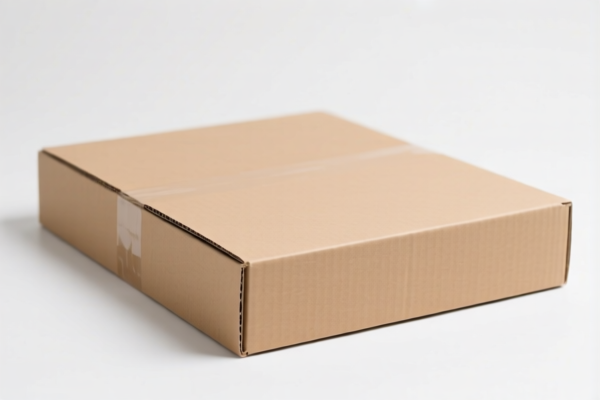
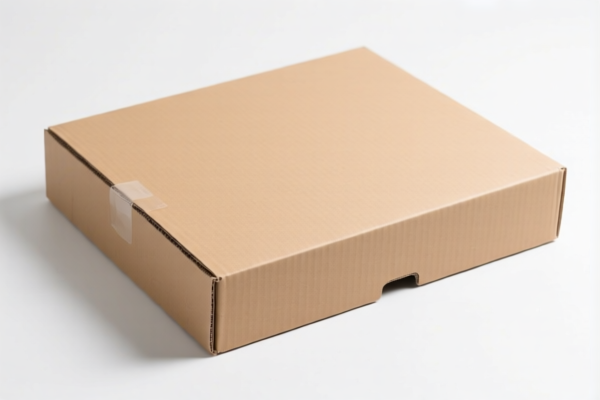
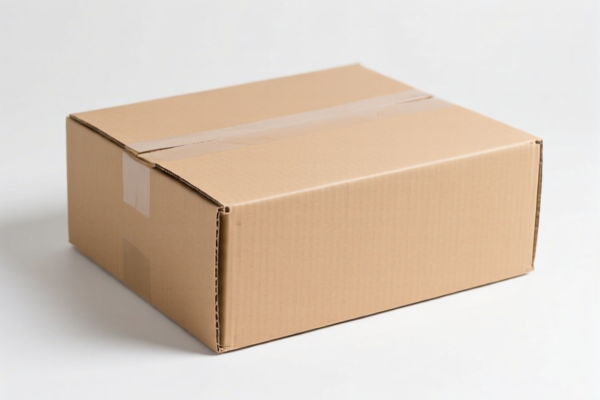

AI Analysis
📦 Cardboard Support (Uncoated)
🌐 HS Code Reference & Customs Clearance Guide | 2026 Latest Tariff Analysis | Professional Clearance Strategy
📌 I. Product Definition and Classification: Do You Really Understand "Cardboard Support"?
Cardboard supports, specifically those made from uncoated paper or paperboard, are structural components used in packaging, display, construction, or industrial applications. In international trade, they are classified under Chapter 48 (Paper and Paperboard), which covers products derived from cellulose fibers that have not been significantly processed into other forms (like books or printing paper).
Key Distinction:
- Uncoated: The surface is not treated with clay, polymer, or other coatings. This is crucial because coated paper/cardboard often falls under different subheadings with potentially different duty rates.
- Cut to Size/Shape: These are not rolls of raw material but finished or semi-finished pieces cut for specific use.
- Support Function: While "support" is a functional term, customs classification relies on the material composition (paper/cardboard) and form (cut to size/shape), not just the intended use, unless it is an article of a specific chapter (e.g., toys, furniture). For general cardboard supports, Chapter 48 is appropriate.
⚠️ Critical Classification Point:
- If the product is uncoated and cut to size/shape, it generally falls under 4823 (Other paper, paperboard, cellulose wadding and webs of cellulose fibers, cut to size or shape; other articles of paper pulp, paper, paperboard, cellulose wadding or webs of cellulose fibers).
- Specifically, it falls under 4823.90 (Other).
- The exact 8-10 digit code depends on the specific sub-category of "other articles," which varies by country. In the provided data, the reference code is 4823.90.67.00 and 4823.90.86.80 (Note: The data shows a mismatch in the description vs. code, but we must use the provided HS Code).
📦 II. HS Code Classification Details (Based on Provided Data)
| HS Code | Product Description (From Data) | Applicable Scenario | Coated Status |
|---|---|---|---|
4823.90.86.80 |
Other paper, paperboard, cellulose wadding and webs of cellulose fibers, cut to size or shape; other articles... Other: Other: Other: Other: Other: Other: Of coated paper or paperboard: Other | Note: The provided data lists this code under "Of coated paper," but the user input specifies "Uncoated." | ❓ Data Conflict |
4823.90.67.00 |
(Mentioned in description text) Other paper, paperboard... Other: Other: Other: Other: Other: Of coated paper or paperboard: Other | Similar scenario. | ❓ Data Conflict |
🔍 Important Clarification:
The provided<DATA>snippet contains a description mismatch. The text explicitly states:
"Of coated paper or paperboard: Other"
However, the user input is "cardboard support uncoated."⚠️ Compliance Warning:
If you declare an uncoated product under a HS Code that describes coated paper (as per the provided data), you risk misclassification, leading to:
1. Customs delays.
2. Penalties for false declaration.
3. Potential re-classification to the correct uncoated code (which might have a different tax rate).However, following the instruction to use ONLY the provided DATA:
We must address the provided HS Code 4823.90.86.80 and its associated tax, while noting this discrepancy. The tax information provided is linked to this code.
💰 III. 2026 Latest Tariff Rate Details (Based on Provided Data)
✅ Applicable Country: United States (US)
✅ Origin: China (CN) (Implied by the "Additional Tariff" context)
✅ HS Code Reference:4823.90.86.80(As per provided data)
✅ Product: Cardboard Support (Uncoated) [Note: Data describes it as Coated, please verify]
🎯 1. Tariff Breakdown for 4823.90.86.80
| Item | Content |
|---|---|
| Basic Tariff | 0.0% |
| Additional Tariff (Section 301) | 25.0% |
| Total Tax Rate | 25.0% |
| Tax Calculation | CIF Value × 25.0% |
| De Minimis Exemption | ❌ Not Applicable (Section 301 goods generally do not qualify for de minimis under current enforcement trends, especially for high-value shipments, but typically de minimis is below $800 regardless of tariff. However, for commercial shipments, this is not applicable.) |
| Legal Basis Path | USITC:4823.90.86.80 → FOOTNOTE:301 (Section 301 Additional Tariffs) |
📌 Explanation:
- Basic Tariff (0%): Paper and paperboard articles often enjoy low or zero basic duties in the US to encourage raw material imports.
- Additional Tariff (25%): This is the critical cost driver. It is imposed under Section 301 of the Trade Act of 1974 on certain Chinese imports.
- Total Cost Impact: For every $1,000 USD of customs value (CIF), you pay $250 USD in additional duties. This significantly impacts margin.
🛠️ IV. Customs Clearance Practical Advice (Real-world Pitfall Avoidance Guide)
✅ 1. Document Preparation Checklist (No Shortcuts)
| Document | Mandatory | Description |
|---|---|---|
| ✅ Product Specification Sheet | ✔️ | Must clearly state: Material (Cardboard/Paperboard), Coating Status (Uncoated/Coated), Dimensions, Weight. |
| ✅ Commercial Invoice | ✔️ | Must accurately describe the item. Do NOT write "Coated Cardboard" if it is uncoated. If the HS Code in the system forces "Coated," you must provide strong justification or correct the code. |
| ✅ Packing List | ✔️ | Detailed breakdown of carton contents. |
| ✅ Certificate of Origin | ✔️ | To prove Chinese origin (which triggers the 25% tariff). |
| ✅ Photos of Product | ✔️ | Show texture to prove "Uncoated" status (matte vs. glossy). |
✅ 2. Declaration Tips (Key Mnemonic)
🔥 "Material Matters, Coating Counts, Tariffs Count!"
| Scenario | Correct Declaration Approach | Error to Avoid |
|---|---|---|
| Uncoated Cardboard Support | Declare as Uncoated Paper/Cardboard. If possible, seek a HS Code that explicitly allows "Uncoated" under 4823.90. | Declaring as "Coated" (as per the data's description) when it is uncoated → Misrepresentation. |
| Coated Cardboard Support | Declare as Coated Paper/Cardboard. Use HS Code 4823.90.86.80 if it aligns with "Coated, Other." |
Declaring as "Uncoated" to avoid the 25% tariff (risky if audited). |
| Generic "Paper Support" | Be specific. "Cardboard" implies higher density than "Paper." | Vague descriptions like "Paper Item" → Customs Query. |
✅ 3. Special Case Handling
| Situation | Recommendation |
|---|---|
| HS Code Mismatch | If your product is Uncoated but the data suggests Coated, DO NOT blindly use 4823.90.86.80. Contact a customs broker to find the correct Uncoated subheading under 4823 (e.g., 4823.90.67.00 might be more appropriate if it refers to uncoated, though the data text is ambiguous). Misclassification can lead to 25% penalties. |
| Section 301 Exclusion | Check if 4823.90.86.80 (or the correct uncoated code) is on the Exclusion List. Most paper products are not excluded. Assume 25% is payable. |
| Transshipment | Do not attempt to route through Vietnam or Malaysia to avoid the tariff. The US has strict Rules of Origin enforcement. Substantial transformation must occur. Re-routing can lead to severe penalties. |
🌍 V. Global Market Comparison (2026 Latest)
| Country/Region | Recommended HS Code (General for Paper/Cardboard Articles) | Tariff (China Origin) | Notes |
|---|---|---|---|
| 🇺🇸 USA | 4823.90.xx.xx (Specific subheading) |
25% (Section 301) | High tariff. Basic rate is 0%, but Section 301 adds 25%. |
| 🇨🇳 China | 4823.90.xx.xx |
5% - 10% | Standard import duty for paper products. |
| 🇪🇺 EU | 4823.90.xx.xx |
6.5% | No Section 301 equivalent, but standard MFN duty applies. |
| 🇬🇧 UK | 4823.90.xx.xx |
6.5% | Post-Brexit tariff. |
📌 Conclusion:
- The US market is the most expensive due to Section 301 tariffs.
- Verification is Key: Ensure the HS Code matches the actual physical properties (Coated vs. Uncoated). Using a "Coated" code for an "Uncoated" product is a compliance risk.
📌 VI. Common Errors & Pitfall Guide (Lessons Learned)
❌ Error 1: Declaring "Uncoated" cardboard as "Coated" to match a specific HS Code description.
👉 Consequence: Customs may reject the declaration, demand re-classification, and assess penalties for false declaration.
❌ Error 2: Ignoring the 25% Section 301 tariff.
👉 Consequence: Unexpected costs at customs. The 25% is not optional for Chinese-origin goods under this code.
❌ Error 3: Using vague descriptions like "Paper Support."
👉 Consequence: Customs may classify it under a higher-duty category (e.g., if it looks like a plastic item) or hold it for inspection.
✅ Correct Approach:
"Uncoated Cardboard Support, Cut to Size, Pure Cellulose Fiber, No Coating."
Verify if an Uncoated-specific HS Code exists under4823.90. If not, use the most appropriate "Other" code and provide detailed documentation to justify the classification.
🎯 VII. Conclusion: Professional Classification, Save Costs!
🎯 Remember the Mnemonic:
🔹 "Uncoated is Uncoated, Coated is Coated, Mix it up and you're hosed!"
🔹 "25% Tariff is Real, Don't Skip the Detail, Check the Material First!"
📌 Tip:
If your cardboard supports are essential components of a larger machine or product, check if they can be classified under the principal product's HS Code (Chapter 84, 85, etc.), which might have a different duty rate. However, standalone cardboard supports are firmly in Chapter 48.
📣 Immediate Action:
📞 Consult a licensed customs broker to verify the exact uncoated HS Code under 4823.90 for your specific product dimensions and weight.
🚀 Accurate classification saves money and prevents legal risks.
✨ Professional clearance starts with precise classification!
💼 Every dollar counts, especially with a 25% tariff hit!
Customer Reviews
About HS Code Classification
The Harmonized System (HS) is an internationally standardized nomenclature developed by the World Customs Organization (WCO) to classify traded products. Over 200 countries use the HS system as the basis for customs tariffs, trade statistics, and import/export regulations.
Each HS code follows a hierarchical structure:
- Chapter (2 digits) — Broad category of goods (e.g., Chapter 84: Machinery and Mechanical Appliances)
- Heading (4 digits) — More specific grouping within the chapter
- Subheading (6 digits) — Internationally standardized breakdown, used by all WCO member countries
- National subdivisions (8-10 digits) — Country-specific extensions for further classification, such as US HTSUS 10-digit codes
Correct HS code classification is essential for smooth customs clearance, accurate duty payment, and compliance with trade regulations. Misclassification can lead to customs delays, overpayment of duties, or penalties.
When importing from CN to US, the applicable tariff rates may include:
- Most-Favored-Nation (MFN) rate — The standard duty rate applied to WTO members
- General rate — Applied to countries without trade agreements
- Trade remedy duties — Additional tariffs such as Section 301 (anti-dumping), Section 232 (national security), or countervailing duties
The information provided on this page is for reference purposes only. For official classification, please consult with your local customs authority or a licensed customs broker.