carpet hs code 5701902030
CN → US| HS Code | Tariff Rate | Origin | Destination | Doc |
|---|---|---|---|---|
| 5701901030 | 35.0% | CN | US | Official Doc |
| 5701902030 | 35.0% | CN | US | Official Doc |
| 5705002015 | 38.3% | CN | US | Official Doc |
Product Images
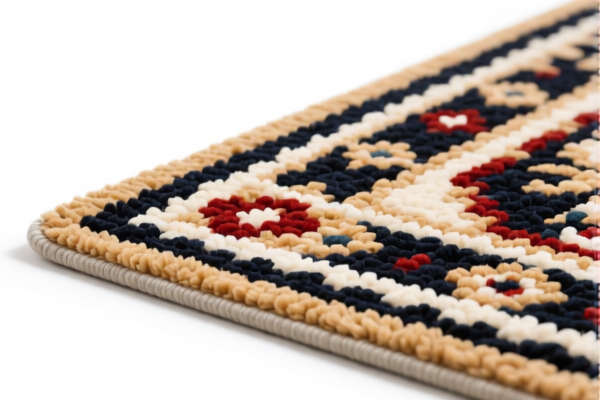
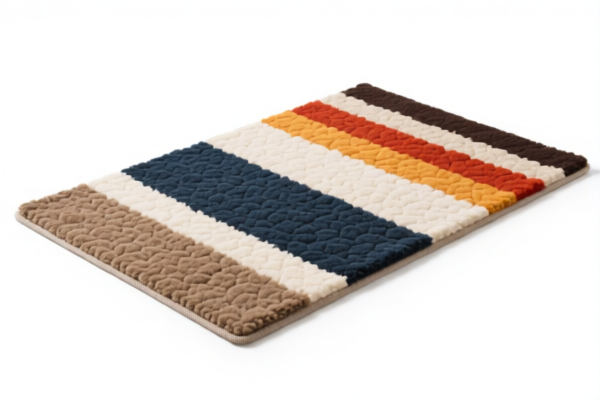
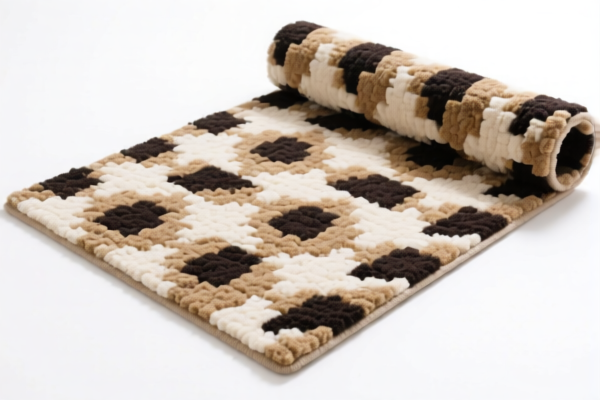
AI Analysis
🧶 Carpet (HS Code: 5701.90.20.30)
🌐 HS Code Reference & Customs Clearance Guide | 2026 Latest Tariff Analysis | Professional Strategy
📌 I. Product Definition & Classification: Do You Really Understand "Carpet"?
Carpet is a textile floor covering, defined by its structure as a woven or tufted fabric laid on floors. In international trade, the classification of carpets depends heavily on fiber material and manufacturing process.
According to HS Code 5701.90.20.30, this specific classification assumes:
1. Product Form: Carpet (Textile Floor Covering).
2. Material: Inferred as Synthetic Fibers (based on the "20" subheading logic for other textile floor coverings not of wool/fine animal hair, often grouped with synthetics in this specific 10-digit slot).
3. Structure: Non-tufted/non-flocked, or other woven structures not specified in more detailed subheadings.
⚠️ Key Distinction Point:
- If the carpet is made of wool or fine animal hair → It likely falls under5701.10or5701.90.10.
- If it is tufted (needle-punched with loops) vs. woven (flat-weave) → This affects the first 6 digits. However,5701.90.20.30specifically targets synthetic-based carpets under general "other" categories.
- Crucial Check: Ensure the product is NOT wool-based. If it is wool, this code is WRONG, and you risk a misdeclaration penalty.
📦 II. HS Code Classification Details (2026 Latest Tariff Authority)
| HS Code | Product Description | Material Assumption | Key Characteristics |
|---|---|---|---|
5701.90.20.30 |
Carpet (Synthetic/Other Textile Floor Covering) | Synthetic Fibers (e.g., Nylon, Polypropylene, Polyester) | - General carpet - Not wool/fine hair - Not tufted (if tufted, might be 5703...)- "Other" woven/flat-weave structure |
🔍 Important Note:
- This code (5701.90.20.30) is specifically linked to Synthetic Fiber Carpets in many tariff schedules where20indicates "other" than wool/animal hair, and.30is a specific national sub-code (e.g., for import from China to the US).
- Do NOT use this for Wool Carpets. Use5701.90.10.30for wool/non-wool animal hair if applicable.
- Do NOT use this for Tufted Carpets. Tufted carpets often fall under5703or5704depending on backing. If this is a woven carpet (flat-woven, rag rug, or industrial woven), this code is appropriate.
💰 III. 2026 Latest Tariff Rate Breakdown (Including Surtaxes & Policy Add-ons)
✅ Applicable Country: United States (US)
✅ Origin: China (CN)
✅ Effective Date: 2025/2026 (Current Trade Policy Era)
🎯 1. 5701.90.20.30 —— Carpet (Synthetic/Other)
| Item | Detail |
|---|---|
| Base Tariff Rate | 0.0% (Most Favored Nation rate for many carpets) |
| Section 301 Surtax | +25.0% (Added Tariff on Chinese Goods) |
| Section 122 Tariff | +10.0% (Specific Tariff on Certain Textile/Floor Covering Imports from China) |
| Total Effective Rate | 35.0% |
| Tax Calculation | CIF Value × 35% |
| De Minimis Exemption? | ❌ NO (deny_de_minimis applies) |
| Legal Basis Path | USITC:5701.90.20.30 → Section 301 Footnote → Section 122 Statutory Authority |
📌 Explanation:
- "Base 0%": The standard MFN tariff for carpets is often zero or low, reflecting US import patterns.
- "Section 301 (+25%)": This is the major trade war tariff on Chinese goods. Most carpets from China are subject to this.
- "Section 122 (+10%)": A specific add-on tariff applied to certain textile and floor covering imports from China to protect domestic manufacturing.
- Total 35%: This is a high tariff. It significantly impacts the landed cost.
- No De Minimis: Products valued under $800 (Section 321) cannot bypass these tariffs if they are subject to Section 301/122. They must be formally entered.
🛠️ IV. Customs Clearance Practical Advice (Avoid Pitfalls)
✅ 1. Required Documentation Checklist
| Document | Mandatory? | Explanation |
|---|---|---|
| ✅ Product Composition Statement | ✔️ | Must specify 100% Synthetic (e.g., "100% Nylon Stencil"). If it contains wool, this code is invalid. |
| ✅ Photos of Product & Label | ✔️ | Clear images of the carpet back, weave pattern, and label. |
| ✅ Commercial Invoice | ✔️ | Must state "Carpet, Synthetic Fiber, Woven" (if applicable). |
| ✅ Packing List | ✔️ | Include dimensions, weight, and number of rolls/pieces. |
| ✅ Origin Certificate | ✔️ | Proof of Chinese origin. |
| ✅ Structure Diagram (if requested) | ✔️ | To prove it is woven (5701) and not tufted (5703) or felted (5702). |
🚨 Critical Warning:
- Wool Content > 10%? If your carpet contains significant wool, you MUST reclassify to5701.90.10.30(Tax: 35%) or5701.10(Tax: 38.3%).
- Tufted vs. Woven: Tufted carpets are often classified under5703or5704. Misclassifying a tufted carpet as5701(woven) can lead to audits and penalties. Ensure the manufacturing process is correctly described.
✅ 2. Classification Strategy & Risk Mitigation
| Scenario | Correct Action | Risk if Incorrect |
|---|---|---|
| Synthetic Woven Carpet | Use 5701.90.20.30 (35%) |
✅ Correct |
| Synthetic Tufted Carpet | Check 5703 or 5704 |
⚠️ Might be lower or higher, but structure mismatch leads to seizure. |
| Wool Carpet | Use 5701.90.10.30 (35%) or 5705 (38.3%) |
❌ Misclassification: Fine animal hair carpets have different rules. |
| Mixed Material (Wool + Synth) | Check wool % threshold | ❌ If wool > 10%, it may be classified as wool. |
🔥 Golden Rule:
"Wool is King, Synth is Queen, Weave vs. Tuft is the Key!"
- If Wool →5701.90.10.30
- If Synthetic & Woven →5701.90.20.30
- If Synthetic & Tufted → Likely5703(Check specific subheadings)
✅ 3. Special Cases
| Case | Recommendation |
|---|---|
| Sample Shipment | Still subject to 35%. Do not use DHL/FedEx under $800 to bypass; it will be caught. |
| Large Industrial Carpet | Ensure it fits "Floor Covering" definition. If it’s a rug for wall hanging, it may be 5805. |
| Origin Transshipment | If shipped from Vietnam but made in China, it is still China Origin. Tariffs apply. |
🌍 V. Global Market Comparison (2026 Latest)
| Country/Region | HS Code (Similar) | Tariff Rate | Notes |
|---|---|---|---|
| 🇺🇸 USA | 5701.90.20.30 |
35% (0% + 25% + 10%) | High tariffs due to 301 & 122 clauses. |
| 🇨🇳 China | 5701.90.20.30 |
0% | Import tariff is low, but export taxes may apply. |
| 🇪🇺 EU | 5701.90.90 |
0% - 4% | No Section 301/122 equivalents. Much cheaper. |
| 🇬🇧 UK | 5701.90.90 |
0% - 4% | Post-Brexit tariff rates. |
| 🇨🇦 Canada | 5701.90.20 |
0% + CUSMA check | Check for preferential if from Mexico/Canada. |
📌 Conclusion:
- The US is the most expensive market for Chinese carpets due to layered tariffs.
- EU and UK offer significantly lower costs (0-4%). Consider diversifying sourcing or marketing to these regions.
📌 VI. Common Mistakes & Pitfalls (Lessons Learned)
❌ Mistake 1: Claiming "De Minimis" ($800 rule) to avoid 35% tariff.
👉 Consequence: Customs will seize goods, impose fines, and blacklist your importer code. Do not do this.
❌ Mistake 2: Misdeclaring a Tufted carpet as Woven (5701 instead of 5703).
👉 Consequence: Customs may assess a different duty rate or reject the entry for misdescription. Structure must match.
❌ Mistake 3: Using 5701.90.20.30 for a Wool carpet.
👉 Consequence: Misclassification. Wool carpets have different tariff lines (5701.90.10.30). While the rate might be similar (35%), the legal risk is high.
✅ Correct Declaration Example:
"CARPET, SYNTHETIC FIBER (NYLON), WOVEN, 100% NYLON, FLOOR COVERING, MADE IN CHINA, HS 5701.90.20.30"
🎯 VII. Conclusion: Professional Clearance, Cost Efficiency!
🎯 Remember:
🔹 "35% is the baseline for Chinese Carpets in the US."
🔹 "Wool vs. Synth determines the sub-category, but both hit ~35%."
🔹 "Structure (Woven vs. Tufted) is critical for accurate HS code."
📌 Pro Tip:
If you are importing large volumes, consider:
1. Advance Ruling: Apply for a CBP Advance Ruling to lock in the classification.
2. Supply Chain Adjustment: Evaluate sourcing from Vietnam or India where tariffs might be lower (0-15%) if you can shift manufacturing.
3. Bonded Warehouses: Use if applicable to defer duty payments until sale.
📣 Immediate Action:
📞 Contact a Customs Broker to verify the weave type and fiber content.
📦 Prepare Composition Certificates from your supplier.
🚀 Plan for 35% Tariff in your landed cost calculation.
✨ Professional clearance starts with precise classification!
💼 Every percent saved is pure profit!
Customer Reviews
About HS Code Classification
The Harmonized System (HS) is an internationally standardized nomenclature developed by the World Customs Organization (WCO) to classify traded products. Over 200 countries use the HS system as the basis for customs tariffs, trade statistics, and import/export regulations.
Each HS code follows a hierarchical structure:
- Chapter (2 digits) — Broad category of goods (e.g., Chapter 84: Machinery and Mechanical Appliances)
- Heading (4 digits) — More specific grouping within the chapter
- Subheading (6 digits) — Internationally standardized breakdown, used by all WCO member countries
- National subdivisions (8-10 digits) — Country-specific extensions for further classification, such as US HTSUS 10-digit codes
Correct HS code classification is essential for smooth customs clearance, accurate duty payment, and compliance with trade regulations. Misclassification can lead to customs delays, overpayment of duties, or penalties.
When importing from CN to US, the applicable tariff rates may include:
- Most-Favored-Nation (MFN) rate — The standard duty rate applied to WTO members
- General rate — Applied to countries without trade agreements
- Trade remedy duties — Additional tariffs such as Section 301 (anti-dumping), Section 232 (national security), or countervailing duties
The information provided on this page is for reference purposes only. For official classification, please consult with your local customs authority or a licensed customs broker.